
POETRY AND KNOWLEDGE
Small Is Big. Think in Fractals.
POM-prompted poetry. About fractals for peace and sustainability.
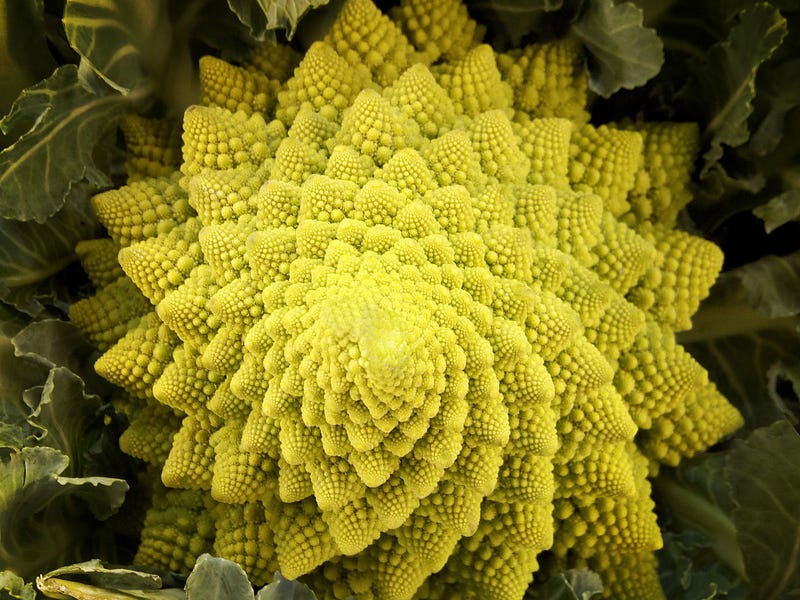
Gaia Scales in Fractals
The shapes of nature are vast and immense. And tiny. So cute whenever we’re close.
Small-smaller-smallest From universe to planet to continent to home.
Big-bigger-biggest From garden to landscape to country to world.
Life is abstract when far from our beds. Life is concrete when touching our doorsteps.
Hatred is easy when we don’t know the hated. Hatred is painful when we hate close to home.
But love can be scaled in fractals, too. Starting tiny, growing bigger, becoming vast.
And hate can get smaller by looking at details, finding out we’re no different after all.
It’s knowing that softens. It’s listening that cares. It’s humming a consistent tune and finding a harmonious melody, together.
Fractals are cool, fractals rock!
Characteristics of Fractals
Fractals are all around us. We often just don’t recognize them. But a simple vegetable like cauliflower is made up of fractals. This is the one from my fridge. You see the little roses. And many of those together form the big cauliflower.
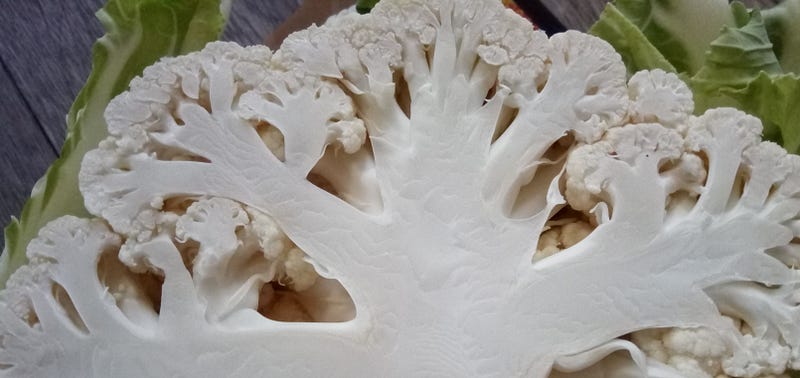
How do we define fractals in science? This is what Eliot Kersgaard says about them:
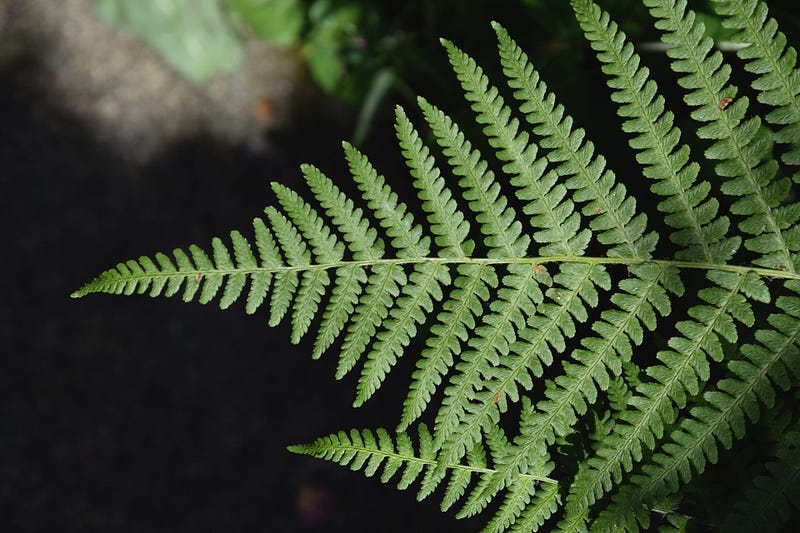
“A fractal is a system with similar properties at all scales. This characteristic is called self-similarity. In the physical world, this means that if you look at a fractal at high magnification, it will have the same structure it has at low magnification. Trees and their leaves are excellent examples of fractals in nature.” — Eliot Kersgaard in Life’s Universal Patterns
Fern leaves show it well:
What Use Are Fractals?
Fractals might seem nothing more than a scientific titbit of knowledge far from our real life. But no. Upon redesigning our economy and our societies, we make use of fractals. They are very important to create a peaceful and sustainable world.
Fractals are very important for peace. When we zoom out too much, make it all abstract, we cannot feel compassion for others who seem so different from ourselves.
When we zoom in and focus on what we have in common, we find out that the other is a person. An alive human being who loves his children and might just have a different perspective to think what he thinks and do what he does.
Fractals are also very important for a sustainable future. Companies should be scaling in interdependent fractals so they can adapt their production to local ecosystems and local cultures. And they can stop producing waste and pollution.
If we embrace fractals in our lives, we might find a way to live together with all diverse humans within biodiverse ecosystems. And find a balanced harmony.
Find fractals, my dear readers. And combine all fluttering notes into a beautiful, harmonious symphony…
Thank you, Christina M. Ward, for giving us great prompts.
If you want to reach out, just connect via LinkedIn, Facebook, Twitter, Instagram, Pinterest, ManyStories, Quora, or my website.


