
What Narcissists and Borderlines Teach us About Love
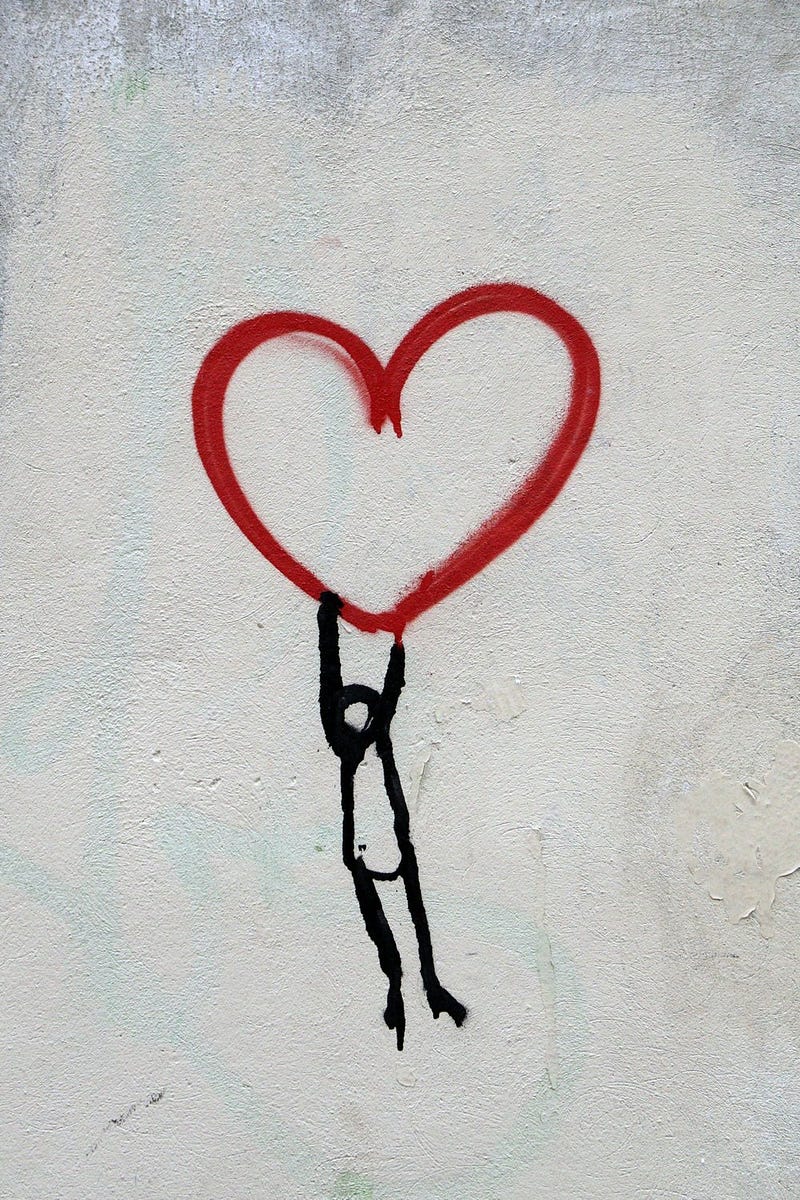
Of all the mental illnesses we have discovered or invented, Borderline and Narcissistic Personality Disorder are the two which truly demonstrate what happens to the human who does not believe in love. And yet, individuals suffering either disorder deeply obsess over love — the Borderline obsesses over losing love whereas the Narcissist obsesses over loving himself. Both types know love exists, yet they cannot experience its true nature. For them, love is, but in their own hearts, it does not happen.
The nightmare of the heart is to live in a world where one cannot love, or cannot be loved. We psychologists leave the soul to religion, which itself has destructuralized into spirituality, affording us some responsibility for mapping the world of the heart. Matters of the heart determine what we now call mental health but define in terms more sanitized and detached.
The great, shameful deficiency in mental health is that the word love does not appear in the DSM. Our entire basis for understanding mental illness diagnoses and their corresponding cures does not incorporate love. It is as if AI, in its heartless wisdom, were to measure the human psyche in terms of functionality instead of love.
To be a Narcissist, one must not believe in others’ inner realities. If the Narcissist were to weigh others’ happiness and misery the way he does his own, he would not be able to torment others shamelessly; to see others as the means with himself as the end; to be unrestricted by his lack of empathy.
To be a Borderline, one must not believe in one’s own ability to experience safe and lasting love. If the Borderline were to believe that love were stable, safe and real, she would not obsess over the very love she sabotaged; would not cast self-fulfilling prophecies on love’s failure; would not feel pain as something more real than love itself.
Narcissists fail to afford the same reality to others that they do to themselves. There are after all two kinds of people in the Narcissist’s world: the Narcissist, and everyone else. In the same way that extremists state, ‘If you aren’t one of us, you’re one of them,’ the Narcissist believes, ‘If you aren’t one of me, you’re just…them.’
We this in the first Avengers when the villain AI, Ultron, (who of course lacks empathy and carries a narcissistic name) states the terms of his ontological battle: ‘All of you against all of me!’
Whereas for the Narcissist others fail to exist, the Borderline feels that safety within love fails to exist so that, for the Borderline, love stops happening once it enters the Borderline’s heart. Love in a Borderline’s heart exists on borrowed time, which is the true curse of the Borderline: to feel love all the more intensely, and yet with a profound conviction in its mortality. While others may think that pain is temporary while love is everlasting, Borderlines believe love is mortal while it is pain that lives forever.
The only comparison I have seen with respect to the Borderline belief-system about love is that of chronic addicts I have treated: the way addicts both fear and love their habit; the way they believe it will liberate them from their pain before worsening it; the way they are a slave to it but can scarcely find their identity out of it. Borderlines narcoticize love into a drug, projecting onto their partners (or therapists, or friends, or relatives) the identity of the drug dealer who does not care about the Borderline, and instead wants the Borderline to need the very thing that will hurt her. This may explain Borderline splitting, in which the loved one is either a savior or a villain, which is just how addicts see their dealer.

The nightmare of the Narcissist is that he cannot give love because others don’t mean anything in and of themselves. The nightmare of the Borderline is that she cannot receive love because love is unsafe or unstable, just like her. This is why these two disorders are fundamental to the mythology of the heart. They teach us what goes wrong, and in so doing, remind us of what needs to go right.
The ancient Greek gods gave somatic curses: blind the psychic (Tiresias); have the liver eaten (Prometheus); age eternally without dying (Tithonus). Personality disorders render amatory curses: the inability to give love because you don’t believe in others as worthy receptacles (Narcissists); the inability to receive love because you don’t believe you are a worthy receptacle (Borderlines). Either way, the individual does not believe in their love beyond themselves, and so lacks a reliable reality outside their ego.
If reality ends at our skin, the illusion that surrounds us fails to carry meaning. To live in a world of love, we have to recognize something is real beyond ourselves. We have to recognize that love is beyond ourselves, and that we are that love.
Also read How Borderlines See Love, How Narcissists See Love, When You Should be a Borderline, and When Being a Narcissist Makes Sense.
To follow me: https://medium.com/@myartman
To subscribe: https://medium.com/@myartman/membership


