
5 Untold Stories of Japanese Tattoos
From Criminal Branding to Artistic Expression
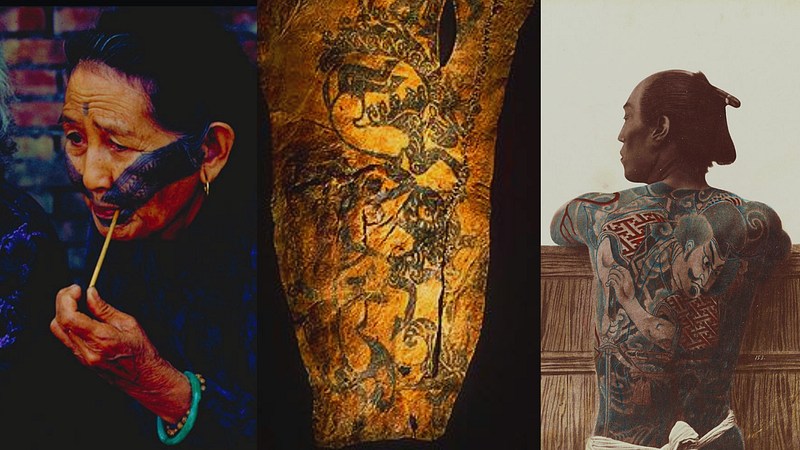
Ever wondered why all gangsters in movies have dragon tattoos on their arms? Or, if not a dragon, then any other tattoo. Basically, whenever a filmmaker wants to show the typical ‘bad guy’ in a movie or series, they give the guy tattoos.
This is because traditional Japanese tattoos known as ‘Irezumi’ were originally associated with criminals and outcasts! This association began in 300 AD when Japanese criminals were marked with tattoos.
However, after Japan stopped branding its criminals in the 1800s, the previously branded people covered up their criminal designs or ‘bookie’ with larger, more decorative patterns and motifs.
1- Japanese Criminal Tattoos
The association with criminality became even more pronounced with the rise of the ‘Yakuza,’ which was started in the 17th century. Anyone who joined the yakuza and participated in their mafia-like and organized criminal activities was made to get a tattoo.
This was seen as an initiation into the gang. It also showed that the person getting the tattoo was loyal to the gang and will permanently pledge allegiance since getting a tattoo the traditional Japanese way hurts like hell, to put it frankly.
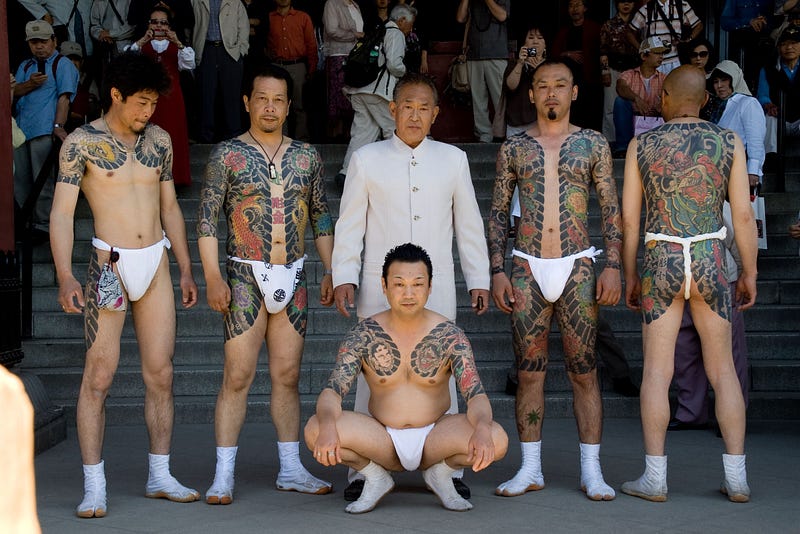

Some gang members only got tattooed on their chest, legs, arms, or other areas of the body so they could remain anonymous. This is where the whole concept of tattoos being intimidating began.
In Japan, there are still some public areas such as hot springs and public swimming pools that do not allow entrance to individuals with tattoos. This is due to the association of tattoos with organized criminal activity.
Which is incredibly discriminatory and hinders a person’s self-expression. However, around the Edo period, tattoos started becoming a little more normal. Many people even came up with their own tattooing practices.
2- Horimono
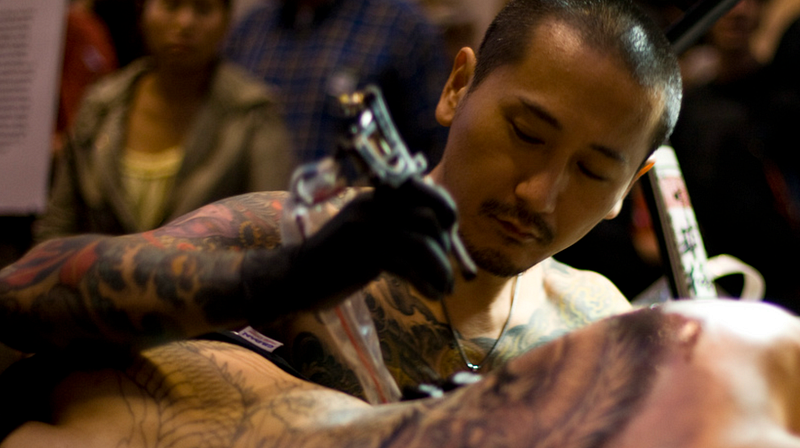
As the famous saying goes, ‘No pain no gain.’ The process of getting a Japanese tattoo is definitely not for the weak of the heart. This process is known as ‘horimono’. It involves the use of a handheld tool called a ‘Tebori.’
This involves the tattoo artist manually pushing the ink beneath the top layers of the skin. This is more time-consuming, painful, and permanent than modern techniques for tattooing.
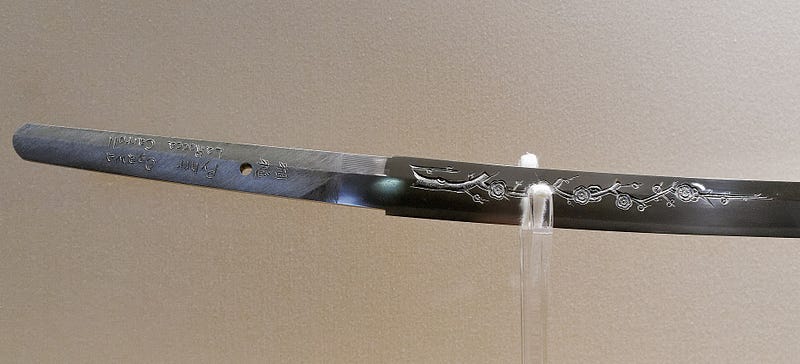

Still, Japanese tattooing is considered a form of fine art. It takes years and years of practice to become a master tattoo artist.
It is incredibly beautiful with awe-inspiring details and intense colors. Traditional Japanese tattoo designs usually feature dragons, koi fish, or cherry blossoms (all things that hold immense cultural significance in Japan.)
3- Claim to Fame
You must be aware of anime or other totally Kawaii (cute) Japanese norms, but today you are in for a ride as you delve into the world of Japanese tattoos.
Have you ever had that urge where you wanted to do something reckless in life? Or when you tried to somehow do something so meaningful for yourself that you get it inked on your body; a reminder, a memory, something you are passionate about, or something simply fun.
In modern society, there are innumerable ways of self-expression. So, the best way to express ourselves and embrace our unique personal identities is through art. And, the art in question today is; tattoos. That’s right. Especially, Japanese tattoos.
These are not just mere body art, but rather symbols of culture deep-rooted in folklore or traditions.
These tattoos hold incredible meaning for those who get them even when the process of getting tattooed is not for the weak-hearted, and they are rooted in such a web of misconceptions and stigmas that it becomes difficult to really appreciate them.
So, what say you to removing this doubtful mist from around Japanese tattoos and acknowledging the beautiful cultural message they giv
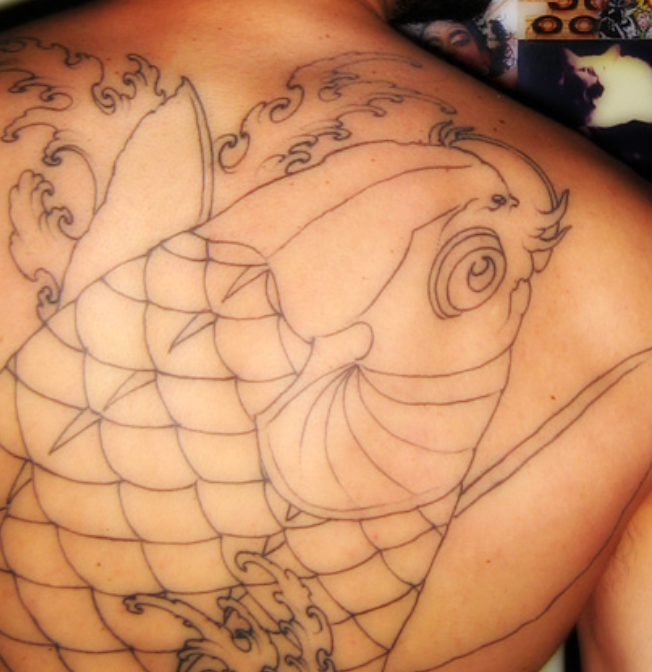

Despite their association with crime, as discussed before, Japanese tattoos are becoming increasingly popular globally. It all began around the early 19th and 20th centuries.
Japanese immigrants brought their colorful tattoos to the United States with them. From there, it became popular among sailors and other military personnel first. Soon, the stigma around tattoos began receding as more and more people in the West began to normalize it.
4- Cultural Controversy
How can it be that the West gets involved somewhere and there isn’t any controversy? In the case of Japanese tattoos, the involvement of the West sparked debates on cultural appropriation.

Sometimes, people get tattoos of Japanese characters or other things without even knowing what they mean. This undermines Japanese cultural values and could be considered extremely disrespectful.
There have even been times when some people experimented with Japanese words and phrases thinking they meant something good when they actually turned out to be hilarious fails.
Wrap-up on The Tattoo Tales
Well, this just proves how the history of Japanese tattoos is extremely colorful and has a million twists and turns, both negative and positive.
Steeped in stigmas that are now slowly clearing and cultural values, Japanese tattoos have proven themselves to be so much more than just body art. So, when are you getting your next Japanese-inspired tattoo?
Maybe a Naruto one would strike your fancy if cherry blossoms seem too outdated!
Want to follow up more from me and other amazing writers on Medium?
Hop on the chance to join: