
5 “Silly” Things I Do To Create Opportunities From My Email List
You’ll think you’re wasting your time… But you’re not

“Hello Scott, how are you? Just wondered if you’re doing any freelance copywriting?”
Opportunities like this make me smile.
I messaged back:
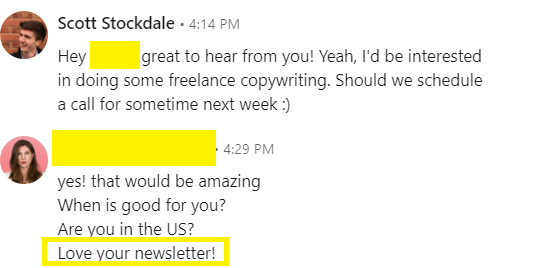
I didn’t know she was a subscriber.
We jumped on the call, went through my proposal, and have worked together since. She said my newsletter was the reason she reached out.
Last week, a different subscriber got in touch. She likes my writing. After a successful call, we’ve agreed to start working together.
Opportunities like this keep popping up. The most exciting thing is I’ve barely scratched the surface.
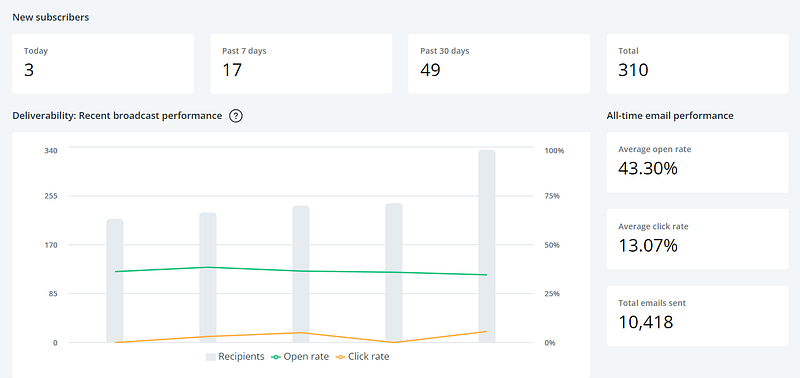
My email list is small. 310 people have subscribed and it’s taken nine months to get to this point. These are people who’ve opened at least one of my emails in the last two months. (I “cancel” subscribers who haven’t.)
You don’t need a big email list.
My goal is to get it to 500 subscribers by the end of this year. I’ll then feel confident about reaching out to sponsors. My stretch goal is 1,000.
First things first, I recommend creating a freebie. (P.S. You may already have one)
Last March, I published an article about becoming a full-time writer. I linked to a document I’d put together.
Eva kindly left me this note:
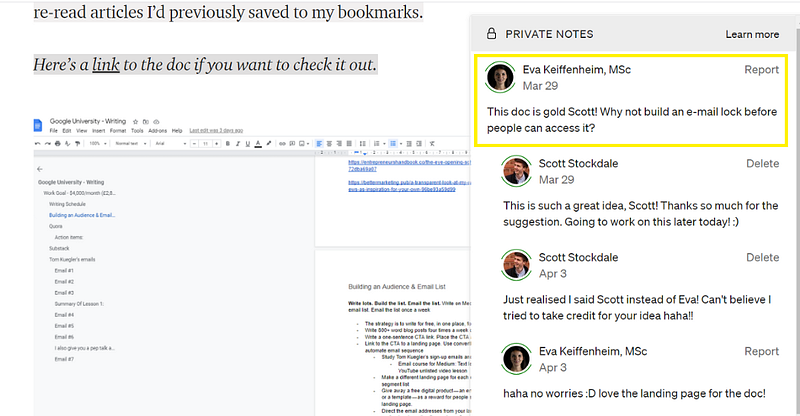
Her suggestion was simple.
Instead of giving access to a resource that I’d spent hours putting together, why not add an email lock?
In other words, rather than link to the Google Doc, I should link to a landing page. On this page, someone enters their email address to claim the document.
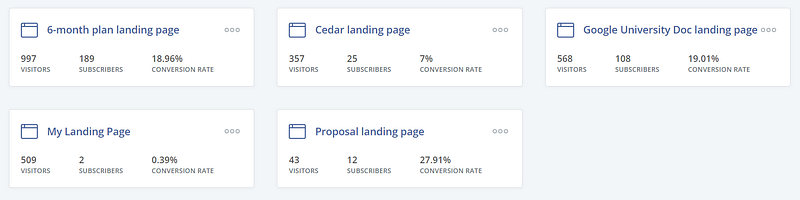
I created the landing page with Convertkit in less than an hour. It’s driven over 30% of new subscribers.
I include a simple call-to-action at the end of my articles to drive traffic to these pages.
After confirming their email, the document gets sent to them. This happens automatically:
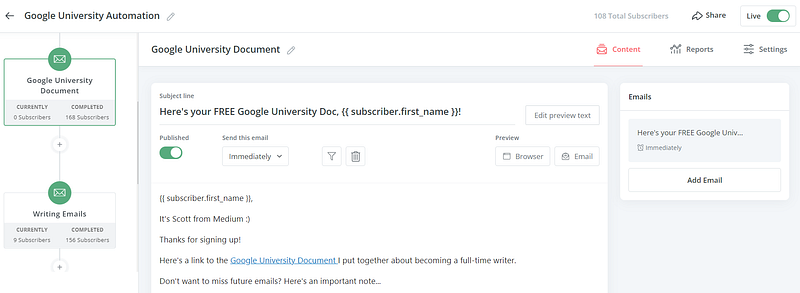
Over the next two months, they’re sent another five emails. This also happens without me pressing send:
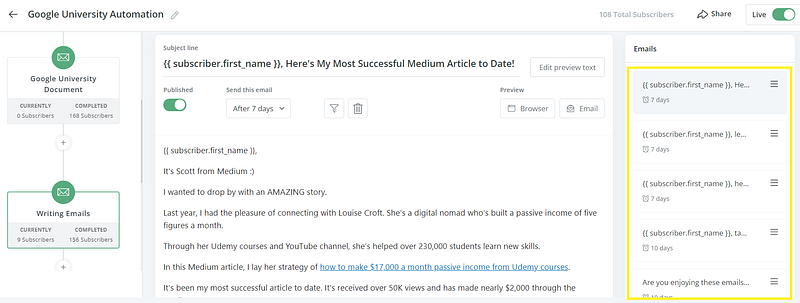
5 “silly” things I do to create opportunities
I say silly.
They’re not really.
Things are often seen as “a waste of time” until they deliver results. This is a shame. I’d argue the following have been instrumental in creating opportunities for me.
#1: Give away something for free
In the last of my automated emails, I link to a Google form.
I encourage subscribers to leave feedback about my emails. In exchange, they get free access to my online writing course (worth £59.99).
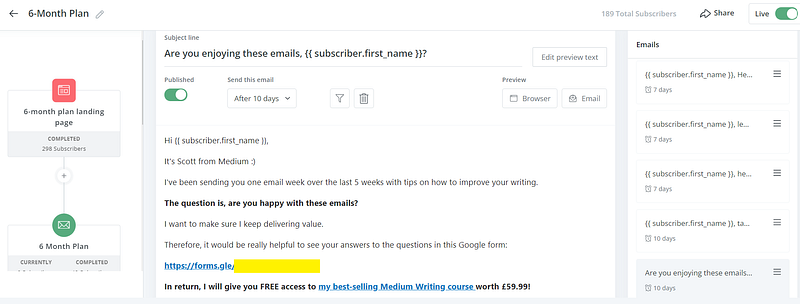
They get something valuable and I get useful feedback.
I also know which segment of my list to add them to. In the feedback form, I ask which they’d prefer. (My list is segmented by topic: writing, outsourcing, and entrepreneurship.)
Win-win.
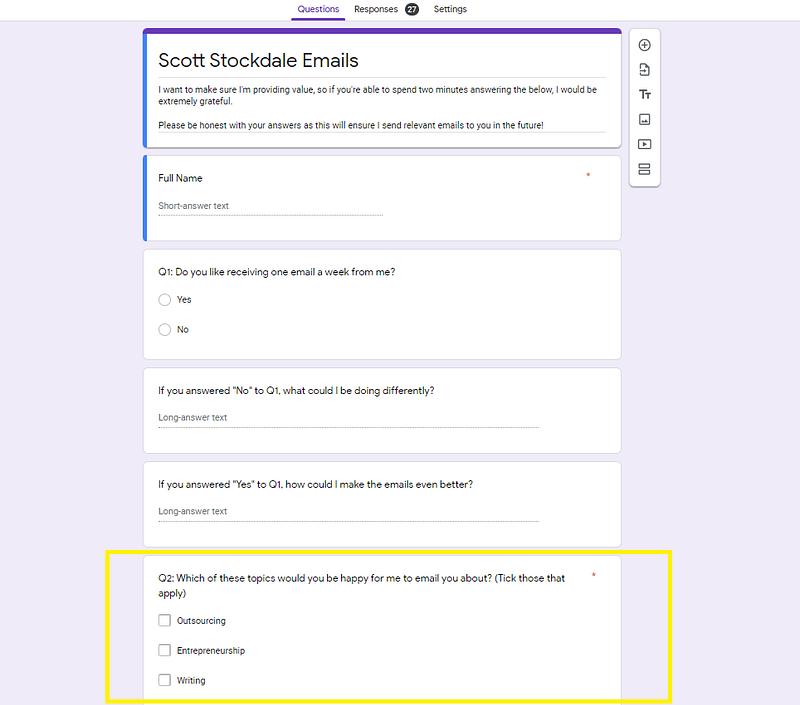
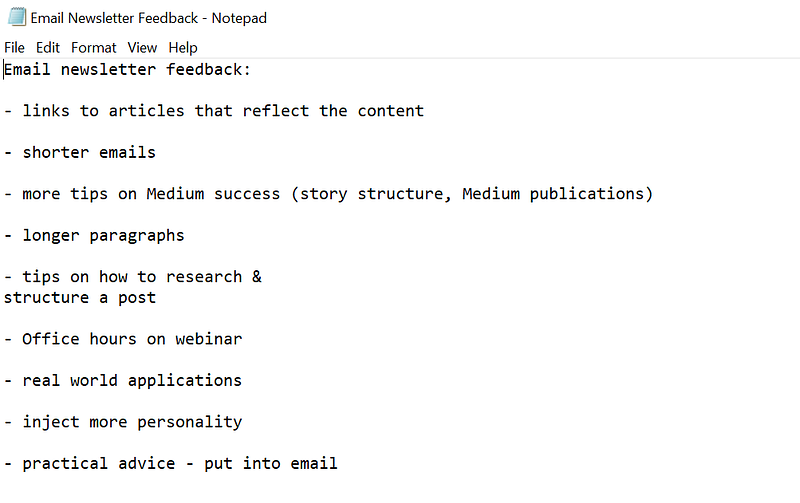
I get a notification from Google when someone completes the form. I check through the responses, reflect on the feedback, and add them to a text file. This file is saved on my desktop.
So far, the feedback has given me nine actionable points.
I make sure to look at this document before I send an email.
The last thing I do is email the subscriber. In the Google Form, I ask the person to enter their full name. This way, I can open up Convertkit, search for their name, and find their email address.
Then, I send a variation of this email:
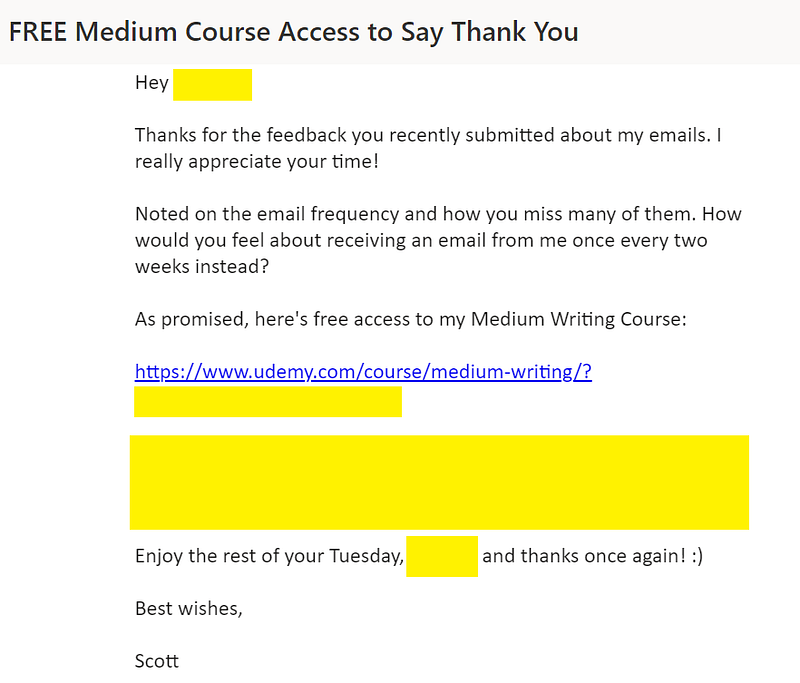
In this example, I asked a question. Subscribers usually reply. They like being heard.
In his feedback, this subscriber wrote that he didn’t have time to read all my emails. He wanted them to be less frequent.
I asked whether once every two weeks would work for him:
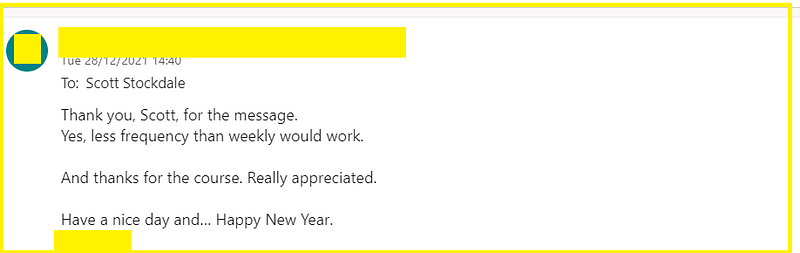
I’ve since added another tag within Convertkit called “2 weeks”. This subscriber has this tag. I don’t add this tag to emails if I don’t want him to receive them.
#2: Give, give, give, give, give
Value is subjective.
I think my emails are educational and entertaining, which is enough for me.
I give away resources. I jump on calls. I share my brain. When people subscribe, they subscribe to you.
Go as long as you can without asking for stuff. Buy my course, check this out, etc. Last week, I unsubscribed from a newsletter that kept pitching.
When you act like you don’t need a thing, people want to connect.
#3: No more than two links per email
And if you do add two, make sure they’re linking to the same thing.
Emails should have one call to action. Any more than this and it gets frustrating.
When was the last time you clicked on all the links in a roundup email? If you’re like me, the answer’s never.
#4: Only use text
Don’t bother with images or fancy layouts.
It’s easy for them to screw up across devices.
#5: You don’t need a rigid schedule
If your email sounds good, people will open it. If they can’t open it now, they’ll come back to it later.
If it’s not for them, they won’t open it at all.
Your subject line is way more important. Spend time on this.
I like sending emails on Thursday afternoons. This is my favourite day of the week. However, I’m not fixed on this. I just aim for once a week.
If I can’t send them on Thursday, I’ll aim for Friday. The weekend’s okay too.
And if I miss a week, who cares?
I doubt people are waiting for my email.
Takeaways
In spite of its size, my email list keeps on giving.
Opportunities pop up and I get to connect with people from all over the world.
My goal is to get to 500 subscribers by the end of this year. I’m confident this will happen. My stretch goal is 1,000. If I make it a priority, I’ll follow the tips Anangsha lays out about Swapstack.
And once I get to 500, I’ll follow Julia’s steps to secure a sponsor.
Here’s a quick summary of the five “silly” things I do to create opportunities from my email list:
- #1: Give away something for free. I get feedback and my subscribers get value. Win-win.
- #2: Give, give, give, give, give. The money will take care of itself.
- #3: No more than two links per email. Most subscribers won’t click on one — let alone five.
- #4: Only use text. This is a personal preference, but I focus on the writing. Everything else is a distraction.
- #5: You don’t need a rigid schedule. People aren’t waiting for your emails. You can mix things up.
Most important of all, have patience. This won’t happen overnight. It may take one year. It could take three.
Stick with it and wonderful things can happen.
“Trust is consistency over time”
— Jeff Weiner, American Businessman
Want to ditch the 9–5? Get my free 19-page guide: Everything I Did to Quit My 9–5 Job & Transition Into Profitable, Sustainable Solopreneuring :)