
Here’s the Google Doc I Used to Land My First Writing Client
Google Doc included — along with steps for attracting clients (without having to pitch)

“You have to niche down.”
My coach was onto something. He’d been freelancing for years. The problem was, it was the chicken and egg all over again.
I didn’t know what I liked writing about, so I had to experiment. But that meant I couldn’t go niche.
Hmmm.
I ignored his advice and continued with my projects.
This was three years ago. Since then, I’ve posted content every single week. Podcasts, articles, online courses — you name it.
There’s been no grand plan.
Because of the content, though, opportunities have popped up. One came earlier this year when I was asked to coach people on launching their podcasts.
Over 30 launches later, I no longer coach, but I’ve remained in touch with many of my clients. On our last calls, I encouraged them to reach out if they ever needed help.
One of my clients did. She asked if I could help her outsource some of her tasks, so I introduced her to a virtual assistant I’ve been working with for 18 months. They’ve been working together since.
Four months later, she reached out again:
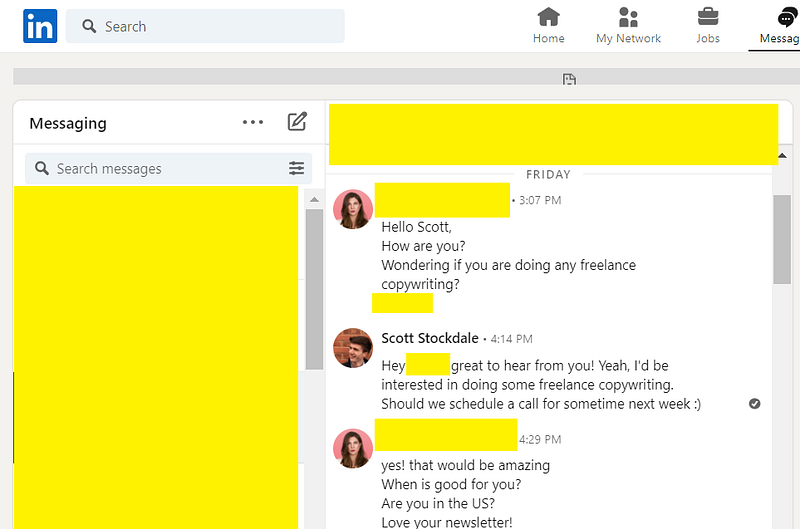
Step #1: Consistently produce content to improve your skills. Opportunities will come your way. When they do, say yes!
First Call
Like previous coaching calls, we spent a few minutes catching up. I asked about her kids, and she asked about my new flat. We then broached the subject of writing.
She gave me a quick run-down of what she wanted help with, and I jotted things in my notebook.
We established what she was looking for (copywriting for her newsletter, blog, and LinkedIn). I then asked questions I’d prepared beforehand:
- When would you want to start?
- Do you have examples of writing I can look at?
- What tone of voice are you looking for? Professional? Friendly? Something else?
These questions brought other questions to life. After 20 minutes, we agreed on actions:
- She was going to email me examples of blogs and newsletters she’d written in the past.
- I was going to email her a proposal by the end of the week.
Step #2: Seek to understand your potential client’s needs. Ask questions, listen, and dig deeper. By the end of the call, confirm a date for when you’ll send over a proposal.
My Google Doc Proposal
Front Cover [Page 1] & Overview [Page 2]
The proposal I sent across is five pages long.
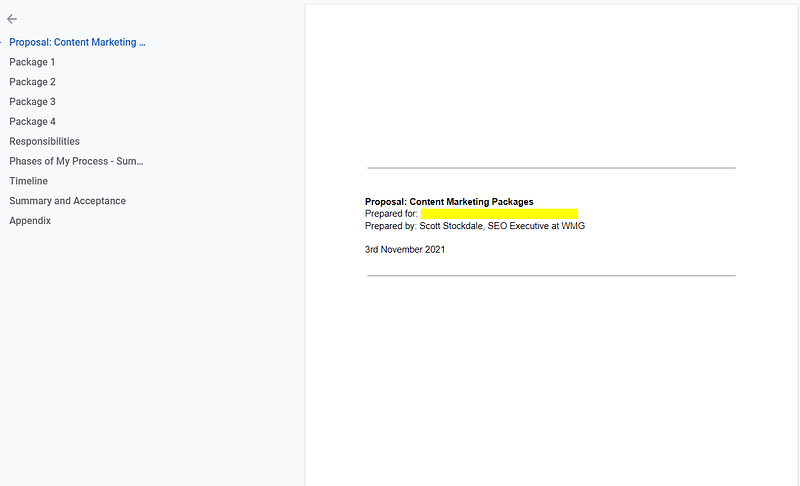
The first page is a cover and looks like this. I won’t be winning design awards anytime soon:
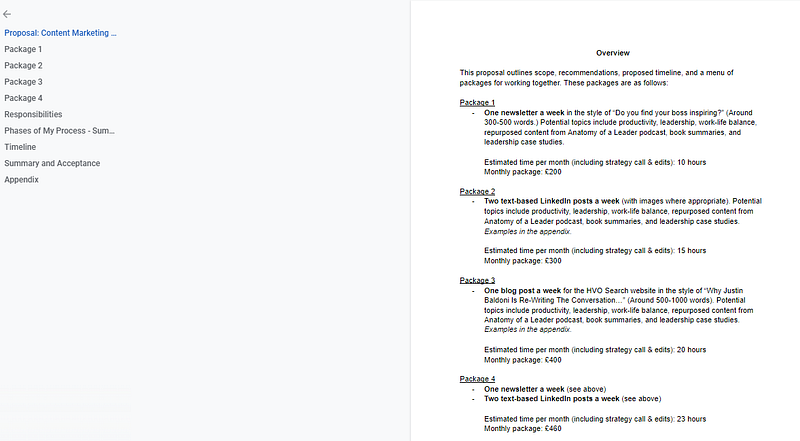
On page two, I detail packages.
These packages are tailored to my client’s needs. I include estimated times for each, as well as prices per month.
I settled on £20/hour. This is the first time I’ll be writing content for someone else, and the client is aware of my writing style. She’s on my email list.
(This is one of the reasons she reached out. She likes my newsletter.)
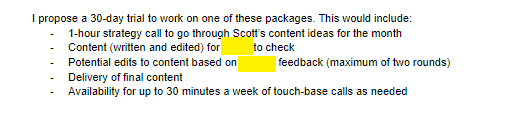
At the bottom of the page, I summarise my proposal. This includes trialling one of the packages, as well as what’s included:
Responsibilities & Phases of My Process [Page 3]
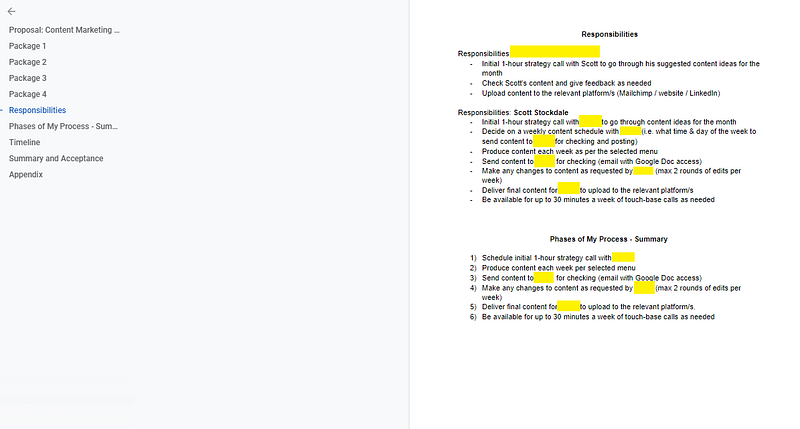
On the third page, I detail the responsibilities of both parties. This is to make sure our expectations are aligned. Also, if I’m asked to go outside the scope of work, I can ask for further payment.
The “phases of my process” section is similar to the responsibilities I list for myself.
Timeline & Summary and Acceptance [Page 4]
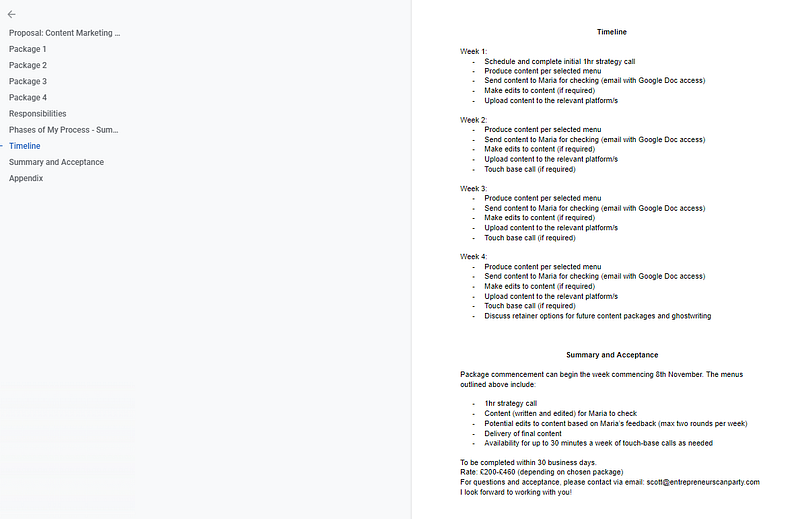
On the fourth page, I outline what I’ll be doing each week.
This serves two purposes. The first is to reassure the client I have a plan in place. The second is it acts as my own personal roadmap for when I start working with her.
In week four, I include a line about working together in the future. (“Discuss retainer options for future content packages and ghostwriting.”) This opens the door to working with the client on an ongoing basis after the trial.
Finally, I summarise what each package entails, my rate, and the date I can start. I also drop in the line, “I look forward to working with you!”
I’m no David Blane, but I figured this couldn’t do any harm!
Appendix [Page 5]
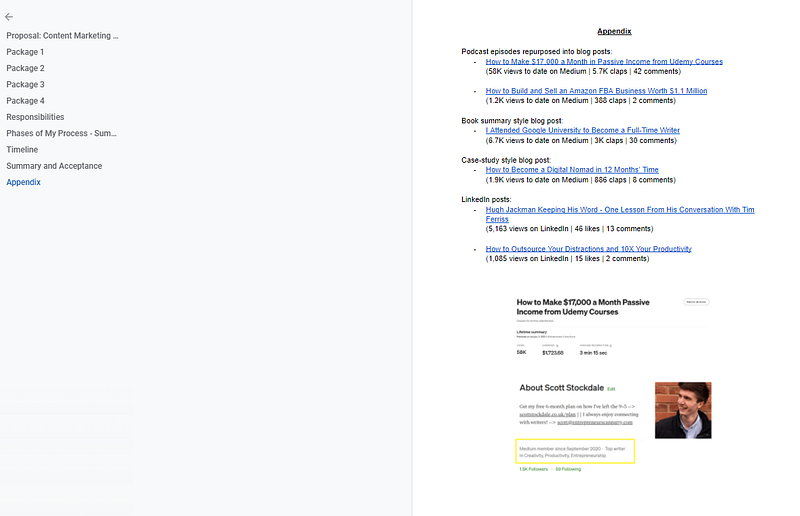
On the packages page [page 2], I write, “example can be found in the appendix”.
In the appendix, I list popular blogs and posts I’ve written before, with links to each. I also include a screenshot of the stats for one of my most successful posts to date (in terms of views and earnings).
This is likely the last thing my client read. I wanted to leave a positive impression.
Here’s a link to my Google Doc proposal. You’re welcome to copy it when pitching to clients.
Step #3: Keep it simple. Potential clients want your writing skills — not your design skills.
Email to Potential Client
Once I put the proposal together (which took me around four hours), I left it alone.
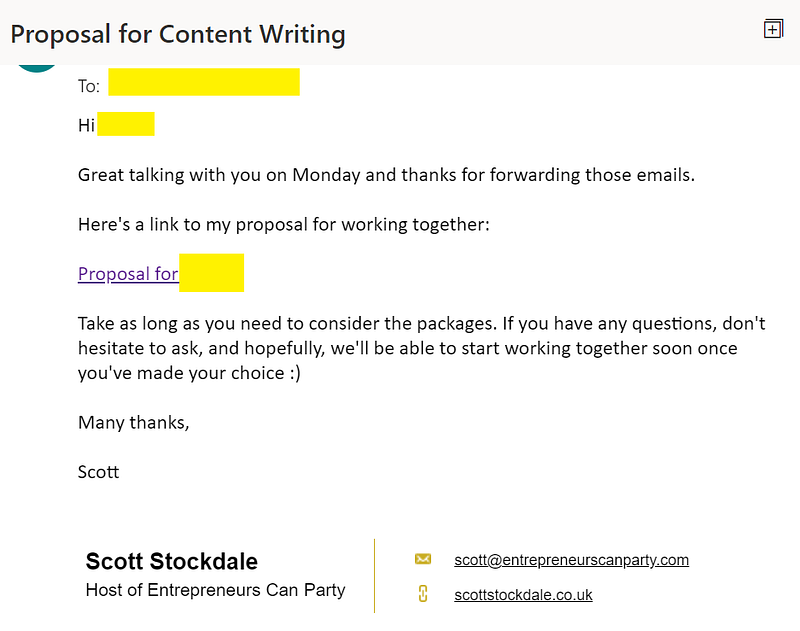
I then came back to it the next day. I hunted for typos and triple-checked the details, before putting together my proposal email:
She emailed back a few hours later:
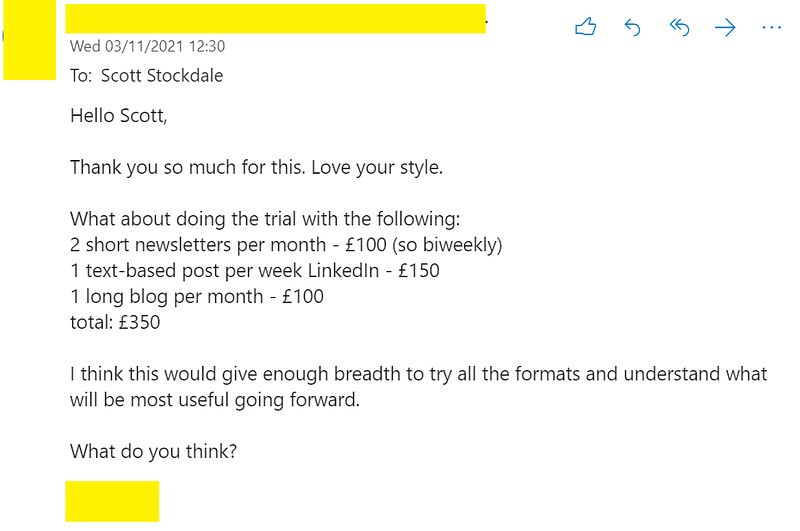
I responded back saying this was great. I sent her some content ideas this morning before our strategy call next week.
Again, I kept it simple and pulled these ideas into a Google doc.
Step #4: Keep client emails to the point and check for typos before sending your proposal.
Takeaways
This is new territory for me. I’ve never written content for someone else before. However, I’ve got plenty of experience working with clients. I’ve also been posting content for the last three years.
Refine your skills, share your best stuff for free, and people may want to work with you.
Here’s a quick summary of the steps:
- #1: Consistently produce content to improve your skills. Opportunities will come your way. When they do, say yes!
- #2: Seek to understand your potential client’s needs by listening to what they say. Ask questions, listen, and dig deeper. By the end of the call, confirm a date for when you’ll send over a proposal.
- #3: Keep the proposal simple. People looking for writing services want your writing skills — not fancy designs.
- #4: Keep client emails to the point and check for typos before sending your proposal.
Want to land your first writing client? Here’s a link to my Google Doc proposal in case you missed it earlier :)


