ize:fit:800/0*MfPkcTD-VnLb9wbb"><figcaption>Photo by <a href="https://unsplash.com/@gcowie?utm_source=medium&utm_medium=referral">Gordon Cowie</a> on <a href="https://unsplash.com?utm_source=medium&utm_medium=referral">Unsplash</a></figcaption></figure><h1 id="5b15">#3 — Control the Negative</h1><p id="6416">I see very few people harnessing the power of the <a href="https://www.bodybuilding.com/fun/teen-locke31.htm">negative or eccentric</a> portion of a rep.</p><p id="0aa3">While one is sternum bouncing a barbell off his chest, another is cracking the gym floor open with every deadlift rep. It’s probably thanks to the trite “<i>Stay away from negativity”</i> advice.</p><p id="5dd8">Bad joke aside, did you know that the highly ignored eccentric <a href="https://www.ncbi.nlm.nih.gov/pmc/articles/PMC6510035/#:~:text=Eccentric%20contractions%20performed%20at%20longer,secondary%20damage%20(Figure%201).">actually causes more muscle damage</a> <b>and <a href="https://sandcresearch.medium.com/do-eccentric-and-concentric-training-produce-different-types-of-muscle-growth-ec66197b0f5c#:~:text=Later%20researchers%20proposed%20that%20while,as%20concentric%2Donly%20strength%20training.">stimulates more muscle fibers</a> </b>than its famous brother <a href="https://www.bodybuilding.com/fun/teen-locke31.htm#:~:text=From%20a%20mechanical%20perspective%2C%20a,Eccentric%20phase%20(lowering%20the%20weight)">concentric</a>?</p><p id="8a71">No, <a href="https://www.physio-pedia.com/Muscle_Injuries">not the bad muscle damage</a>, but the good one — the kind <a href="https://www.crossfit.com/essentials/muscle-damage-for-size-and-strength#:~:text=Exercise%2Dinduced%20muscle%20damage%20(EIMD,to%20be%20bigger%20and%20stronger.">that causes muscle growth</a>. There’s another benefit to controlling the negative — increased <a href="https://www.healthline.com/health/exercise-fitness/time-under-tension#:~:text=Time%20under%20tension%20(TUT)%20refers,strength%2C%20endurance%2C%20and%20growth.">time under tension</a> which further boosts muscle growth.</p><p id="bf8d">So, harness the power of the negative — control the weight and don’t just let the weight drop. No more sternum bouncing or cracking the gym floor.</p><h1 id="aec9">#4—Push Past Failure Using Rest-Pause Reps</h1><p id="84b6"><i>“Train close to failure”</i> is one of the most touted pieces of fitness advice. And it is good advice — as it’s <a href="https://www.youtube.com/watch?v=ZK3zl146hQk">only when you train close to failure</a> that you optimally stimulate muscle growth.</p><p id="d1bd">But sometimes, pushing past failure can help you eke out that extra muscle growth. Rest-pause reps <a href="https://www.muscleandfitness.com/workouts/workout-tips/pushing-past-muscle-failure/">are one of the best ways</a> to do just that.</p><p id="3da8">It’s simple — once you reach failure on a set, instead of stopping completely, you rest for a few seconds and try to get in a few more reps.</p><p id="7627" type="7">“Pushing past failure can help you eke out that extra muscle growth.”</p><p id="531a"><b>To really benefit from these, don’t perform rest-pause reps on every set</b>. That would cause <a href="https://en.wikipedia.org/wiki/Overtraining">over-training</a> and hamper your progress. What I do and suggest is — <b>Use them only on the last set of every exercise.</b></p><p id="7ba1">So if you’re performing 5 sets of the flat bench press. On the last set, once you hit failure, rack the weight, wait for 10–15 seconds, and squeeze out a few more reps.</p><p id="65cd">This way, you can harness the benefits of pushing past failure without over-training.</p><figure id="2fd8"><img src="https://cdn-images-1.readmedium.com/v2/resize:fit:800/0*N7pj5SPGFvCe31p1"><figcaption>Photo by <a href="https://unsplash.com/@aloragriffiths?utm_source=medium&utm_medium=referral">Alora Griffiths</a> on <a href="https://unsplash.com?utm_source=medium&utm_medium=referral">Unsplash</a></figcaption></figure><h1 id="48e8">#5 — Pause at Peak Contraction</h1><p id="c7fa"><a href="https://www.bodybuilding.com/fun/teen-locke31.htm#:~:text=From%20a%20mechanical%20perspective%2C%20a,Eccentric%20phase%20(lowering%20the%20weight)">The transition phase between the concentric and the eccentric</a> is when the muscle is at peak contraction — like when the bar is almost touching your chest during a bench press, at the bottom of a squat, or the top of a bicep curl.</p><p id="5802">In this position, the muscle is completely shortened and is under <i>maximum</i> tension.</p><p id="fffc">By pausing for a second or two, you increase the <a href="https://www.healthline.com/health/exercise-fitness/time-under-tension#:~:text=Time%20under%20tension%20(TUT)%20refers,strength%2C%20endurance%2C%20and%20growth.">time under tension</a>, specifically under maximum tension which is even better. And as we saw earlier —<b> a higher time under tension = more muscle growth.</b></p><p id="e1e4">Moreover, pausing eliminates any momentum and forces you to use a stricter form. This again boosts muscle
Options
growth.</p><h1 id="6838">Bonus — Pre-Exhaust the Muscle</h1><p id="47bd">I didn’t include this one in the main list as it is a double-edged sword.</p><p id="ad59"><a href="https://www.bodybuilding.com/fun/randy1.htm#:~:text=a%20body%20parts.-,Pre%2Dexhaust%2C%20as%20the%20name%20implies%2C%20is%20pre%2D,joint%22%20movement(s).">Pre-exhausting</a> a muscle means that you perform a set of an isolation exercise before performing the main compound exercise. For example, a set of cable chest flies before the bench press.</p><p id="39cd" type="7">“So the tricky part is hitting the isolation exercise at the right intensity.”</p><p id="6b1b">The benefit is that since the muscle is already well activated thanks to the isolation exercise; you tend to use and stimulate it more during the compound one.</p><p id="6583">But if the isolation set is too intense, the muscle is battered and the assisting muscles take over the compound set.</p><p id="f14a">So the tricky part is hitting the isolation exercise at the right intensity- not so hard that you batter the muscle and not so less that it’s barely stimulated.</p><p id="8a01">But if performed correctly, you can definitely focus on and hit the target muscle <i>much</i> harder than you usually would.</p><figure id="f9be"><img src="https://cdn-images-1.readmedium.com/v2/resize:fit:800/1*x-aCjXyxABIdlv_VStjwQQ.jpeg"><figcaption>Photo by <a href="https://unsplash.com/@visualsbyroyalz?utm_source=unsplash&utm_medium=referral&utm_content=creditCopyText">Anastase Maragos</a> on <a href="https://unsplash.com/?utm_source=unsplash&utm_medium=referral&utm_content=creditCopyText">Unsplash</a></figcaption></figure><h1 id="0aae">To Summarize</h1><ul><li><b>Control the negative.</b> Don’t just slam or drop the weight after every rep but lower it under control.</li><li><b>See in the mirror or visualize the muscle being worked.</b> And <i>really </i>try to focus and connect with it.</li><li><b>Use rest-pause reps.</b> On the last set of every exercise, don’t stop when you hit failure. Rest for a few seconds and try to squeeze out a few more reps.</li><li><b>Make your warmup sets explosive.</b> Treat your warmup sets seriously and perform them in an explosive but controlled manner.</li><li><b>Pause every rep for a second or two when you reach peak contraction. </b>For example, at the bottom of a bench press or the top of a bicep curl.</li><li><b>Pre-exhaust the target muscle</b> by performing a medium intensity set of an isolation exercise before you perform a compound exercise.</li></ul><p id="3338"><b><i>Thanks for reading! If you enjoyed this, consider joining <a href="https://abetterlife.substack.com/">A Better Life</a></i></b><i>. It’s free! You’ll receive my best posts and a weekly newsletter called <a href="https://abetterlife.substack.com/p/sunday-self-scaler-2">Sunday Self-Scaler</a> to help kick your week off to a good start. Also, here are a few similar articles you might enjoy,</i></p><div id="935d" class="link-block">
<a href="https://readmedium.com/5-brutal-and-ugly-truths-about-fitness-i-see-no-one-talking-about-36909028a689">
<div>
<div>
<h2>5 Brutal and Ugly Truths About Fitness I See No One Talking About</h2>
<div><h3>Had I known these earlier — I would’ve saved a lot of effort, time, mental anguish, and money</h3></div>
<div><p>medium.com</p></div>
</div>
<div>
<div style="background-image: url(https://miro.readmedium.com/v2/resize:fit:320/0*mjhNcjma9MNrhWtI)"></div>
</div>
</div>
</a>
</div><div id="4af7" class="link-block">
<a href="https://readmedium.com/one-of-the-most-underrated-exercises-i-see-no-one-doing-51a0bd4d5586">
<div>
<div>
<h2>One Of The Most Underrated Exercises I See No One Doing</h2>
<div><h3>It's highly functional, boosts endurance, and builds full-body strength</h3></div>
<div><p>medium.com</p></div>
</div>
<div>
<div style="background-image: url(https://miro.readmedium.com/v2/resize:fit:320/1*NjvYVgzkcMXk8U7zuD3SCw.jpeg)"></div>
</div>
</div>
</a>
</div><div id="09db" class="link-block">
<a href="https://readmedium.com/if-i-was-forced-to-do-only-4-exercises-for-the-rest-of-my-life-i-would-do-these-b3f7a648ddcd">
<div>
<div>
<h2>If I Was Forced to Do only 4 Exercises for The Rest of My Life, I Would Do These</h2>
<div><h3>Your entire body’s musculature can be worked out with just these four</h3></div>
<div><p>medium.com</p></div>
</div>
<div>
<div style="background-image: url(https://miro.readmedium.com/v2/resize:fit:320/1*_rXOReTEmytbDAHpjq47qQ.jpeg)"></div>
</div>
</div>
</a>
</div></article></body>
5 Rare and Tiny Tweaks that Can Massively Improve Your Workouts
Each tweak takes very little effort, and at most a few seconds to apply

It’s been close to 5 years since I started working out and I’ve learned a lot over this journey.
Despite the major things constituting much of this learning, the rare tidbits and tweaks I’ve picked up along the way have proven to be the real diamonds.
These minor tweaks don’t cause tangible changes right away but over time, compound to unimaginable results. I want to share 5 such workout tweaks with you.
Each of these tweaks takes very little effort and at most a few seconds to apply. And as I’ve said earlier,
“These minor tweaks don’t cause tangible changes right away but over time, compound to unimaginable results.”
Coming to the warmup sets, I used to perform them the way most did — in a slow and controlled manner.
But after I came across a video, I tried making them explosive. And Voila! My working sets felt like butter. Ever since then, I’ve been using explosive warmups.
The benefit of performing explosive warmups is that — you fire up your central nervous system, better grease the joints, and “prime” the body for the heavier weights.
Explosive doesn’t mean uncontrolled. It means controlled but super-quick reps. Notice how strength coach Brain Alsruhe warms up in the below video. To quote him,
“You want to move the heavyweights like they’re light and the light ones like they’re heavy. When you have 135 lbs on the bar, you want to be pushing into it like it’s 500 lbs.”
#2 — Visualize the Muscle You Are Working
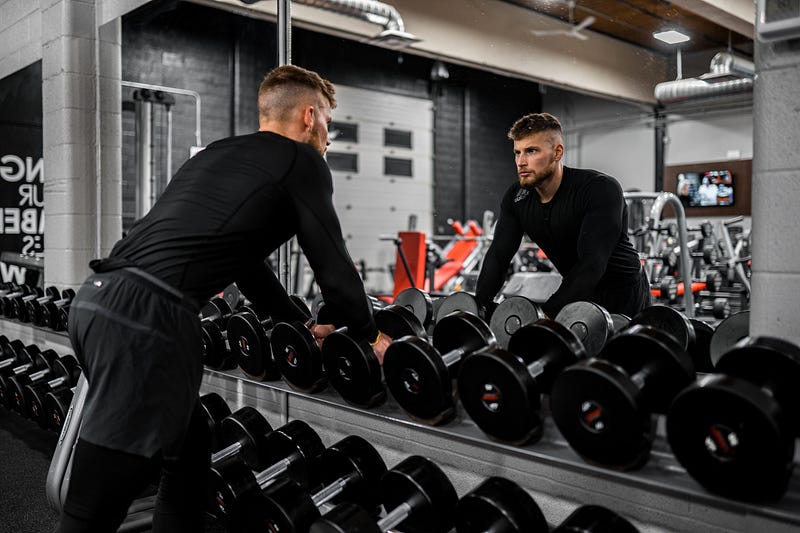
If there’s a mirror, get yourself in front of it and see the muscle working. If there isn’t a mirror or you’re working out muscles you can’t see (like the back), your imagination has to suffice.
“Whatever you do, really try to connect with the muscle.”
The advantage of doing this is that you really connect with the muscle and hence cause better muscle activation. And better activation = more muscle growth.
Over time, this will also help you develop a good mind-muscle connection, which helps you better connect with and target a particular muscle.
This means that when you are performing the bench press, you can focus on and target the chest better. And prevent your shoulders or triceps from getting involved too much.
This tweak has helped my triceps a lot. I used to struggle to even feel them earlier but after consistently performing tricep extensions in front of a mirror, I’m now able to connect properly with them.
So, see in the mirror or visualize in your mind — whatever you do, really try toconnect with the muscle.
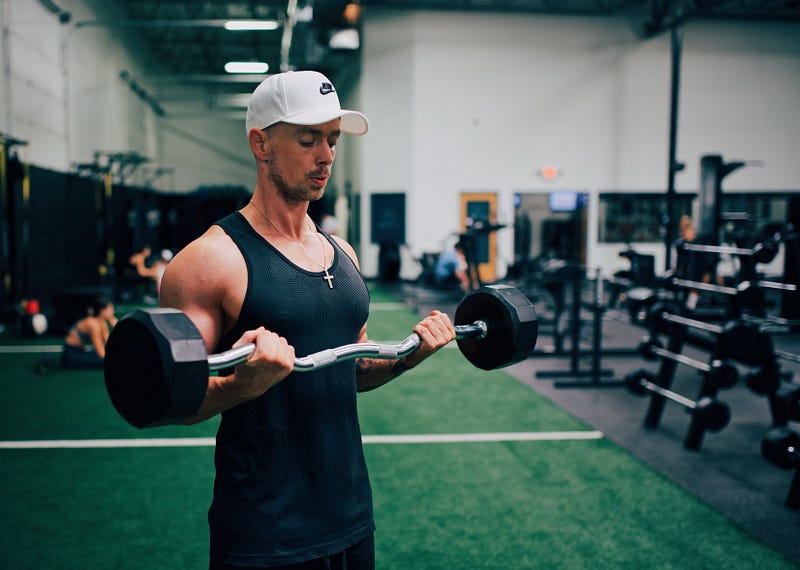
I see very few people harnessing the power of the negative or eccentric portion of a rep.
While one is sternum bouncing a barbell off his chest, another is cracking the gym floor open with every deadlift rep. It’s probably thanks to the trite “Stay away from negativity” advice.
So, harness the power of the negative — control the weight and don’t just let the weight drop. No more sternum bouncing or cracking the gym floor.
#4—Push Past Failure Using Rest-Pause Reps
“Train close to failure” is one of the most touted pieces of fitness advice. And it is good advice — as it’s only when you train close to failure that you optimally stimulate muscle growth.
But sometimes, pushing past failure can help you eke out that extra muscle growth. Rest-pause reps are one of the best ways to do just that.
It’s simple — once you reach failure on a set, instead of stopping completely, you rest for a few seconds and try to get in a few more reps.
“Pushing past failure can help you eke out that extra muscle growth.”
To really benefit from these, don’t perform rest-pause reps on every set. That would cause over-training and hamper your progress. What I do and suggest is — Use them only on the last set of every exercise.
So if you’re performing 5 sets of the flat bench press. On the last set, once you hit failure, rack the weight, wait for 10–15 seconds, and squeeze out a few more reps.
This way, you can harness the benefits of pushing past failure without over-training.
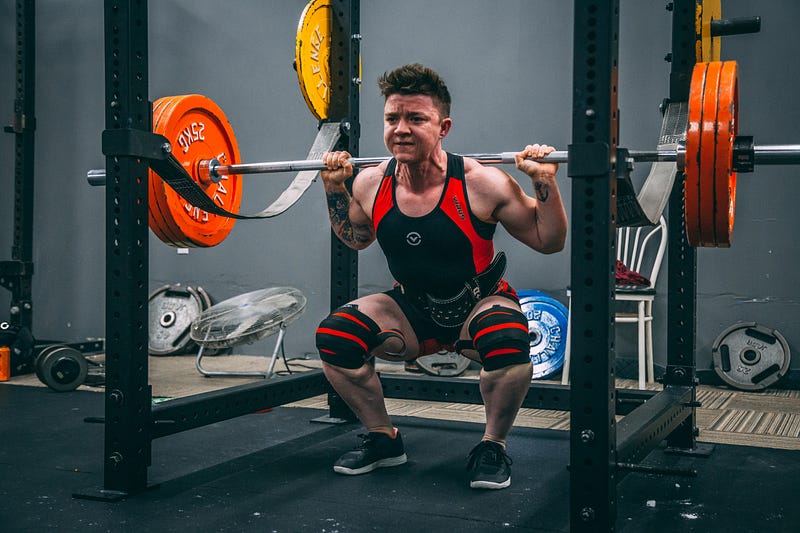
In this position, the muscle is completely shortened and is under maximum tension.
By pausing for a second or two, you increase the time under tension, specifically under maximum tension which is even better. And as we saw earlier — a higher time under tension = more muscle growth.
Moreover, pausing eliminates any momentum and forces you to use a stricter form. This again boosts muscle growth.
Bonus — Pre-Exhaust the Muscle
I didn’t include this one in the main list as it is a double-edged sword.
Pre-exhausting a muscle means that you perform a set of an isolation exercise before performing the main compound exercise. For example, a set of cable chest flies before the bench press.
“So the tricky part is hitting the isolation exercise at the right intensity.”
The benefit is that since the muscle is already well activated thanks to the isolation exercise; you tend to use and stimulate it more during the compound one.
But if the isolation set is too intense, the muscle is battered and the assisting muscles take over the compound set.
So the tricky part is hitting the isolation exercise at the right intensity- not so hard that you batter the muscle and not so less that it’s barely stimulated.
But if performed correctly, you can definitely focus on and hit the target muscle much harder than you usually would.
Control the negative. Don’t just slam or drop the weight after every rep but lower it under control.
See in the mirror or visualize the muscle being worked. And really try to focus and connect with it.
Use rest-pause reps. On the last set of every exercise, don’t stop when you hit failure. Rest for a few seconds and try to squeeze out a few more reps.
Make your warmup sets explosive. Treat your warmup sets seriously and perform them in an explosive but controlled manner.
Pause every rep for a second or two when you reach peak contraction. For example, at the bottom of a bench press or the top of a bicep curl.
Pre-exhaust the target muscle by performing a medium intensity set of an isolation exercise before you perform a compound exercise.
Thanks for reading! If you enjoyed this, consider joining A Better Life. It’s free! You’ll receive my best posts and a weekly newsletter called Sunday Self-Scaler to help kick your week off to a good start. Also, here are a few similar articles you might enjoy,