
If I Was Forced to Do only 4 Exercises for The Rest of My Life, I Would Do These
Your entire body’s musculature can be worked out with just these four
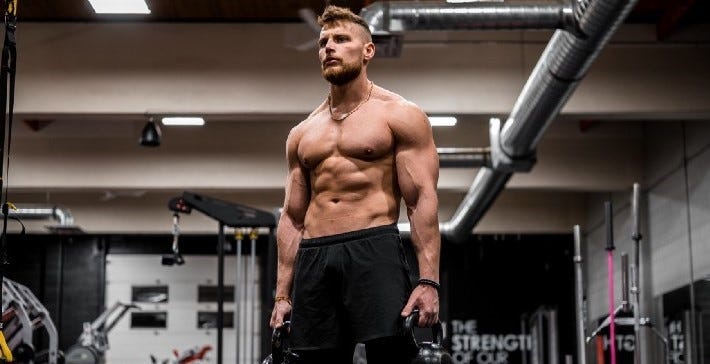
The first time I set foot in a gym, I was a skinny fat teenager that knew nothing about anything related to fitness. It’s been four years now and my journey so far has seen me make a lot of mistakes and learn quite a bit.
Looking back, one thing that really strikes me is the sheer number of exercises I used to do for each muscle group. It was to “target” the muscle from “different angles”.
Absolute bullsh*t.
“When it comes to exercises, you don’t need a lot — in fact, less is even better.”
I remember doing 7 different exercises for biceps but now, with only one or two my results are much better.
When it comes to exercises, you don’t need a lot — in fact, less is even better. The entire body can be trained with just 4 exercises. Yes. I am not kidding. Without further ado, here they are.
The Barbell Conventional Deadlift
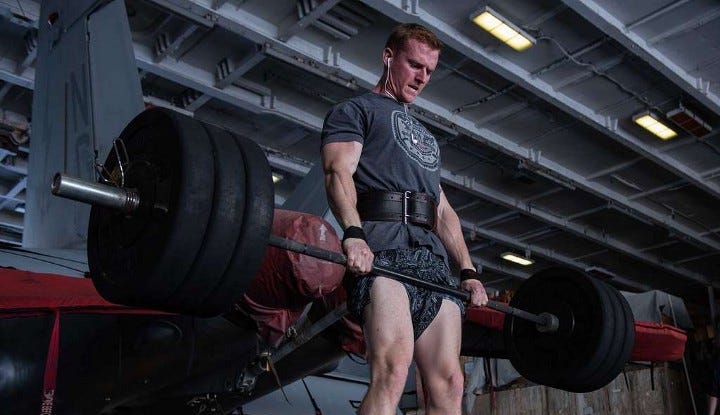
The barbell deadlift is called the king of all exercises for a reason — it works the entire posterior chain, the forearms, the triceps, and almost every other muscle in the body.
The fact that the deadlift works such a large number of muscles also means that it expends a lot of calories, improves intermuscular coordination, and stimulates the release of anabolic hormones such as Testosterone and Growth Hormone (GH).
I didn’t deadlift for the first two years of my fitness journey and once I started, it didn’t take long for me to see a visible difference in my back and to be honest, my entire body’s musculature.
As someone that primarily does the sumo deadlift, the reason I chose the conventional deadlift instead was — it puts more emphasis on the hamstrings and the lower back.
Sumo puts more emphasis on the quads and glutes but with the barbell squat being on this list, those muscle groups are taken care of.
Here’s an excellent video on mastering the form of the conventional deadlift.
Barbell Back Squat
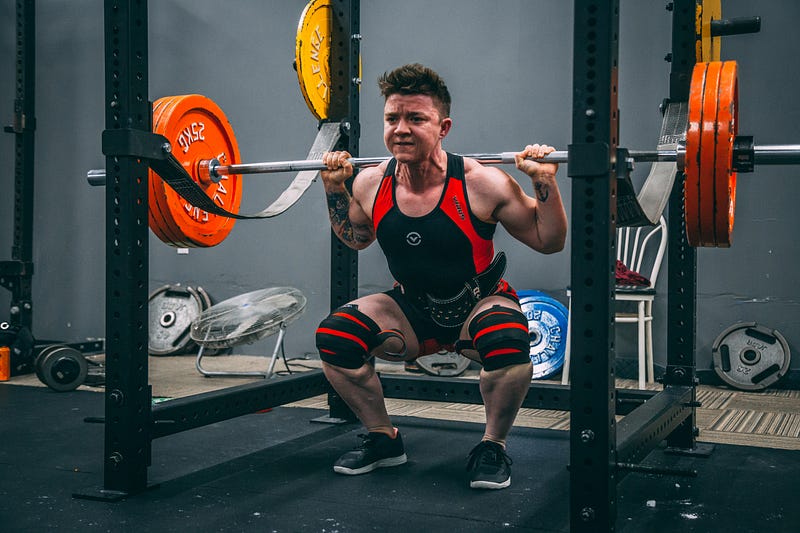
If the deadlift is the king, the squat is the queen of all exercises. This exercise is unarguably the best lower body exercise out there — primarily working your quadriceps (thighs) and glutes (buttocks) and secondarily working your hamstrings (the back of your thighs) and calves.
It also recruits much of the upper body musculature to hold and stabilize the weight. So just like the deadlift, even the squat uses a large number of muscles — so it has the same benefits we talked about earlier.
“A couple of sets of heavy squats is much more of a leg day than a bunch of isolation exercises.”
I didn’t train my legs for the first two years and even after I started, I did only leg presses and other isolation exercises. My legs didn’t show much growth then.
It was only after I started barbell squatting that my legs started to actually grow. To this day, I swear by squatting — a couple of sets of heavy squats is much more of a leg day than a bunch of isolation exercises.
Here’s an excellent video on mastering the form of the barbell squat.
Weighted Pullup
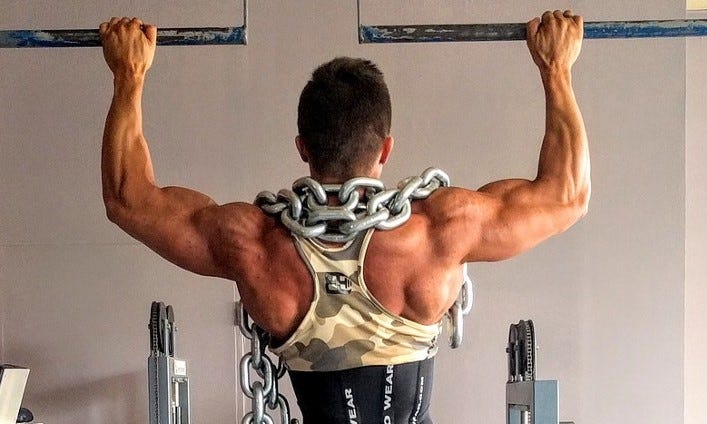
This is in my opinion the number one exercise you can do for your back. Here’s an excellent video on learning and mastering its form.
It was when the quarantine started and I had to make do with working out at home, that I really started doing weighted pullups.
My back exploded in width, not literally but yes, the difference was phenomenal. No, lat pulldowns don’t even come close despite being similar.
“So, python arms, cobra back, and rock hard abs all with this one exercise!”
The pullup works pretty much the entire back musculature except for the spinal erectors but the deadlift takes care of that. So pullup+deadlift = complete back development.
What about barbell rows? Well, they can definitely augment your back training but aren’t necessary as strength coach Alec Enkiri explains.
Pullup + Deadlift = Complete back development
Also, weighted pull-ups have been found to be the best exercise for the core, much better than crunches or planks. They are also one of the best exercises for the biceps.
So, python arms, cobra back, and rock hard abs all with this one exercise!
Incline Dumbbell Bench Press
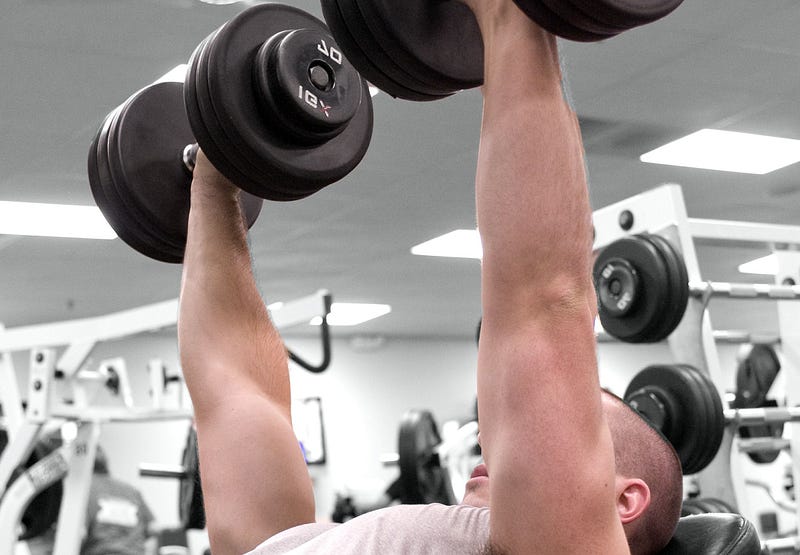
After quite some research and thinking, I chose this over the flat barbell bench press. The main reasons were — more shoulder and upper chest activation, more range of motion (ROM), and a lesser chance of injury.
This exercise is the squat of the upper body and adequately works your triceps, chest, and shoulders. It also uses the muscles in the back as stabilizers.
“This exercise is the squat of the upper body.”
The only downside is that progressing on this isn’t as convenient as the barbell bench press— with barbell movements, you can increase the weight even by tiny amounts(even 0.25 kgs) while with dumbbells, you are limited by the weight of the dumbbells.
But the benefits far outweigh this minor downside. Here’s an excellent video on the correct form of this exercise.
Work Out Just 3 Hours a Week
If you are running short on time, you can use just these 4 exercises to form your workout plan to get the most bang for your buck.
Based on the optimal muscle training frequency and Renaissance Periodization’s volume recommendations, I want to offer you a sample workout plan.
This doesn’t have to be final, this is just a good starting point. Feel free to tweak it or add in exercises as you wish.
The Workout Plan
With this, you will be working out on alternate days, so only three days a week —either (Monday, Wednesday, and Friday) or (Tuesday, Thursday, Saturday).
There are two workouts A and B and you’ll alternate them. So ABA one week and BAB the next and so on. Each workout will last about an hour so you will be working out just 3 hours a week!
Workout A:
- Warmup with this excellent routine.
- Conventional Deadlift: 4–6 sets of 3 to 5 reps.
- Weighted Pullups: 4–6 sets of 4 to 6 reps.
- Barbell Back Squats: 2–4 sets of 4 to 12 reps.
- Incline Dumbbell Press: 2–4 sets of 6–15 reps.
Workout B:
- Warmup with this excellent routine.
- Incline Dumbbell Press: 4–6 sets of 4 to 8 reps.
- Barbell Back Squats: 4–6 sets of 3 to 5 reps
- Weighted Pullups: 2–4 sets of 4 to 8 reps.
- Conventional Deadlift: 2–4 sets of 6–12 reps.
A few things to keep in mind
- Do not ignore the warm-up. Warming up is crucial to prevent injuries and prepare you physically and mentally for the workout. A few weeks back, I severely cramped my hamstring when I skipped the warmup as I was in a “hurry.”
- Stay hydrated. You don’t have to down a gallon, just have a few sips of water after every set. When I recently blacked out midset due to inadequate hydration, it was only through sheer luck that I didn’t get injured.
- Use proper form to prevent injuries and maximize progress. For years, I made the mistake of “ego-lifting” or lifting with bad form. Only when I cleaned up my form, did my rate of progress drastically increase.
- Track every workout. I use my phone’s note-taking app to track mine. This is essential to progressively overload. Every time you workout, your goal should be to beat your past workout. So after every workout, make sure to jot down the sets, reps, and weights.
- Listen to music. I legit cannot get through a workout without music. Putting on my headphones and blasting some EDM or metal psyches me up, relieves boredom, and makes me go harder. Research has also shown music to have a positive effect on working out.