avatarHailey

Free AI web copilot to create summaries, insights and extended knowledge, download it at here

3831

Abstract

who appreciated his work, and on the other side, people criticized him for exploiting and sensationalizing the suffering of a child.</p><p id="d0e3">No matter how many controversies surrounded the photograph — it still managed to have a profound impact on its observers.</p><p id="5d92">The photo showed the merciless realities of war-torn regions and the effect of extreme poverty and famine.</p><p id="f8c5">The photograph has become an iconic symbol of these struggles and has been widely circulated and studied, sparking discussions and raising awareness about the devastating effects of famine and war on innocent children.</p><p id="eed5">In today’s world, the Vulture and the Little Girl remains a significant image that evokes strong emotions and prompts reflection on the inequalities and hardships that persist across the globe.</p><h1 id="0663">3. Migrant Mother Who Sacrificed It All</h1><figure id="48b6"><img src="https://cdn-images-1.readmedium.com/v2/resize:fit:800/0*XhLBN9ORIeO28Jgm"><figcaption>Image Source — <a href="https://upload.wikimedia.org/wikipedia/commons/6/65/Migrant-mother-02_photographie_originale_coloris%C3%A9e_%28crop%29.jpg">Wiki</a></figcaption></figure><p id="901e">The photograph known as the “Migrant Mother,” taken by Dorothea Lange in 1936 during the Great Depression, remains a significant image in American history.</p><p id="97eb">It is a symbol of the struggles endured by thousands of Americans during that time, depicting the poverty, hunger, and difficulties faced by families.</p><p id="af0f">The woman in the photograph is Florence Owens Thompson, a Native American mother who had six children to support after her husband passed away.</p><p id="20ad">She worked hard, picking cotton and doing other agricultural jobs to make ends meet.</p><p id="bf28">Although Thompson and her children disagreed with some of the details in Lange’s account, the photo still stands as a testament to her maternal sacrifice and dignity as a human being.</p><p id="c3b2">Despite economic hardships, she continued to move from place to place in search of work.</p><p id="875f">Florence Thompson didn’t even stop even when she was diagnosed with cancer and other heart problems, she remained strong and determined until her death in 1983.</p><p id="3513">The sacrifices made by mothers like Florence Owens Thompson during the Great Depression continue to inspire people today.</p><p id="229c">The photograph remains a reminder of the difficult times and the resilience of those who lived through them.</p><h1 id="7838">4. Dead Toddler By The Beach</h1><figure id="8326"><img src="https://cdn-images-1.readmedium.com/v2/resize:fit:800/0*LNZMsnbEKIJbP9tC"><figcaption>Image Source — <a href="https://upload.wikimedia.org/wikipedia/en/7/70/Alan_Kurdi_lifeless_body.jpg">Wiki</a></figcaption></figure><p id="c47d">Alan Kurdi, a two-year-old Syrian toddler who drowned in the Mediterranean Sea in 2015 together with his mother and sibling.</p><p id="8321">This heartbreaking image captured by Turkish journalist Nilüfer Demir quickly went viral and prompted global responses to the refugee crisis.</p><p id="640e">Kurdi and his family were refugees trying to reach Europe from Turkey, with Canada being their intended destination.</p><p id="b686">The pain of the family became a contentious subject during the 2015 Canadian federal election.</p><p id="986f">Kurdi’s photo stands as a reminder of the current refugee crisis and the challenging situation that many families continue to experience despite the fact that the tragedy occurred a number of years ago.</p><p id="00ba">It highlights the need for compassion and action to support those seeking refuge from war and persecution.</p><p id="1583">One cannot help but feel sad and depressed when one considers Kurdi’s passing. It is a tragic death that

Options

ought never to have happened.</p><p id="20d4">The story of this innocent young boy reminds us that every refugee number conceals actual individuals who were compelled to flee their homes and have sincere goals and aspirations.</p><h1 id="9f5c">5. Segregated Waterfall</h1><figure id="22ce"><img src="https://cdn-images-1.readmedium.com/v2/resize:fit:800/0*dl5nZ1f1zDVl2WJT"><figcaption>Image Source — <a href="https://www.flickr.com/photos/64067698@N06/6189330179">Flickr</a></figcaption></figure><p id="1785">Realizing how much injustice and inequality there was in America during the segregation era is devastating.</p><p id="122f">The photograph by Elliot Erwitt, taken in North Carolina, USA, in 1950, demonstrates how black and white people were segregated even in the most basic settings, such as water fountains.</p><p id="87b3">The visual of a ‘white’ fountain being visibly more opulent than a ‘hued’ fountain serves as a stark reminder of the stark differences between the two populations’ lifestyles.</p><p id="ec50">The man’s expression as he fixes his attention on the “white” fountain speaks for itself.</p><p id="9f15">It’s hard to imagine a time when everything was segregated, which also includes places of worship like churches.</p><p id="d1e8">Following the Civil War, America’s discrimination situation deteriorated, and it was more obvious during the World War II era.</p><h1 id="38b5">Final Words</h1><p id="a8aa">With the power of photography, we may capture and protect moments of immense emotional worth.</p><p id="0bd8">Photos have the ability to evoke strong emotions in us, whether they are freezing moments of love, pleasure, or pain or documenting the splendor of nature.</p><p id="9a94">They serve as tangible reminders of our past, experiences, and connections, enabling us to repeatedly revisit those memories.</p><p id="4fde">More from the author:</p><div id="8427" class="link-block"> <a href="https://readmedium.com/4-mysterious-wwii-shipwrecks-you-need-to-see-d161ec3ce38b"> <div> <div> <h2>4 Mysterious WWII Shipwrecks You Need to See</h2> <div><h3>Fascinating WWII shipwrecks and their untold stories.</h3></div> <div><p>medium.com</p></div> </div> <div> <div style="background-image: url(https://miro.readmedium.com/v2/resize:fit:320/1*XpPPA2MiRQoL1NF5l9ngnA.png)"></div> </div> </div> </a> </div><div id="aff9" class="link-block"> <a href="https://readmedium.com/4-ordinary-photos-with-extraordinary-stories-in-history-fb1f749d00c2"> <div> <div> <h2>4 Ordinary Photos With Extraordinary Stories In History</h2> <div><h3>Surprising Backstories You Missed Behind These Simple Photos.</h3></div> <div><p>medium.com</p></div> </div> <div> <div style="background-image: url(https://miro.readmedium.com/v2/resize:fit:320/1*8kZpkWO0G8RuCK8_gA2k5Q.jpeg)"></div> </div> </div> </a> </div><div id="8b47" class="link-block"> <a href="https://readmedium.com/5-mind-blowing-space-images-from-2022-that-will-leave-you-stunned-b0d94bf5fa53"> <div> <div> <h2>5 Mind-Blowing Space Images from 2022 That Will Leave You Stunned</h2> <div><h3>Unforgettable shots of cosmic wonders.</h3></div> <div><p>medium.com</p></div> </div> <div> <div style="background-image: url(https://miro.readmedium.com/v2/resize:fit:320/1*_FGoTehWuvfiwSLtS3j03g.png)"></div> </div> </div> </a> </div></article></body>

5 Powerful Photographs That Will Stir Your Soul & Bring Tears to Your Eyes

Emotionally-charged images that will leave a lasting impression.
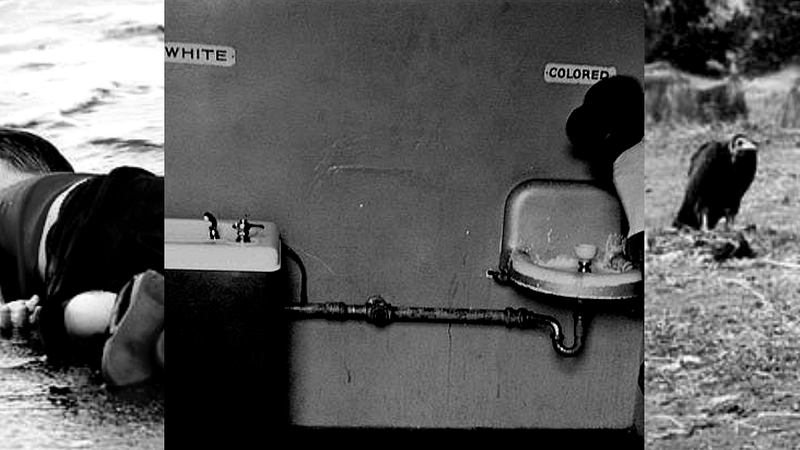
Source: Image from the author

We all know there are some photos out there which are worth a thousand words — after these, there are those which have the ability to touch you emotionally.

From heartwarming to heartbreaking, these photos have the ability to touch us in a way that words simply can’t.

These powerful photos have captured some of the most intense moments in history. They show scenes of love, happiness, tragedy, and heartbreak.

Some of these photos were snapped by common folks, while on the other hand, there were those which were not only popular during the time they were photographed.

But even today, they still have the ability to captivate their observer.

No matter what, all of them have the power to make you feel a certain kind of way — emotionally, that is.

So you better be ready to have your emotions in check and heartstrings tugged before reading the article below.

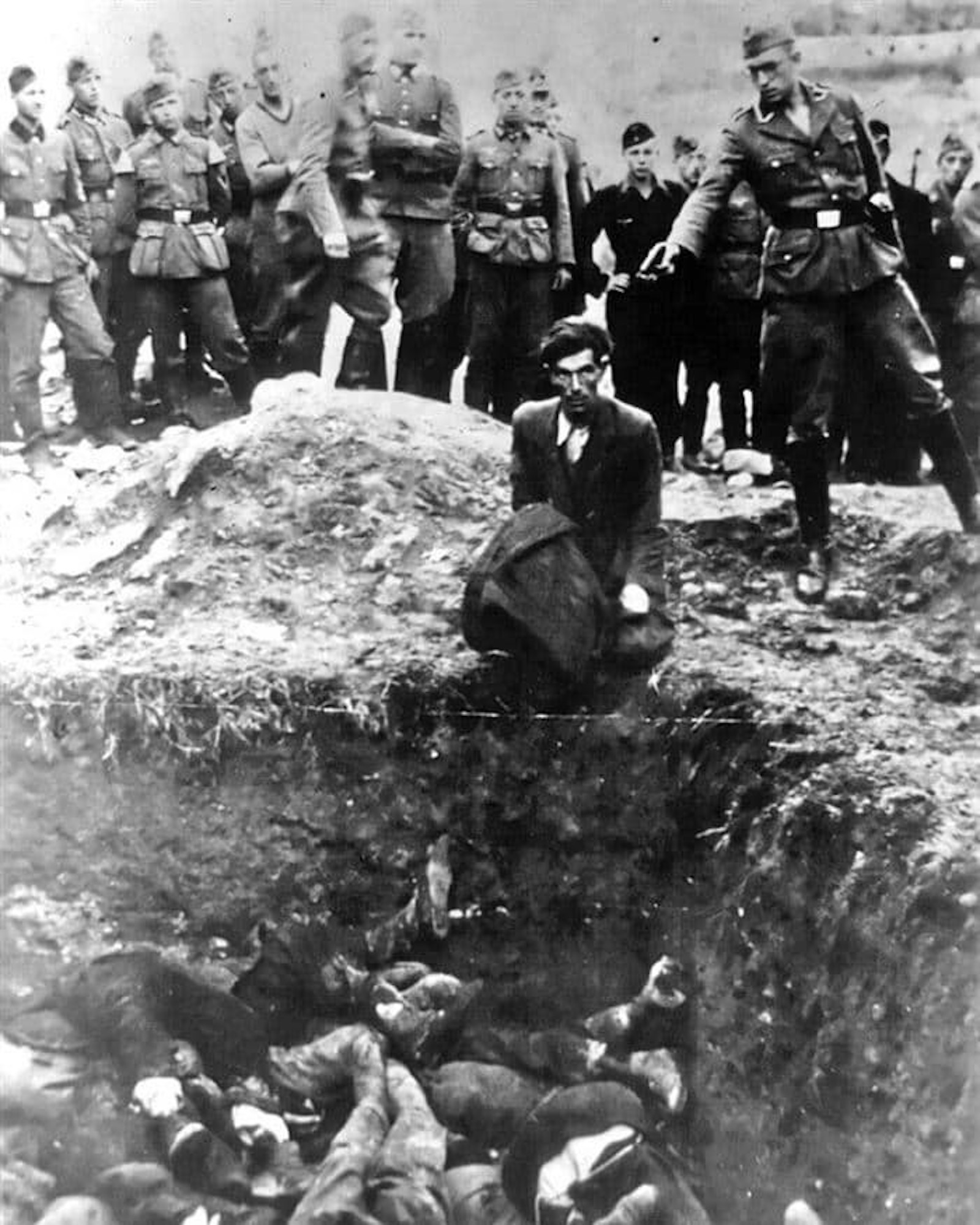
1. The Last Jew Of Vinnitsa
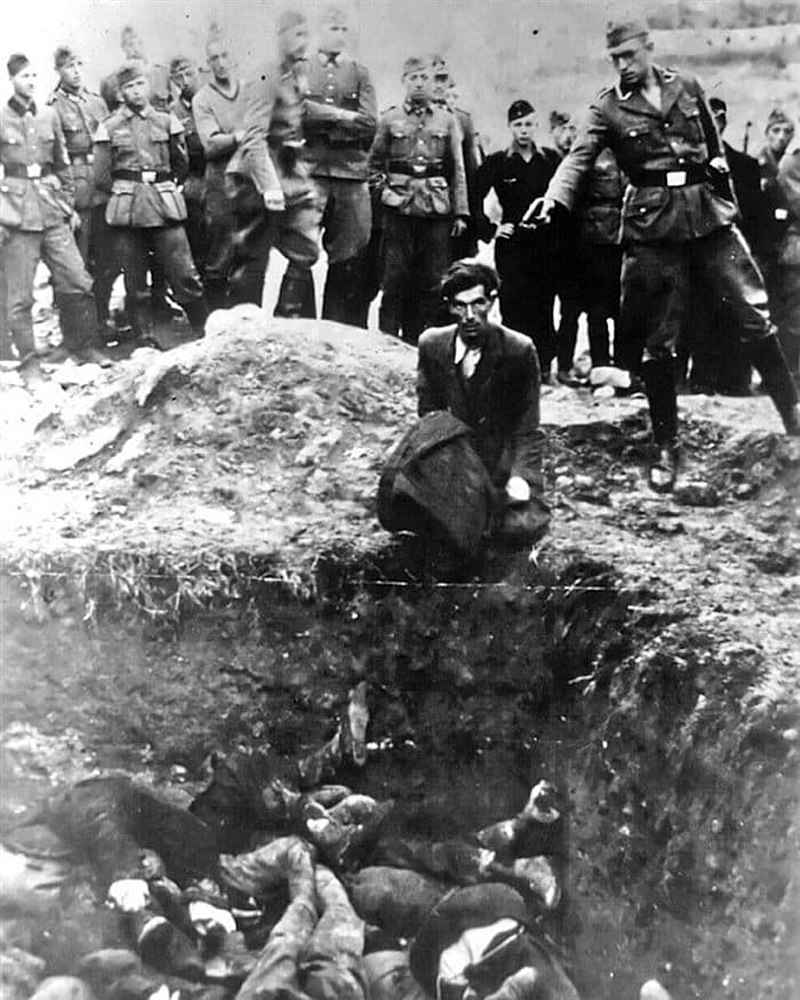
Image Source — Wikimedia Commons

The Last Jew in Vinnitsa is a photograph from the Holocaust era in Ukraine.

The picture shows an unknown Jewish man kneeling beside a mass grave containing bodies, about to be executed by a member of Einsatzgruppe D, a mobile death squad of the Nazi SS. In the background, a group of SS and Reich Labour Service men can be seen watching.

This photo remains significant today as a stark reminder of the atrocities committed during the Holocaust.

It is a vivid reminder and a symbol of horrors which were inflicted upon people — just because they were from a different faith — it was undoubtedly one of the darkest periods in modern history.

The image portrays a sense of terror and despair as the man kneels beside the grave filled with the bodies of his fellow Jews.

The group of SS and Reich Labour Service men in the background only adds to the horror of the scene.

No matter how old the photograph still continues to remind us of the horrors the people had to go through during the Holocaust.

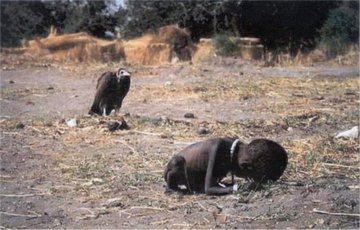
2. The Little Girl And The Lurking Vulture
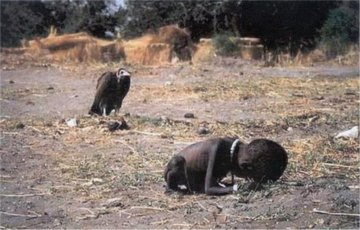
Image Source — Wiki

The Vulture and the Little Girl is a photograph that has gained popularity for its haunting and thought-provoking depiction of poverty and suffering.

The photo, captured by Kevin Carter, was first published in The New York Times in 1993; it shows a frail child collapsed in the foreground while a vulture lurks nearby.

The dying child, which is believed to be a girl, was attempting to reach the feeding center of the United Nations in Ayod, Sudan.

The photo became very popular, and in the year that followed, Carter won numerous awards for his photo, which also included the Pulitzer Prize of 1994.

Carter was stuck between emotions because, on one, there were those who appreciated his work, and on the other side, people criticized him for exploiting and sensationalizing the suffering of a child.

No matter how many controversies surrounded the photograph — it still managed to have a profound impact on its observers.

The photo showed the merciless realities of war-torn regions and the effect of extreme poverty and famine.

The photograph has become an iconic symbol of these struggles and has been widely circulated and studied, sparking discussions and raising awareness about the devastating effects of famine and war on innocent children.

In today’s world, the Vulture and the Little Girl remains a significant image that evokes strong emotions and prompts reflection on the inequalities and hardships that persist across the globe.

3. Migrant Mother Who Sacrificed It All
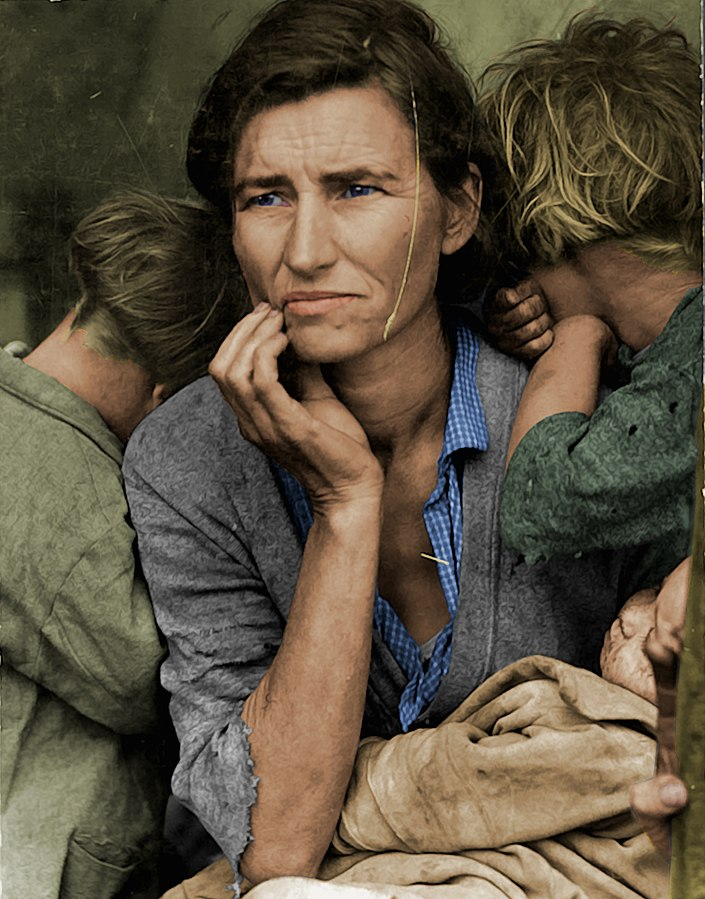
Image Source — Wiki

The photograph known as the “Migrant Mother,” taken by Dorothea Lange in 1936 during the Great Depression, remains a significant image in American history.

It is a symbol of the struggles endured by thousands of Americans during that time, depicting the poverty, hunger, and difficulties faced by families.

The woman in the photograph is Florence Owens Thompson, a Native American mother who had six children to support after her husband passed away.

She worked hard, picking cotton and doing other agricultural jobs to make ends meet.

Although Thompson and her children disagreed with some of the details in Lange’s account, the photo still stands as a testament to her maternal sacrifice and dignity as a human being.

Despite economic hardships, she continued to move from place to place in search of work.

Florence Thompson didn’t even stop even when she was diagnosed with cancer and other heart problems, she remained strong and determined until her death in 1983.

The sacrifices made by mothers like Florence Owens Thompson during the Great Depression continue to inspire people today.

The photograph remains a reminder of the difficult times and the resilience of those who lived through them.

4. Dead Toddler By The Beach
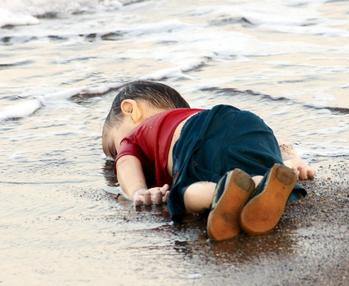
Image Source — Wiki

Alan Kurdi, a two-year-old Syrian toddler who drowned in the Mediterranean Sea in 2015 together with his mother and sibling.

This heartbreaking image captured by Turkish journalist Nilüfer Demir quickly went viral and prompted global responses to the refugee crisis.

Kurdi and his family were refugees trying to reach Europe from Turkey, with Canada being their intended destination.

The pain of the family became a contentious subject during the 2015 Canadian federal election.

Kurdi’s photo stands as a reminder of the current refugee crisis and the challenging situation that many families continue to experience despite the fact that the tragedy occurred a number of years ago.

It highlights the need for compassion and action to support those seeking refuge from war and persecution.

One cannot help but feel sad and depressed when one considers Kurdi’s passing. It is a tragic death that ought never to have happened.

The story of this innocent young boy reminds us that every refugee number conceals actual individuals who were compelled to flee their homes and have sincere goals and aspirations.

5. Segregated Waterfall

Image Source — Flickr

Realizing how much injustice and inequality there was in America during the segregation era is devastating.

The photograph by Elliot Erwitt, taken in North Carolina, USA, in 1950, demonstrates how black and white people were segregated even in the most basic settings, such as water fountains.

The visual of a ‘white’ fountain being visibly more opulent than a ‘hued’ fountain serves as a stark reminder of the stark differences between the two populations’ lifestyles.

The man’s expression as he fixes his attention on the “white” fountain speaks for itself.

It’s hard to imagine a time when everything was segregated, which also includes places of worship like churches.

Following the Civil War, America’s discrimination situation deteriorated, and it was more obvious during the World War II era.

Final Words

With the power of photography, we may capture and protect moments of immense emotional worth.

Photos have the ability to evoke strong emotions in us, whether they are freezing moments of love, pleasure, or pain or documenting the splendor of nature.

They serve as tangible reminders of our past, experiences, and connections, enabling us to repeatedly revisit those memories.

More from the author:

History
Culture
Education
Photography
Politics
Recommended from ReadMedium