
4 Ordinary Photos With Extraordinary Stories In History
Surprising Backstories You Missed Behind These Simple Photos.
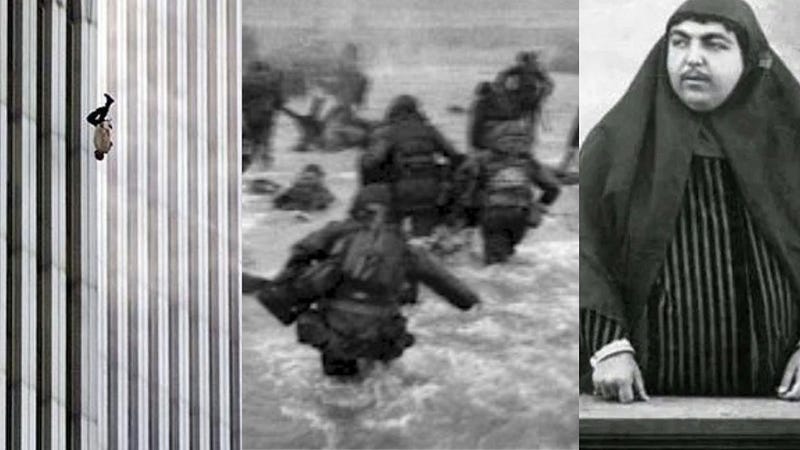
A moment’s essence can be captured and preserved for all time through the art of photography.
It is a powerful tool that has changed the world, helping us define our era and bringing to light issues that might otherwise go overlooked.
Some of the most famous photos have influenced how we see ourselves as people and forced us to face social realities.
These have sparked major concerns about our culture’s direction and the reasons we accept such tragedies.
But truly appreciating the impact and influence of a photograph requires understanding the context behind it.
This is why I have compiled a list of four seemingly mundane photographs that pack an unforgettable emotional punch, each with a remarkable, strange, or sorrowful backstory.
1. The Falling Man Of 9/11
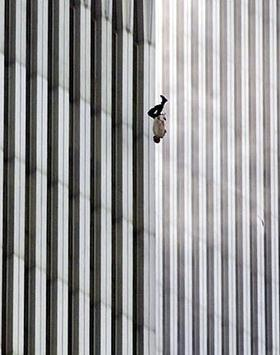
The Falling Man photograph captures a haunting and tragic moment from the September 11 attacks in New York City.
It was taken by Associated Press photographer Richard Drew and depicts a man falling from the World Trade Center’s North Tower.
The man’s name is still unknown, however, it is assumed that he worked at the tower’s top-floor restaurant Windows on the World.
Uncertainty exists over the man’s fall circumstances.
The fire and smoke that had enveloped the top stories may have caused him to jump, or he may have fallen while trying to find a way out. On the day of the attacks, the picture was captured at precisely 9:41:15 A.M.
The photo drew harsh criticism when it was released in international media on the 12th of September, 2001.
The picture was considered disturbing, cold, frightful, and heartless by many readers. The picture, however, has gathered praise throughout time and is now considered a classic form of photojournalism.
As a Time Magazine retrospective noted in 2016, the true power of the photograph lies not in the identity of the man but in what he represents — a symbol of the countless unknown and often forgotten victims of war and violence.
In that sense, the Falling Man has become a makeshift Unknown Soldier, suspended forever in history.
2.D-Day — Magnificent Eleven
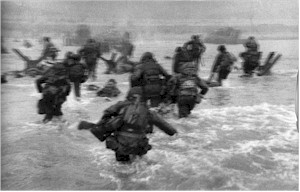
The Magnificent Eleven is a collection of iconic photographs capturing the events of D-Day, June 6th, 1944, shot by the brave war photographer Robert Capa.
Capa was one of the first troops to land on the American invasion beach, Omaha Beach, and he managed to capture the gruesome reality of the situation with his camera.
Capa claimed that he took a staggering 106 photographs while under heavy enemy fire, but unfortunately, all but eleven of them were destroyed in a processing mishap at the Life magazine photo lab in London.
The Magnificent Eleven are the eleven shots that have survived and have come to be known as such.
These are widely considered as some of the most significant and striking photos from World War II.
Countless people have been moved by and inspired by these images, including the famous director Steven Spielberg who used them as inspiration for his masterpiece Saving Private Ryan.
Despite the legendary status of the Magnificent Eleven, recent research has called into question the accuracy of Capa’s account.
There have only allegedly been eleven photographs shot in total, and there is no proof that any of them were destroyed or lost in the processing mishap.
Yet, the Magnificent Eleven’s lasting influence persisted, and these remarkable pictures continue to move and inspire people all over the world.
3.The Iconic Photograph Of Zahra Khanom
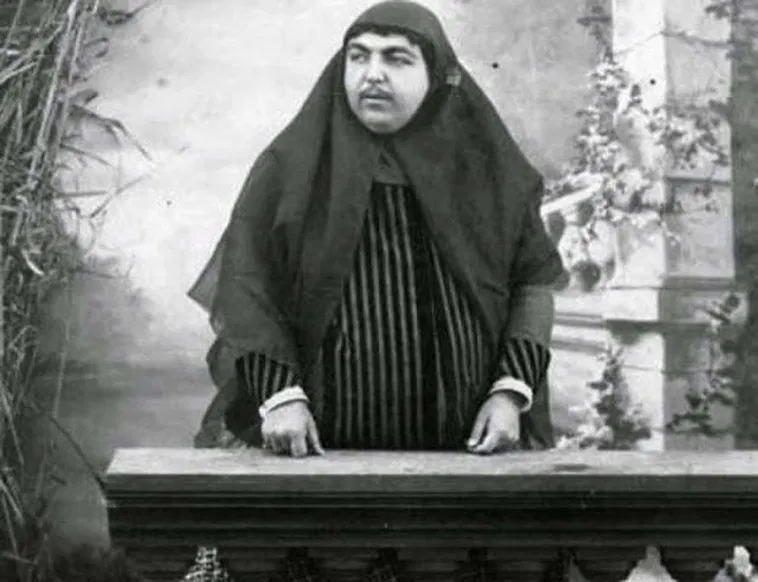
Taj al-Saltaneh, an inspiring figure in Iranian history, was a true pioneer for women’s rights and a proud feminist.
She relentlessly battled for gender equality and women’s rights as a founding member of Iran’s secret Women’s Freedom Society in the early 1900s.
Despite facing immense opposition and societal pressures, Taj al-Saltaneh boldly organized and attended secret women’s rights meetings, often telling her children and grandchildren that she was attending religious sessions.
In a remarkable act of courage, she even led a women’s rights march to parliament and was a fervent supporter of Iran’s constitutional revolution.
Interestingly, Taj al-Saltaneh’s iconic photograph, in which she appears with a mustache, serves as a powerful symbol of her unwavering commitment to equal rights for all.
In a society where women were often discouraged from having facial hair, Taj al-Saltaneh’s bold display of a mustache was a way to challenge societal norms and advocate for gender equality.
The legacy of Taj al-Saltaneh lives on as a testament to the strength of tenacity, bravery, and determination in the fight for women’s rights.
4. The Rotting Farms Of Apple — Chernobyl
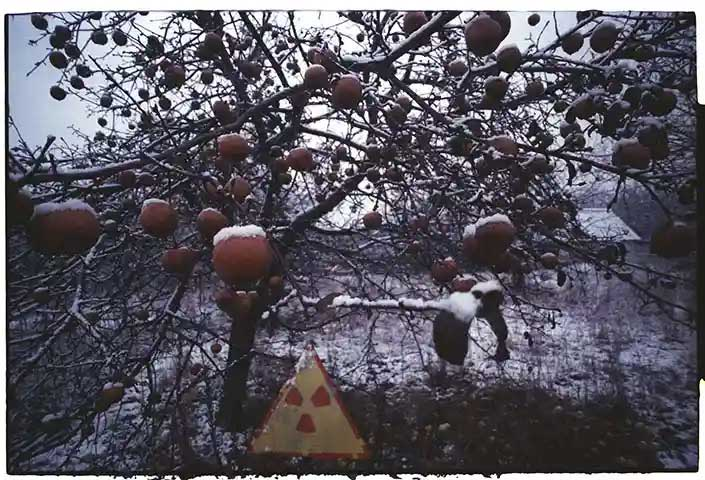
Chernobyl’s unpicked apples serve as a chilling reminder of the terrible incident that occurred more than three decades ago.
One can’t help but cry just thinking about those fruit-laden trees in the abandoned orchards left to rot.
This is a heartbreaking story of lives cut short, homelessness, and an uninhabitable land.
The region around Chernobyl was evacuated after the nuclear disaster, and residents left behind their homes, crops, livelihood, and means of support.
The locals’ former source of food, apples, were radioactively tainted, leaving the government with no other choice but to ban the consumption of these apples.
As a result, the apple trees in the orchards were neglected, left to rot.
The ruins of the once-thriving apple orchards can be seen when walking through Pripyat, a ghost town.
The unpicked apples that are already rotting on the branches of the trees, which are still bearing fruit, serve as a heartbreaking reminder of the tragedy that befell this town.
The apples, which were once a source of sustenance and enjoyment, now lie forgotten, a testament to the lives lost and the hopes shattered of people who once called this land their home.
Conclusion
Photography is a tremendously effective tool for preserving history and sharing a compelling narrative with audiences everywhere.
The interesting story behind some photographs may make them stand out even though they initially appear unimpressive. Understanding a photograph’s impact and significance requires knowledge of its context and history.
Certain photos have even sparked significant social discussions and movements, helping to define our time and bring important topics to light.
More from the author:


