5 Most Devastating Computer Viruses In History That Shook The World
Dark side of tech — worst viruses that wreaked chaos all around.

The world of technology is constantly at risk from viruses.
We’ve witnessed several genuinely catastrophic outbreaks throughout the years that have wreaked havoc on computers and networks around the world.
These notorious viruses have impacted countless businesses and individuals, costing billions of dollars in damages. Let’s see how:
1. WannaCry — Ransomware Costing More Than 4 Billion Dollars

A few years ago, the world was devastated by the globally infamous computer virus known as WannaCry.
In short, WannaCry was a ransomware version that quickly swept over networks, encrypted files on computers, and demanded money in exchange for the key to unlock the encryption.
More than 200,000 computers in 150 countries were compromised when it was initially discovered in May 2017.
The ransomware took use of a Microsoft Windows flaw that had already been patched, but many businesses had neglected to update their computers.
It was able to infect Computers by sending malicious emails and taking advantage of flaws in networked devices like printers and routers.
The damage that WannaCry did was tremendous.
Hospitals, banks, governments, and businesses across the globe were affected.
Some organizations were forced to pay significant sums of money to regain access to their data. The cost of the attack was estimated to have exceeded four billion dollars.
Thankfully, security experts were able to identify the kill switch for the ransomware, which helped in preventing its further spread.
2. ILOVEYOU — A Worm Virus
Onel de Guzman, a college student from the Philippines, developed the ILOVEYOU virus, one of the most infamous computer viruses in history.
Infecting millions of computers and costing billions of dollars in damage, the malware first appeared in May 2000 and spread quickly across the world.
An email attachment that appeared to be a love letter was used to spread the ILOVEYOU virus.
The virus would start to spread to other machines on the network once users opened the attachment.
The virus would then carry on to erase files, replace crucial data, and damage the compromised system in plenty of other ways.
Both businesses and individuals were affected by the virus, which caused widespread panic.
To stop the virus from spreading further, a lot of organizations had to shut down their email systems, and some of those businesses lost important data that they were unable to retrieve.
The ILOVEYOU virus is thought to have cost the global economy more than 10 billion dollars in damages.
It served as a wake-up call for numerous companies and brought attention to the significance of cybersecurity and the demand for improved protection against cyberattacks.
In conclusion, the ILOVEYOU virus was an absolutely devastating cyberattack that severely harmed both individuals and businesses all around the world.
Although the virus was developed by a single college student, it highlighted how extensive disruption and damage can be caused by cyber attacks.
3. Klez — The Repetitive Worm
The nasty malware programme known as Klez initially surfaced in 2001. It targets Windows-based systems and spreads through email attachments.
The virus is infamous for its quick replicating and ability to infect new systems, often resulting in extensive harm to computer networks.
Klez is particularly dangerous due to a number of its characteristics. It has the ability to spoof email addresses, making it appear like the virus is coming from a reliable source.
The virus can alter system files and disable antivirus software, making it hard to locate and remove. Klez caused almost 20 billion dollars’ worth of damage.
Several different Klez versions were released over time, each with advanced functionality and spreading methods.
Sensitive data, such as passwords and credit card details, have been known to be stolen by some virus iterations.
If you want to safeguard yourself against Klez and other viruses it is crucial to keep your computer’s software updated and to refrain from downloading attachments or visiting links from unauthorized or suspicious sources.
However, it’s still essential to install a trustworthy antivirus software and routinely scan your computer for dangers.
4. Sobig — The Name Says it All
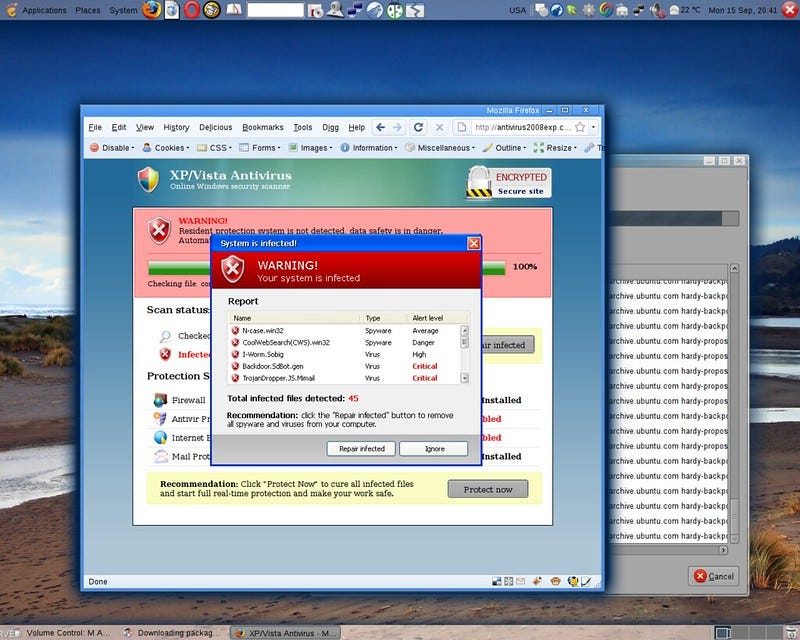
The horrible computer virus Sobig was responsible for serious damage in 2003. It was mainly transmitted via email attachments and had a number of variations that changed over time.
Millions of computers were infected by the virus, which cost over $30 billion in damages.
The virus spread quickly thanks to Sobig’s ability to send infected emails to contacts in a victim’s address book.
Besides this, it had a “backdoor” feature that gave hackers remote access to infected computers.
In the end, the virus was linked to a single person who was never apprehended.
However, a number of people suspected of creating and spreading various virus variants were arrested.
Improved cybersecurity measures are needed, and Sobig also highlighted the necessity of being vigilant against phishing and email scams.
In order to safeguard against similar threats in the future, it also sparked the creation of new antivirus software.
5. MyDoom — The Biggest And The Baddest Of All
One of the most famously known computer viruses in history is called MyDoom.
In just a few days after being first identified in January 2004, it rapidly spread throughout the globe, infecting millions of computers.
MyDoom is regarded as one of the most destructive computer viruses ever produced, resulting in billions of dollars in losses (38 billion to be precise) and interfering with the operations of major businesses and governmental organizations.
MyDoom stood out from all others that had come before it thanks to its phenomenal and relentless ability to spread via email attachments.
MyDoom was designed to spread quickly and widely by replicating itself by sending emails to contacts in the infected computer’s contact list.
This feature made the virus one of the fastest-spreading in history by enabling it to infect millions of computers in just a few days.
A particular website or server could also be targeted by MyDoom for a coordinated denial-of-service (DoS) attack, which would effectively halt it from functioning.
By using infected computers as a part of a sizable botnet, the virus’s developers were able to launch precise attacks on particular websites or servers.
MyDoom spread for years in spite of efforts to eradicate it and get rid of the virus from infected computers.
MyDoom caused a lot of damage to people, organizations, and businesses around the world.
Final Words — Top Computer Viruses
Since the beginning of computing, there have been computer viruses, and they have gotten more advanced and destructive over time.
The most devastating computer viruses in history have compromised sensitive data, disrupted critical services, and cost businesses a great deal of money.
These massive scale viruses act as a reminder of the necessity of strong cybersecurity measures and the significance of being hypervigilant about ever-changing cyberthreats.
It is crucial to stay up to date on the most recent threats and take preventative measures to safeguard our systems and networks against malicious attacks as technology develops.
More from the author: