
5 Honest Ways to Convert Atheists to Christianity
Convince us that God exists by proper approaches

In a previous article, I took a satirical approach and shared some not-so-legitimate methods that Christians could use to win over non-believers. These methods exploit people’s psychological vulnerabilities and use tricky tactics. Sadly, some churches do employ such practices.
In this article, I want to take a more positive approach. I’d like to suggest five legitimate and reasonable methods that Christians, in theory, can use to persuade skeptics and atheists to consider embracing Jesus. I hope that Christians will lean more towards these approaches instead of resorting to effective yet emotionally manipulative tactics.
Why do I say “in theory?” I will explain below.
Meet atheists where they are
When I talk to Christians, one of the most frustrating aspects is that they often make statements that seem perfectly logical to them, but they don’t consider how those statements might sound to atheists.
Atheists, as a rule, are skeptical about the contents of the Bible. However, many Christians either seem unaware of this or simply disregard it. They frequently reference passages from the Bible and anticipate that atheists will readily accept them as historical or true.

I’ve encountered this situation many times. Christians often make statements like, “Do you need evidence for God’s existence? Just look at the world around you; it’s God’s creation. Genesis 1:1 tells us that God created the heavens and the earth.” They believe this is a convincing argument.
Another common assertion is, “Miracles aren’t all that uncommon or extraordinary. Jesus performed numerous miracles during his time on Earth. So it shouldn’t be too difficult to believe in his resurrection as well.”
To Christians hoping to convert atheists: Don’t assume that atheists will automatically accept what you consider obvious. Take the time to engage with where they’re coming from. Atheists tend to be skeptical about the Bible, so it’s crucial to explain why the Bible should be trusted and offer evidence beyond its pages to support your claims. Simply asserting that the Bible is God’s Word because it says so is a form of circular reasoning, which is a logical fallacy.
Maintain consistency in your evaluation standards
One common mistake that Christians often make, regardless of their denomination, is applying double standards in their arguments. They put forth reasons supporting the reliability of the Christian faith, but if another religion were to employ a similar type of argument, they would reject it outright.
For instance, if someone were to claim that Buddhism is true because it’s the foundation of Eastern civilization, most people would readily recognize the flaws in such reasoning. However, I’ve heard popular Christian apologists use a similar line of thinking by asserting that Christianity is the cornerstone of Western civilization as a reason for belief in it.
Here’s another example: Christians often rely on the number of witness accounts to support the historicity of Jesus’ resurrection. In essence, their argument boils down to this — “Some people from ancient times claimed to have seen Jesus rising from the dead or heard about those who did, and I believe them.” However, if you substitute Jesus’ resurrection with miracle claims from other religions and ask Christians if they find such an argument persuasive, they typically say no.
To show you what I mean, consider the eleven individuals who signed testimonies stating that they saw the golden plates from which Joseph Smith translated the Book of Mormon. Three of them even claimed to have seen the angel Moroni. Would these testimonies be enough to convince Christians to believe in the Book of Mormon? For the most part, the answer is a resounding no! Yet, when it comes to confirming Jesus’ resurrection, all they can provide is essentially the same thing: testimonies.
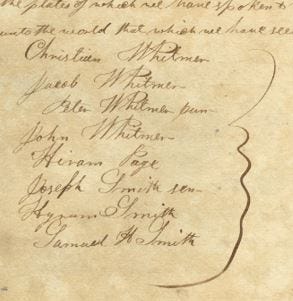

Christians, if you wouldn’t accept the same argument from other religions, don’t use it on atheists, thinking it will convince them of Christianity’s truth. Doing so only makes it clear to us that you are inconsistent in your reasoning.
Understand that you are arguing for supernatural, not ordinary, things
This point is related to the last one. When it comes to other religions, Christians readily distinguish between the level of evidence needed for ordinary claims and extraordinary ones.
For instance, Christians don’t have trouble accepting the historical fact that Muhammad was a real person, born in the sixth century and passed away in the seventh century. This is a straightforward and mundane claim. However, they understandably find the assertion that Muhammad once rode a horse to space and split the moon in half to be utterly far-fetched.
Nonetheless, many Christians remain perplexed as to why atheists wouldn’t accept the physical resurrection of Jesus as a fact, even when they provide historical evidence confirming that Jesus and other figures, like Pontius Pilate, were indeed historical individuals. The fact that Christians find this puzzling is itself quite puzzling to me.
Certainly, the Bible can accurately mention names and places, but it doesn’t make its claims about a bunch of dead people rising from their graves and walking in Jerusalem (Matthew 27:52–53) automatically accurate or believable.
Ordinary claims require ordinary evidence, and extraordinary claims require extraordinary evidence to justify their belief.
Focus on what makes Christianity true, NOT how it benefits you
Imagine how fantastic it would be if Santa Claus were real! You’d get a gift delivered to your house every Christmas. But does the benefit of receiving gifts make it more likely that Santa Claus exists? Not at all!
Yet some Christians use a similar approach when they talk about Jesus. They say that believing in Jesus can wash away your sins, answer your prayers, and provide hope for an afterlife. And you know what? Such tactics work. Many people have converted to Christianity after hearing these comforting messages. But does that mean it’s a proper way to spread the faith?
No!
If your belief in Jesus is solely based on a desire to rid yourself of past guilt or to gain confidence in an afterlife, I will view you as a self-centered thinker and not give your words much weight.
The correct approach to determining the truth of something is by examining the supporting evidence that indicates its truth, rather than relying on how emotionally comforting it would be if it were true.
Verify your assumptions
One of the quickest ways for individual Christians to undermine their credibility is by making unfounded assumptions about atheists without bothering to check.
Nothing is more off-putting than Christians presuming that atheists reject the idea of God because they want to sin or because they hate God. These conclusions aren’t drawn from listening to atheists’ experiences but are merely wild guesses influenced by what they’ve heard in church and their personal biases against atheists.
Over the years, many Christians have asked me why I deconstructed my Christian faith, but it’s been rare to find those who genuinely wanted to listen. Instead, they often attempted to reinterpret my journey to fit their preconceived notions about what ex-Christians or atheists are supposed to be like.
Some of them expressed sympathy, assuming that my deconstruction was a result of past negative experiences with churches, even though I explicitly mentioned that it wasn’t related to how Christians had treated me. Others simply denied that I had ever been a Christian, without knowing anything about my faith journey.
It is as if those Christians are incapable of hearing what other people have to say and prefer to live in their own bubbles.
When someone regularly jumps to conclusions without properly weighing the evidence, it reveals their lack of dependable judgment. If Christians consistently make incorrect judgments about atheists and are not open to being corrected, it essentially conveys the message, “You shouldn’t trust me for anything I say.”
Conclusion
Why do I say that Christians, “in theory,” can follow these five tips at the beginning of this article? It’s because, in practice, I rarely come across Christians who are willing to embrace them when attempting to convince non-believers.
If Christians can put these five tips into practice, they’ll earn my respect, and I’ll be more open to hearing what they have to say. These requests don’t seem unreasonable to me because they apply to many other situations as well.
If you don’t agree with any of them, please don’t talk to me about your Christian faith. Save your time, and mine.