
5 Habits of Stock Market Investors Who Make 30% per Year
Copy and apply what the elite investors are doing

Investors will always strive to find profitable stocks in the market.
Only a few will ever achieve this and outperform the market. And only a small subset of these investors will do so consistently, year after year.
This is not great news for the majority that fall into the bracket of ‘losing investors’. Still, the good news is that this can easily be changed by analysing and implementing the habits of profitable investors, which I will share with you.
I’ve been investing for more than 10 years. After mastering the habits of profitable investing, I turned to assisting others in doing the same since 2018. One common trend has always stood out for me: investors who consistently lose money invariably repeat the same ‘avoidable’ mistakes over and over.
In my experience, and after many years of educating others on the fine art of investing wisely, I’ve identified five simple habits that all successful investors will typically share.
By adopting these five habits, you can steer clear of making impulsive decisions and aimlessly navigating the market. You will have a clear process that will put you into the flow of the market to effortlessly identify profitable stocks year-round.
The key to this isn’t just about having a strong investing strategy but also improving your personal habits.
The five essential habits you will need to adopt:
- Develop and follow a structured plan
- Stick to the plan
- Let go of losing stocks
- Remain focused and take buying signals at all costs
- Follow the trends in the market
Grab These 5 Habits By The Horn
1. Develop and follow a structured plan
The first habit of all successful people, not just investors in the stock market, is having a clearly written, structured plan. If you travel from point A to point B, you must have the steps and directions and know exactly how you will reach your destination. This principle should be applied to your plan.
You have to think about how you will be able to consistently go from owning losing stocks to adding profitable stocks to your portfolio. If you don’t have a plan, the stock-picking process will be random, and you won’t be able to replicate the times when you were able to pick profitable stocks.
When looking at a list of stocks to buy, ask yourself, “Am I basing my buying decisions on a repeatable, successful system?”
If you are not yet consistently successful, you are probably buying stocks because they were:
- Suggested by someone who isn’t a profitable investor.
- A hype stock that everyone seems to be talking about, especially on social media.
- Already trading at an extreme all-time high (which means you are too late to the party).
- A household name stock that you think will make you money.
Plan your success
Developing my own plan has helped me gain, on average, 30% per year in the stock market over the last 10 years. It has also kept me from wiping out my account like others do and is the reason I am consistently profitable.
In your plan, you must state:
- The maximum amount of drawdown you will allow your account to have.
- The risk you will apply to each stock you buy.
- How to search for stocks to invest in.
- How to filter the stocks down to only the best performers.
- How to compound your gains by reinvesting in your profitable stocks.
- When to exit your investments.
My plan contains my strategy so I can easily follow a proven process with little effort. When investing becomes simple, you can get through your daily routine of managing your stock portfolio and then enjoy the rest of your day with your family and loved ones.
2. Stick to the plan
Don’t deviate from what’s winning
Now that your plan is put together, the hardest part is sticking to it. I used to list my plan in bullet points, and then I would stick that list beside my computer. I did that until the key points were embedded in my subconscious. This forced me to stick with the plan through the ups and downs in the market.
You might stray from your plan because your friend has made a significant profit from a stock, triggering a fear of missing out on profiting too. Greed can easily overcome you, a common challenge for new investors. Successful investors learn how to stick with their plan regardless of what external influences come their way.
The discipline to do that is learned over time from the losses incurred from not following the plan. The bruises from the setbacks will either cause you to give up or straighten you up and force you to follow the plan. Once you go through this, you will be set to effortlessly extract profit from the market.
3. Let go of losing stocks
One of the things I see investors struggle with is letting go of losing stocks. I have a friend who had two stocks in his portfolio. One was moving up and making a good profit, and the other was moving down and losing money. He made a strange decision to sell the stock that was in profit and still moving higher, and he chose to keep the one losing money.
I asked him why he did that, and he said he wanted to quickly bank the profit of the rising stock before it started to fall, as he didn’t want to give the profit back to the market. He said he kept the falling stock because he was waiting for it to move back up into profit.
He did the opposite of what you should do. You have to assume that a rising stock will continue to rise and a falling stock will continue to fall. Using that logic, by waiting for the falling stock to move back up, he was waiting for a miracle to happen.
If he had a well-placed stoploss below the stock price, then he would have been able to exit that falling stock with a small loss. Instead, he did not use a stoploss and was literally gambling with his money, letting it freefall. And that’s what he did until the losses became unbearable, and then he exited, learning a tough lesson.
Letting go of falling stocks at the right time will make you profitable even when more stocks in your portfolio are falling than rising.
There are many volatile periods in the market, and at one of those times, I had 12 stocks in my portfolio as the overall market was moving up. The markets turned around shortly after buying the stocks, and I was stopped out of eight of the positions. Each position was a 1% loss, so I incurred an overall 8% loss on my portfolio. The remaining four stocks rebounded and began to climb, so I allowed them to run.
One exited with a 4% profit, another at 7%, one at 8%, and the last at 10%, totaling a profit of 29%. Even after deducting the 8% loss, my portfolio was up by 21%. The gains wouldn’t have offset the losses if I had not cut losses on those 12 stocks.
Cut your losses short and let your winners run.
4. Remain focused and take buying signals at all costs
Stick with your guns
There is always doubt when you are about to pull the trigger to buy a stock. You may hear these voices in your head:
- ‘What if this turns into another loss?’
- ‘But my plumber says this stock is going down’
- ‘I think this stock is overbought. I’ll wait for another opportunity’
You must ignore these voices.
The whole reason for having a plan and strategy is to stick to it. The process you have can only work if you follow it precisely as outlined. You should not worry if your stock choice is wrong and you lose money. As you saw in the previous point, I was wrong more times than I was right and still made a profit. Since it’s hard to predict which stocks will succeed or fail, you must act on all valid buy signals in your plan.
5. Follow the trends in the market
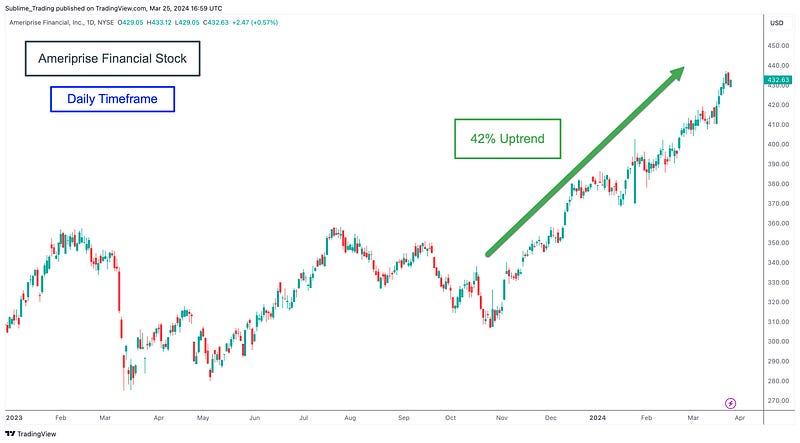
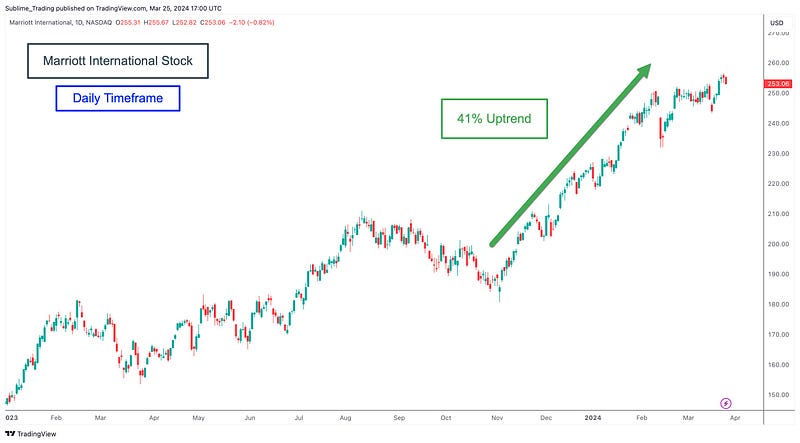
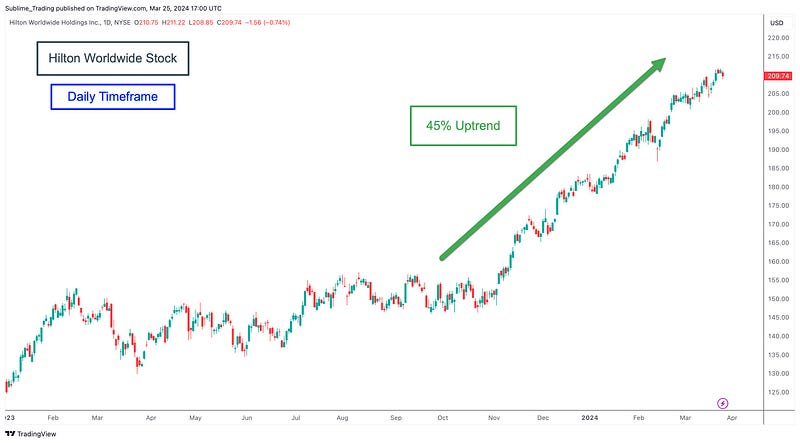
The ability to follow the trends in the market is the final habit you need to have to be a successful investor. I’ve tried many systems in the past, including day trading and swing trading, which focus on buying stocks for a very short period of time. When I discovered and applied the system I use now, which is a trend-following system, profits came easy. The system allows me to follow the trend in the stocks that are moving up, enabling me to ride the bullish momentum until the stock reverses.
Here are some stocks that have allowed me to ride the trends.
Habits in action
You’ve probably heard of Warren Buffet, the stock market guru who was once the wealthiest man in the world. His investing style involves holding stocks for many years, averaging a 23% return annually.
Some investors outperform Buffett, and one in particular tops the list with an average annual return of 120%. This investor is Richard Dennis, and he achieved this top spot by using a trend-following strategy.
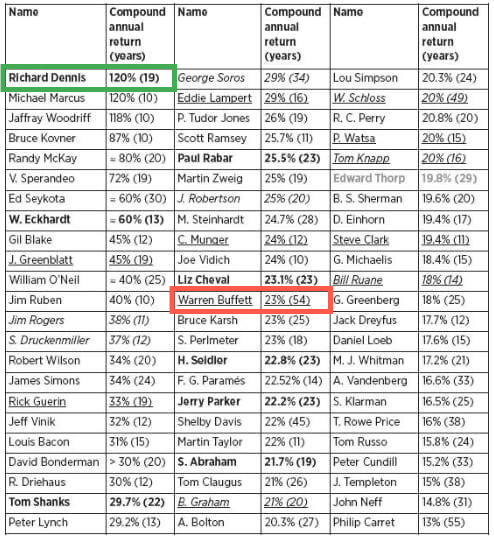
This is a clear demonstration of the system’s true power. It is not mentioned in public discussions because investors are more interested in day trading, get-rich-quick strategies, or Warren Buffett’s long-term approach.
Trend-following sits between these methods. Richard Dennis employs this method to identify and invest in stocks that are on the rise and profitable. The dynamic nature of this approach enables investors to exit when the trend ends and pursue the next opportunity.
Richard Dennis implemented the habits of a successful investor, and the results are clear.
Apply your good habits
To get started, you want to have a structured plan of a trend follower. The rules involve finding stocks moving up, and there’s a simple way of doing this.
Use scanning software to scan the list of thousands of stocks that are breaking above their 52-week highs.
Ensure the stock has a strong history of uptrends. (This will help you filter out the weak stocks).
Apply a 1% risk to the stock.
Have a well-placed stoploss in case the stock starts falling.
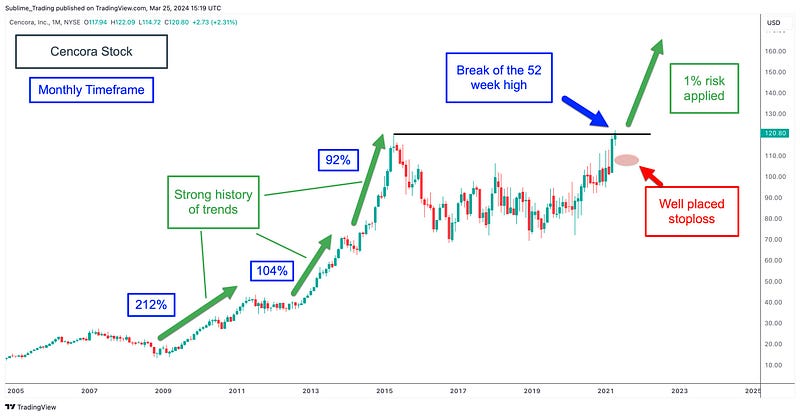
The stock Cencora appeared in my scan because it was breaking above its 52-week high. The history of the stock proved it had performed well in the past, with a trend rising as high as 212%. This suggested there was potential for a profitable opportunity.
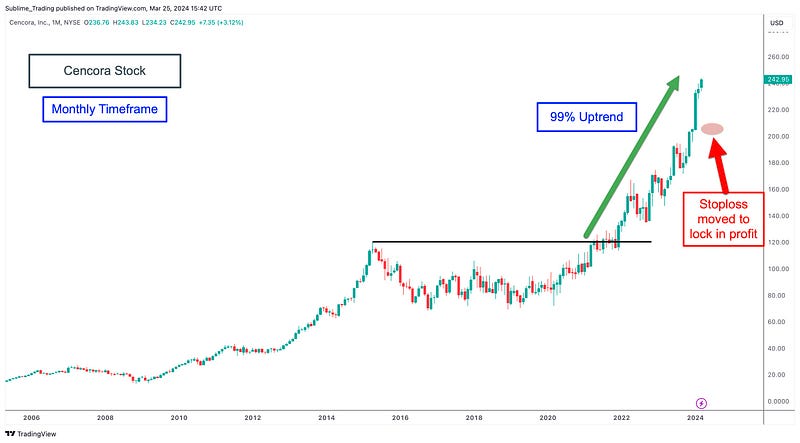
By referencing my investing plan, I knew what to look for. It helped me identify this stock as a strong opportunity in just a few seconds.
The results speak for themselves. This stock went on to rise 99%. Because my plan states where to place my stoploss, I knew exactly where to move my stop as the stock price rose. The stop was eventually moved above the entry level, meaning the position would be stopped out for a profit. It was also placed at a point to give the stock enough room to fluctuate without exiting prematurely.
These habits, shared by successful investors, have benefited me for the following reasons:
- My structured plan determined when and if I would buy this stock.
- I stuck with the plan. This assisted me in managing the investment and being profitable.
- I was ready to let go of the stock if it turned into a loser because I had a well-placed stoploss.
- I took the signal to buy the stock when it appeared. I did not second guess buying it once the stock met my criteria.
- I followed the trend in the market and bought a stock which had previously trended well, having moved up 212% in the past.
Habits navigate you through chaos
Although the market’s fluctuations are uncertain and can be compared to a rough storm at times, achieving success often hinges on internal discipline and unwavering consistency. This, of course, comes with practice.
The whole investing space can be noisy, and you will get influenced into buying stocks for the wrong reasons. However, by applying the habits outlined above, you will be on the right path to finding consistency as a stock market investor.
Visit us at DataDrivenInvestor.com
Subscribe to DDIntel here.
Featured Article:
Join our creator ecosystem here.
DDI Official Telegram Channel: https://t.me/+tafUp6ecEys4YjQ1


