
5 Gruesome Recipes: History of Eating Corpses as Medicine
By eating corpses, people thought they could heal themselves.
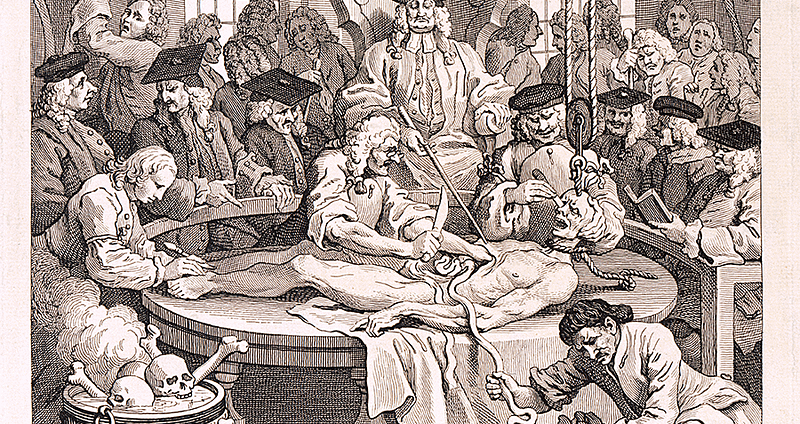
Making use of dead bodies has been common since 25 AD — thanks to the Roman Empire. The wide use of corpse medicine in Europe, stemming from ancient Rome, started in 1200 lasting till the 1890s, giving centuries to scientists for practice.
Experimenting with corpse-related remedies, scientists churned out new weird and exotic recipes for treating nearly anything — from deep wounds to gouts.
If you are wondering that whether these medicines work? Well, only in people’s subconscious mind, and that did the magic. Let’s look at some recipes.
Where people sourced corpses from?
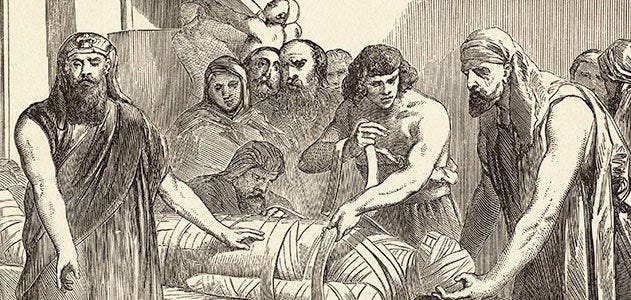
Several facts highlight how from the 16th and 17th Centuries, from scientists to priests, included human parts in their everyday remedies — like blood, bones, and fat, but where did they arrange corpse from?
Knowing about this gross fascination is incomplete until you are not equipped with the source of corpses. Cannibalism took its extreme form when mummies began to go missing. They stole skulls from the burial sites and sold different body parts.
Despite looting and shipping the mummies from Egypt, they always fell short; thus, people local mummified the body. How you ask?
In the 17th Century, Johann Schroeder, a German physician, promoted local mummification as:
Take the fresh, unspotted cadaver of a redheaded man (because in them the blood is thinner and the flesh hence more excellent) aged about twenty-four, who has been executed and died a violent death. Let the corpse lie one day and night in the sun and moon — but the weather must be good. Cut the flesh in pieces and sprinkle it with myrrh and just a little aloe. Then soak it in spirits of wine for several days, hang it up for 6 or 10 hours, soak it again in spirits of wine, then let the pieces dry in dry air in a shady spot. Thus they will be similar to smoked meat and will not stink.
Recipe 1#: Powdered skull
Starting from the skull, it was powdered for preparing head ailment. Not only the commoners are interested in corpse medicine, but Kings also penned a deep interest in the business — the prime example being King Charles II of England.
Interestingly, in the 17th Century Thomas Willis, a known name in brain science introduced a drink for treating apoplexy — a mixture of chocolate and a powdered human skull. King Charles II loved the use of the human skull in a concoction. His “King’s Drops’’ were famous.
The recipe included a human skull in the form of fine dust mixed with alcohol drops. Even he used the drops on his deathbed, hoping for a miracle but to no avail. He left the world, but his “drops” lived.
Throughout the 18th Century, the drops were sold across London. For making the recipe more exotic, physicians experimented with the addition of chocolate coupled with other herbs.
The critical ingredient remained the skull, which was thought to provide a cure for epilepsy and bleeding. The recipe didn’t work for King Charles II, but people yet considered a chance of preventing death.
Recipe #2: Usage of human fat
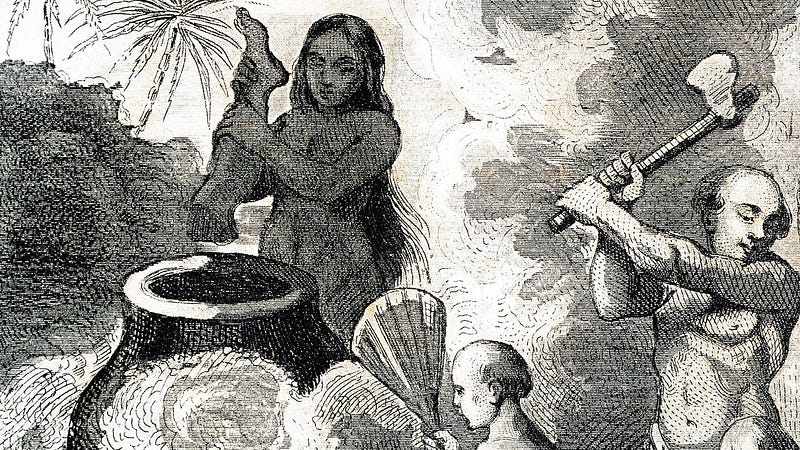
Not only the preservable body parts were utilized, but the non-preservable were also used in corpse medicine. For instance, human fat, together with cinnabar, was thought to cure rabies.
To fix the outer body, people resorted to human fat. German doctor prescribed one to rub the fat into the skin for healing gout. But a specific procedure needed to get followed for preparing human fat for the cure.
Comte Antoine-François de Fourcroy, a French pharmacist, in 18th century detailed the recipe in his work Elements of Chemistry and Natural History.
The recipe was something like this: Cut the fat pieces, separating vessels and membranes. Wash the fat and let it melt on its own before getting solidified into a glazed earthen vessel. The recipe also detailed how “twenty-eight ounces of human fat” accounts for 20 ounces of oil.
Recipe #3: Powdered moss for epilepsy & nosebleeds
People even did not leave the section of the moss that grew of the dug skull — the toupee of the moss, “Usnea”, became a valued additive. People thought the powdered moss cured epilepsy and nosebleeds.
Recipe #4: Liquor of hair & human excrement
People had a recipe for hair growth with which they treated the receding hairline: Liquor of hair. It would regrow the hair, while its powder version would also aid jaundice.
Additionally, treating cataracts was simple back then — blow powdered human excrement into the eyes.
Recipe #5: Use of blood, but of a fresh one
The 16th-Century guy, Paracelsus, a German-Swiss physician, spread the benefits of drinking fresh blood for maintaining the vitality of the body — his followers became so obsessed with blood that they even suggested taking it out of a living body.
The blood needed to be fresh, and this requirement was quite challenging. Back then, the poor could not afford the expensive medicines composed of complex compounds. Thus, they relied on cannibal medicine.
To reap the most benefit of such practices, they used to stand at executions, pay a small amount and drink the warm blood of the condemned — simply gross.
By this single incident, one can perceive the power the executioner of the 16th century possessed. One was labelled as a great healer in the German countries, a social helper who benefited people.
People also had options — raw or cooked blood. Many preferred the blood to be cooked; thus, in 1679, a recipe got introduced from Franciscan apothecaries detailing the procedure to make marmalade.
Blood was considered potent in terms of spiritual context. People believed that blood carried the soul; thus, freshest blood was deemed most effective.
There was a blood preference with respect to gender. People often preferred to consume young men’s blood while the other times’ blood of virginal young women.
Why people loved the use of corpse material?
What theory did people lived mainly by when consuming the corpse material, be it skull or blood?
Well, they sought to preserve their life with others’ death. Believing that insensate life remains in the dead, the people consume those remains, so they get mixed with their body parts and give them intellectual life.
In short, by eating the grounded-up body parts and consuming other fluids, people, in essence, utilizing the dead’s powerful bodily forces for curing their body system. Interesting.
Practice towards its demise
Such a practice evaporated over time but not wholly; its vapors ruled over different parts of the world for centuries. Interestingly, even in the 19th century, people deemed any substance coming from the dead as a healing source.
1893 collection of folk cures details:
“Coffin water is considered good for warts, and the water with which a corpse has been washed has been recently given to a man in Glasgow as a remedy for fits.”
Where does cannibalism fit with today leading medical theories?
Today, people compare it with homoeopathic ideas, detailing like cures like thus powered skulls suggested for head-related ailments and similarly blood for curing blood diseases.
This idea originally sprang from the Paracelsus, “father of toxicology”, whom we have talked earlier about, in the 16th century spread the concept of treating an ailment with a similar cure. He promoted to wear a corpse tooth around the neck for preventing tooth decay — what even?
Today we are cringing at the use of cannibalism, but looking thoroughly around will make us realize how medical practices in us and the UK still use corpses, body parts, yes, in a fancy way — for human blood, and organ donation etc.
But thanks, we are not, at least, living in the horrifying era where the question was not should I eat human flesh, but What sort of flesh should I eat?
References:
https://www.laphamsquarterly.org/roundtable/brief-history-medical-cannibalism
More from author


