
The Married Woman Who Hid Her Lover in the Attic For Over A Decade
One husband, two boyfriends & a lover hidden in her attic — the story Of Dolly Oesterreich.
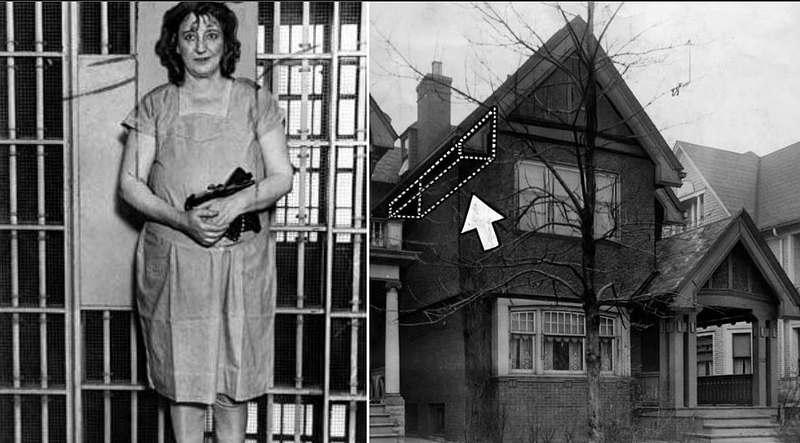
Dolly Oesterreich’s story is strange and will remain strange no matter how liberal the society gets.
Let’s see what made her “stories” of relationship so odd and weird to digest:
It All Started With a Sewing Machine
Dolly Oesterreich, in her thirties, was the wife of Fred Oesterreich, a Milwaukee apron factory owner. The man used to be out for work, spending long hours in his business and the rest in drinking, leaving the needs of Dolly unfulfilled.
The story of her complicated life started in the autumns — thanks to her malfunctioning sewing machine. In 1913, she complained to Fred about the machine, who sent over a machine repairer, Otto Sanhumber, a 17-year-old boy.
The boy worked at Fred’s Factory whom he sent for his family work; little did he know a new business would get started — a cheating business. Otto met Dolly’s alluring sight, and the bizarre affair began.
As time slipped, the relationship’s secrecy began to become a burden — maintaining a relationship by meeting in hotels is not a walk in the park. Soon Dolly Oesterreich shifted the location of their meet-up from hotel rooms to her own bedroom, alarming the neighbors. The nosy ones kept probing about a new boy they had seen hanging around for quite a while. Dolly coined a lie and shushed the neighborhood by labelling Otto as her “vagabond half-brother.”
Attic Idea: The New Weird Arrangement
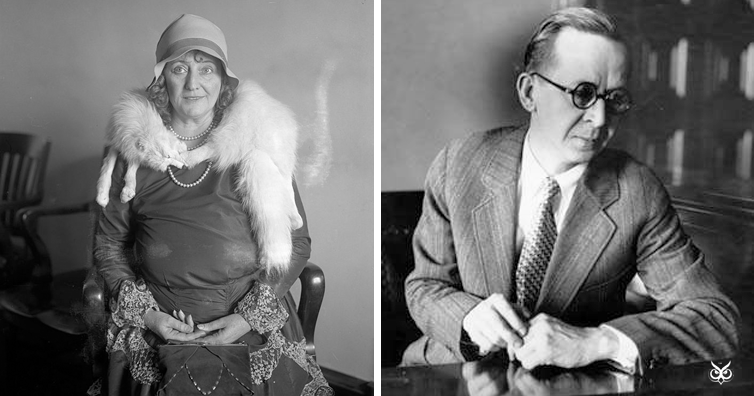
Dolly knew that labelling Otto as her half brother would not keep their secret for long enough. Instead of relying on this weak argument, she devised a plan — giving Otto a residence in her attic. By living in the Oesterreich home, Otto would never be caught going in or coming out, protecting them both from the misery of shame.
Interestingly, blinded by the fold of love, Otto agreed on Dolly’s offer and ended up quitting his job. The boy, without a family, embraced a new life of hiding in Dolly’s house with happiness.
The new arrangement was not easy. Was it? It meant Otto could never avail of the option of leaving the attic. Adapting his new lifestyle, Otto stayed there with satisfaction, spending his time writing fiction stories, hoping to get them published one day.
Los Angeles Times states,
“At night, he read mysteries by candlelight and wrote stories of adventure and lust. By day he made love to Dolly Oesterreich, helped her keep house and made bathtub gin.”
A relation which to me, at least, seems extremely hard to pull even for five days, surprisingly continued in a very way for five years. Otto lived in that cramped attic for Dolly.
A Threat Well-Tackled
In 1918, their plan’s success was at stake as Fred proposed to sell the house for and move to Los Angeles. Before matters could thread into complications, Dolly found an alternative house.
She suggested Fred shift into a place overlooking Sunset Boulevard. Dolly secured accomplishment in her second round of hideout planning, sending otto early to occupy the residence’s attic. Otto waited in the attic of her new house until Dolly shifted.
The absurdity continued for another four years — Dolly and Otto continued with their previous lifestyles. Duration could have been more than four years; if, the sensitive, Otto wouldn’t have stormed in front of Fred.
Trouble In The Paradise?
On August 22, 1922, Otto overhead the fighting scene between husband and wife. Raging with anger, Otto burst into the room, witnessed the couple’s quarrel through his eyes and brandished two pistols.
Upon recognising Otto to his factory’s worker, Fred lost his temper. The result of the fight? Fred got shot. Witnessing the scene, Dolly and Otto panicked.
Otto didn’t seem as naive as one might think he was, for the locked Dolly in the closet — only to save her. By locking the closet from outside and taking the guns, keys with him, the guy returned to his attic, creating a scenario that a locked up lady could not shoot her husband. Gunshots were reported, and the police arrived.
Dolly, clever enough to understand Otto’s planning, became an epic creative writer. She crafted a burglary story — a story where a robber entered, shot Fred, locked her in the closet and flew with expensive items.
Owing to the lack of evidence in the investigation, the police released the lady.
The Saucy Personality Surfaced Further
We didn’t see the colorful personality of Dolly Österreich until now. Upon turning a widow, the lady moved to a new place to continue her life.
Any person can assume that circumstances gave Otto and Dolly a new chance to start over — finally, they could publicise the relationship, forsaking the secretive lifestyle. But this story is twisted, somewhat baffling. Instead of admitting the relationship opening, both continued the same plan — Otto shifted to her new house’s attic. Yes, thrice this time.
Otto, with his published stories, got just enough money to afford a typewriter. He continued his passion for writing in Dolly’s new house’s attic. All that while Dolly got a chance to find herself someone different, a lawyer turned her new lover, Herman S. Shapiro.
As time passed, Dolly found similarities in her new and old circumstances — Shapiro, owing to his job’s nature, used to be away for long hours, leaving Dolly all by her own, which he didn’t know was dangerous.
Dolly was all by herself, and now it is not much hard to guess — there was the entry of Dolly’s third lover, Roy Klumb. If you are wondering where Otto was all the while — in the attic with his typewriter.
Dolly needed to get rid of the guns with which Fred was shot. By giving the reason for guns resembling burglar’s ones, Dolly asked her third lover to dispose of them. Getting fooled by the excuse, Klumb tossed the guns in LaBrea tar pits.
Ugly Breakups & Frequent Jail Visits
Dolly didn’t think of long-term. Thus upon the breakup, Klumb swerved the matters into an ugly path. He went to the police station, revealing Dolly’s gun to be hidden in the tar pit. Dolly got arrested. What Klumb didn’t think was of corrosion: The corroded gun could not prove Dolly guilty.
All that happened whole Otto was still in the attic, lost in his fiction world! What next? Introducing Otto as her vagabond brother, Dolly pleaded with Shapiro to get groceries for him in the attic and convey that he should come out.
Interestingly, Otto didn’t quite like the sight of another man; thus, he spilled the beans of his actual relation with Dolly.
Shapiro didn’t take Otto seriously, or rather, and he cared less about Dolly keeping a boy in her attic for years. As a lawyer, Shapiro took measures to get Dolly out, helping her lift all the charges against her.
All Didn’t Sail Well In Dolly’s Love Life
Why? Well, because seven years later, Shapiro could not tolerate her. He not only moved out of the house but also resorted to the police station, giving them evidence against Dolly for Fred Oesterreich murder.
Poor Dolly landed up again in the police station, but that time Otto got arrested too — as both of them were involved. The jury found Otto guilty of manslaughter, though the defense kept protesting about his enslavement.
The whole trial became famous as a Batman case because Otto lived in a cave-like attic for a decade. What happened next? Both of them went on trial but were eventually set free due to statute limitations on the killing.
Dolly and her colorful life ended in 1961. At 80, she might have learned a few lessons about relationships.
More from the author:


