
3 Utterly Bizarre & Weird Riots Throughout The History
Unusual and strangest riots that actually happened.
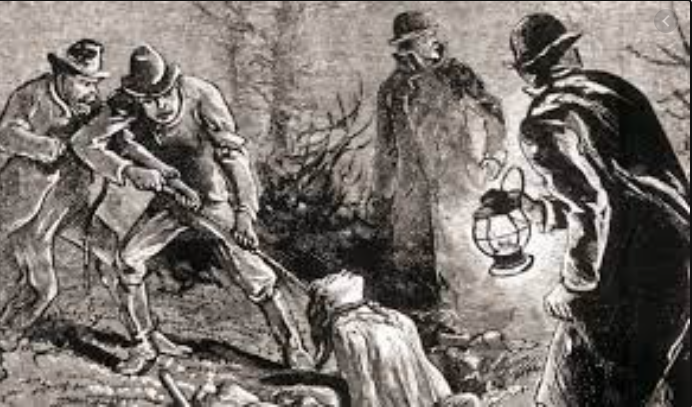
Riots stem from poverty, societal differences, discrimination, political issues, or other unnamed causes. The magnitude of the crowd becomes the justification for joining the riot.
No matter the cause of the sparking clash, they may eventually escalate to a decently destructive level, which often becomes deadly.
History is dotted with several such baffling events. From balloonists to Toronto clown riot, let’s dig into the unusual, bizarre riots.
1. The Eel Pulling Riot From One Of The Most Ferocious Games In History.
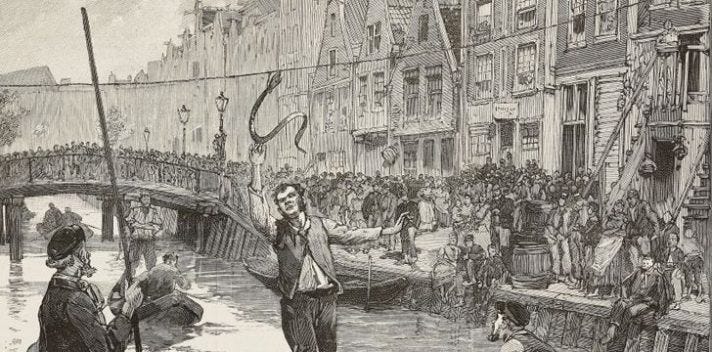
If you have not known about this weird sport Palingoproer, then you are not new — many do not. Eel pulling was a strange popular game where a writing eel used to be suspended over the canal. People in the boats were supposed to leap in for snatching the eel as they passed beneath — and the majority of them landed in the water instead.
Tying a live eel between two houses of the canal by a rope and yanking the eel when floating under the string — what type of the game was that? A cruel one. The winners used to receive a heavy amount — almost equivalent to a week’s wage.
Police In Action & Crowd’s Unreasonable Reaction:
This game was illegal because of its cruelty in the name of entertainment. In July 1886, police took action against the players at the city’s Jordan district; they didn’t anticipate the public’s outrageous reactions.
Four of the officers entered the house from where a rope was tied. As soon as the police officers got out of the house, the spectators became disgruntled upon the intervention. One of the spectators beat the officer with his umbrella.
People began throwing bricks and stones at the police. Joined by the socialist protests, the civilians grew stronger such that a big riot broke out.
With the fall of night, the tempers of people seemed to return to their places. They all went home, giving a sense of calmness. But interestingly, the Dutch dispute was not as easy to be resolved as it seemed.
The angry crowd stormed the police station to lift the ban from the Eel grabbing game with the next dawn. The army had to intervene by opening the fire on protestors — a pretty intense scenario between unarmed rioters and armed soldiers.
Tragedy happens whenever unarmed ones face the armed people. Firing the muskets, the army enveloped the whole scene in the smoke, leading to twenty-six deaths then and there. Many people fled to their homes, and another two thousand were arrested.
The Tragedy Followed Which Could Have Been Avoided:
What happened next was the same thing that always happens in history when people without guns stand up to people with guns.
The army fired their rifles into the crowd, enveloping the whole scene in smoke, as smokeless gun powder had yet to be invented, and as the smoke cleared, 26 rioters lay dead on the streets, with the rest having fled back to their homes.
2. The New York Doctor’s Riot As A Result of Collecting Cadavers By Gruesome Means.
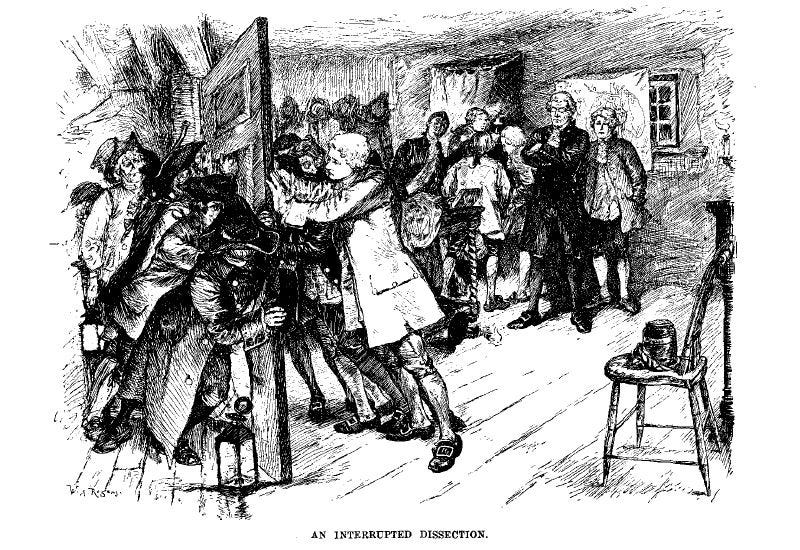
History testifies how for centuries, anatomists have been trying to study the human body by relying on gruesome means of acquiring the corpses.
In the 18th century, no proper rules existed which directed how bodies needed to be collected for the study of medical students. The idea of autopsies and cutting up the dead bodies was already enough to creep the soul of ordinary citizens. The rumor made the situation worse — students were stealing bodies from the graveyard.
What caused the riot?
Rumors were already pushing the riot to take place, but what really marked the beginning of the event was a boy’s story.
On April 16, 1788, a group of boys were playing outside the New York hospital, and one of them witnessed a severed arm. The medical student told the boy the arm belonged to his own deceased mother — a fact which scared him. Rushing towards his home, the boy told his father the entire creepy thing.
The boy’s mason father, alarmed by the event, ran to the cemetery and dug his wife’s coffin to find it empty. What next? An angry mob marches towards the hospital. Upon seeing the mob, the few staff members and students ran away while the others remained to protect the specimens.
The crowd broke into the hospital and found three new bodies — one was getting boiled. Different females and male body parts were hanging up. Disgusted by what they witnessed, the mob pulled the specimens, took them to the street and burned them.
The mayor arrived at the riot location. Hospital staff were taken to jail for their protection. Despite being the crowd dispersal, peaceful settling was far from the reality.
What tragedy followed the next day?
Rioters didn’t stop but looked for bodies the following day. Gathering around Columbia University, rioters tried to force their way in, but bodies by then had been removed — thus, none was found.
Instead of routing back their homes, the group of 5,000 people, equipped with rocks, timber and bricks, descended towards the jail where doctors sought protection. The mob had a single demand: bringing back the bodies.
Breaking the jail seemed the only option upon which one the guard killed the man. The Rioter’s killing escalated the anger in the crowd even further.r
Secretary of Foreign Affairs John Jay was attacked with a rock that hit his head, and Revolutionary War hero General Baron von Steuben was hit with a brick. The militia had no option except to open the fire on the mob — resulting in 29 deaths.
Results of the riot?
This riot paved the way towards proper law enforcement, which guided legal ways of collecting cadavers and enforcing severe robbery penalties. Sadly, this was not the only incident resulting from corpses. Instead, 17 others came to light between1765 and 1854.
3. The Leicester Balloon Riot By Savage “Balloonatics”.
You might not be aware, but back in the 19th century, balloonists were seen as daredevils. Capable of drawing considerable audience attention, they would offer hungry people entertainment, curiosity and a feeling of aww.
Something similar but rather disastrous happened in 1864 when a famous aeronaut, Henry Coxwell, announced his balloon’s appearance in the summers. Nearly fifty thousand people flocked to the event in Leicester, England.
Sadly, the ticket holders sank in the word of rumor, and they believed when someone announced Coxwell is not showcasing the enormous balloon in the event, rather a different one.
What happened next? Attack:
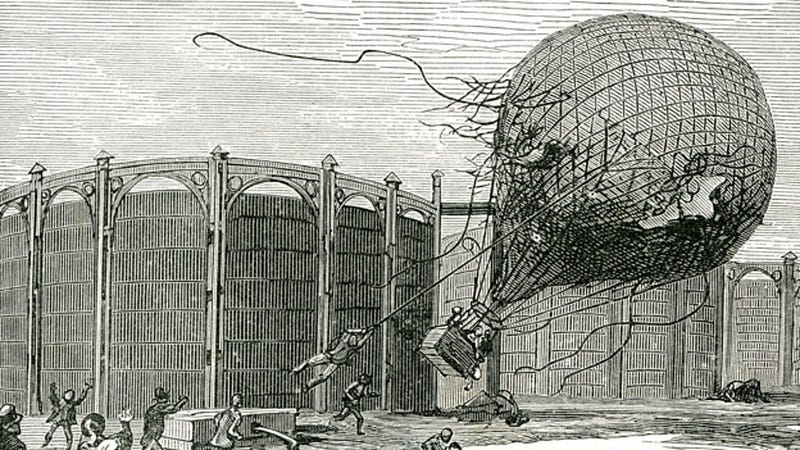
The impatient public not only broke into the Coxwell’s preparation room but also demanded to take off soon. Ticket Holder became rude and, in a rush, damaged the basket and balloons.
Despite several instances of requesting a space to properly walkthrough, Coxwell was denied or somewhat ignored. Seeing the outrageous public’s behaviour, Coxwell began deflating the balloon.
Unhappy seeing the Coxwell’s move, people began trashing the balloon further, finally cutting it and setting the basket on fire. Rioters didn’t only attack the balloon but also jumped on Coxwell, who was luckily led away somewhere safe by police officers.
After Coxwell’s escape:
What unlucky followed was a misunderstanding — a random guy was mistaken for Coxwell, whose coat was torn apart. Interestingly, people capitalized on the riot as well. Taking the balloon pieces, they began selling them as souvenirs.
All in all, The London Review of Politics, Society, Literature, Art and Science condemned the riot. Even Coxwell, unable to digest people’s attitude, labelled the townspeople as savages. This historical event gave a new name to the townspeople, making them popular as Balloonatics.
More from the author:


