5 Crucial Things to Know About GPT-4
ChatGPT is about to get way more powerful
After a long wait, OpenAI finally released the new GPT-4 model, a major update to the basic framework underlying their wildly popular ChatGPT system, as well as their GPT-3.5 API.
Subscribe to my YouTube channel for more generative AI and cutting-edge gadget videos.
There’s a lot to unpack in the new GPT-4 release. Based on early examples, API documentation and code samples provided by OpenAI, here are five crucial things to know about the new model.
It’s Immediately Available to ChatGPT Plus Users
If you were one of the early users to fork over $20 to join OpenAI’s ChatGPT Plus service, you’re about to get a major reward — and some serious return on your investment.
ChatGPT Plus users are the first people with access to the new GPT-4 platform. If you subscribe to ChatGPT Plus, you can head over and begin using GPT-4 right away.
Lots of people asked why someone would pay money to subscribe to the Plus service when ChatGPT is free. Apparently, so that you can get fast access to new model updates!
It’s Multimodal
Before GPT-4 came out, there was wild speculation about whether it would remain a text-only model like ChatGPT, or would become a multimodal model.
Multimodal models are able to work with a wide range of media types as both their output and input — everything from text to images and ultimately video.
At the moment, GPT-4 appears to support images for both its inputs and outputs. Initially, this capability is available only to a single third-party company which is helping OpenAI test image processing.
Once the system is faster, images as input will become available to more users.
But OpenAI has some examples of how it could ultimately play out. One example includes a photo of eggs and flour, with a cooking-related query.
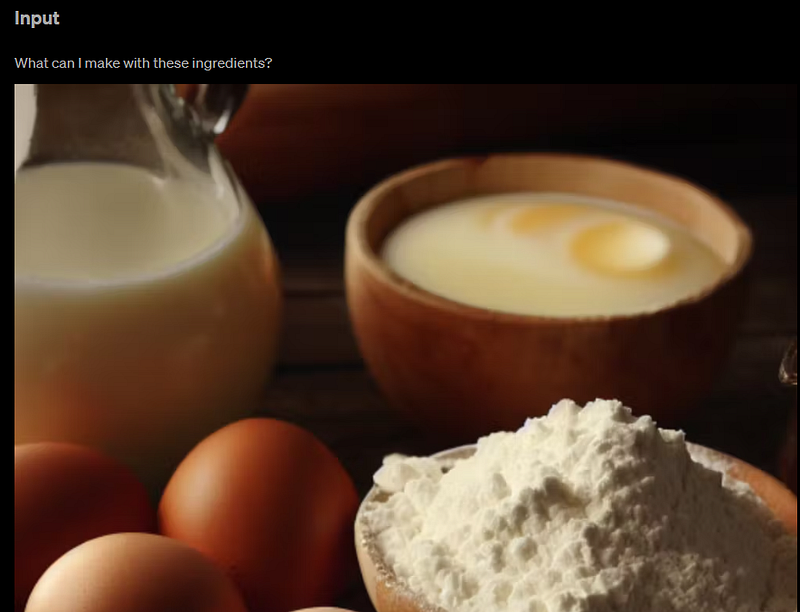
GPT-4 recommends recipes that could be made with the ingredients shown in the picture.
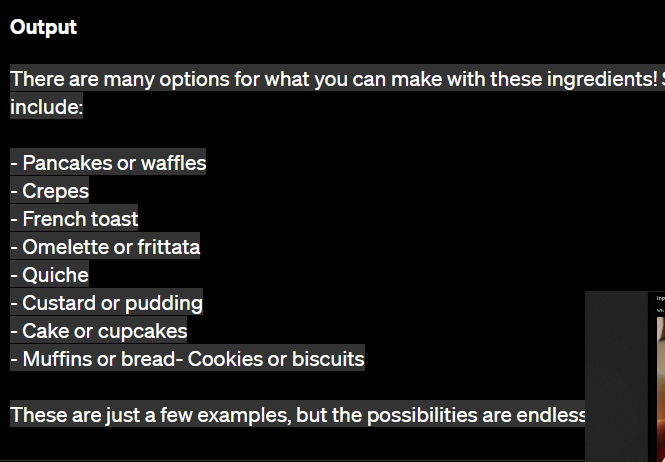
The model could also be used to caption images, or write amazing alt text for images on websites. Video isn’t available yet, but it’s likely on the way now that GPT-4 is multimodal.
There’s an API
OpenAI will provide API access to the new model almost immediately. The company released a waitlist upon launching GPT-4, and said that some developers would get access on the day of the launch.
Expect many companies to start integrating GPT-4 into their products almost immediately. Many are already integrated with existing APIs from OpenAI, so the switch to GPT-4 isn’t hard to implement.
It Can Process Way More Data
The original ChatGPT could process 4,096 tokens. That’s about 5,000 words worth of text.
That limitation included both the text in the prompt given to ChatGPT and the system’s output. The limits prevented the system from analyzing big documents, or writing long blog posts — or even books.
The limitation was likely a cost/computation based limitation. The more tokens you add to a large language model, the more computation the model needs to perform in order to process the text, and thus the more expensive it is to run.
GPT-4 expands these limitations dramatically. By default, GPT-4 can handle 8,000 tokens right out of the box. It can also support up to 32,000 tokens. That’s about 50 pages of text.
Processing more data will allow the system to process far more instructions, writer longer articles, and perhaps even write very long documents or full literary works.
It’s Better at Human-Like Tasks and Tests
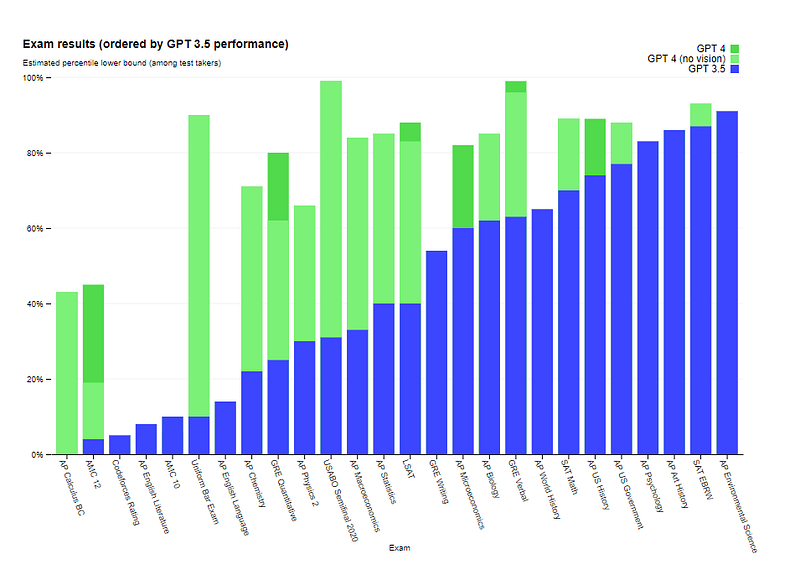
ChatGPT running GPT3.5 could pass human-oriented exams like the bar exam — but only just.
The system tended to get a score on the lower end of passing — a C- or thereabouts. GPT-4 has been trained to perform these human-like tests and tasks much better.
The model now performs as well as a top student on many standard exams. AP Environmental Science exams, GRE exams, and even the LSAT — GPT-4 can easily score in the top 10% of them all.
It’s still terrible at English lit. But tasks like math exams — where GPT-3.5 stuggled — are much improved with GPT-4.
Next Steps
If you want to use GPT-4, there are a few ways you can do so:
- Sign up for ChatGPT Plus. GPT-4 should be available through the paid ChatGPT already.
- Sign up for the waitlist for access to the GPT-4 API. Developers should get access over the next few days/weeks.
Want more coverage of cutting-edge generative AI? Subscribe to me on Medium and follow The Generator.