
5 Surprising Ways By Which Egyptians Still Rule The World
There is a lot of uncanniness to what shaped the progressive civilization of Egypt into what it is today.
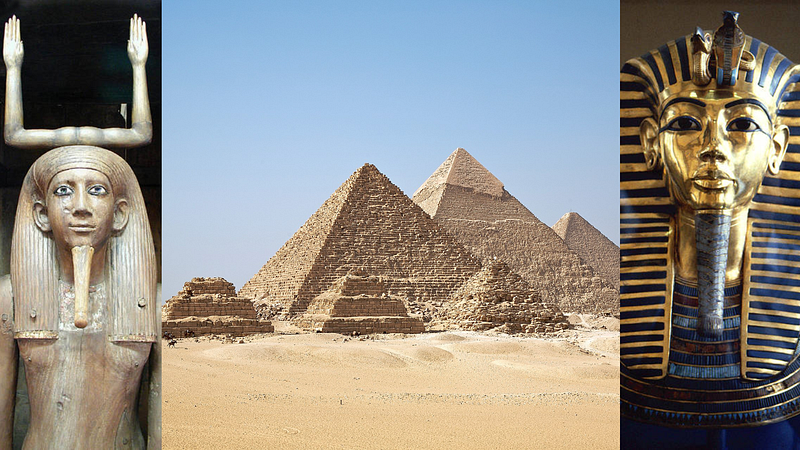
As of today, Egypt might be viewed as one of the most populated countries across the globe with the ever-increasing phenomenon of inflation. Yet, it does not stand as an ‘underdeveloped’ country in all of the Middle East.
Instead, it is widely known for its ancient history, one that adapted strange methods of survival into their daily routine to make their generations unique. From different methods that benefitted human health to the famous extensive burial procedures of the kings and pharaohs, Egypt is identified uniquely among all other countries.
Although tombstones, pyramids, and pharaohs remain to be the mainstream of Egypt for the world today, here are five more aspects that existed in ancient Egypt but stayed undisclosed to the rest of the world for a very long time.
1- Soft Pillows for A Good Night’s Sleep? The Ancient Egyptians Don’t Think So!
While exploring the ruins of the old civilizations of Egypt and the marvelous tombs of its kings, archaeologists stumbled upon an incomplete goblet-like object that may have seemed at first a stool to sit on but was actually far more interesting.
The object was a headstand and was found to be used as a pillow in ancient times by the people of Egypt while they slept. It does sound quite eery to consider that humans were finding ways to torture themselves even during sleep, then. But, despite all its discomfort, the method was actually deemed helpful for the people of that time.
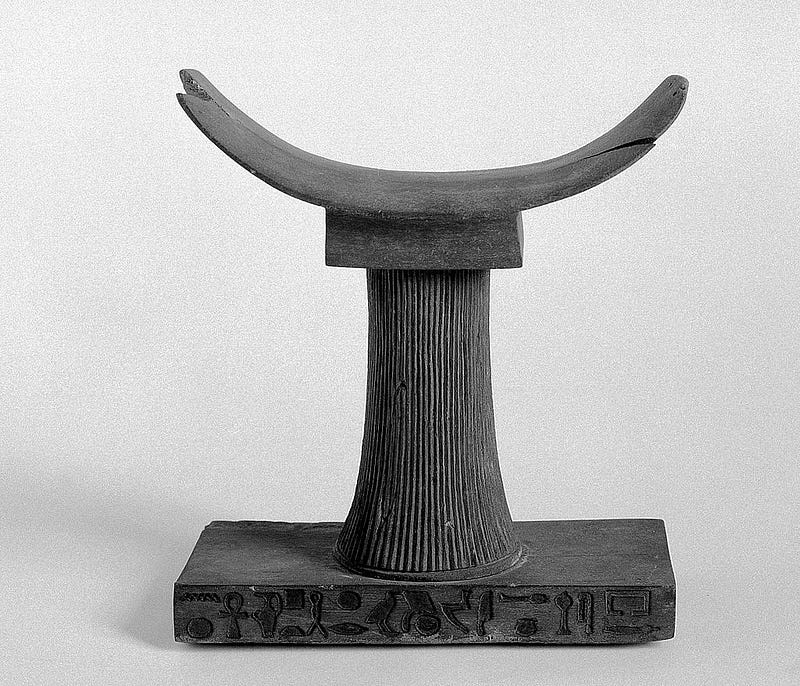

The headrest was shaped in a curve, was made of stone, marble, or even glass at times, and had a stand below it. This elevated a person’s head from the ground while they slept.
This elevation was certainly one of the major goals of sleeping on this headrest as the common Egyptian did not want insects crawling up his face or into his nose or ears.
Apart from sleeping, the wooden or stone pillow was also used as a headrest for the mummified kings of ancient Egypt to help them easily migrate into the afterlife without dealing with demons that used to linger in the graves uninvited.
2- The Sphinx And The Confidential Network Inside
In 1935, archaeologists studying the great Sphinx came across an astonishing discovery that completely changed their perspective of the site. Before then, the true purpose of the Sphinx was unknown and all theories were just assumptions.
However, in 1935, archaeologists discovered a hole in the head of the Sphinx, and they realized that perhaps the Sphinx was actually hiding something else entirely. Most historians believed that the Sphinx sat atop a great labyrinth that leads to a secret underground city.
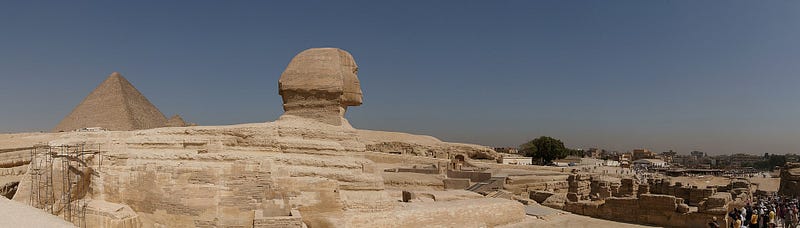

What is most intriguing is that every time an entrance or an opening turns up, it is immediately covered up again and forgotten about! These days, historians have completely given up on the idea and no further research is being done on the secret city under the Sphinx.
3- The Important Man With Mysterious Inscriptions On His Tomb
In 2018, a new tomb was discovered near a pyramid in Abusir. The tomb, which is unusually small and contains only a grave, a small chapel, and the remains of a statue, dates back to the time of the Old Kingdom in Egypt.
This is an era that historians know the least about. However, what is most fascinating are the inscriptions on the walls of the tomb. Other than the usual details like the name of the priest being Kaires and the time he lived in, the engravings also quote the priest as “The Keeper of the Secret ‘’.
Historians believe that he must have been a close friend of the Pharaoh Neferirkare as the priest’s tomb is located close to Neferirkare’s pyramid. The priest Kaires is also called the Foremost of The House of Life, which was an ancient library that held vast knowledge on a few of the most mysterious subjects in ancient Egypt.
4- Unusual Schools Teaching Even More Unusual Knowledge
The Egyptians are famous for their love for knowledge and their height of awareness and perception. Historians believe that this was not a coincidental trait. In ancient Egypt, there existed secret schools and educational institutes that taught esoteric knowledge. Students from all over the world and as far as Asia came to Egypt seeking guidance and teachings on rare subjects like wisdom, spiritual enlightenment, and even magic! The schools were run by spiritual leaders, masters of the divine sciences, and magi, and there were common myths that the school even taught the secrets to immortality. Modern historians have discovered that what these schools taught were actually scientific subjects like alchemy, philosophy, and mathematics, but it wouldn’t be foolish to assume that back in ancient times, these subjects were considered close to magic.
5- False Doors That Served Spiritual Purposes
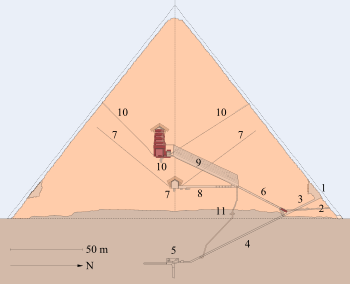
The Egyptians believed that once a person had died, they would not be able to enter the afterlife themselves and had to be assisted. They believed that there needed to be a portal for the souls of the dead to walk through to reach the afterlife. Hence, many tombs and pyramids have a false door constructed on the left of the grave. This is because, in ancient Egypt, it was a common belief that the land of the dead lay somewhere to the left. These false doors don’t actually open or lead anywhere, but are meant to serve as a portal to the afterlife for the soul of the deceased once the tomb has been closed.
Conclusion
While sounding very weird and new to us, these secrets about Egypt show us how absorbed the people back then were in living and building, despite their status. The commoners were grateful for what they had and consistently worshipped their gods alongside introducing better ways to help their fellow Egyptians migrate into the afterlife with ease.
It is said that the pyramids of Egypt were built by the most diligent people ever on Earth. It took them almost their entire lives to construct a single pyramid from the tombstone to the gateways that served the purpose of spiritual migration.
Imagine living where you work for hours during the day and night but also being appreciated and respected as a person for helping in the cause. Sounds like quite less of a possibility, doesn’t it? Such a civilization that was so passionate about the phenomenon of life and death can be considered a better one than the ones that are seen today.
Want to follow up more from me and other amazing writers on Medium?
Hop on the chance to join: