
5 Biggest Ever Lies in Human History
Revealing the hidden truths behind misinformation, Manipulation, and myth-making.
The truth has frequently been distorted, concealed, or completely fabricated throughout history for a number of different reasons.
The greatest lies in history have had a profound effect on society and continue to influence how we perceive the world, whether they are used for political purposes or for personal gain.
Come along as we expose some of these intriguing lies from the past.
1. The Legend Of Trojan Horse
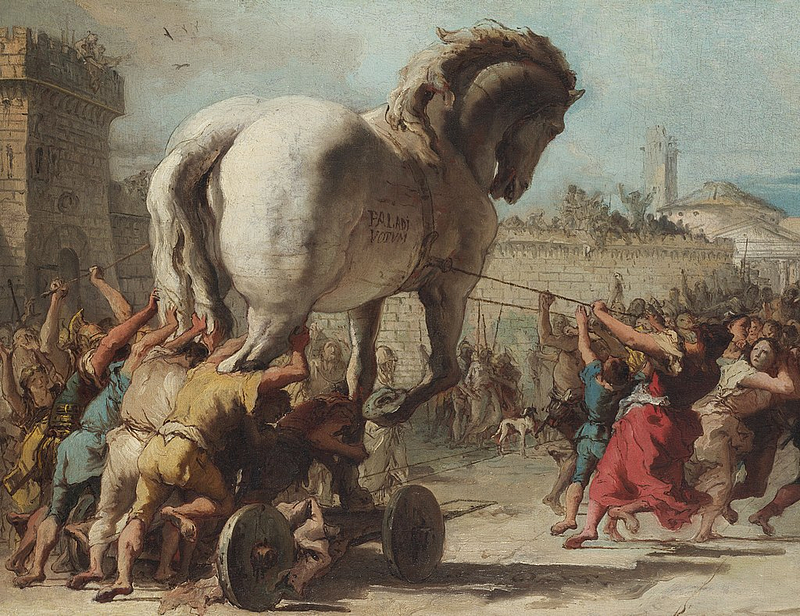

Greek mythology’s legendary Trojan Horse tells the story of the Greeks’ cunning plan to invade Troy during the Trojan War.
The Greeks allegedly constructed a huge wooden horse and left it in front of Troy’s main gate as a supposed peace offering.
The Trojans brought the horse inside their city walls, believing it to be a gift. But at night, the Greeks who had been hiding inside the horse broke cover and unlocked the gates, letting the Greek army in to capture the city.
Despite being a popular and well-recognized story, many historians and experts believe that the Trojan Horse is a fabrication or exaggeration of the actual events that occurred during the Trojan War.
There isn’t any proof that a wooden horse was ever used, some contend that it would have been a foolish and unrealistic way to infiltrate the city.
Furthermore, some experts argue that the myth of the Trojan Horse might have been made up to glorify the Greek victory over Troy.
The story would have supported the idea of Greek supremacy and military success by showing the Greeks as resourceful and crafty.
The Trojan Horse is a captivating story that has captured the imagination of many generations, but there is not much proof that it is true.
Instead, it is probably a myth that has been inflated over time for dramatic effect.
2. The Tuskegee Syphilis — A Racist Lies
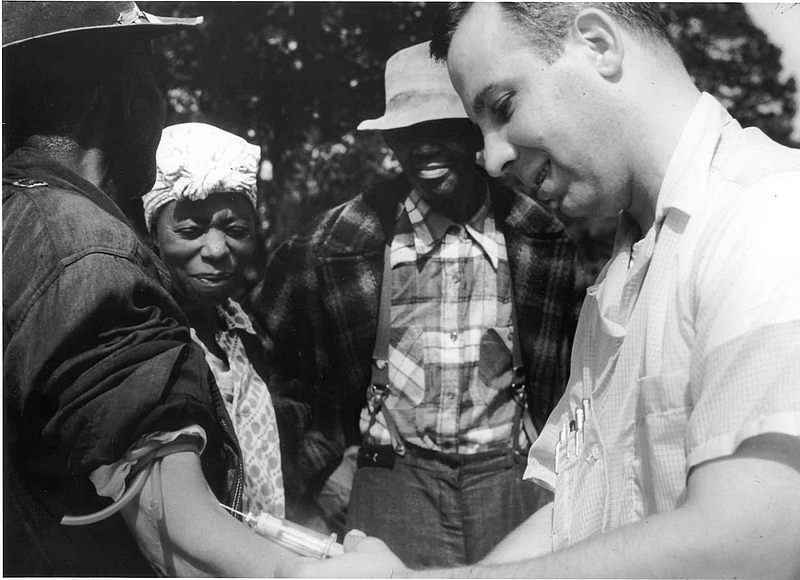

Between 1932 and 1972, the US Public Health Service carried out the infamous Tuskegee syphilis experiment.
Over 600 African-American men who were syphilis-positive were subjected to unethical and deceitful treatment as part of the study, which was carried out in Tuskegee, Alabama.
Even after the discovery of penicillin, the men were purposefully denied access to any effective treatment during the course of the study, which was initially intended to look into the long-term effects of untreated syphilis.
Despite being misled into believing they were receiving free medical care, the participants were actually being abandoned to suffer the debilitating effects of syphilis without their knowledge or consent.
Given the numerous ethical transgressions that were made during the Tuskegee syphilis experiment, it is widely believed to be one of the biggest historical lies.
The participants were purposefully misled by the researchers, denied access to proper medical care, and the study was carried out even after treatment for the disease was found.
3. Soviet Denying Involvement In Katyn Massacre
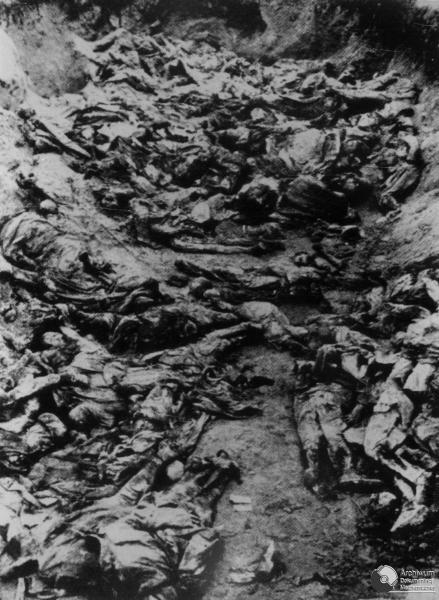
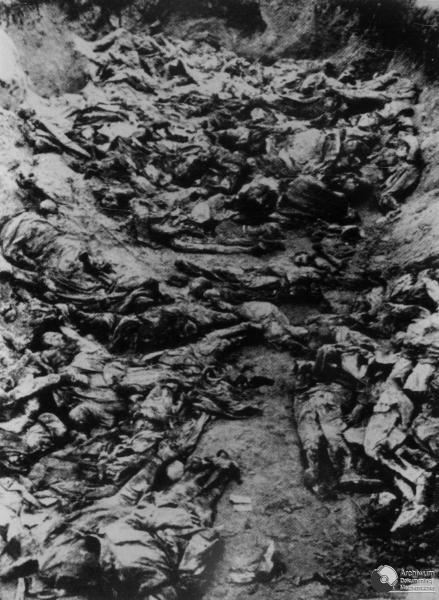
Over 20,000 Polish military officers and intellectuals were executed by the Soviet Union in the horrifying Katyn Massacre, which took place during World War II.
A brutal demonstration of the Soviet Union’s control over Poland at the time, the massacre occurred in the 1940s in the Katyn Forest in western Russia.
Although there was clear evidence that the Soviet Union was behind the massacre, they consistently denied it for years.
They even went so far as to attribute it to the Nazis, which was an outright lie.
One of the main reasons the Soviet Union insisted they were not responsible for the Katyn Massacre was their desire to uphold their reputation as a just and fair nation.
Their reputation would have been destroyed and they could have faced international condemnation if they had admitted to the massacre.
The Soviet Union’s denial of the Katyn Massacre, however, is now widely regarded as one of the biggest lies in history because the truth eventually came to light.
It serves as a tragic reminder of the influence of propaganda and the lengths to which some countries will go to preserve their good reputation.
4. Iraq’s Possession Of Weapons Of Mass Destruction

The failure to find and present any evidence of weapons of mass destruction (WMD) to the world after the 2003 Iraq invasion fueled the belief that America lied about Iraq’s possession of WMD.
The Bush administration’s main justification for invading Iraq was that Iraq has WMD and this poses an immediate and great threat to the United States and its allies.
However, later investigations revealed that the intelligence provided to support these claims were false and exaggerated.
Furthermore, there is convincing evidence outhere which suggests that America’s invasion of Iraq was motivated by a desire to control Iraq’s massive oil reserves rather than concerns about WMDs.
One reason for believing this is because of the well-known ties between the Bush administration and the oil industry — an invasion was necessary and the only way for gaining access to Iraq’s reserves of oil.
The fact that America had previously provided Iraq with biological and chemical weapons during the Iran-Iraq war in the 1980s gives support to the claim that America lied about Iraq’s WMDs.
This suggests that the US was aware of Iraq’s weapons and that the justifications for the invasion were deliberately baseless.
5. The Watergate Scandal — A Lies Involving The President
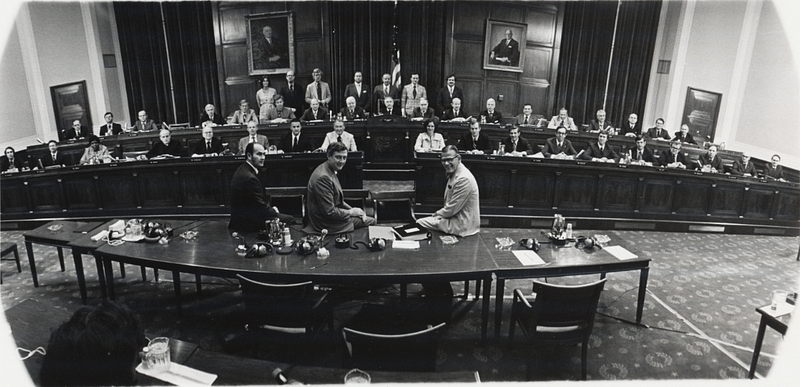

The Watergate scandal is regarded as one of the biggest lies in American history because of the involvement of high ranking government officials and the extent they went to in covering up their involvement.
The scandal concerned a break-in at the Democratic National Committee headquarters in Washington D.C at the Watergate complex in 1972, which was carried out by the supporters of President Richard Nixon.
After Nixon and his administration attempted to cover up their involvement in the break-in, a full investigation was launched, in which Nixon and officials from his administration were found involved in the break in.
Government institutions lost public trust as a result of the scandal, and led to Nixon’s resignation.
This also resulted in a renewed commitment to accountability and transparency in government.
The scandal revealed the extent of government corruption and abuse of power.
Conclusion

Countless myths, lies, and misconceptions have swept throughout history.
It can be challenging to distinguish between what is real and what is not because of the extensive use of propaganda to deceive the public and baseless historical interpretations that have been passed down from generation to generation.
But in order to understand the past more accurately, it’s critical to seek out the facts and question conventional wisdom.
More from the author: