
4 Ways On How I Find My Balance To Self-Care From Self-Sabotage
What happened when I slept 16 hours every day for 60 days
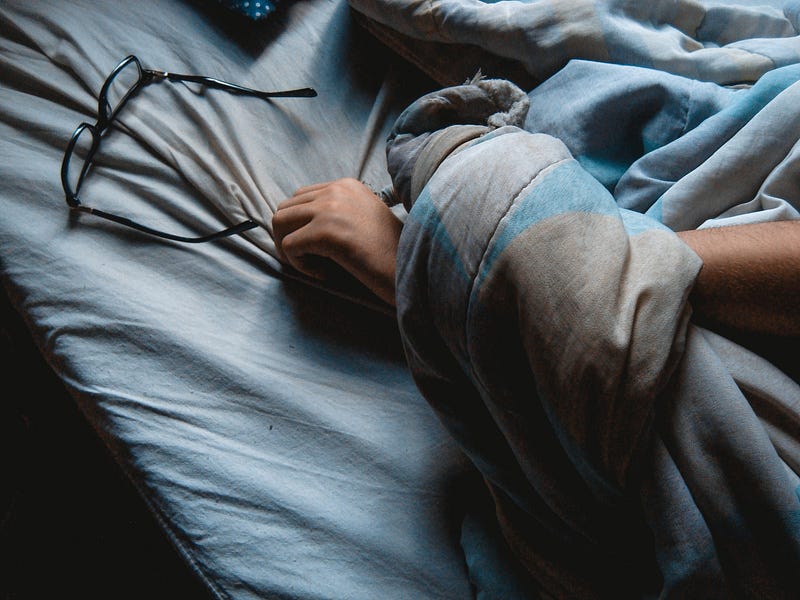
During the height of the first wave of the pandemic, like many countries all over the world, Singapore went into a lockdown (although we call it a Circuit-Breaker). This lasted for 8 weeks.
It was a major flip of lifestyle for many of us, I wasn’t sparred too. I found myself waning in energy, motivation, and sense of purpose. This was probably spurred by the stress of a long-distance relationship 10,000 miles away.
Like any self-care practitioner, I was careful not to get into a burnt-out; and I started disabling and deleting social media apps to reduce any unnecessary and subtle stress that comes with it, ranging from an overload of information to the comparison trap.
I was also subconsciously afraid of putting on stress-weight or pandemic-weight with staying at home so much. And so I started sleeping my way through the ongoing pandemic, aiming to reduce any cortisol overdrive.
Like a Tour de France professional cyclist clocking more than 2,200 miles in 23 days, I started sleeping 16 hours a day for the next 60 days.
I thought much sleep would help me gain some clarity and purpose and helped the time to pass by faster in this dreadful year of 2020. Instead, I may have taken self-care to an extreme.
When oversleeping and self-care backfires
During the first few days, I was feeling quite good, after all, this is the perfect time to sleep your stress away. But soon the days turned into weeks and with each week, I started to notice some negative effects.
I lost more than 10-lbs in the span of 8 weeks, effortlessly, from sleeping.
Don’t congratulate me too early just yet. If you think these 10-lbs were healthy weight loss, I realize it wasn’t. It was mostly muscle-mass loss.
Everything shrank around me. I didn’t realize how much weight I have lost until all my clothes started to hang loose and neighbors and even the regular hawker with whom I usually get my dinner commented that how much weight I have lost in a short span of time. I felt like I had liposuction for free.
For the most part of my 5 to 6 hours of waking moments, I probably only consumed one meal of no more than 1000 calories, which is much lower than the minimum required for basal metabolism.
I started to experience even more mental fog and lost my sense of what is days-and-nights.
The biggest drawback I got from oversleeping is perhaps that instead of gaining more clarity, my head felt more blurry, and had nagging head throbs. The constant mental fog and heaviness didn’t go away, I wasn’t able to think clearly as much as I like to.
At one point, I was feeling symptoms of anemic, my head would spin if I had a sudden change in my bodily position, for example, lying back too quickly or simply standing up too quickly from a bend-over position.
Not to mention by this time, my fatigue was taken a new level — just from oversleeping.
I fell into a semi-depression.
I can’t really put to an exact time when this episode starts to happen. I started looking at the world with dark-colored lenses. Everything seemed so gloom-and-doom. I also cried most times for not much rhyme or reason.
I only got up to wash up, ate a bit of food, perhaps occasionally looking at the blue sky from my window, and fell back to sleep as soon as I felt the weariness set in. Some days, I would drag my body, and take a short walk around my estate for 30 minutes or so.
How I find the balance to self-care
Somewhere in the back of my mind, I knew I had to do something. This state was telling me that I have taken my “self-care” way too far into “self-sabotage”.
The next few days comprised of baby steps to get my life around again.
1.) I kept my night curtains opened
As soon as the day brightens, the bright rays of the tropical sun will pierce into my room. This natural alarm clock wakes me gently and as tempted as it may seem, I forced myself to get up. I may even recite a mantra or two to trick the brain into waking up.
2.) Cold shower to wake the brain and vagus nerve.
As soon as I got up, I would wake my senses up with an extremely cold shower! In fact, cold showers have also been shown to stimulate our vagus nerve and our drive to work for rewards.
Vagus nerve stimulation has also shown some evidence to increasing our vagal tone, aids in relaxation, de-stressing, overcoming anxiety and depression, reduces inflammation, which in turn improves our mood, well-being, and resilience over a long period of time.
3.) I started working on my long-time creative pursuits.
One of the best outcomes from the 60-days was that I started to embark on creating videos and started a YouTube channel, something I have always wanted to do but held back. Learning new skills has also shown to inculcate a sense of purpose and fulfillment in one, and I definitely can attest to that.
Other creative pursuits that I have since embarked, include writing articles on a more regular basis on Medium, setting up my home gym, picking up better reading techniques thanks to Jim Kwik’s 3M model, and now re-venturing into the dropshipping e-commerce business.
4.) I rehauled my room into a mini-studio workspace.
I have long practiced minimalism way before Marie Kondo became a trend. I threw away much of my possessions 8 years ago as I felt a sense of living life with more meaning. So the practice of clearing things has never been too difficult for me.
One thing I did this time was I threw away my bed, got a foldable tatami mat, and returned to sleeping on the floor, the good old way I was brought up.
As I cleared even more things, it also felt like I regained a new lease of life.
Parting Thoughts
Our modern life is full of the business of busyness, so much so that, I am aware that many may not have the luxury of sleeping many hours. But if anything I have learned in those 60 days is this — as much as quantity is important but in this day and age, quality triumphs. Especially if there’s a deeper underlying emotional, mental or physical issue that needs to be addressed.
Will I do this again? Probably not, unless there is an underlying health issue. I am no longer the Sleeping Beauty waiting for my Prince Philip to wake me up from my slumber. I have since resumed the regular 7–9 hours of sleep a day, and getting back into a more active regime.
If you like to receive bite-sized actions and stories, check out Yan’s The 3Min Club, where twice a month, you receive 3Ms (movement, mindfulness, mantra) you can do in 3 minutes.

You just read another post from In Fitness And In Health: a health and fitness community dedicated to sharing knowledge, lessons, and suggestions to living happier, healthier lives.
If you’d like to join our newsletter and receive more stories like this one, tap here.


