
Fitness | Health | Lifestyle
Can You Strength Train At Home?
5 ways to build muscles in a 12 sqm space
When life throws you lemons, make lemonade.
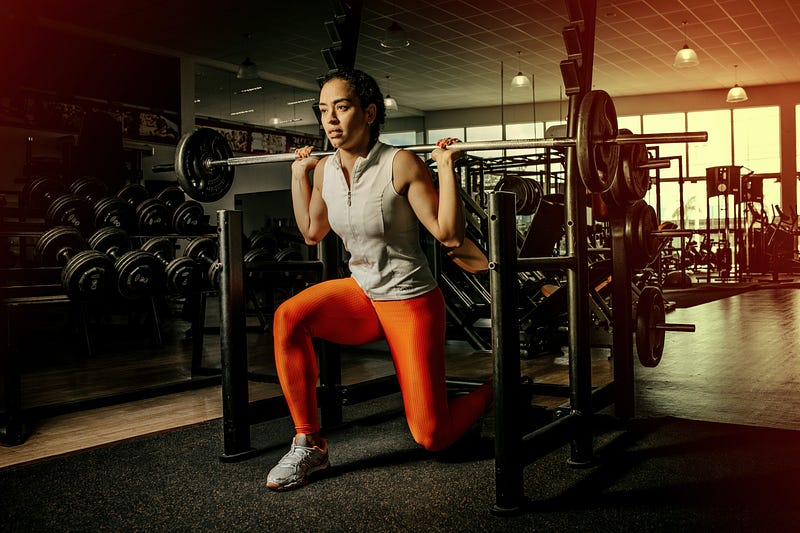
I have always love hitting the weights at the gym since I was eighteen and more so after I was in remission from cancer at twenty-three.
Call me a gym rat. Being a girl who grew up with self-esteem issues, I have found my solace with weights ever since. The endorphins and dopamine high, similar to runner’s high, rushing through my bloodstream really boosted my feeling of esteem, made possible by the sense of accomplishment. After all, living in a small city-like state, how often do you see five foot two petite girls crushing one to two hundred pounds at the gym, day in day out?
With the lockdown that happened earlier this year and the widespread of the coronavirus, like many of my fellow gym enthusiasts, the change in adjusting to the routine has been overwhelming.
I don't live in a big apartment with a yard or an open balcony, in fact, I am living with my parents and other family members. Space is limited. But I do have my own room of about twelve square meters.
When my gym membership expired midway through the first month of post-lockdown, I was undecided to renew or retire. There were still a lot of uncertainties revolving around how the virus is spreading, particularly around asymptomatic carriers, and the mortality rate of this infectious virus.
This anxiety was exacerbated with uncontrollable factors such as erratic behaviors seen amongst the public, including a lack of understanding of what social responsibility is and adjusting to a new cultural practice of personal hygiene. (At the start of the pandemic, I saw a gym member sneezing right into the gym mirror, while flexing and posing!)
After going back and forth weighing the pros and cons, I decided not to renew my gym membership. I figured that the cons outweigh the pros. Health is something that no amount of money nor personal bests can buy. I also decided to take on the challenge of finding creative ways to get strength training, muscle building, and endorphins going.
*Muscles are needed to maintain healthy metabolism as we age. For women, this is actually important to transit us into our peri, pre, and post-menopause.
After nearly three months of post-lockdown, I did find a way around strength training at home, and here are five ways that have worked for me.
Five Ways To Strength Train during a Pandemic
1 — Matter of Tools
The first thing I did was to start researching what available weights are out there. From my previous experience as a personal trainer, I know there are plenty of functional fitness tools such as kettlebells, sandbags, TRX suspension, resistance bands, the good old barbells with weights and the list goes on.
I did have a pull-up bar installed in my room years ago, and have existing tools such as TRX, Pilates ring, a Swiss ball/stability ball, and a few resistance bands of various resistance levels. But I wanted a set of weights that can fit my goals and my small room.
I was pleasantly satisfied when I decided to jump on getting my forty kilograms/eighty-eight pounds (40kg/88lbs) adjustable dumbbells to barbells converter! I even got myself high-density gym flooring mats for safety.
This got me excited that I even did my first product review on my YouTube channel. (Check it out!)
Now with the tools in place, things are starting to get real and serious.
2 —Quality over Quantity
My strength training sessions typically last ninety minutes or so. However, I had to reframe my mind when working out at home with limited space. I know for a fact that, sometimes, “longer” sessions don’t mean more gains. The quality of the sessions always triumphs, when paired with a scientific approach.
With that in mind, I reprogram my plan and go back to the “basics”, and work on sets/reps/rests. Thirty-minute of strength training at home for twice a week beats ninety minutes of four times of strength training at the gym.
3- Think Movement, Not Isolation
This is one principle I learn that has transformed the way how I hit the weights.
The old-school way of training at the gym involves training in body parts in isolated movements, for example, crunching abs on the ab curl machine, or working on the inner/outer thighs with the seated abductor/adductor machine, or pumping up the guns on the classic seated bicep machine. These aren’t “bad” but they are mostly training for aesthetic reasons or for rehabilitation. What’s more, most machines aren’t built for small-sized figures like me.
The fact is, our bodies do not move in isolation, they move in integration. What this means is that for every single movement your body is performing, there will be a group of antagonistic and agonist muscles at play.
For example, in a bicep curl, the biceps muscle groups will be the agonist as it contracts to produce the curl action, while the triceps will be antagonist as it relaxes to allow the movement to occur.
When you start to realize this, you will come to realize there isn’t really a need to train muscle groups six to seven times a week. (unless you are a competitive bodybuilder or in roles that require a certain aesthetic look).
Furthermore, there are seven functional basic movement patterns of the human body to ensure its survival. They are, squat, bend/deadlift, push, pull, twist/rotate, overhead, and lunge/gait. (Some websites may expound on each of these moves to give more than just seven.)
With this revised in mind, I can easily come up with three to four movements and its variations when combined with the upper/lower/trunk on alternate days.
4 — Think Long Term and Work It Back
Life will eventually move on. Gyms and outdoor facilities will ultimately resume at their full capacity within safety means. With that in mind, I reframed my goals, think long-term, and work it backward.
For example, my goal is still to gain muscles and also, getting my core muscles really strong, as I have a chronic back and hip issue that will creep up if I remained too immobile. I also want to feel physically strong and look good, so I targeted skill accomplishment as my long-term goals, such as ten pull-ups every day and being able to perform barbell hip thrusts at two hundred and twenty pounds (100kg/220lbs) for ten to twelve repetitions.
With all these goals in mind, I work my training program backward and adjusted my goals for the next six to twelve months.
5 — Work with What You Have Around.
Lastly, this has been, without a doubt, the most challenging aspect for me. But what doesn’t kill you makes you strong. Instead of seeing the lack, I pull out my “abundance mindset” card and ask “ How can I work around the space with what I had?”
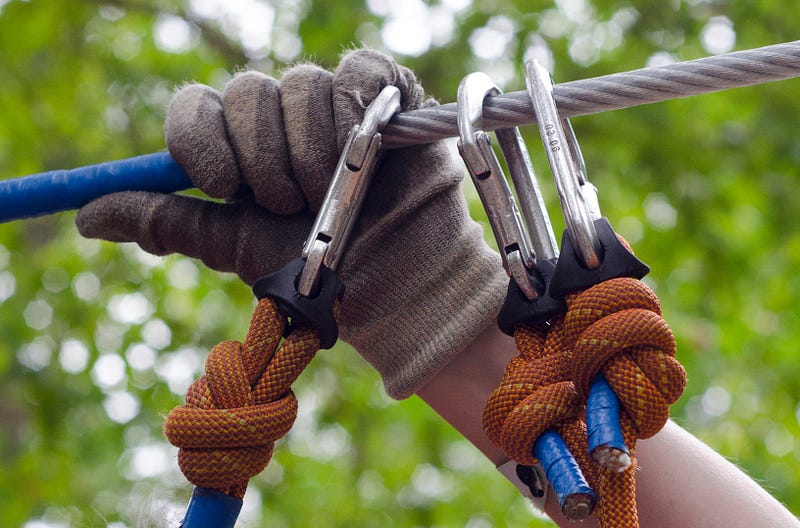
My biggest challenge is really setting up a hip-thrust “station” and having an anchor point below the ankle so that I can perform movements with low to the high frontal or sagittal plane. (Like drawing the X mark from bottom-up).
I have to admit, I haven’t been successful so far with the latter unless I choose to have an outdoor workout or outside the common corridor area, where I will use the staircase as my anchor point.
If you are wondering, how I do that. The MAGIC lies in having huge carabiners!
So there you have it, here are my five ways I manage to build my “room” gym. You definitely can still strength train, build muscle, get the pump at home. There sure are lots of privacy and convenience with this set-up, not to mention, there is simply no excuse not to be able to squeeze in a workout every day.
I do remain hopeful that the pandemic will get better and more in control, so that we all can experience the freedom of movement anywhere, everywhere, anytime.
Did you miss the article? - The Controversies of Adrenal Fatigue
Hello there, Thanks for reading. I am honored and grateful for your time. I don’t claim to know everything, but I will always strive to share every single bit of truth with thought and humility.
If you like to read more of my stories and be inspired along the way, Let’s connect. One real story at a time, one practical move at a time.


