
4 Key Steps to Start Turning Your Life Around and Becoming the Best Version of Yourself.
You can't move forward without these foundational lessons.
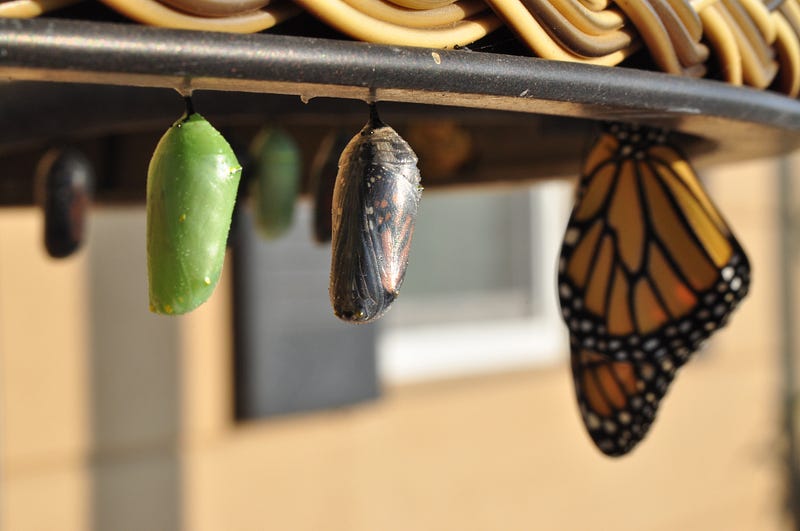
I'm grateful I learned these lessons by twenty-seven.
In so many instances, I hear people complain about challenges and changes they weren't expecting.
I'm not saying we shouldn't be allowed to complain. I'll be honest; some obstacles are really challenging and can wear us down. It's okay to vent our frustrations.
But I've learned that any situation can be turned around for the better, especially if we're honest about what we can and cannot control.
1. We must be brutally honest about what is and isn't working.
As the saying goes, first, you need to admit you have a problem.
We must acknowledge our bad habits if we want to change.
We need to do a serious audit of our lives and look at the areas where we're not moving forward the way we want to.
For example, I'm not the happiest with my fitness.
I used to be a very active teenager. I was a competitive swimmer all of middle school and high school.
In college, I was able to transition into weightlifting easily, but after graduating, it's been a struggle to find a workout routine that I can stick to.
At this moment, I'm occasionally swimming. Once or twice per week at most, that's it.
I have a relatively active job, but I could be treating my body and health better if I stuck to a workout routine.
You can do a review like this with other areas of your life. Your finances, your nutrition, your friends even.
Look at the overall direction you see your life heading. If you don't like it, be honest about what's taking you in that direction in the first place.
2. We need to change our mindset about change.
For starters, we can't avoid change.
We need to change the idea that a thriving, joyful life is void of problems. This is false.
We need to look at change as an opportunity for growth and improvement.
Change is an opportunity to create a better quality of life, achieve our goals, become the best version of ourselves, etc.
Change requires effort.
Our society has made so many aspects of our lives so convenient that we expect change to be convenient too.
We want things to happen when and how we want them, but that's not reality.
Change only happens when we take action.
We need to change those thoughts that tell us getting up and working out is inconvenient. That cooking our food is inconvenient. That cleaning and organizing is inconvenient.
These things are not inconvenient — they're the foundation for an organized, peaceful life.
If you want a joyful, content, peaceful life, you'll have to get up and do the work to earn it.
Otherwise, time will pass by, and you'll realize you never achieved what you wanted.
In other words, the pain of change is better than the pain of regret.
3. We have to be honest about what this process looks like.
It's ugly, it's messy, and it takes time.
You will not achieve the results you're looking for overnight.
I have so much experience with this I could write a hundred blogs — I may have at this point.
I realized this process of change and growth was never going to be easy or pretty when I chose to heal from my disorderly eating habits.
At the young age of eighteen, I was done letting my low self-esteem and poor body image consume me.
The journey to recovery was an ugly, long one.
I wanted to stop being afraid of eating food. So what did I do? I started eating.
What happened? I started gaining weight. It was my worst nightmare come true at the time.
But I stuck through the process. I ate until full instead of starving myself and working out for two hours to 'undo the damage.'
This arduous process lasted for years.
Finally, around the age of twenty-five, I was no longer anxious, didn't restrict anything, and didn't use the gym as a punishment for eating.
I also didn't weigh myself during this time, so I didn't lose my sh*t.
I decided to weigh myself one day — low and behold; I had lost weight!
I learned my body needed time to recover from all the years of restriction. My mind also needed to heal from all the stress and anxiety I constantly felt.
Your journey may look something like this.
It will take more time than you expect, and it will be messier than you can imagine.
But you'll come out a better, different, healed person.
4. We must have grace with ourselves along this process.
Otherwise, we will quit on ourselves.
The goal isn't perfection; it's progress.
It took me about seven years to heal from my disorderly eating habits because I wasn't perfect with the process.
I fell off the healing wagon and got back on the dieting wagon.
I succumbed to my low self-esteem from time to time, which caused me to restrict food and work out obsessively.
I had to fight these default behaviors. I had to rewire my mind to forgive myself and do better next time.
I had to teach myself that my value didn't come from how I looked or the number on the scale.
I learned to love myself and accept that I will look different throughout the phases of life.
I gave myself grace and understanding because I'm human, which means being imperfect.
Have grace and give yourself forgiveness as many times as you need to.
This doesn't mean giving yourself a pass every time you mess up. It means letting go of the disappointment of not being perfect and moving forward.
One day, you'll see that you overcame some of your biggest obstacles and challenges.
You'll look in the mirror and be proud and happy of the person looking back. You'll realize you hold a lot more power than you thought.
Learning these lessons has helped me realize that these obstacles are a refining process to turn me into the best version of myself.
I’m no longer afraid of life’s challenges, and you shouldn’t be either.
I hope these lessons help you on the road to conquering your life.


