
4 Biggest & Shocking Lies We Learned In Our History Class
Hidden truths behind commonly accepted beliefs.
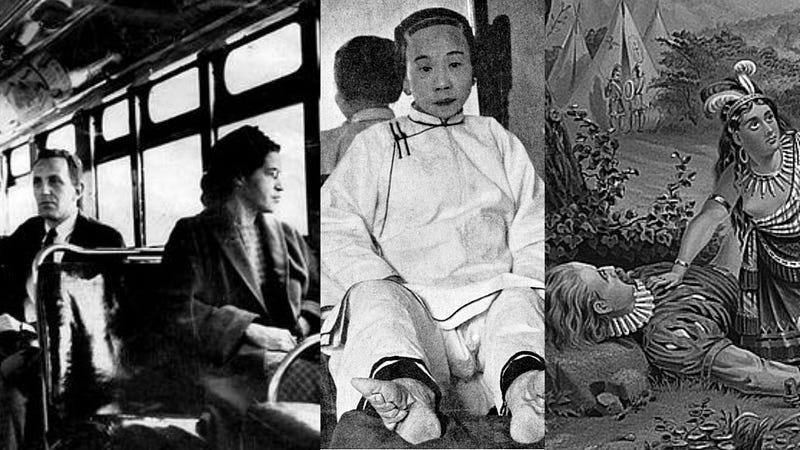
Sadly, there exists some widely believed historical inaccuracies which are shamelessly taught in many school curriculums.
Through a critical examination of historical events, this piece aims to uncover the truth behind these commonly accepted misconceptions, offering a new perspective on our understanding of the past.
1. Chinese Foot Bending A Practice Beyond Male Attraction
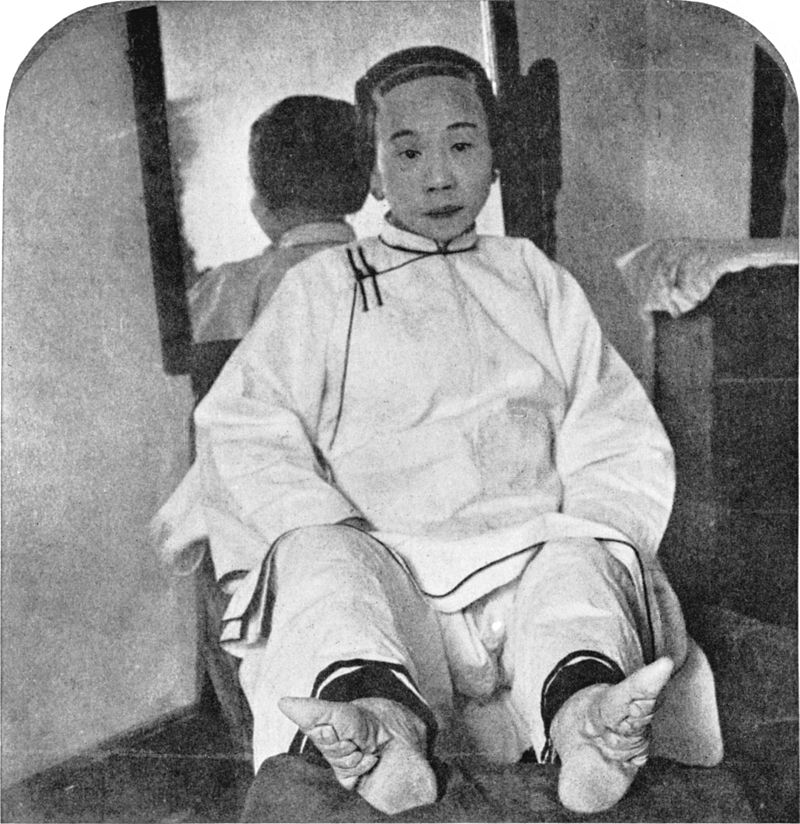

It is a common misconception that Chinese foot binding was only practiced because it attracted men.
However, the reality is that there were several other reasons besides attracting men behind the infamous and painful practice of Foot-Binding.
First of all, women with small feet were considered to be wealthy and elite. This was one of the reasons bound-footed women were often regarded as more attractive for marriage because they came from families with higher social status, which meant that marrying one would give one a lot of power and influence.
Second, it was widely believed that women with bound feet were more righteous and obedient.
Women with these two traits naturally made them much more desirable by the men.
Unfortunately, many schools continue to teach that foot binding was only done to attract men.
This is a false representation of the practice that downplays its real historical significance. It’s essential that we educate ourselves and others about the true purpose of foot binding as well as its cultural significance.
2. Pocahontas And Her Relationship With John Smith
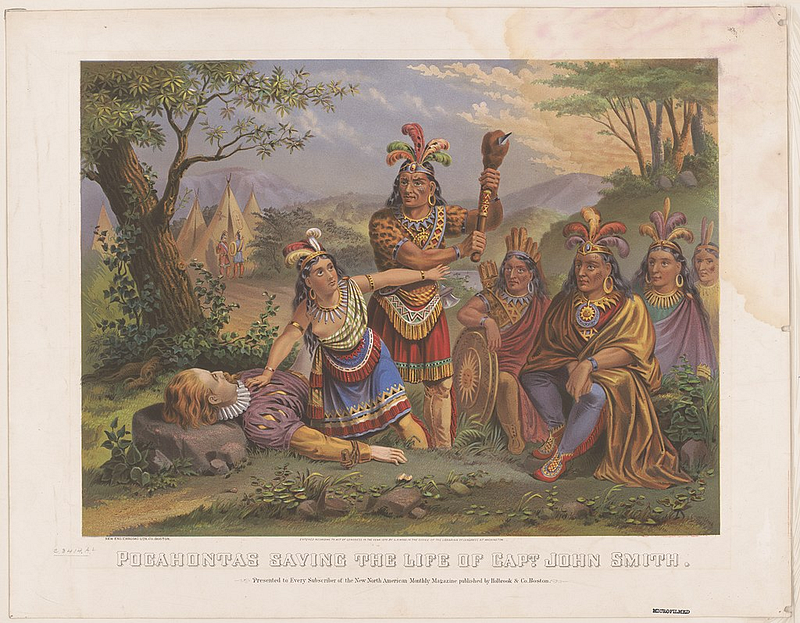

The tale of Pocahontas and John Smith has been a perennial favorite of literature, film, and, of course, school curricula.
However, many people who have devoted their lives studying Pochahontas haven’t found any conclusive proof that suggests Pocahontas had any romantic feelings for John.
Several historical records claim that Pocahontas was a young child when she first met John, which raises even more doubts about the two’s relationship.
Many historians believe that the romanticizing part of Pocahontas’s story began with the publication of John Smith’s eyewitness account.
In the publication, Pocahontas was portrayed as someone who romanticized John, and this is why she saved John’s life from her father and his tribe — he also claimed that Pochahontas visited him in Jamestown.
However, several exaggerations and inconsistencies make it hard to believe Smith’s account and make it much more questionable.
Despite the lack of evidence, many schools still present Pocahontas and John Smith’s relationship as a romantic one.
Along with perpetuating a historical myth, this inaccurate portrayal also feeds negative stereotypes about indigenous women and their interactions with colonists.
It is crucial that schools give students accurate historical information.
Teaching students the truth about historical events and figures should be teachers’ top priority rather than promoting myths and inaccuracies.
3. The Misconceptions About The Boat Used In Famous Delaware River Crossing
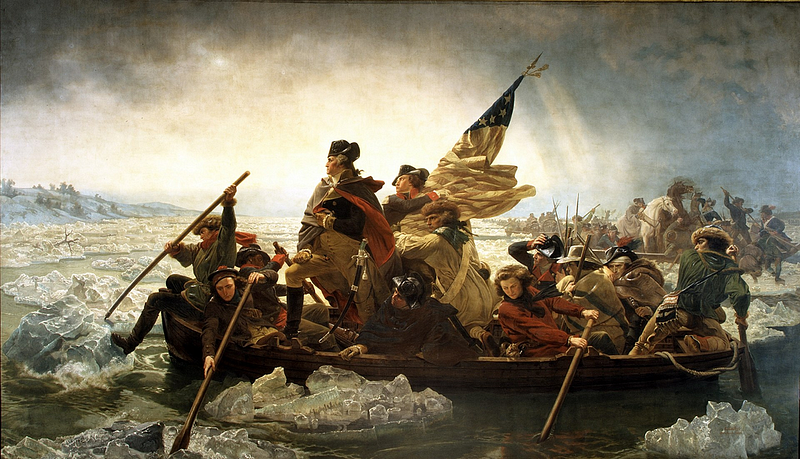

The historical moment when George Washington and his troops crossed the Delaware River is widely considered to be the key turning point in the American Revolution.
The idea Washington crossed the river in a small rowboat is a common misconception and one that has persisted for ages.
However, in reality, George Washington and his troops crossed Delaware in a Durham boat, which was much larger.
The Delaware River was frequently used for cargo transportation, and Durham boats, which could accommodate 30 to 40 soldiers as well as artillery and supplies, were a common sight.
On the 25th of December, 1776, George Washington crossed Delaware as part of a surprise assault on the Hessian mercenaries in Trenton, New Jersey, and the Durham boat was the only capable boat available at the time that could transport a large number of soldiers and equipment,
The popular painting “Washington Crossing Delaware” by Emanuel Leutze, which depicts a relatively small boat with Washington standing triumphantly in the bow, is likely the source of the misconception that Washington crossed the river in a small rowboat — and while the painting is a powerful and effective symbol of American perseverance, it is not a true depiction of the crossing.
Contrary to popular belief, the crossing of the Delaware River still stands as a testament to American tenacity, bravery and determination, while the use of the larger Durham boat emphasizes the detailed logistics and strategic planning that went into this important military operation.
4. Rosa Park And Her Seat In Colored Section Of The Bus
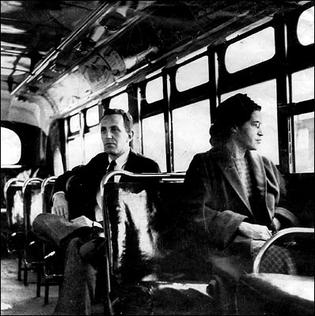

One of the most common misconceptions or lies taught in schools about Rosa Parks — is that she was simply exhausted when she refused to give up her seat on a Montgomery, Alabama, bus that was reserved for white people. This, however, is not entirely true.
Parks was, in fact, seated in the bus’s “coloured section,” which at the time was still subjected to segregation laws.
Parks and three other black passengers were told to give up their seats to newly boarding white passengers when the bus reached its capacity.
However, Rosa Parks refused to comply, despite the fact that the remaining three passengers did.
It’s important to keep in mind that Parks was not just a regular black woman when she was arrested.
She was a highly qualified activist and a prominent member of the National Association for the Advancement of Colored People.
This is why Rosa Parks’ arrest at the time gained so much attention, and it was exactly what was needed to start a prolonged boycott of Montgomery’s buses that lasted for more than a year.
Rosa Parks’ incident played a significant role in the city’s decision to end segregation in all forms of its public transportation system.
Despite not being the first demonstration against segregation, Parks’ action that day was a pivotal moment in the Civil Rights Movement.
Conclusion
The biggest historical lies that are taught in schools must be acknowledged and rejected because they shape our perception of reality and have an impact on our actions and opinions.
We can better understand our past and work towards a more just and equitable future by acknowledging and debunking these myths.
More from the author: