
Health, Fitness, and Body Image
Why Men Believe They Own the Rights to Women’s Bodies
I can’t get past the fact that she looks like the s — — emoji — Aries Spears on Lizzo
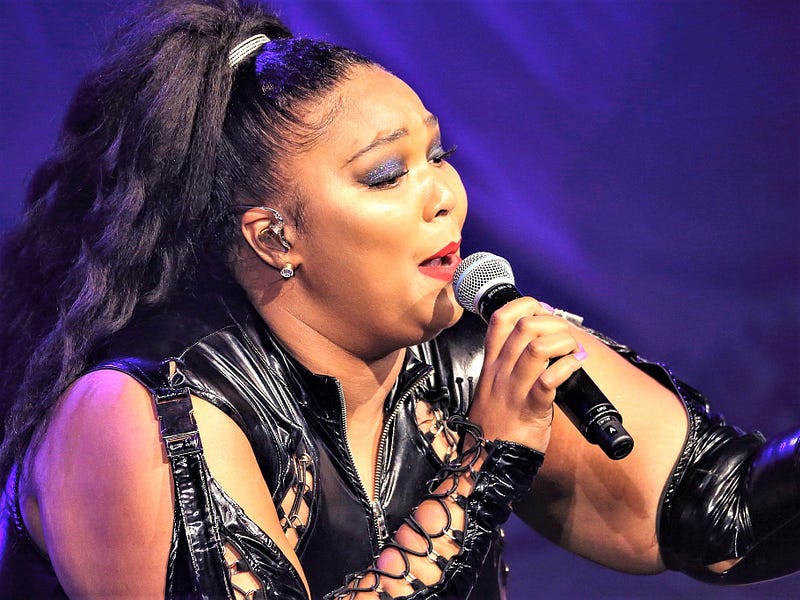
Seriously a sh*t emoji? 💩💩💩 What is with 2022? A lot of men are trying to shame women in any way they can. Madonna posts photos of herself on Instagram and 50 Cent came running after the pop icon,’
“Yo this is the funniest shit! LOL. That’s Madonna under the bed trying to do like a virgin at 63. she shot out, if she don’t get her old ass up. LMFAO.”
To which Madonna called out her ‘friend,’
“I guess your new career is getting attention while trying to humiliate others. The least elevated choice you could make as an artist or an adult. You’re just jealous you won’t look as good as me or have as much fun when you are my age!”
And now it is Aries Spears who wants Lizzo to feel the shame of being a woman in an industry that many men still believe is their territory.
Any woman who has more success, better look a certain way, act a certain way, or these men will go after them.
“I can’t get past the fact that she looks like a s — emoji,” “She’s got a very pretty face, but she keeps showing her body off like, come on, man. Come on, yo.”
“I’m sorry. Listen, I ain’t the most in-shape n — r in the world but I still, when you funny and you got swagger and confidence and you decent looking — I think I’m at least handsome — you get p — y. But a woman that’s built like a plate of mashed potatoes is in trouble.”
“You know what kills me about women is the hypocrisy and the contradiction,” Spears said, beads of sweat popping up across his face. “‘F — diabetes, f — heart problems, f — heart disease, cholesterol. Y’all claim womanhood and about sisterhood and support for your sister, you know, when it comes to that ridiculous s — . But if you really gave a f — , why wouldn’t you go, ‘Black girl, we love your confidence, boo boo, but this ain’t it. This ain’t it.’”
“That’s the real love!” Spears said. “Y’all jump on me for making jokes, but y’all won’t be f — ing real and go, ‘Sister, put the eclair down. This ain’t it. It’s treadmill time.’” — Transcript of his interview with TAOD
Both 50 Cent and Aries Spears were rightfully condemned for their words on social media.
They are not the only ones, Chris Rock took down Will Smith’s wife on the Oscars stage, for some laughs. While I will never condone Will Smith’s violent reaction which to some appeared chivalrous was also an example of male toxicity.
And if it happens in Hollywood, it happens in real life all the time.
Lizzo had to speak, and it’s about damn time
In the recent VMA awards, where Lizzo won the award in the video for good category, in her acceptance speech she had this to say to her detractors, I guess to Aries Spears himself.
“And now, for bitches that got something to say about me in the press,” “You know what? I’m not going to say nothing.”
“They be like, ‘Lizzo why don’t you clap back? Why don’t you clap back?’ ’Cause, bitch, I’m winning, hoe!,” Lizzo said, to thunderous applause. “Big bitch is winning, ho! Best revenge is your paper, bitch!”
While Lizzo had her share of controversy with words when both she and Beyoncé use ‘spaz’ which to disability activists is an ableist slur and offensive in their songs.
But Lizzo acted with grace and humility when she listened to the criticism,
“As a fat black woman in America, I’ve had many hurtful words used against me.” “Let me make one thing clear: I never want to promote derogatory language,” “This is the result of me listening and taking action.” — Lizzo
Sexual objectification of women
Men believe they know better when it comes to women. From the way they look, to what they do with their bodies. Who took away women's reproductive rights? Mostly the men who are sitting behind their benches at the US Supreme Court.
And when it comes to representation, while the population of American women in the United States is about 50%, female members of Congress are at 19%.
Again, men occupying the seats of power have a lot to say about women.
In a study, Women who are objectified are viewed as less than fully human, perceived to have less of a mind for thoughts or decisions, and viewed as less deserving of moral treatment by others.
And while it isn't men who view women this way but also women, one can only look at Justice Amy Coney Barrett who sided with men to overturn Roe v Wade.
Sexual objectification or SO occurs when a woman’s body or body parts are singled out and separated from her as a person and she is viewed primarily as a physical object of male sexual desire (Bartky, 1990).
Objectification theory posits that SO of females is likely to contribute to mental health problems that disproportionately affect women (i.e., eating disorders, depression, and sexual dysfunction) via two main paths.
The first path is direct and overt and involves SO experiences. The second path is indirect and subtle and involves women’s internalization of SO experiences or self-objectification. — Excerpt, Sexual Objectification of Women: Advances to Theory and Research
Final words
While we see random kindness around us, more often than not, we have to deal with a lot of bad people around us who would put us down.
And with social media, we have to deal with the pain twice, in real life and online.
While everyone experiences bullying and is criticized for their looks, weight, and age, we have to admit that it is the women who get more of it.
And while women are fighting back, it is a battle that drains anyone, the constant criticism takes a toll on anyone’s mental health.
Aries Spears, 50 Cent, and even Chris Rock, I would like to ask them when was the last time someone said something so bad that it hurt them from the inside.
And if they have experienced pain from words, why do they dish it out? Do they take pleasure in someone else’s pain?
Thank you for reading.
Sources:
Sexual Objectification of Women: Advances to Theory and Research
Lizzo Seems to Respond to Comedian Aries Spears
Here are some of my stories, all complimentary.
👉Celebrity Conspiracy Theories, Anne Heche Is Its Latest Victim — Free Reading.
👉He Was My John Travolta to My Sandy, Grease Made Me Realize I Was Gay — Free Reading.
👉Ricky Martin Denies Charges of Incest and Can Spend the Rest of His Life in Jail If Found Guilty — Free Reading.
👉Claim your offer.
If you enjoyed this article, please consider joining Medium by clicking on this link. I may earn a little commission to buy myself a decent cup of coffee. Thank you.


