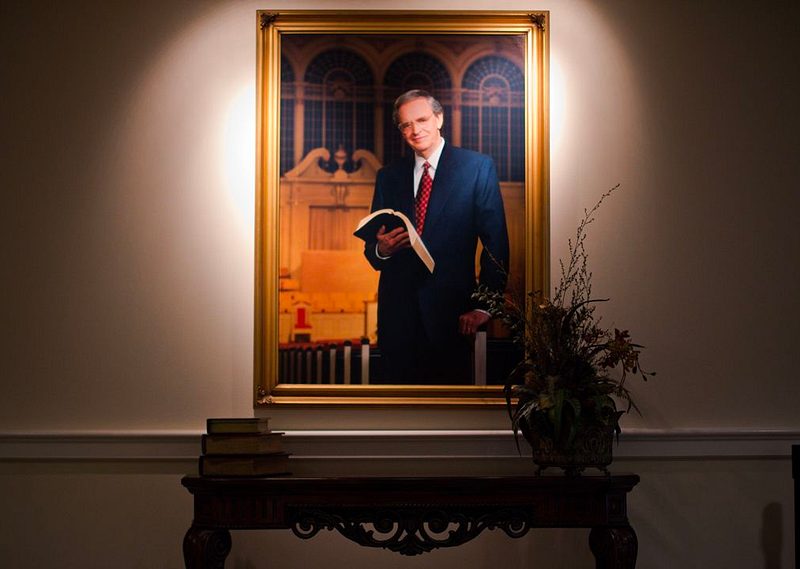
I believe in Hell so Charles Stanley has somewhere to go
Let’s talk about an Evangelical villain
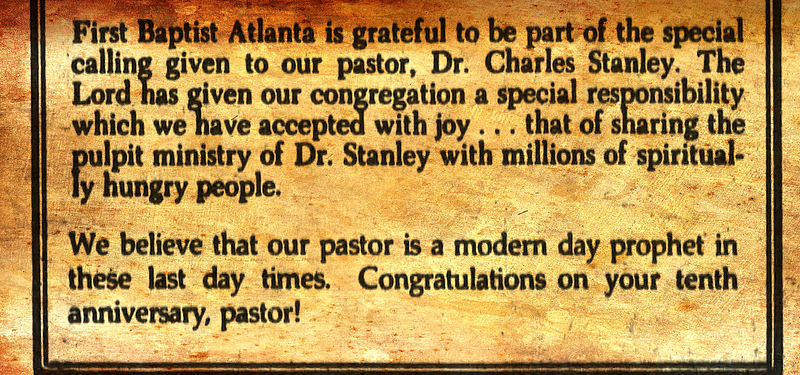
He was the smiling religious hero who ruled over the Evangelical world since the late 1970s. A scholar. A ‘man of God’—nearly a new prophet.
That’s what they said. As a kid I was made to watch his T.V. show, In Touch with Dr. Charles Stanley. Later, I looked up the facts about him.
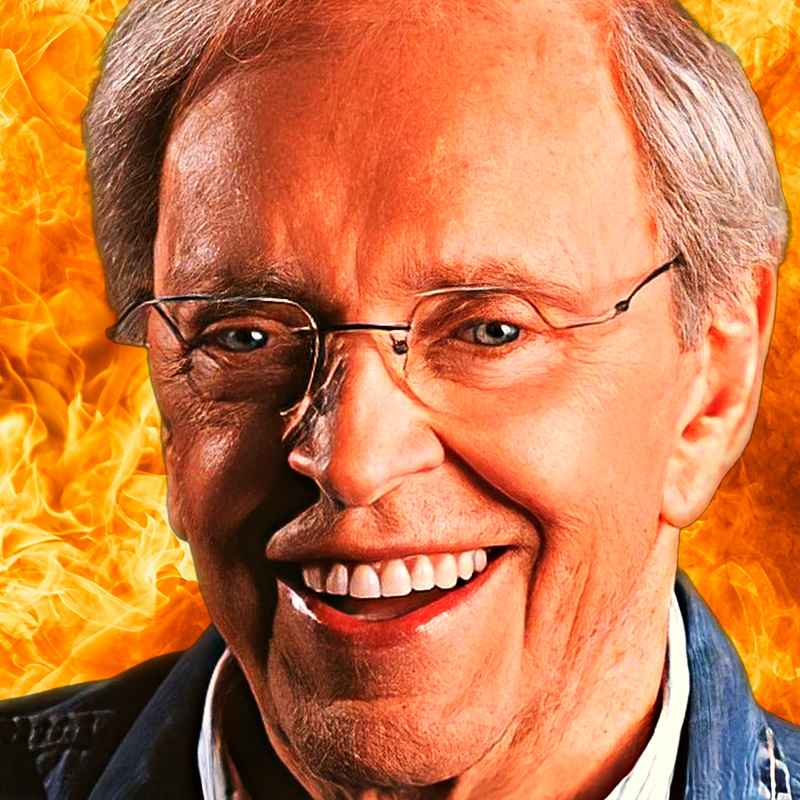
His ‘doctorate’ was from an unaccredited diploma mill.
For his ‘dissertation’ at Luther Rice Seminary, all he’d had to do was send in some sermon transcripts. He wasn’t a ‘Dr.’, and wasn’t a scholar.
His tellings of his life are clearly fraudulent. I read Stanley’s 2016 memoir, Courageous Faith: My Story From a Life of Obedience, then compared it with news coverage throughout his life.
He likes the story of how he became head pastor at First Baptist Church in Atlanta. The elder board had rejected him. He said it was because they were “country club” types, where his focus — straight from God — was “evangelism.”
He’d gotten elected by bypassing the elder board and appealing to the congregation. Afterward, 35 deacons and 300 members resigned. Stanley called it a “cleansing of the temple.”
But elders from the church were quoted saying they’d been startled at an apparent change that came over the man they’d hired as an assistant pastor. A deacon recalled they had “a complete reversal on Stanley because he was so power-hungry.”
Stanley had taken to calling himself a ‘prophet of God’ with a mission for the church. “It is very difficult to dialogue with one who always thinks his answer comes from God,” another elder said.
It was often said that Stanley didn’t talk to people, but at people.
But everyone else was just a mere mortal. He was the Moses-like leader, the “prophet” sent to the world to minister in the Last Days!
His own church bought it completely.
Stanley’s work as a “prophet” was to reform America.
He mobilized his churches as political machines, turning non-political “fundamentalists” into a Republican voting bloc. A 1963 newspaper interview has him prodding churchgoers:
“We must start applying our Christian time toward civic attitudes and political campaigns.”
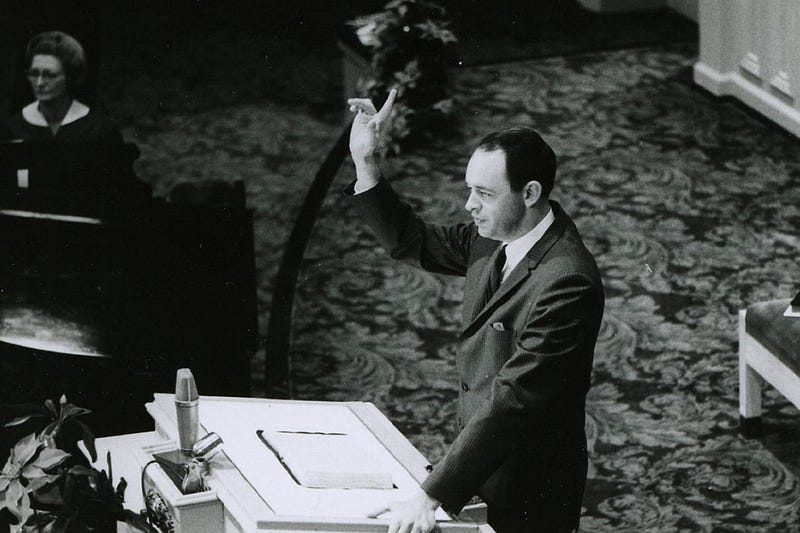
In a startling break from Baptist norms, he took to endorsing political candidates from the pulpit.
He was a racist and segregationist.
The Encyclopedia of Evangelicalism noted that “as late as the 1970s he had guards stationed outside the church to keep African-Americans out.”
In Stanley’s memoirs, there are, incredibly, no mentions of race.
It was a subject they talked about in silence.
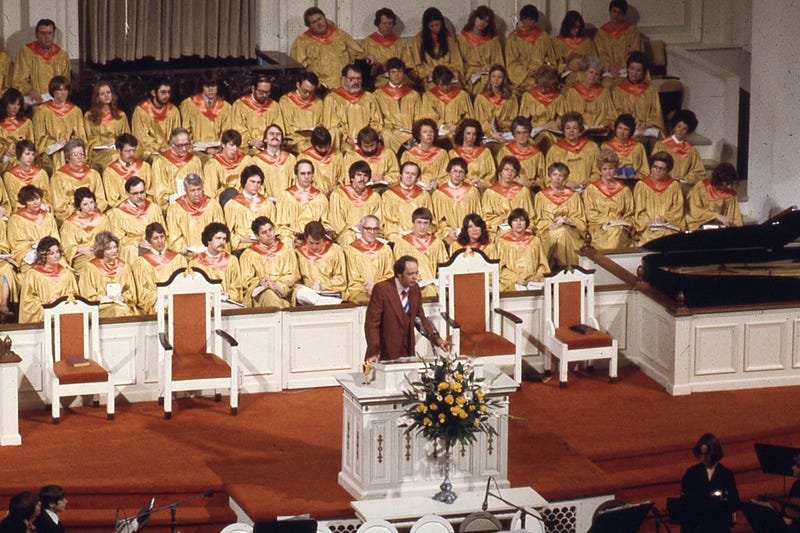
Charles Stanley was an architect of the “Religious Right.”
He was a founding member of the Moral Majority and the Christian Coalition. He worked to get Ronald Reagan elected.
He left his mark wherever he went.
I realized: Charles Stanley was not a pastor, really, so much as a political activist with a vision of a white supremacist Christian nation.
He provided the kooky theology — while telling people he was a prophet, to make it all go down nice.

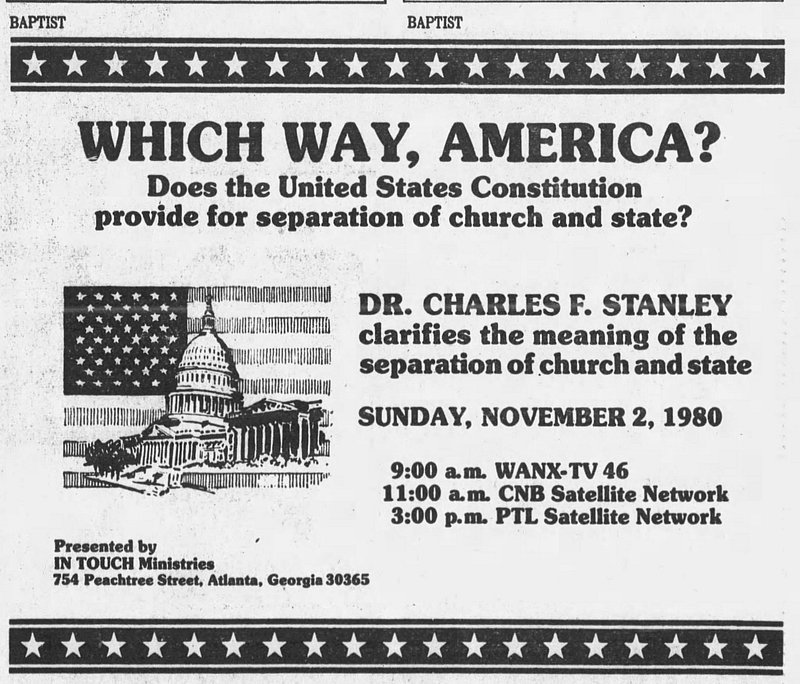
And so ‘Evangelicals’ were born.
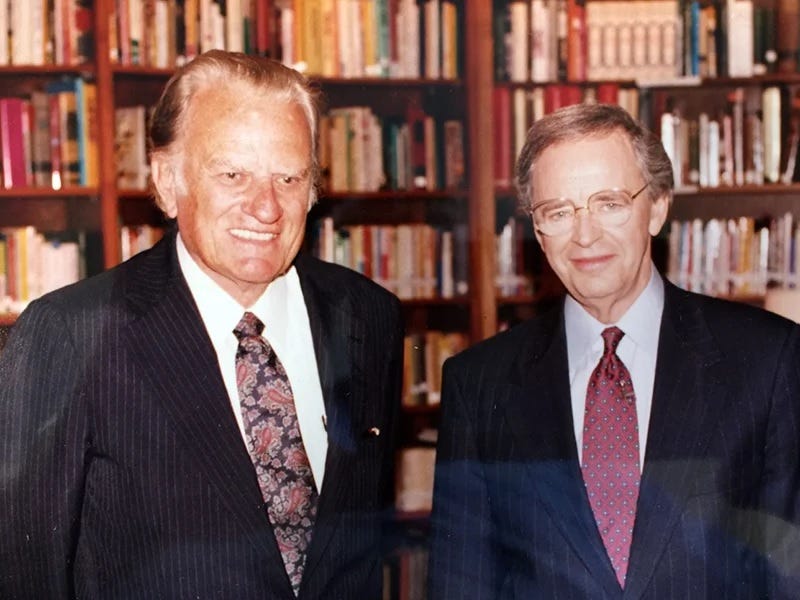
It was a movement that surprised Billy Graham himself. But from then on, Charles Stanley was at the wheel.
Stanley became a national figure because of T.V.
Around 1976, he did a little show on local channels in Atlanta. As he writes in Courageous Faith, in 1977 he got a call from Pat Robertson of the Christian Broadcasting Network. They needed an act to replace the departing Jim and Tammy Faye Bakker.
There was something compelling about Stanley. He was so pleasant, so smiling, like a sweet Southern gentleman, nearly eunuch-like in his non-masculinity. But under the surface there was something very dark.
I always felt that about him — a spirit that was authoritarian, conniving, controlling. Then, doing research on him, I found Stanley describing himself as “very, very combative and very, very competitive.”
He said his life motto had been:
“You do or die. You do whatever is necessary to win.”
He said that was in his past, but I wasn’t so sure.
In 1984, Stanley was elected president of the Southern Baptist Convention.
The man pulling the strings to achieve the victory was Paul Pressler, the legendary activist engineering the ‘conservative resurgence’. Stanley had to have known Paul Pressler was a gay pedophile. Everyone around him knew, as I discussed in my post “When Southern Baptists Were Gay Pedophiles.”
At the SBC, Stanley ignored the many reports of sexual abuse in churches that poured in continually. The Evangelical anti-abuse activist Christa Brown would recall Stanley, as SBC leader, working to bury her report of rape against her pastor.
What Stanley cared about was dead gays.
At the height of the AIDS era, he used his platform at the SBC to war on the ‘evil homosexuals’, i.e. people dying of a virus. He worked to pass off the “AIDS is God’s punishment” idea as serious theology. He says in 1986:
“It is a sinful life style, according to Scripture, and I believe that AIDS is God indicating his displeasure and his attitude toward that form of life style, which we in this country are about to accept.”
Evangelicals never held him to account for this infamy. But Jews did, interestingly. In 2015, he was to receive an award for his support of Israel until his comments on AIDS were remembered.
Jewish leaders, viewing Stanley’s AIDS rants as inhumane, rejected him even in view of his advocacy for Israel. He ducked out of the award, quietly.
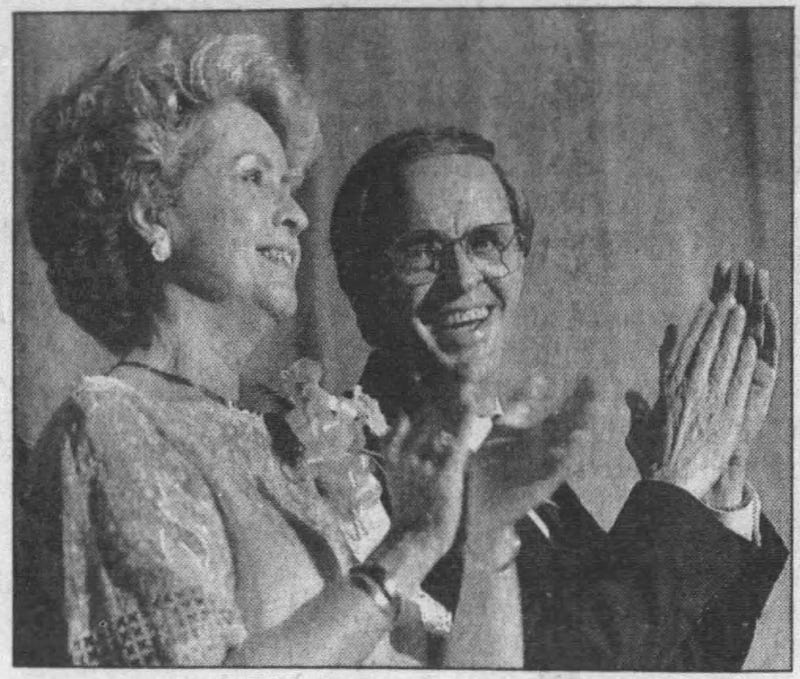
In 1993 his wife asked for a divorce.
My 2020 post, “Divorcing Charles Stanley,” currently at 290k views (and widely copied on gossip sites), tells the horror story that played out.
Anna Stanley had wanted a divorce since the mid-1980s. She wrote a letter to the church providing testimony that Charles had abandoned his family. All he cared about was his work, she said.
This should have been grounds for his dismissal. He had not managed his family well — and this was a biblical violation, as Charles Stanley had himself emphasized many times.
The church ignored the letter, and connived to keep Anna’s story from being heard. Delaying the process for years, Charles Stanley was often openly lying about the marriage being on the road to recovery.
Anna kept pressing for a divorce, and finally got it, as the church voted to let Charles remain head pastor — shattering the “biblical” rules they’d sworn by until that moment.
I guess he got Evangelicals to admit they don’t actually care about their “rules.”
They pretend to follow them, posing as “godly.” But all they really care about is power. 🔶