When Southern Baptists were gay pedophiles
A lawsuit against a historic leader indicts a religion
An amazing civil case is making its way through Texas courts. A man says that when he was age 14, in 1980, he was raped by a youth pastor at his church.
The accuser, Gareld Duane Rollins Jr., names Paul Pressler—a familiar name to Southern Baptists. A legendary activist since the late 1970s, he almost singlehandedly shifted the denomination to the hard right.
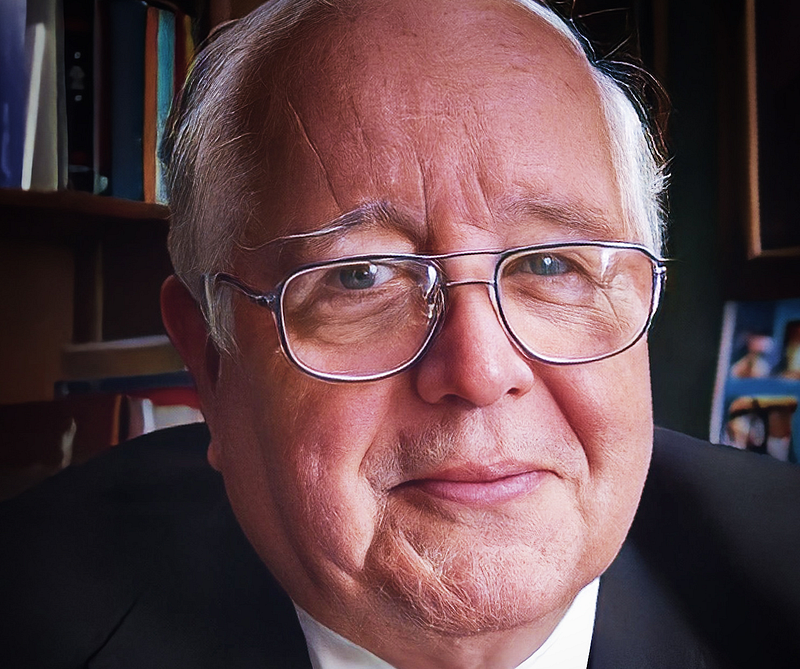
Christians haven’t been eager to talk about the case.
But World magazine just has a remarkable new exposé, and I’m reading the lawsuit, which has details too sordid for any mainstream outlet to report.
Rollins, who is called ‘Duane’, seems to have had a single mother. As a church elder, Pressler stepped in to help out with his education, and so the kid learned about anal sex. The lawsuit narrates:
“Pressler told Duane that he was oppressed, under attack, lonely, unappreciated, and that they had a freedom to engage in this behavior not given to others. He told Duane he was the only boy he had kissed on the lips.”
Was Pressler saying he was in love? He explained the sex as:
“…our secret, our freedom, no one but God would understand.”
The sex happened in the Pressler master bedroom, Duane recalls, when Pressler’s wife was home. He understood it to be some kind of religious exercise, but one that plunged him into a private hell. He’d shortly afterward take up alcohol and marijuana, and later harder drugs.
Duane ended up in jail, multiple times.
Pressler made efforts to help him get parole, and in 2003, Duane was paroled on the condition of Pressler’s law firm employing him. He left jail and entered the lifestyle of a wealthy Christian celebrity, working as office assistant—and bedroom assistant.
Pressler took him around the world as his “masseur” — though Duane wasn’t the only one. On a church trip to Algeria, Duane recalls one time when a group of Christian leaders were kept waiting while Pressler finished up with a youth named ‘Farid’.
That such incidents could be unnoticed remains mysterious — unless they weren’t. It seems there was plenty of talk. Duane’s lawyer told the Texas Monitor in 2017 that Pressler’s sex life had been the “worst kept secret in Houston.” He added:
“He’s been very blatant and very careless over the years running after young boys and picking them up from these various church youth Bible study groups.”
What was going on with Pressler’s wife?
A word from Nancy Avery Pressler might be helpful. She’s made no public statement. She was no dummy. Her wedding announcement in 1959 lists her as a graduate of Smith College. (She might’ve known Sylvia Plath.)
The Presslers had three children, God knows how.
In 2003, Pressler and Duane fought violently in a Dallas hotel room.
Duane sued, citing physical assault. In a whirlwind of sex and secrets, Pressler agreed to pay him $1500 a month, for twenty-five years—if he kept quiet about their relationship.
Soon Duane was back in jail. A session with a prison psychiatrist in 2015 prompted him to realize, the lawsuit says, “that his relationship with Pressler was neither ‘God-approved’ nor part of any ‘divine plan.’”
In 2017, he sued. For the first time, Presser was outed. The allegations fell outside the statute of limitations. But on appeal, owing to Duane having been impaired by PTSD, the courts allowed the case to go forward.
His suit inspired two other Pressler victims to step forward.
A young lawyer at a law firm Pressler had worked at years later said he’d been invited to get naked in a hot tub.
Another victim was Toby Twining, later a noted musician. In 1977 he was a 17-year-old attending Bethel Independent Presbyterian Church in Houston. Pressler was his youth pastor. After several flirty scenes, Twining recalls, Pressler got him into a sauna, and sexually assaulted him. Twining told the church leadership, and Pressler was fired — but quietly.
World magazine quotes a man who, at the time, was the young son of Bethel’s pastor. He recalls being advised privately to avoid Pressler. Other boys didn’t get the memo, and the church leadership seems to have regarded it all as a secret they’d keep. As World notes:
“…a few Baptist leaders were aware of accusations of misconduct against Pressler but made no moves to protect young men once the accusations surfaced.”
Pressler switched churches to First Baptist of Houston.
That’s where he met Duane. It’s instructive to look over Pressler’s memoir of the time, published in 1999. He writes of his leaving Bethel as owing to that church not being a member of the Southern Baptist Convention.
God, he says, had given him a special charge to see that Southern Baptists continued to believe in biblical inerrancy. He set to work on a campaign to take over the leadership of the Southern Baptist Convention. His key idea was that the SBC needed to return to a strict belief in the Bible’s divine inspiration.
Histories tell this narrative as if it’s true. But a man who used his position as youth pastor to rape boys is not a man who has received a divine calling. Pressler’s talk of biblical inerrancy situated him as ultra-orthodox.
He posed essentially as a prophet, while teasing the prospect of a “Christian” political takeover of the United States. He knew how to win those Baptist sympathies—and sons.
Pressler had no theological education.
He’d attended Princeton. He was elected as a state representative, then an appeals court judge (as a Democrat)—a position that placed little demands on him. As a judge, he had a platform, and time and money for a campaign to seize control of the SBC.
That Pressler was even a Christian, however, strikes me as dubious. He became a youth pastor, it seems, to seduce boys, and then moved to working with the SBC. Here he was essentially a Republican operative.
The story seems to be that he’d met Ronald Reagan, who then was embarking on another run for president. As Anne Nelson notes in Shadow Network: Media, Money, and the Secret Hub of the Radical Right, Pressler “immediately grasped his potential to build out their base.”
With the social dexterity of a Roy Cohn, Pressler invaded the Southern Baptist world, using theological arguments to gain access to its leverage over sixteen million voters.
Pressler’s campaigning was full of anti-gay innuendo.
He positioned the ‘reformers’ as real men who were bringing ultra-masculinity to the Southern Baptist denomination, when other denominations were getting effeminate. He’s remembered for a joke:
“Why can’t Episcopalians play chess anymore? Because they can’t tell a queen from a bishop.”
Then he’d go have drug-fueled sex with Duane.
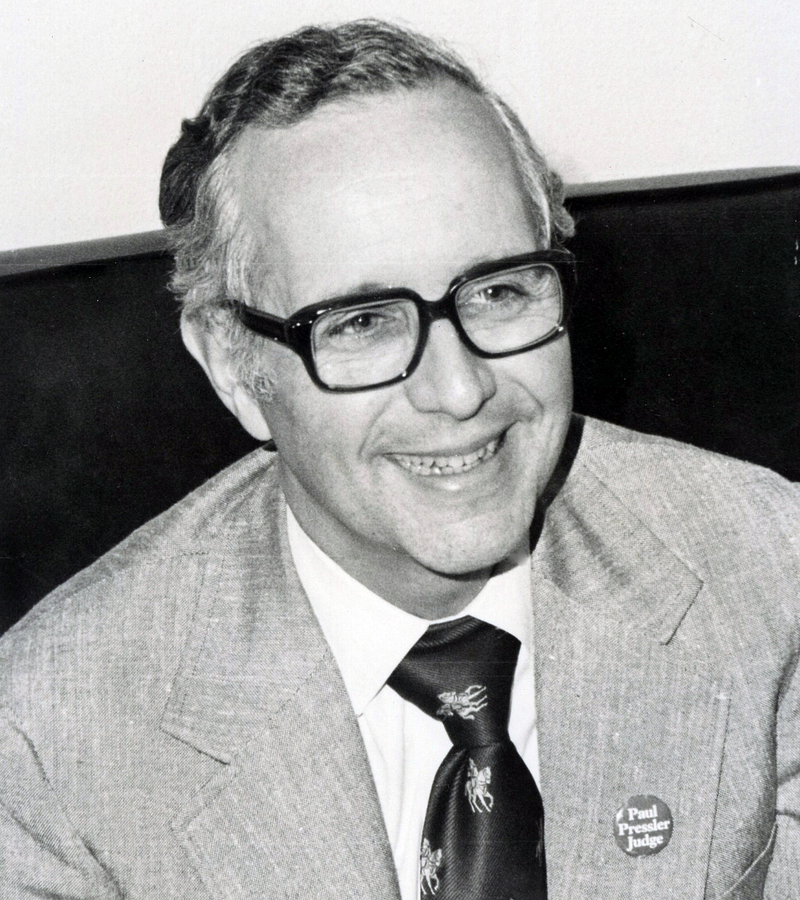
He’s recalled to have had “files on nearly every SBC pastor…”
He’d take them and campaign at church after church. His endless talk was about “biblical inerrancy,” but the goal was the SBC presidency—then the Reagan presidency.
Even Baptists were shocked by how ruthless Pressler could get in pursuit of both. As Christianity Today reported in 1979:
“One Louisiana pastor complained of these conservatives, ‘They may be as orthodox as Peter, but they’re as mean as the devil.’”
A news story in 1999 has a recollection of Pressler and his cronies:
“They made it a yes or no question. Either you believed the Bible from cover to cover or you don’t.”
In Bill Moyers’ 1987 PBS documentary, God and Politics, a source recalls Pressler campaigning in the late 1970s:
“They’re using raw power. It’s our side against your side. We win, you lose. Now, that may be valid in the world of secular politics, but I contend that in the work of the kingdom of God there’s no place for that.”
It’s quite a story: Baptists feeling super-masculine for being strong-armed by a closeted gay pedophile.
Pressler talked up his “super Christianity.”
While hitting the “biblical inerrancy” thing, he’d assembled a political team. A college president named Paige Patterson was a figurehead theologian. A pastor from Memphis named Adrian Rogers, was the figurehead candidate.
The strategy was to win the presidency of the SBC. Then they could fire all committee chairs and install their own leadership.
A single vote would allow a takeover of the entire organization—just in time to mobilize it to elect Reagan.
Adrian Rogers was elected SBC president in 1979.
The SBC struggled to fight off the takeover. As Christianity Today reported, a resolution was passed to “disavow overt political activity and organization as a method of selection of its officers.”
And an investigation was launched into “voter irregularities.”
But the right-wing was energized in anticipation of Reagan’s victory in 1980. The possibility came in view of a Christian president, and the “Christian America” of Southern Baptist dreams. Adrian Rogers wouldn’t be able to get them to the Promised Land, but Pressler had his eye on a gifted newcomer.
An Atlanta pastor had been called “power-hungry” from the start of his career. He’d dreamed of using churches for political organizing. His own marriage was a sham. But he embodied the new Southern Baptist ethos, as in his motto:
“You do whatever is necessary to win.”
Or you do—when you’re Charles Stanley.
Victories racked up.
A new, right-wing America seemed to be happening—with Southern Baptists eager to chime in on most any political issue.
In 1981, Pressler was a founding member of the ‘Council for National Policy’, a secretive group of Christian leaders who get together to chart out America’s course. When asked about it by Bill Moyers for the 1987 documentary, Pressler ended the interview.
Charles Stanley became SBC president in 1985. In 1988, Pressler got Richard Land installed in the key ‘Christian Life Commission’, the committee that set social policy. Land instigated the culture war over Disney’s ‘Gay Days’ that marked Southern Baptists for a generation.
Pressler was always publicly anti-gay.
There’s scattered remarks about it in his memoir, like mocking those who claimed to be gay Christians. But under his watch, the SBC became a fountain of anti-gay talk. As SBC president, Charles Stanley says in 1986:
“It is a sinful life style, according to Scripture, and I believe that AIDS is God indicating his displeasure and his attitude toward that form of life style, which we in this country are about to accept.”
That this anti-gay stance has a gay origin is deeply ironic—but in Christian history, hardly unprecedented.
In 1989, Pressler was on the way to Washington.
He publicly changed parties to Republican just in time to be considered by the Bush administration for the head the Office of Government Ethics. The story later told was that “liberals” objected to his rise.
As World discovered, the FBI did a background check and found “ethics problems.” It appears the president of Baylor University, Abner McCall, with whom he’d long been at odds, revealed Pressler’s homosexual history.
World found a memo about it from Paige Patterson, who claimed to have never heard of it before. Duane was working as Pressler’s ‘office assistant’ at the time, saw the FBI evaluation, and recalls the words “toxic” and “could not recommend the candidate for the position.”
Pressler remained at the SBC.
He was a notorious figure. In 1990, Bill Moyers called him “a little dictator so puffed up with power that he cannot distinguish God’s will from his own whims.”
Was #MeToo his downfall? The link Duane’s lawsuit came in 2017. But there was another effort to out Pressler. He had been discussed in a leading Evangelical media platform, The Gospel Coalition. A young pastor named Chris Davis had written about his interaction with “a much older, respected Christian leader who was well-known in my circles.”
Davis writes of this “leader” taking an interest in him, ushering him into the upper elite of Southern Baptist clergy. He narrates:
“The first night when we settled into our hotel room, he told me how special I was, that he loved me, and he gave me a long hug before lights out.”
There were odd naked scenes around the shower. Davis writes of his mentality at the time: “You just go with it because of who he is.”
In telling his story now, Davis doesn’t address whether he’d told The Gospel Coalition, in 2018, the name of his abuser. Would they have printed an accusation about a “respected Christian leader” without asking who it was?
Pressler is still living, at age 91.
Through lawyers, he “vehemently” denied all allegations, calling the lawsuit “frivolous.”
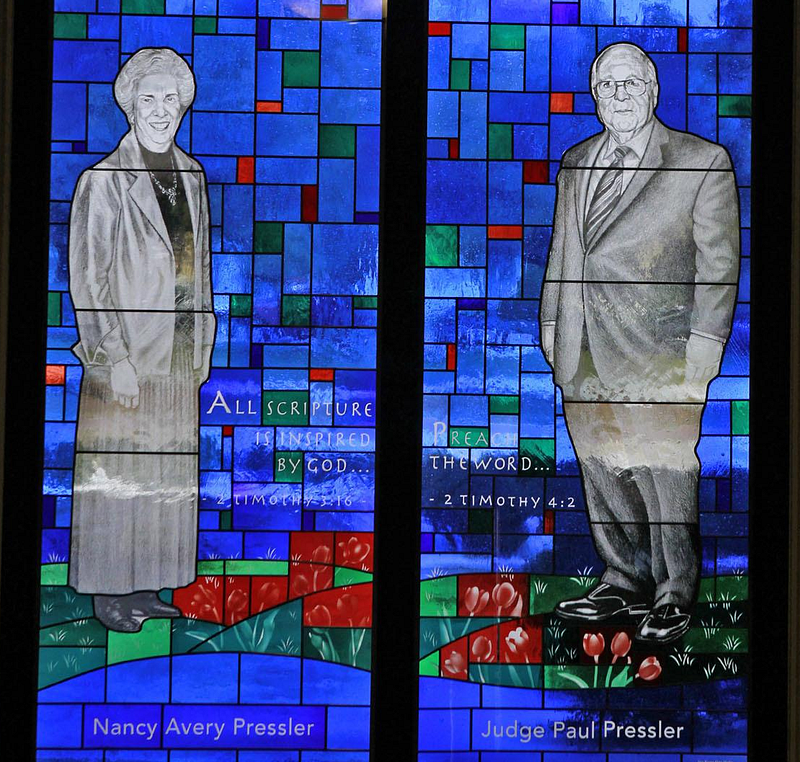
His religion made a show of disavowing him. That he was removed from the window of the Southwestern Baptist Theological Seminary, and relieved of some money, may be all the public punishment he’ll receive.
Toby Twining recalls his response had been to “block” the assault from his memory. Forty years later, it came back with force.
But the religion, for the most part, remains in denial. To go through the pieces, it might just be a story of Southern Baptists realizing they’d had a political organizer of some genius—a man who could bring them in view of the ‘Christian empire’ of their dreams.
The price would be their sons. 🔶
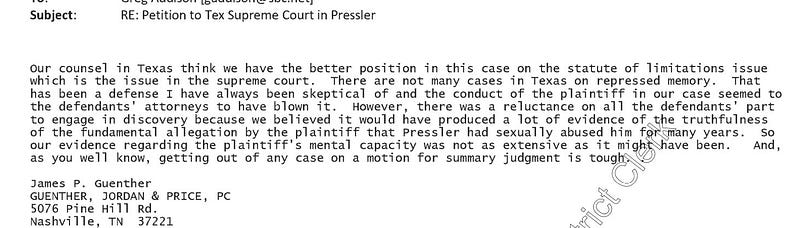
Added: The SBC knew. A 2021 memo from a longtime lawyer for the denomination said that if the case proceeded to discovery there would be “a lot of evidence” that Pressler abused Duane Rollins “for many years.”