
Tammy Faye was a prophet
Finally, someone was listening to God
Born in 1942, she was raised in a religious culture that seems unbelievably cruel. But it was just some ordinary Christians in Minnesota.
I’m reading Tammy Faye Bakker’s 1978 memoir, I Gotta Be Me. When she was three, her father left a family of a wife and two kids. He just wanted to be married to someone else, somewhere else, but blame was cast. “To the church, my mother was just a harlot,” Tammy Faye writes.
The insults, the barbs—she remembered it all.

A theological insight came to her.
She writes: “They didn’t have any spirituality in themselves so they had to find a ‘bigger sinner’ to pick apart.”
That’s a big insight into Christianity.
At age ten, she responded to an altar call. She writes: “For hours I lay on the floor and spoke in an unknown language. I wasn’t aware of anyone else. I was walking with Jesus.”
And she began to dream of another Christianity—one that wasn’t cruel to women, or cruel at all.
As a teenager she wanted to try make-up.
Tammy Faye writes: “I had been taught if you put on lipstick you are going to hell.” She tried a little eyeshadow instead.
Cosmetics became her stage for interrogating, and challenging, Christian legalism—those rules they had about everything. She knew she was provoking Christians, and that they’d retaliate. She writes:
“Way down deep in my heart I felt many of the people at our church had been old fuddy-duddies on such things and that there was a place of liberation with the Lord.”
She often speaks of her conversations with God. She writes:
“God began to speak to me that He is a God of love.”
And I started to think that might be true. The deity had finally found someone who was listening.

She went to Bible college, but they had nothing to teach her.
Tammy Faye cites no information or insights from the year she attended North Central Bible College in Minneapolis. I suspect she was mostly looking for a man to marry. She was driven to be a public figure in Christianity, which meant she needed a husband.
But she needed a husband who’d see her as a spiritual partner—an unusual profile for a Christian man. But there he was. “He weighed 130 pounds and I seventy-three,” she writes. “We looked great together.”
Her attention, as always, was to visuals. Tammy Faye was tiny, 4'10". Jim Bakker was 5'4". They looked proportional to each other. She didn’t know it yet, but they were like little machines built for T.V.
She often ‘codes’ Jim as queer.
He was frequently in emotional collapse, ‘crying’ or ‘sobbing’. After they married, she writes: “Jim was so in love all he wanted to do was stay home and play house.”
She doesn’t critique him for that, or wage any kind of gender attack. The only problem came when he said he wasn’t sure he wanted to be a pastor, or even a Christian. She panicked. She became suicidal. The plan was that he would preach, and she would sing.
She got a family friend to call Jim and tell him: “Jim Bakker, if you don’t get back to church and do what God wants you to, your wife is going to be the minister.”
In Pentecostal theology, woman were seen as second class, but allowed to be a pastor if there was an “emergency” — and Tammy Faye, it seems, was ready to pull the trigger.
But Jim got back on the wagon, and their show went on the road.
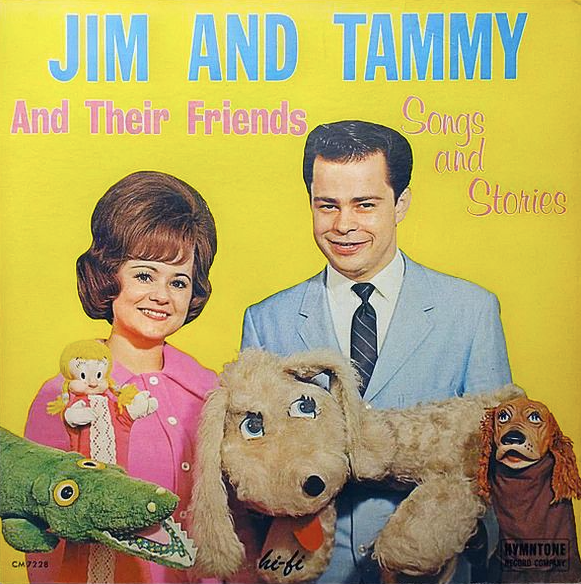
She seems the primary creative drive for the puppet show they developed. She found that voices and personalities were flowing out of her. She writes: “Jim swears to this day that I have a double or triple personality.”
They became nationally known for the act. She writes: “We were breaking Sunday school records all over the country. Kids were even dragging their parents to church on rainy, stormy nights.”
A rising Pentecostal media baron named Pat Robertson needed talent for his new CBN network. So the Bakkers had a children’s show called Come On Over. It became the first hit for the network, and for years the only thing they were known for.
I love a promo song for the show:
“It’s Tammy — A double whammy — Of turned-on Christian love!”
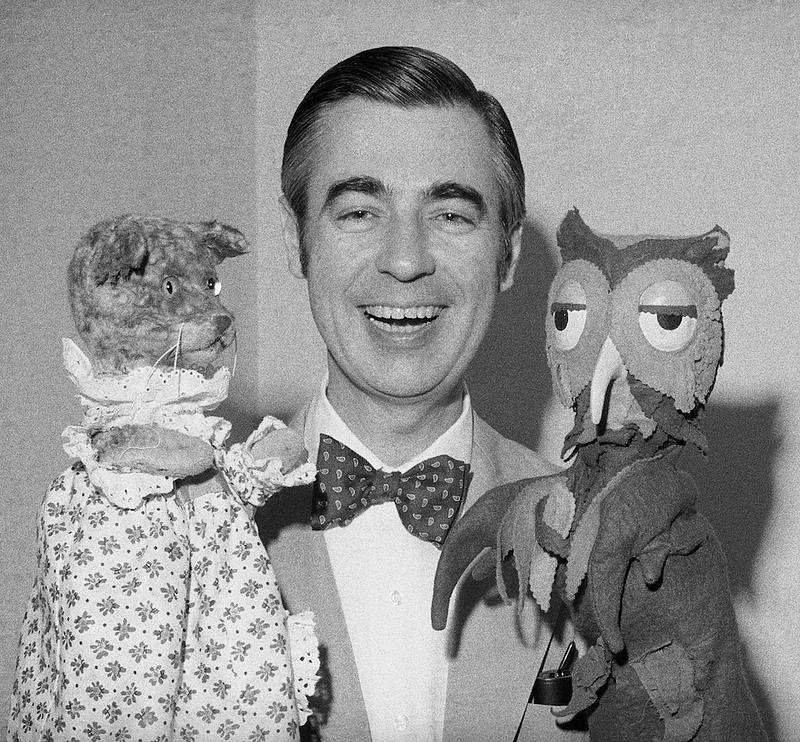
A similarity to Mister Roger’s Neighborhood is striking, but I’m not able to find any suggestion of a crossover influence. Two Christian media geniuses, Fred Rogers and Tammy Faye Bakker, were on parallel tracks—using play therapy to teach Christians how to speak their feelings.
Jim yearned to be a power player.
To boost his status at the network, he focused on doing telethon fundraisers— startling viewers by sobbing on air when begging for money.
In Tammy Faye’s descriptions of him, he remained a deeply anxious person. He nursed constant ulcers, and had a nervous breakdown that led him to confine himself in a bedroom for a month. She writes: “I could hear him cry, ‘Please God, don’t let me lose my mind.’”
She did their show on her own, as he eventually emerged, talking up a new talk show he wanted to do. It would be called The 700 Club, a good-humored Christian variety show, with musical guests.
But Pat Robertson joined as a co-host, and it became, over time, a venue for his political commentary.
Tammy Faye was increasingly sidelined.
“I began to feel left out of Jim’s life,” she writes. “His whole life became television.” Another way to say that would be: she’d generated a hit for them, and they took the ball and ran away with it.
She always viewed the Robertson crowd as spiritually dark. Developing a conflict with one CBN employee, she writes of God chiding her:
“Tammy, you don’t have to love what she does. But you must love her because she is My child and I love her just as much as I love you.”
Tammy replied, “Lord, I ask You to forgive me, and I’m going to love her through You!”
Loving Jim was as difficult.
Always forward-thinking about discussing sex, she writes that their sex life became mechanical, and that’s when Jim was home, which wasn’t much. She writes:
“I was becoming desperate to have a baby, someone I could love, someone to help take away the loneliness I faced day after day, night after night.”
She managed—somehow—to get pregnant. She worked on T.V. all throughout her pregnancy, one of the many unusual features of her career that is mentioned in passing.
She had a daughter. “I loved her as I have never loved another human being,” she writes. “It was me and a tiny baby girl named Tammy Sue. She and I against the world.”
A strange condition overtook her.
For a year her body felt numbed, her life force felt muted. She writes:
“Suddenly I couldn’t pray any more. I couldn’t cry any more. I couldn’t laugh any more, and I couldn’t even let Jim touch me. Every time he’d go to touch me I felt I was breaking out in a cold sweat all over my body.”
She was released from this state, she writes, in a dramatic scene when she was called upon to sing to a thousand people. Except she gave a sermon as well. As she writes: “I got up and ministered in word and song.”
In a religion that didn’t let women speak, she had to teach herself how.
They set up in Charlotte, North Carolina, and the “PTL” empire was born.
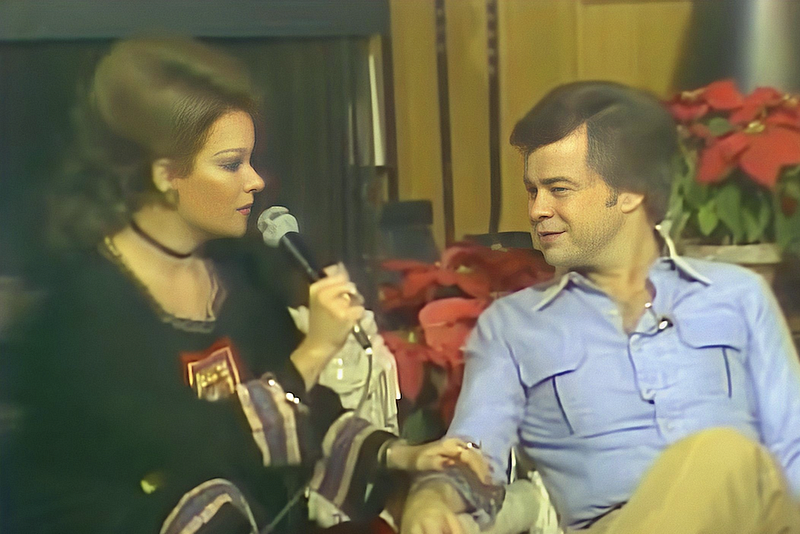
Jim Bakker was a bizarre presence in Christianity: a fun, bouncy little faith-healing evangelist given to laughing and crying.
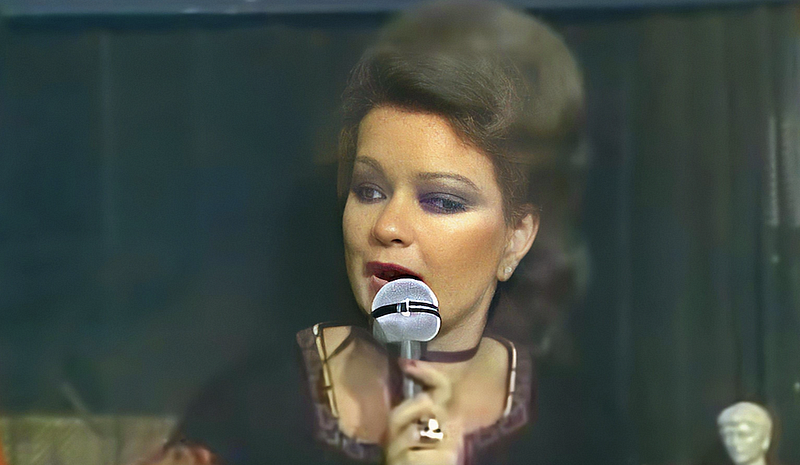
But Tammy Faye was the star. All along the way, she was teaching herself everything. She became an accomplished T.V. host, talking about God, interviewing, singing—while keeping up a comic persona. A jester. A clown. A mother. A teacher.
She can seem eerily present. In a 1982 clip, Vestal Goodman, the Southern gospel singer, tells her that Christians across the country talk about her. Goodman relays her response: “Honey, it’s because she is alive. There’s nothing about her dead. She’s alive.”
Tammy Faye’s 1985 interview with a gay Christian minister and AIDS victim named Steve Pieters remains just one startling highlight of her amazing career. As most Christians were actively wishing for the deaths of AIDS sufferers, she said they were loved.
Wasn’t she a prophet?
If that means someone who tells a religion they have to change, I’m not sure how Tammy Faye wasn’t one. And like prophets in the Bible, including Jesus, she was rewarded with scorn. Her daughter recalls that “when when we would go shopping, people would yell out horrible things to her.”
Tammy Faye was oddly agitating. People would just start foaming at the mouth at any mention of her name. “She never really got the unconditional love she gave to so many, and that’s what makes me sad because she just wanted to love everyone,” says Tammy Sue.
But I think an idea started to spread outward, from its origin in a single, small woman. Maybe it is just about loving. Tammy Faye heard it from God, and gave it to the world. 🔶


