
30 Beliefs And Techniques For Life And Writing from Jack Kerouac
#21 ‘Struggle to sketch the flow that already exists intact in mind’
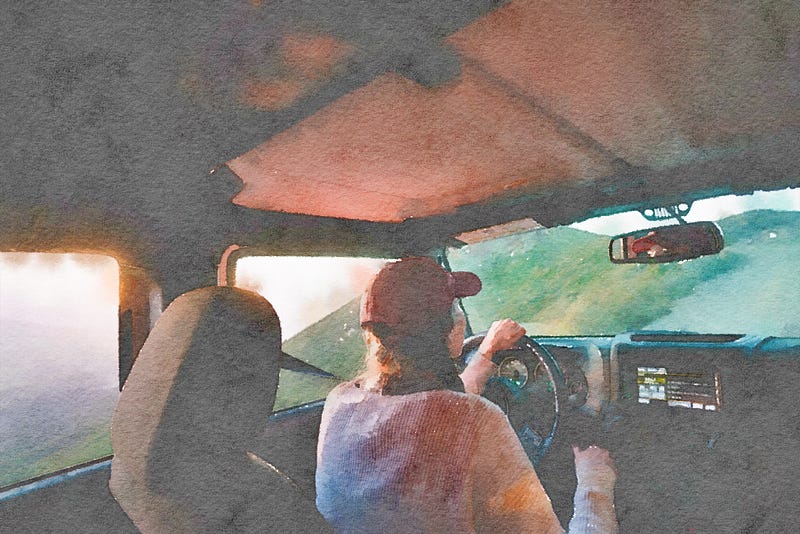
“What is that feeling when you’re driving away from people and they recede on the plain till you see their specks dispersing? — it’s the too-huge world vaulting us, and it’s good-bye. But we lean forward to the next crazy venture beneath the skies.” ― Jack Kerouac, On the Road
Jack Kerouac (1922–1969) was a Beat Poet and writer. Tucked away in The Portable Jack Kerouac, a collection of his most famous writings, is his list of 30 beliefs for writing and life entitled Belief and Technique for Modern Prose. Skip to the end to find the list.
The importance of nature and wilderness in Jack’s writing
Scholarship on the 1950’s American Beat poets, writes English professor and ecocriticism scholar Susan Signe Morrison, has mostly focused on the group’s experiences as city-dwellers who occasionally enjoyed road trips into the wild.
Studies of Jack Kerouac's writing, in particular, has focused mostly on him as an egocentric, jazz-influenced urban writer with fantasies of escaping city life manifesting in stream-of-consciousness writing about his cross-country road trips with his fellow poetic Dharma bums.
But another aspect of these writers’ lives that deserves more attention, says Morrison, is “the importance of the theme of nature and wilderness in their writings.”¹
Wilderness And ‘The Dream of Naturalism’ in Beat Poetry
Today, when the average American hikes into the woods, they don’t just bring sunscreen and a water bottle with them; they’re also carrying with them the cultural baggage of an intellection tradition of ‘wilderness thinking’ deeply rooted in the modern perceptions of the natural world.
The uniquely American love of wilderness is what environmental scholar Paul Wapner calls the American “Dream of Naturalism.” As Wapner writes,
“The American environmentalist imagination has long seen nature as representing much that is true, good, right, and beautiful in the world.”²
An important idea here is that cross-culturally, there are very different notions of not only what constitutes ‘Nature,’ but more specifically, what constitutes ‘good nature’ and ‘bad nature.’
For beat poets like Kerouac deeply influenced by the American nature writing tradition from Thoreau and Emerson to Jack London and John Muir, wild nature was a place undisturbed by human influence. And getting as far away from the city as possible was where one could find all that is true, good, right and beautiful in the world.
Only one problem: For an urban poet like Kerouac who spent much of his life buried deep in bustling cities, you needed a vehicle to get there. A simple road-trip takes on new meaning when understood from within the uniquely American mythology of wilderness that Kerouac so fully embraced in his life.
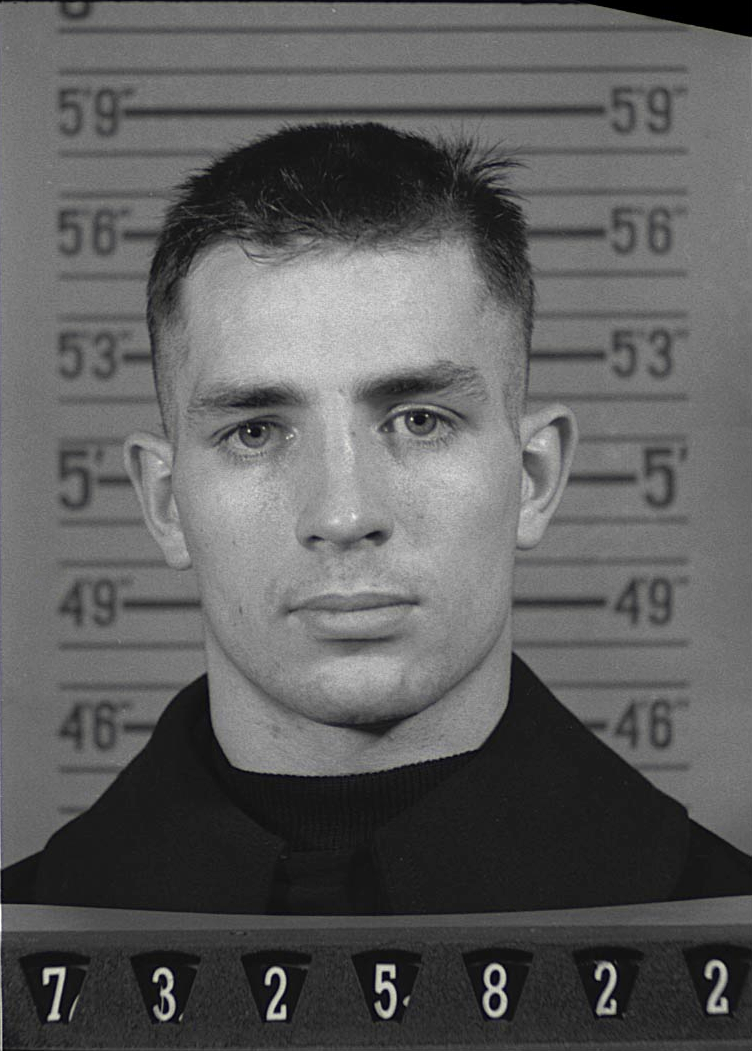

“Man is now a civilized animal, but he is no longer a proud animal.” – Jack Kerouac
Ecocriticism scholars like Morrison, and her fascinating research on ideas about the natural world embedded in Beat Poetry, add to our knowledge of how ‘the wilderness’ was understood in the Beat poets’ imagination, and how this idea of Nature took shape in their writing.
For Kerouac, the wilderness was not just a wild place beyond the city. Fueled by ideas of wilderness in the male-heroic writings of Jack London, John Muir, and Ernest Hemingway, Kerouac saw wilderness as a symbolic space uncorrupted by what he saw as the taming and emasculating effects of civilized life in the city.
For the beat poets, and Kerouac in particular, a journey into the wilderness represented a journey to a ‘masculinist fantasy of animality,’ writes Morrison. For example, Kerouac began writing early on about the corrosive effects of ‘civilized’ society, and especially what he viewed as civilization’s feminizing effects on men. Even in his journal as a young boy, he wrote:
“Man is now a civilized animal, but he is no longer a proud animal.” ³
Morrison writes,
“For Kerouac, as for many men at the time, not only was wilderness threatened by (sub)urbanization, industrialization and modernization, but men themselves were thought to have been tamed and domesticated. They had become captives, chained as they were to their home through their role as family men and softened by the civilizing effects of a feminized culture. The metaphor of domestication implied that men were (wild) animals by nature and that civilization had spoiled and repressed men’s “natural” (and sexual) instincts.”
Reading through Kerouac's opus of work, one can begin to see how this idea of wilderness manifests in his novels, from the Dharma Bums and On the Road to Desolation Angels. “This wild/domestic dichotomy,” Morrison says, “structures Kerouac’s entire cycle of novels and accounts for the gendered separation between public and private spheres.”
Kerouac’s Beliefs and Techniques for Modern Prose
I’m thinking of all this now as I read through Jack Kerouac’s List of 30 Beliefs about life and how to write.
The beat poet Alan Ginsberg is said to have hung Kerouac’s list on his wall when he wrote his poem howl. The poem was written after Ginserberg had a terrifying psychedelic experience with peyote, and one wonders how Kerouac’s wilderness-drenched beliefs about life and writing rippled outward not just into Ginsberg’s poem, but into the wider web of American thinking and writing.
Here is the list:
- Scribbled secret notebooks, and wild typewritten pages, for yr own joy
- Submissive to everything, open, listening
- Try never get drunk outside yr own house
- Be in love with yr life
- Something that you feel will find its own form
- Be crazy dumbsaint of the mind
- Blow as deep as you want to blow
- Write what you want bottomless from bottom of the mind
- The unspeakable visions of the individual
- No time for poetry but exactly what is
- Visionary tics shivering in the chest
- In tranced fixation dreaming upon object before you
- Remove literary, grammatical and syntactical inhibition
- Like Proust be an old teahead of time
- Telling the true story of the world in interior monolog
- The jewel center of interest is the eye within the eye
- Write in recollection and amazement for yourself
- Work from pithy middle eye out, swimming in language sea
- Accept loss forever
- Believe in the holy contour of life
- Struggle to sketch the flow that already exists intact in mind
- Dont think of words when you stop but to see picture better
- Keep track of every day the date emblazoned in yr morning
- No fear or shame in the dignity of yr experience, language & knowledge
- Write for the world to read and see yr exact pictures of it
- Bookmovie is the movie in words, the visual American form
- In praise of Character in the Bleak inhuman Loneliness
- Composing wild, undisciplined, pure, coming in from under, crazier the better
- You’re a Genius all the time
- Writer-Director of Earthly movies Sponsored & Angeled in Heaven
If you found this interesting, why not compliment it with 10 Rules For Writers From Jeanette Winterson, Five Principal Patterns for Writing from Ursula K. Le Guin, or Mary Oliver on Writing and Walking in the Wood.
Notes:
¹ For a comprehensive history of the wilderness idea in the American imagination, see Roderick Nash’s, Wilderness and the American Mind.
² The environmental historian William Cronon writes, for example, “Yosemite is a real place in nature — but its venerated status as a sacred landscape and national symbol is very much a human invention.” Recognizing a place as beautiful as Yosemite as a sacred landscape may seem uncontroversial. But it’s important to realize how culturally specific ideas of ‘sacred’ get enacted in practice. Unfortunately, keeping wilderness sacred often meant keeping people out of it, since wilderness, by definition in the American mind, was a place untouched by humans. And as this idea was realized across the U.S. landscape, this was not simply an inconvenient idea for the Native Americans who inhabited these places for thousands of years. It meant forced and often violent eviction from their ancestral homes.
³ Here’s the full excerpt from Jack Kerouac’s early journals revealing what the Beat poetry scholar Susan Signe Morrison calls Kerouac’s ‘masculinist animal fantasy’: “Man in the Beginning was a proud animal who went out and killed his game and dragged his woman to a cave and ate with her, and performed the sticky art of love on her, and slept with her, and awoke in the morning, cold and dreary in the prehistoric pink of primeval dawn. Today, he shells out five bucks for some grocery food, takes it home to a haughty, commandeering wife, meekly performs the sticky art of love on her at night in a soft willowy bed, and wakes up in the cold and dismal pink of civilized dawn. The difference? Man is now a civilized animal, but he is no longer a proud animal.”