avatarGavin Lamb, PhD

Free AI web copilot to create summaries, insights and extended knowledge, download it at here

2411

Abstract

/a> Salomé to Rilke.</p><figure id="6fed"><img src="https://cdn-images-1.readmedium.com/v2/resize:fit:800/1*E4y4KS0vNGe72yV_-DBCjw.jpeg"><figcaption>Lou Andreas-Salomé, c. 1897. On <a href="https://en.wikipedia.org/wiki/Lou_Andreas-Salom%C3%A9#/media/File:Lou_Andreas-Salom%C3%A9_-_Foto_Atelier_Elvira.jpg">Wikipedia</a> (Public Domain)</figcaption></figure><p id="213b">Sigmund Freud also wrote letters to Lou Andreas-Salomé on topics ranging from living the good life, to what makes humans tick. “The main thing,” Andreas-Salomé wrote Freud, “is that life-faith is essentially and vitally present, by means of which we survive.” Their letters have been captured in <a href="https://books.google.com/books/about/Sigmund_Freud_and_Lou_Andreas_Salom%C3%A9_Le.html?id=US4NHAAACAAJ">another collection</a> too.</p><p id="1561">Rilke dedicated his poetry collection, <a href="https://en.wikipedia.org/wiki/The_Book_of_Hours"><i>The</i> <i>Book of Hours</i> (<i>Das Stunden-Buch)<b></b></i></a><i><b> </b></i>to Andreas-Salomé, and it seems Friedrich Nietzsche’s <a href="https://en.wikipedia.org/wiki/Thus_Spoke_Zarathustra"><i>Thus Spoke Zarathustra: A Book for All and None</i></a><i> </i>was inspired by her as well. It appears Andreas-Salomé was <a href="https://www.newyorker.com/magazine/2006/07/31/rainer-maria-rilke-and-lou-andreas-salome-the-correspondence">known as</a> the “muse of Europe’s fin-de-siècle thinkers and artists.”</p><div id="4761" class="link-block"> <a href="https://readmedium.com/3-essential-books-on-the-positive-psychology-of-productive-writing-dbb100b40c65"> <div> <div> <h2>3 Essential Books on the Positive Psychology of Productive Writing</h2> <div><h3>3 academic writers on 3 techniques for transforming your writing anxiety into a ‘productive instinct’</h3></div> <div><p>medium.com</p></div> </div> <div> <div style="background-image: url(https://miro.readmedium.com/v2/resize:fit:320/1*dbw8yZa2gulOo_S8TuH5dg.jpeg)"></div> </div> </div> </a> </div><h1 id="a3bd">Toward the Teaching of Style: Nietzsche’s Ten Writing Rules</h1><p id="418b">Nietzsche fell in love with Andreas-Salomé when they met, and proposed marriage to her several times. Nietzsche wasn’t successful, and his annoying persistence led A

Options

ndreas-Salomé to end their friendship.</p><p id="cb8c">But over twenty years later, revealing her deep interest in Nietzsche’s ideas, Andreas-Salomé wrote <a href="http://www.gutenberg.org/ebooks/50525">a biography</a> about him. And tucked away in that book were some of Nietzsche’s letters to Andreas-Salomé, including his ten writing rules: “<b><i>Toward the Teaching of Style.</i></b></p><p id="4d0e">Here they are…</p><blockquote id="f7f8"><p>1. Of prime necessity is life: a style should <i>live</i>.</p></blockquote><blockquote id="fd00"><p>2. Style should be suited to the specific person with whom you wish to communicate. (The law of <i>mutual relation</i>.)</p></blockquote><blockquote id="95c6"><p>3. First, one must determine precisely “what-and-what do I wish to say and <i>present</i>,” before you may write. Writing must be mimicry.</p></blockquote><blockquote id="1e80"><p>4. Since the writer <i>lacks</i> many of the speaker’s <i>means</i>, he must in general have for his model a <i>very expressive</i> kind of presentation of necessity, the written copy will appear much paler.</p></blockquote><blockquote id="ba01"><p>5. The richness of life reveals itself through a <i>richness of gestures</i>. One must <i>learn</i> to feel everything — the length and retarding of sentences, interpunctuations, the choice of words, the pausing, the sequence of arguments — like gestures.</p></blockquote><blockquote id="dcc1"><p>6. Be careful with periods! Only those people who also have long duration of breath while speaking are entitled to periods. With most people, the period is a matter of affectation.</p></blockquote><blockquote id="8498"><p>7. Style ought to prove that one <i>believes</i> in an idea; not only that one thinks it but also <i>feels</i> it.</p></blockquote><blockquote id="5847"><p>8. The more abstract a truth which one wishes to teach, the more one must first <i>entice</i> the senses.</p></blockquote><blockquote id="f60c"><p>9. Strategy on the part of the good writer of prose consists of choosing his means for stepping close to poetry but <i>never</i> stepping into it.</p></blockquote><blockquote id="b737"><p>10. It is not good manners or clever to deprive one’s reader of the most obvious objections. It is very good manners and <i>very clever</i> to leave it to one’s reader alone to pronounce the ultimate quintessence of our wisdom.</p></blockquote></article></body>

Nietzsche’s Ten Writing Rules: ‘Toward the Teaching of Style’

Tucked away in his correspondence to psychoanalyst Lou Andreas-Salomé, Nietzsche reveals his principles for writing
Photo by Joanna Kosinska on Unsplash

Throughout history, many writers have sat down to take stock of their successes and failures, and to list their hard-earned knowledge of writing rules to live by.

Many writers feel compelled to document the core principles that guide the why and how of our stylistic choices, focal content, and everyday writing rituals: to dissect failed projects, but also to analyze what worked in times of success.

In most ‘how-to’ writing books I’ve read, writing advice tends to fall into three categories: good style (fit prose), managing emotion (writer’s block), and disciplining behavior (‘write everyday!’). But since every writer inevitably views these categories through the lens of their own personal experience, it’s always helpful for me to hear what kind of advice successful writers amplify in importance (or ignore entirely).

Friedrich Nietzsche’s Letters

In August of 1882, Nietzsche wrote several letters to Lou Andreas-Salomé, a Russian intellectual, and the first female psychoanalyst. Andreas-Salomé seems to have been getting a lot of letters. The Bohemian-Austrian poet, Rainer Maria Rilke, wrote an entire novel of letters to her, which is now immortalized in the collection: Rilke and Andreas-Salomé: A Love Story in Letters. “All art begins [as] a calling forth of life in its still concealed mysteriousness” wrote Salomé to Rilke.
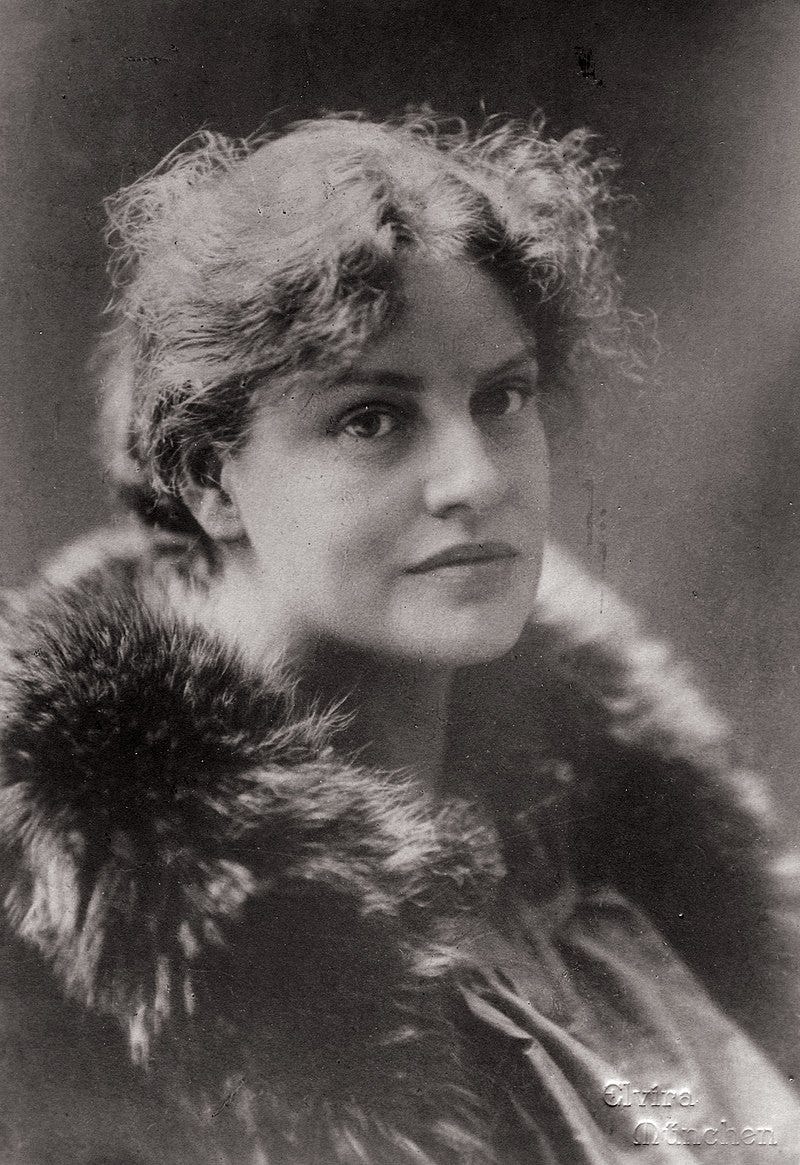
Lou Andreas-Salomé, c. 1897. On Wikipedia (Public Domain)

Sigmund Freud also wrote letters to Lou Andreas-Salomé on topics ranging from living the good life, to what makes humans tick. “The main thing,” Andreas-Salomé wrote Freud, “is that life-faith is essentially and vitally present, by means of which we survive.” Their letters have been captured in another collection too.

Rilke dedicated his poetry collection, The Book of Hours (Das Stunden-Buch) to Andreas-Salomé, and it seems Friedrich Nietzsche’s Thus Spoke Zarathustra: A Book for All and None was inspired by her as well. It appears Andreas-Salomé was known as the “muse of Europe’s fin-de-siècle thinkers and artists.”

Toward the Teaching of Style: Nietzsche’s Ten Writing Rules

Nietzsche fell in love with Andreas-Salomé when they met, and proposed marriage to her several times. Nietzsche wasn’t successful, and his annoying persistence led Andreas-Salomé to end their friendship.

But over twenty years later, revealing her deep interest in Nietzsche’s ideas, Andreas-Salomé wrote a biography about him. And tucked away in that book were some of Nietzsche’s letters to Andreas-Salomé, including his ten writing rules: “Toward the Teaching of Style.

Here they are…

1. Of prime necessity is life: a style should live.

2. Style should be suited to the specific person with whom you wish to communicate. (The law of mutual relation.)

3. First, one must determine precisely “what-and-what do I wish to say and present,” before you may write. Writing must be mimicry.

4. Since the writer lacks many of the speaker’s means, he must in general have for his model a very expressive kind of presentation of necessity, the written copy will appear much paler.

5. The richness of life reveals itself through a richness of gestures. One must learn to feel everything — the length and retarding of sentences, interpunctuations, the choice of words, the pausing, the sequence of arguments — like gestures.

6. Be careful with periods! Only those people who also have long duration of breath while speaking are entitled to periods. With most people, the period is a matter of affectation.

7. Style ought to prove that one believes in an idea; not only that one thinks it but also feels it.

8. The more abstract a truth which one wishes to teach, the more one must first entice the senses.

9. Strategy on the part of the good writer of prose consists of choosing his means for stepping close to poetry but never stepping into it.

10. It is not good manners or clever to deprive one’s reader of the most obvious objections. It is very good manners and very clever to leave it to one’s reader alone to pronounce the ultimate quintessence of our wisdom.

Writing
Writing Tips
History
Philosophy
Books
Recommended from ReadMedium