avatarIain Stanley

Free AI web copilot to create summaries, insights and extended knowledge, download it at here

6057

Abstract

id="890c" type="7">But Ikigai!!!</p><p id="ce87">So we get to Ikigai element number four: What you can get paid for.</p><p id="e761">Now we’re talkin’!</p><p id="2b3a">It ain’t Ikigai that drives graduating students and future generations in modern Japan. Like everywhere else in the world, it’s a salary.</p><p id="ca85">Wake up early, scoff down egg on rice, swish it down with coffee, get the crowded train, stand nose-to-nose with another suited salaryman, smell his egg on rice in your face, sit in an office for 9 hours, go drinking with your seniors, feel sick, maybe vomit, catch the last train home, do it all again tomorrow.</p><p id="7bbf">Ah yes, Ikigai.</p><h1 id="01b6">Wabi-Sabi 侘-寂</h1><figure id="7439"><img src="https://cdn-images-1.readmedium.com/v2/resize:fit:800/1*yV4Tiv5moiBkMgw9Ldm0yQ.jpeg"><figcaption>Screenshot from LinkedIn <a href="https://www.linkedin.com/posts/excellencetalks_eye-opening-concepts-activity-7047263926144643073-Vxac?utm_source=share&amp;utm_medium=member_desktop">post</a> by Excellence Talks</figcaption></figure><p id="19b3">Not to be confused with wasabi, that powerful condiment that can singe your nose hairs and throttle your throat with fire, wabi-sabi is a Japanese aesthetic that values imperfection, impermanence, and simplicity. It emphasizes the beauty of things that are natural, rustic, and unpretentious.</p><p id="3475">And to be sure, there are many parts of Japanese culture that still display the wonderful concept of wabi-sabi. Like origami, for example. Nothing makes me marvel more than watching my 6 y.o daughter fold and twist and magically manipulate a simple set of papers into a magnificent menagerie while I struggle beside her to make an isosceles triangle.</p><p id="df71">But in the world outside of paper-folding and flower-arrangement, like, say, economics, and finance, and construction, and city planning?</p><p id="2c0b">Fuck aesthetics. Fuck simplicity.</p><p id="10e0">Money talks. And it’s a disgusting language.</p><p id="bf91">I’m particularly cynical and prone to spit venom on this topic because it’s one that’s very close to my heart. And my home.</p><p id="61ef">I live on the coastline of rural Kyushu. Beautiful beaches, long stretches of sand. Great surfing.</p><p id="c113">Truth is, it used to be a lot better. What happened?</p><p id="4fef">Governments and local councils with greasy fingers and dodgy connections have dumped tonnes upon tonnes of awful concrete along the coast over the years, and in the process destroyed beaches, dunes, sealife, and whole ecosystems.</p><p id="85ca">And for what?</p><p id="7f6a">Safety, they tell you.</p><p id="f330" type="7">If you ask these pollies how to spell ‘money’, they’d look at you deadpan and say S-A-F-E-T-Y.</p><p id="738c">And it’s not just here. It’s all over Japan.</p><p id="8870">The first place I lived when I arrived here in 2005 was Kaihin Makuhari, just outside Chiba. Home of the Chiba Lotte Marines baseball team. And the Summer Sonic Rock Festival. And the Tokyo Car Show.</p><p id="f966">Great. Except it’s built on reclaimed land.</p><p id="8d54">Just like Tokyo Disney Land. And Tokyo Disney Sea.</p><p id="50d2">Who needs water? Fuck the fish. Fill it in. Build it out.</p><p id="42b8">Protests are now going on down in the island of Amami-Oshima, just north of Okinawa. The protests are related to a controversial development project that involves building a runway and related facilities for a new airport on the island, including in areas that are currently designated as national park and important habitats for endangered species.</p><p id="5a86">The proposed runway would be built on reclaimed land, including areas of tidal flats and beaches.</p><p id="3708">So, yeah, wabi-sabi? Maybe in the gentile world of origami and tea ceremonies.</p><p id="9ee1">But outside, where the politicians and businessmen vultures can get their hooks into anything that can make them money regardless of the impact on the environment or people’s livelihoods?</p><p id="574c">Fuck ’em all. Wabi-sabi be damned.</p><h1 id="3a12">Kaizen 改善</h1><figure id="f5e5"><img src="https://cdn-images-1.readmedium.com/v2/resize:fit:800/1*NGVlYLfWCz1BDI5HVG5WbA.jpeg"><figcaption>Screenshot from LinkedIn <a href="https://www.linkedin.com/posts/excellencetalks_eye-opening-concepts-activity-7047263926144643073-Vxac?utm_source=share&amp;utm_medium=member_desktop">post</a> by Excellence Talks</figcaption></figure><p id="19a9">Ah yes, the oft-heard Japanese term that refers to the philosophy and practice of continuous improvement.</p><p id="d827">The idea that we should always strive to be better. Better workers, better parents, better citizens, better betters.</p><p id="b987">All nice and good if our entire existence was spent seeking intrinsic satisfaction (inner happiness and internal rewards).</p><p id="6fab">But it’s not. For the three basic necessities of life — food, clothing, shelter — we’re extrinsically motivated.</p><p id="4fc8">In short, we do it for the money.</p><p id="b6a1">Can’t speak for all 8 billion of us on this planet but I’m pretty damned sure that most people go to college in the hopes of getting a decent paying job. Then go to grad school to get an even higher paying job. Then do their Ph.Ds so they can get a really great job that pays them a really great bucketload injection of cashola.</p><p id="befa">All makes sense.</p><p id="2672">Kaizen. Keep improving.</p><p id="39ac">Problem is, in Japan, companies typically don’t reward you for your “improvement.” And believe me, I know it only too well.</p><p id="6bc2">When I first arrived to work where I am now, I was a single guy, no kids, a Masters degree, and about 10 years university experience.</p><p id="fa6c">As such, according to the salary ranking scales that almost all Japanese companies and universities use, I was placed on ‘X’ rung of the ladder based on my CV at the time.</p><p id="3d3e">Now? I’m married, 2 kids, a Doctor of Education, a Master of Creative Writing almost done and dusted, and 25 years exp

Options

erience at the university level.</p><figure id="10a9"><img src="https://cdn-images-1.readmedium.com/v2/resize:fit:800/1*drb19R7B6pvY2ZIEOkgPsA.jpeg"><figcaption>Image created by author</figcaption></figure><p id="c8a4">My salary? Hasn’t moved an inch. Not one fucking sway of the needle to a higher realm.</p><p id="0392">My Japanese wife’s exactly the same. Been working at the same company for 15 years. Done countless courses and certification seminars and yada yada up the qualification wazoo. Her reward?</p><p id="21d4">She just get shunted round from new position to new position each year in the wonderful merry-go-round Japanese company job rotation policy. Her take-home pay is actually lower than 15 years ago even though she’s the most senior worker in her office now.</p><p id="094a">The only way you can get the recognition your work deserves is to quit your current job and go to a new company, where you’ll be a lot higher going in on their salary ranking scale.</p><p id="bd5c">Ludicrous.</p><p id="f696">And not possible for many with kids and mortgages and ties to certain areas.</p><p id="a1b2">So Kaizen? Always strive for self improvement? Please.</p><p id="98fd" type="7">The only reason they put the ‘zen’ in kaizen is coz you need to be a Zen Monk to put up with the utter lack of reward or recognition you get for bettering yourself while you work for a Japanese company.</p><h1 id="c225">Summing Up</h1><p id="0847">The world of samurais ended just after the Meiji Restoration in 1868. Alongside them vanished ninjas (involuntarily). Yet some people are still intent on portraying modern Japan as though it hasn’t changed.</p><p id="9a52">And that the concepts that have been romanticised and almost fetishised in movies, books, and comics still dominate the day to day life of current Japanese society.</p><p id="1671">They don’t.</p><p id="be08">Sure, many of the ideas and concepts of feudal Japan still linger on in today’s world, but Japan is not living in a Shogunate. Or fighting wars with topknots.</p><p id="9b2a">Perhaps things like Ikigai, Wabi-Sabi, and Kaizen have a place in people’s hearts and minds, but in the fast-paced world of 2023, Japanese people are just like any other on this earth — busy trying to make ends meet, pay off the mortgage, put the kids through school, save some money, and get to the next stage of their video games.</p><p id="3451">It sure as shit ain’t all kimonos and geisha girls fanning you with a sensu!</p><p id="615c"><b>Interested in how Japanese fathers react when their daughter marries a much older Western man? Read this:</b></p><div id="b0a2" class="link-block"> <a href="https://readmedium.com/younger-japanese-women-older-western-men-how-do-the-girls-fathers-feel-94f18e5f768b"> <div> <div> <h2>Younger Japanese Women, Older Western Men: How Do the Girls’ Fathers Feel?</h2> <div><h3>I was 13 years older, from a foreign country, and struggled with his language. Would he let me marry his daughter?</h3></div> <div><p>medium.com</p></div> </div> <div> <div style="background-image: url(https://miro.readmedium.com/v2/resize:fit:320/1*q-tiMNvQ8y-34gsGLVCkXQ.jpeg)"></div> </div> </div> </a> </div><p id="4cbc"><b>If you’d like a deeper dive into some seedy, hidden aspects of Japanese society, you might be interested in this. It’s had 73k views to date!</b></p><div id="453c" class="link-block"> <a href="https://readmedium.com/the-lucrative-job-for-young-japanese-girls-that-might-disgust-most-western-women-c19acb0eec39"> <div> <div> <h2>The Lucrative Job for Young Japanese Girls That Might Disgust Most Western Women</h2> <div><h3>The age of consent is 13. The adult movie industry’s worth 20 billion. Take a glimpse into Japan’s seedy underbelly</h3></div> <div><p>medium.com</p></div> </div> <div> <div style="background-image: url(https://miro.readmedium.com/v2/resize:fit:320/1*03EXwlfpQFrFJtxtQoUsFQ.jpeg)"></div> </div> </div> </a> </div><p id="a17c"><b>If you’d like a lighter look into parts Japanese of Japanese culture, try this, my first story on Medium that’s made almost 2,000.</b></p><div id="538e" class="link-block"> <a href="https://readmedium.com/6-socially-acceptable-things-in-japan-that-might-horrify-most-americans-7b9666a0173b"> <div> <div> <h2>6 Socially Acceptable Things in Japan That Might Horrify Most Americans</h2> <div><h3>Ever wanted to see how people really live life in Japan? Get ready for some surprises!</h3></div> <div><p>medium.com</p></div> </div> <div> <div style="background-image: url(https://miro.readmedium.com/v2/resize:fit:320/1*jXIllJYNq4adRvHxZ4_pqg.png)"></div> </div> </div> </a> </div><p id="6f3a"><b>And if you’d like to learn about becoming a father in Japan, this will surely shock your socks off.</b></p><div id="c816" class="link-block"> <a href="https://readmedium.com/the-heartbreaking-japanese-tradition-still-used-today-that-separates-babies-from-their-fathers-48d301033694"> <div> <div> <h2>The Heartbreaking Japanese Tradition Still Used Today That Separates Babies From Their Fathers</h2> <div><h3>I couldn’t believe it when my Japanese wife told me she wanted to leave me before our daughter was born.</h3></div> <div><p>medium.com</p></div> </div> <div> <div style="background-image: url(https://miro.readmedium.com/v2/resize:fit:320/1*uTqYLizArtGB5wqo3h5Nkw.jpeg)"></div> </div> </div> </a> </div></article></body>

3 Ridiculous Myths About Modern Japan That Simply Aren’t True

Samurais perished over 100 years ago. Ninjas too. And no, geisha girls aren’t on standby to sing you karaoke. What modern Japan really looks like.

Image created by author

When you close your worn and weary eyes each night and drift off to the mystical twangs of the shamisen wafting over a lake of cherry blossom petals, what images of Japan do your dreams conjure up?

  • Perhaps pure, demure geisha?
  • The scything sword of the stoic samurai?
  • Basho reciting haiku in a temple?
  • Or even sumo on the dohyo?

Scratch the needle across the record, please!

It seems that many westerners have mythologised Japan and its culture so much in recent years that it’s taken on a fantastical life of its own far beyond the realms of any kind of reality.

Evidence of which was when I recently logged into LinkedIn and found a post titled “7 Eye-Opening Japanese Concepts That Will Transform Your Life.” As soon as I saw the title picture, alarm bells started clanging, for it appeared to be a young girl in samurai costume unsheathing sharpened sword from scabbard, and as we all well know, young girls weren’t typically trained in swinging swords during samurai times.
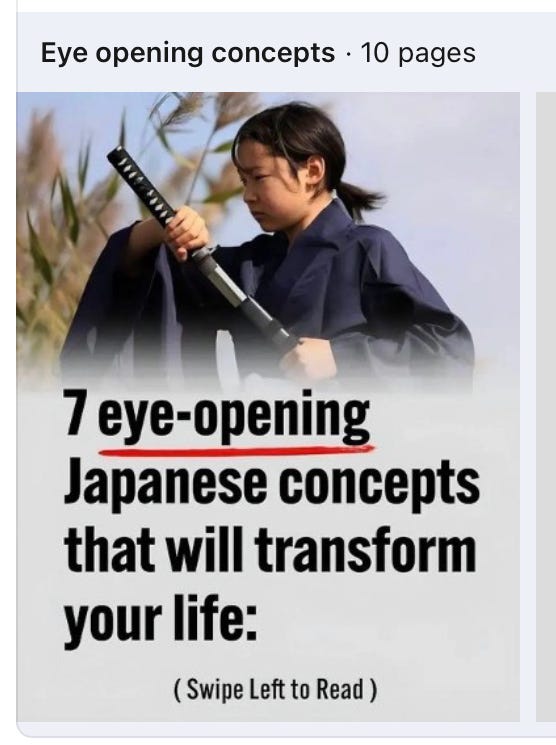
A samurai boy under 15 didn’t typically hold sharpened swords, and girls didn’t hold swords at all. No worries, let’s run with it! Screenshot from LinkedIn post by Excellence Talks

But what the heck, as I’ve lived in Japan for the last 18 years I opened the post out of sheer curiosity to see what it was all about.

Yet as I read through these concepts, I wasn’t transformed so much as my funny bone was tickled into cackles of uncontrollable laughter that were 6 parts cringe and 6 parts cringe.

And then reminded how the West really has no fucking idea about actual day to day life in Japan for most of its 120 million citizens.

So let’s go through some of these Eye-Opening Concepts so I can open your eyes to what life’s really like in Japan and smash that little mythical box of mistaken nonsense back into Fuji kingdom come.

Ikigai 生き甲斐
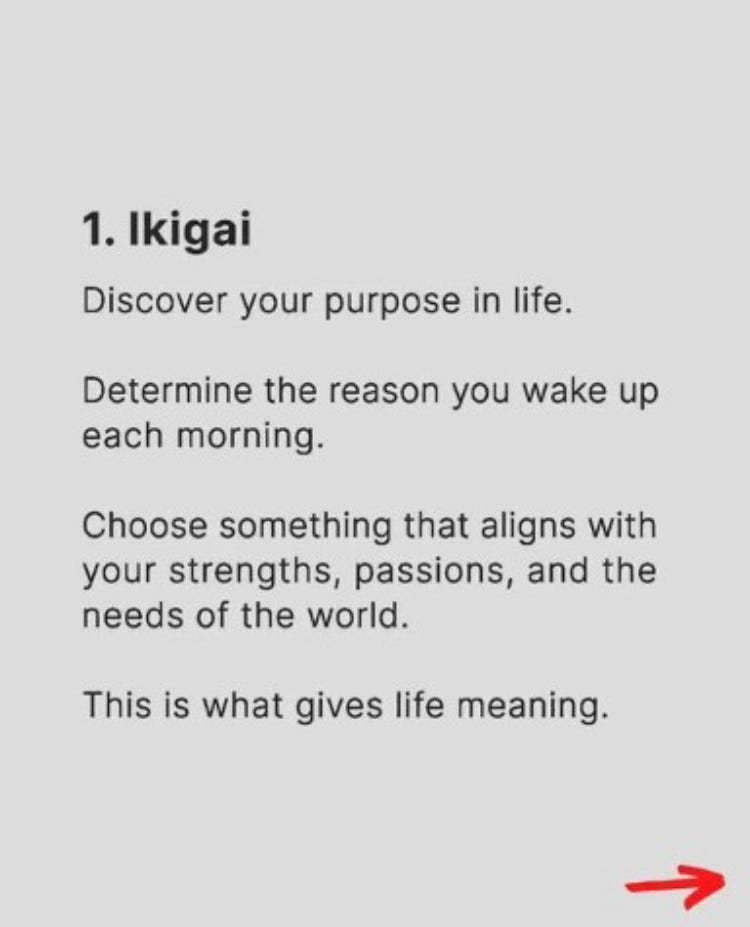
Screenshot from LinkedIn post by Excellence Talks

Ikigai is a Japanese concept that translates to “a reason for being”. It’s the intertwining of four major elements:

  • what you love
  • what you’re good at
  • what the world needs
  • what you can get paid for

The idea is that when these four elements come together, you can find your true purpose in life and experience a sense of fulfillment and unbridled inner happiness.

Worthy of a slide at Tony Robbins’ next $10k per ticket motivational speaking gig.

Except in everyday Japan, it’s utter tosh.

For example, you know how most Japanese university students get jobs? During their 4th year, they regularly go to job fairs called “shuukatsu fairs.” (就活). Shuukatsu is a shortened form of “shushoku katsudou (就職活動)” which means “job hunting activity” in Japanese.

These fairs are typically held on university campuses or at large convention centers and are attended by many Japanese companies looking to hire new graduates. At these fairs, companies set up booths and provide information about their businesses and job opportunities, as well as conduct interviews and collect resumes from interested candidates.

So let’s bring this back to Ikigai, and element number one: doing what you love. Ha! Kids go to these job fairs and chuck CV clumps of mud at walls and hope that something sticks.

I remember my first experience of this with a wonderful, motivated English language student who’d studied abroad and improved her language skills exponentially during her time at university.

Then she went to a “shuukatsu fair.” (就活).

The job she got after attending one of these fairs? Working at a sock manufacturing factory in Tokyo.

Using English? Nope. Traveling? Nope. Import/Export? Nope. Anything vaguely language related? Nope. Something, anything connected to her 4 years of work at university? Nope.

But Ikigai!

Speaking of, what about Ikigai element number two: doing what you’re good at.

Doing what you’re good at? This girl had never set foot inside a sock factory. Nor shown any interest in fashion. Or business.

It was a job, pure and simple. It broke my heart that her 4 years of studying language and international experiences had landed her there.

But Ikigai!

And what of Ikigai element number three: what the world needs…

No doubt, that girl’s mantra all through her four years of studying languages, stuck up on her wall, was “If there’s one thing the world needs more of, it’s socks.”

But Ikigai!!!

So we get to Ikigai element number four: What you can get paid for.

Now we’re talkin’!

It ain’t Ikigai that drives graduating students and future generations in modern Japan. Like everywhere else in the world, it’s a salary.

Wake up early, scoff down egg on rice, swish it down with coffee, get the crowded train, stand nose-to-nose with another suited salaryman, smell his egg on rice in your face, sit in an office for 9 hours, go drinking with your seniors, feel sick, maybe vomit, catch the last train home, do it all again tomorrow.

Ah yes, Ikigai.

Wabi-Sabi 侘-寂
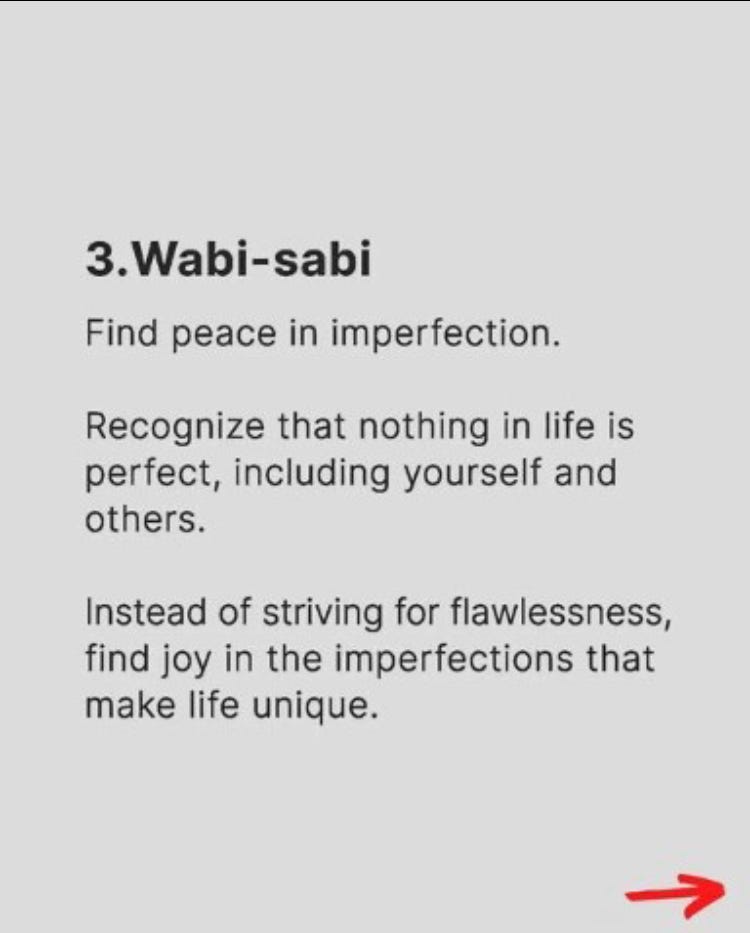
Screenshot from LinkedIn post by Excellence Talks

Not to be confused with wasabi, that powerful condiment that can singe your nose hairs and throttle your throat with fire, wabi-sabi is a Japanese aesthetic that values imperfection, impermanence, and simplicity. It emphasizes the beauty of things that are natural, rustic, and unpretentious.

And to be sure, there are many parts of Japanese culture that still display the wonderful concept of wabi-sabi. Like origami, for example. Nothing makes me marvel more than watching my 6 y.o daughter fold and twist and magically manipulate a simple set of papers into a magnificent menagerie while I struggle beside her to make an isosceles triangle.

But in the world outside of paper-folding and flower-arrangement, like, say, economics, and finance, and construction, and city planning?

Fuck aesthetics. Fuck simplicity.

Money talks. And it’s a disgusting language.

I’m particularly cynical and prone to spit venom on this topic because it’s one that’s very close to my heart. And my home.

I live on the coastline of rural Kyushu. Beautiful beaches, long stretches of sand. Great surfing.

Truth is, it used to be a lot better. What happened?

Governments and local councils with greasy fingers and dodgy connections have dumped tonnes upon tonnes of awful concrete along the coast over the years, and in the process destroyed beaches, dunes, sealife, and whole ecosystems.

And for what?

Safety, they tell you.

If you ask these pollies how to spell ‘money’, they’d look at you deadpan and say S-A-F-E-T-Y.

And it’s not just here. It’s all over Japan.

The first place I lived when I arrived here in 2005 was Kaihin Makuhari, just outside Chiba. Home of the Chiba Lotte Marines baseball team. And the Summer Sonic Rock Festival. And the Tokyo Car Show.

Great. Except it’s built on reclaimed land.

Just like Tokyo Disney Land. And Tokyo Disney Sea.

Who needs water? Fuck the fish. Fill it in. Build it out.

Protests are now going on down in the island of Amami-Oshima, just north of Okinawa. The protests are related to a controversial development project that involves building a runway and related facilities for a new airport on the island, including in areas that are currently designated as national park and important habitats for endangered species.

The proposed runway would be built on reclaimed land, including areas of tidal flats and beaches.

So, yeah, wabi-sabi? Maybe in the gentile world of origami and tea ceremonies.

But outside, where the politicians and businessmen vultures can get their hooks into anything that can make them money regardless of the impact on the environment or people’s livelihoods?

Fuck ’em all. Wabi-sabi be damned.

Kaizen 改善
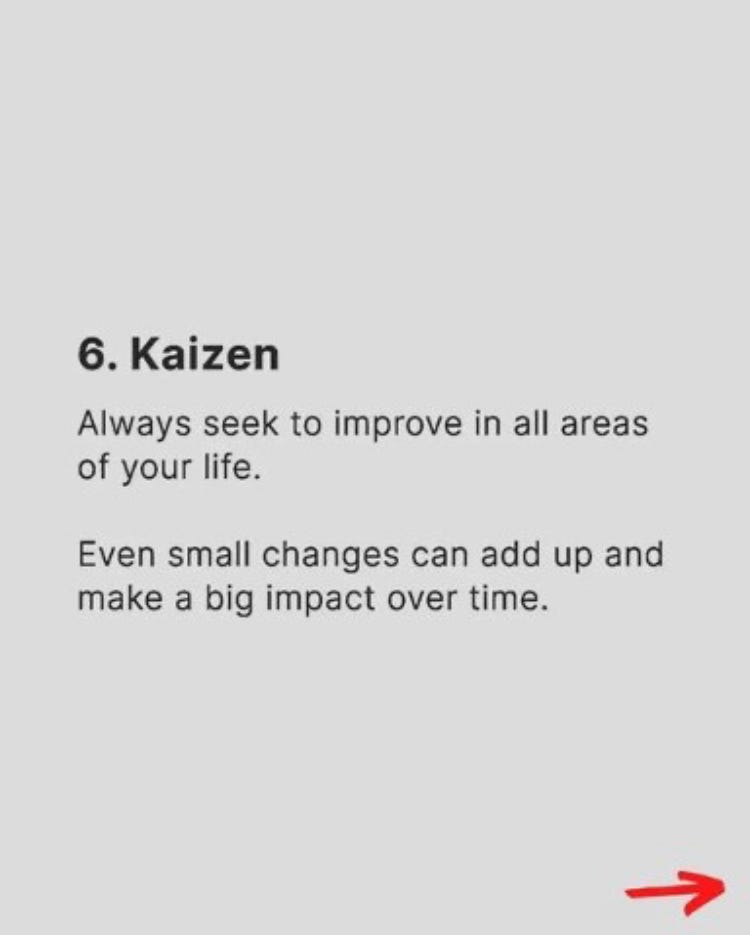
Screenshot from LinkedIn post by Excellence Talks

Ah yes, the oft-heard Japanese term that refers to the philosophy and practice of continuous improvement.

The idea that we should always strive to be better. Better workers, better parents, better citizens, better betters.

All nice and good if our entire existence was spent seeking intrinsic satisfaction (inner happiness and internal rewards).

But it’s not. For the three basic necessities of life — food, clothing, shelter — we’re extrinsically motivated.

In short, we do it for the money.

Can’t speak for all 8 billion of us on this planet but I’m pretty damned sure that most people go to college in the hopes of getting a decent paying job. Then go to grad school to get an even higher paying job. Then do their Ph.Ds so they can get a really great job that pays them a really great bucketload injection of cashola.

All makes sense.

Kaizen. Keep improving.

Problem is, in Japan, companies typically don’t reward you for your “improvement.” And believe me, I know it only too well.

When I first arrived to work where I am now, I was a single guy, no kids, a Masters degree, and about 10 years university experience.

As such, according to the salary ranking scales that almost all Japanese companies and universities use, I was placed on ‘X’ rung of the ladder based on my CV at the time.

Now? I’m married, 2 kids, a Doctor of Education, a Master of Creative Writing almost done and dusted, and 25 years experience at the university level.
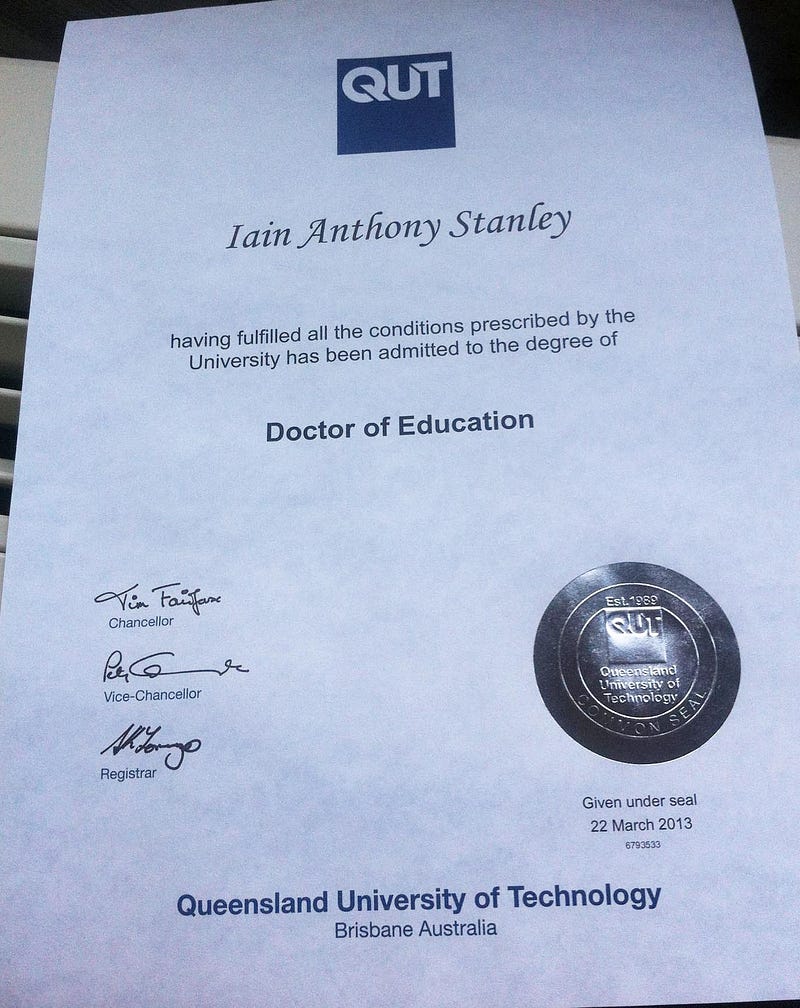
Image created by author

My salary? Hasn’t moved an inch. Not one fucking sway of the needle to a higher realm.

My Japanese wife’s exactly the same. Been working at the same company for 15 years. Done countless courses and certification seminars and yada yada up the qualification wazoo. Her reward?

She just get shunted round from new position to new position each year in the wonderful merry-go-round Japanese company job rotation policy. Her take-home pay is actually lower than 15 years ago even though she’s the most senior worker in her office now.

The only way you can get the recognition your work deserves is to quit your current job and go to a new company, where you’ll be a lot higher going in on their salary ranking scale.

Ludicrous.

And not possible for many with kids and mortgages and ties to certain areas.

So Kaizen? Always strive for self improvement? Please.

The only reason they put the ‘zen’ in kaizen is coz you need to be a Zen Monk to put up with the utter lack of reward or recognition you get for bettering yourself while you work for a Japanese company.

Summing Up

The world of samurais ended just after the Meiji Restoration in 1868. Alongside them vanished ninjas (involuntarily). Yet some people are still intent on portraying modern Japan as though it hasn’t changed.

And that the concepts that have been romanticised and almost fetishised in movies, books, and comics still dominate the day to day life of current Japanese society.

They don’t.

Sure, many of the ideas and concepts of feudal Japan still linger on in today’s world, but Japan is not living in a Shogunate. Or fighting wars with topknots.

Perhaps things like Ikigai, Wabi-Sabi, and Kaizen have a place in people’s hearts and minds, but in the fast-paced world of 2023, Japanese people are just like any other on this earth — busy trying to make ends meet, pay off the mortgage, put the kids through school, save some money, and get to the next stage of their video games.

It sure as shit ain’t all kimonos and geisha girls fanning you with a sensu!

Interested in how Japanese fathers react when their daughter marries a much older Western man? Read this:

If you’d like a deeper dive into some seedy, hidden aspects of Japanese society, you might be interested in this. It’s had 73k views to date!

If you’d like a lighter look into parts Japanese of Japanese culture, try this, my first story on Medium that’s made almost $2,000.

And if you’d like to learn about becoming a father in Japan, this will surely shock your socks off.

Culture
Travel
Japan
History
Digital Global Traveler
Recommended from ReadMedium