
BUSINESS
3 Reasons Why Uber Failed in Japan
Despite the whizzy app, Uber couldn’t compete with local taxi services and government regulations
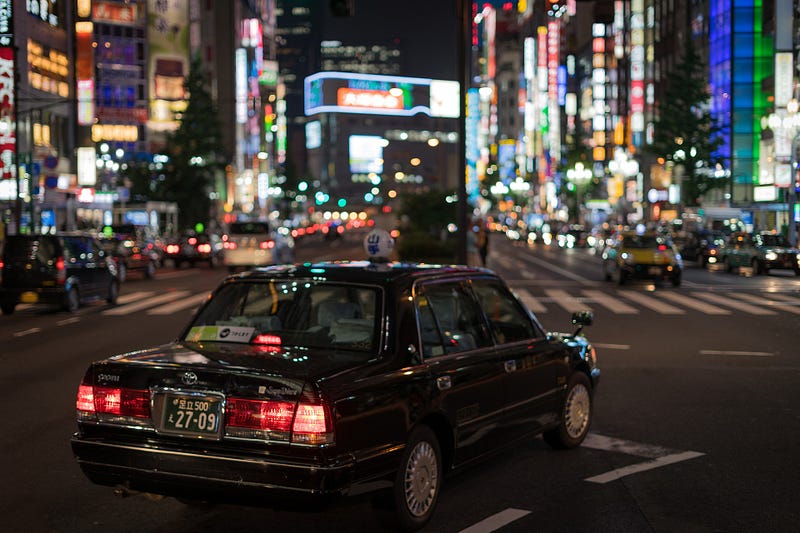
Uber Japan started its ride-hailing service in 2014. It was initially expected to disrupt the Japanese taxi business. However, 8 years after its launch, Uber is available only in 15 cities in Japan.
It failed to spread across the country, let alone destroy the taxi industry. Here are the three reasons for Uber’s failure you may not know.
#1 Legal Entry Barriers
In Japan, illegal private taxis are called 白タク(shiro-taku) — short for “white taxi” — referring to the white license plates of regular cars in comparison with the green plates of legal taxi vehicles.
You cannot become a professional taxi driver overnight in Japan. To comply with the regulations of the Road Traffic Act, you need to obtain a commercial driver’s license (class II) in addition to the standard license (class I). Plus, you need to pass a geography test to operate in highly-populated areas.
Got the license and passed the test? Then, you have to work for a taxi company for at least 2 years before starting your own business as an individual taxi service provider.
Wonder what happens if you secretly offer paid taxi services without a license? You can be sent to prison for up to 3 years or fined up to 3 million yen ($20,000). Whoa.
The Japanese government is trying to relax this law to provide more service in large cities and for surge occasions such as adverse weather and rare train delays. But freedom for shiro-taku is yet to be allowed.
Today, Uber Japan operates in conjunction with major taxi services. Once promising to disrupt the industry, Uber ended up befriending the existing market leaders to survive.
#2 Collusion Between Lawmakers and the Taxi Industry
Many Japanese Diet Members are said to be connected to the Japan Federation of Hire-Taxi Associations. Uber’s biggest competitive threat is not the other taxi companies; the Japanese government itself is the enemy.
Taxi companies offer ‘taxi tickets’ to ministries, which allows Diet members to take taxis without advance payment. It is convenient for presumably busy Diet members to receive monthly invoices from taxi companies instead of paying for each individual ride.
These taxi tickets are often discussed in Parliament due to the discontent of citizens. But as you may imagine, the discussion doesn’t necessarily lead to any actions to decrease spending on taxis.
#3 Japanese Taxis’ Customized Service
If you’ve left the big cities and visited local towns in Japan, you might notice almost every household owns a car—sometimes two or three cars for one family. They commute to work, go shopping, and go out drinking in their cars.
Wait, who drives after downing Kirin beer, haibōru, and sake?
Don’t worry, you can call a taxi company for 代行 (daikō) service. They’ll bring an extra person. You can sleep in the backseat while a professional driver delivers your car to your driveway so you can commute from home the next morning instead of in front of your favorite bar.
Japanese taxis offer a wide range of services: rides for children and elderly, pregnant women in labor, and tourists who want to see the tourist attractions with a private tour guide.
Let’s say you’re in Kagawa and want to visit 2 or 3 udon noodle restaurants in a few hours. Will you book an Uber every time? Well, to start with, Uber isn’t available in Kagawa, and even if it was, you’d be better off with an Udon taxi. Yes, that’s right — a taxi just for udon tourists. The driver will not only take you to the most popular udon restaurants but be an expert tour guide in English. No phone app can compete with that.
Final Thoughts
I tried Uber back in 2014 as soon as it come to Japan. Seeing a moving black car icon on the map was fun. The drivers were nice, and payment on the app was easy. I loved it.
96% of taxi drivers in Japan are men, as Joe Palermo pointed out in his article. And they used to talk a lot. It’s not just once or twice I wondered why I had to nod and fake smile all the way to my destination. The chemical smell of air freshener mixed with stale cigarette smoke was hardly a perfect space to relax.
However, there’s no question that Japanese taxi companies have been improving their service. They invested in their apps and payment options and lowered the base fares. Now it costs less than 500 yen ($3.34) for the first 1 km (0.6 mile) in Tokyo.
Today, if you say ‘Uber’ in Japan, most people think of Uber Eats food delivery instead of the taxi service. While Uber Eats successfully widened the options for food delivery, Uber Japan taxis couldn’t win over Japanese people.
As if Uber doesn’t exist, many people keep their favorite taxi company’s phone numbers — sometimes even with their favorite driver’s name in their contact list. It surely shows the difficulty of disrupting existing businesses in Japan.
Sources: https://www.nikkei.com/article/DGXMZO54694550S0A120C2EE8000/ https://www.shugiin.go.jp/internet/itdb_shitsumon.nsf/html/shitsumon/b173023.htm https://noru-works.jp/column/681
If you enjoyed this article, discover other works of the author at Japonica.
Follow Yuko for more stories about cross-cultural topics, travel, business, parenting, and equality. You can also subscribe from the referral link, which Medium uses a portion from followers for author support without any additional cost. Mediumの購読はこちらからどうぞ。


