
When Science Can’t Explain What You Experience
And cultural beliefs are the only explanation you have
There has been a time in my life where curiosity and excitement surely had the upper hand and fear didn’t exist. I don’t know where and when that all got lost. Sometimes I’m happy I’m over that phase now and sometimes I’m missing those fearless and careless days.
Well, and sometimes I get a blink of that back.
But I guess the changing factor is called time. Time has changed me. My experiences have changed me. And that is how life goes. You grow, you adapt, you change. You move on.
Looking back on situations in life you get twisted feelings about certain things in life. Some things you only understand later in life. Why they happened. How they happened.
And some things in life you’ll just never understand.
One of those situations was my closest encounter with a crocodile. It was back in early 2015. I was volunteering in Ghana for a few months working in a school. And on weekends I traveled around trying to see as much of the country as possible.
I only traveled with local minibusses where only locals could tell me which bus to take from where, where to get off the bus, and when to take the next one. Traveling was time-consuming. But the travels were always part of the journey.
I have learned so much about the Ghanaian culture and their people on those endlessly seeming bus journeys. I learned a lot about waiting. And about time. If I would go back in time, I wouldn’t do a thing differently. Well, almost. I would plan to stay longer. But that’s about it.
The crocodile pond
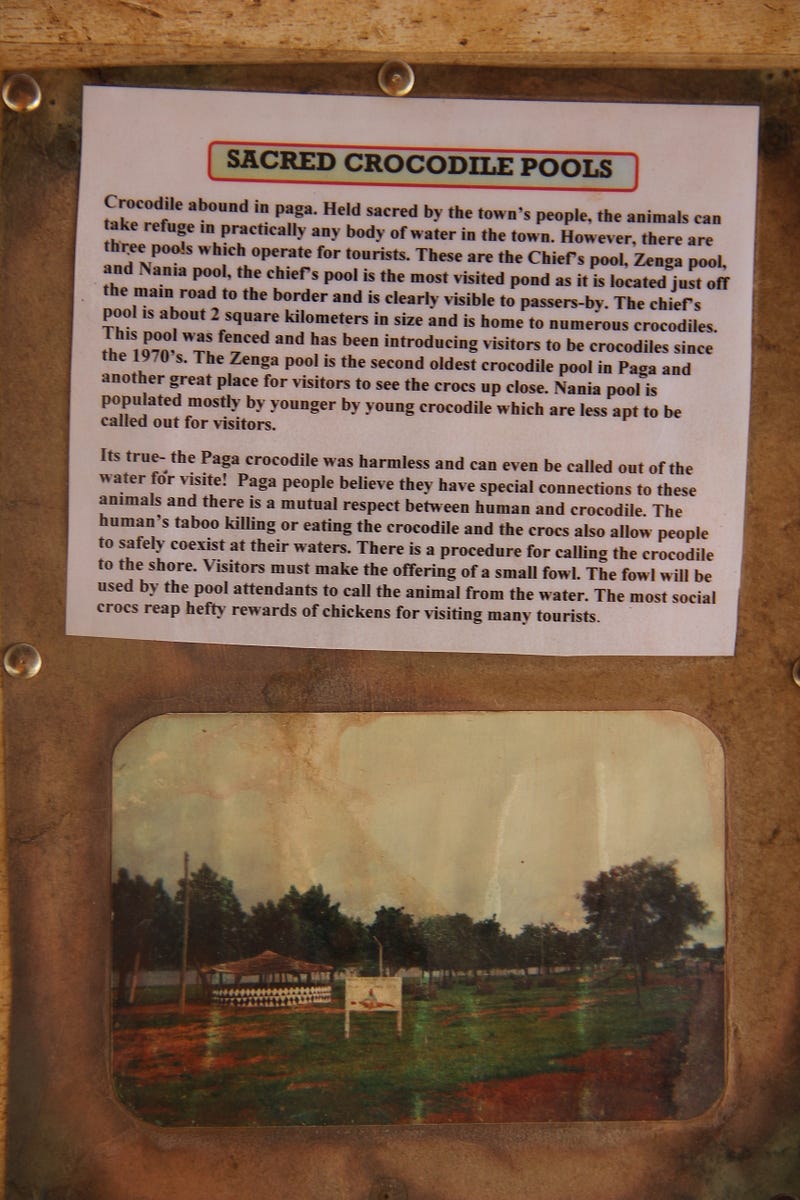
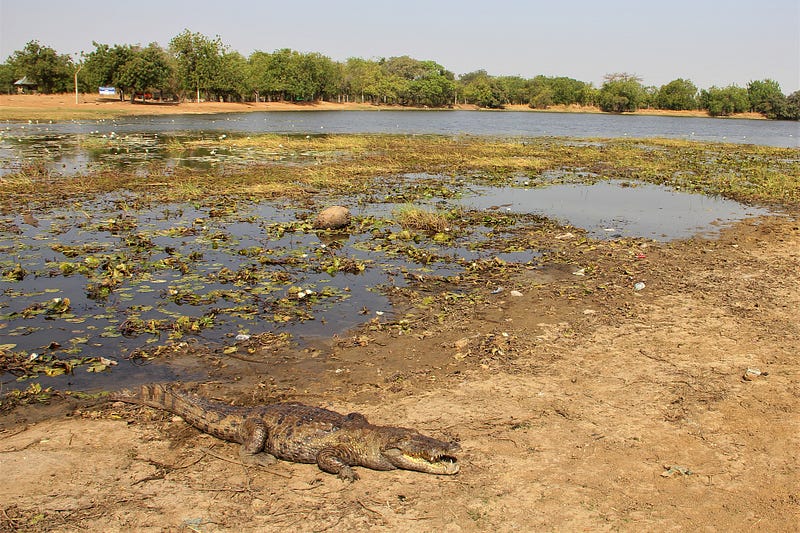
For the day I had planned to visit the mysterious crocodile pond. It’s a collection of small lakes in the very north of Ghana at the border to Burkina Faso. One of those lakes is home to around 200 crocodiles.
So far, there is nothing special about that place. There are plenty of lakes and rivers in Africa filled with crocodiles and other dangerous animals. But here comes the mysterious part of it all.
Children swim every morning through this lake. A village is right next to the pond. Farmers bring their cattle to the pond to drink. And guides let tourists and foreigners like me visit the pond and sit on these animals. Yes, you heard it correctly. You can sit on a wild crocodile without getting eaten by it (hopefully).
Sounds all a bit dodgy? Well, it is. For us at least. For us westerners who have to have a logical explanation for everything. For us, science is the solution to everything.
And science says crocodiles are wild animals. Crocodiles can’t be tamed. And crocodiles will eat anything that moves in front of their eyes. Science tells us to look at a situation from an abstract point of view.
But the reason why I did not get attacked by a crocodile can only be explained by religious and cultural beliefs. No logical and scientific approach will be able to explain what happened that day and what this place is about.
The peace around the pond
The driver of the shared taxi stopped and told me to get out. Apparently, I had arrived. I paid him and walked across the street to a small building where I got greeted already by a man who became my guide.
I paid the entrance fee which was the price for a chicken. My guide explained to me he will call the crocodile with a live chicken. He started to talk about the place as we walked across a small bridge and towards the pond.
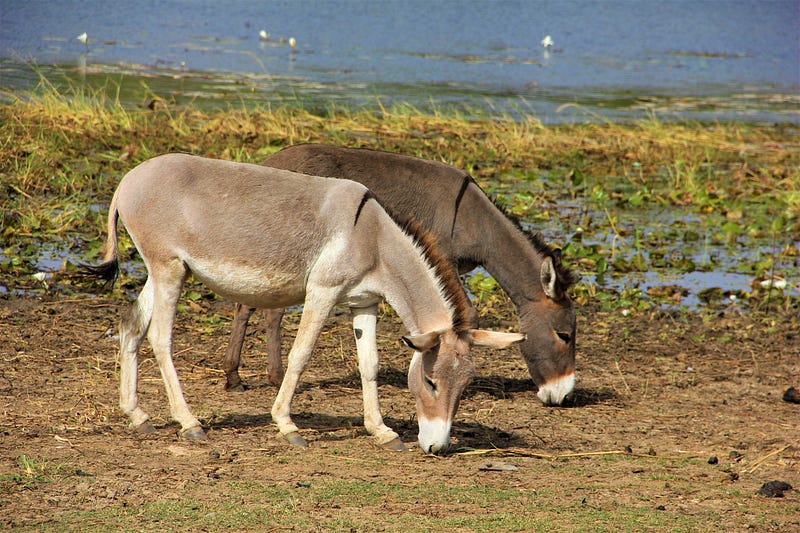
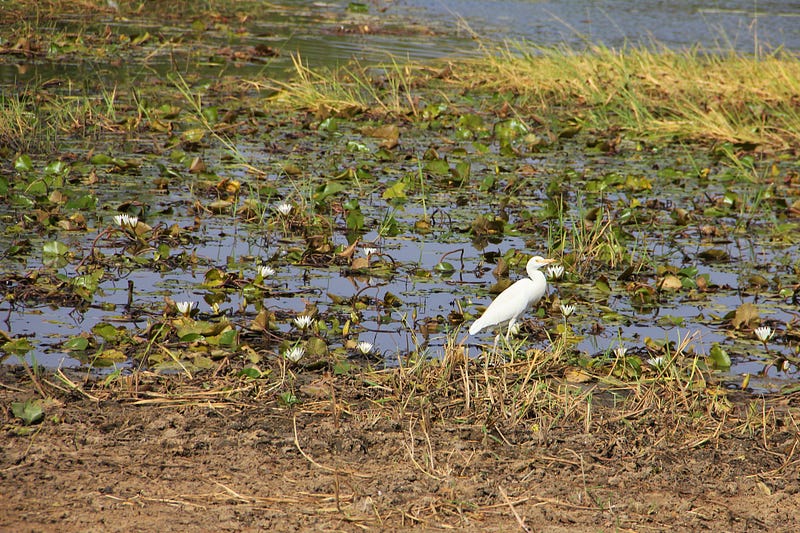
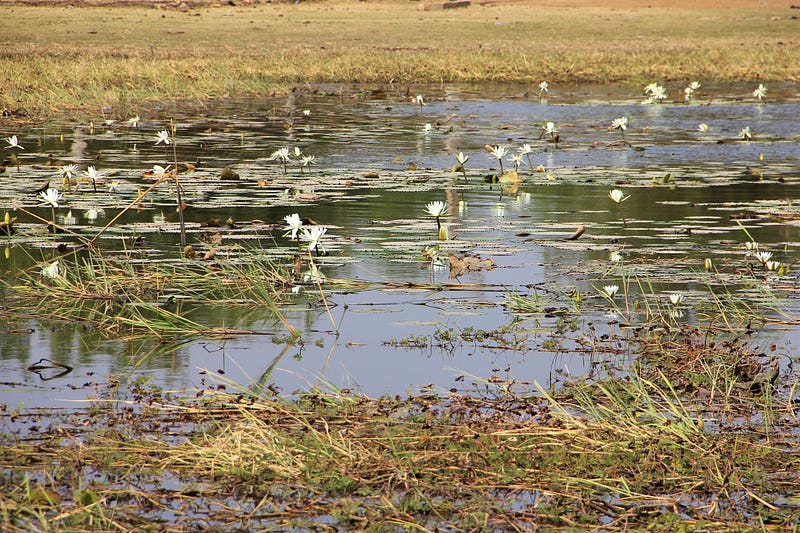
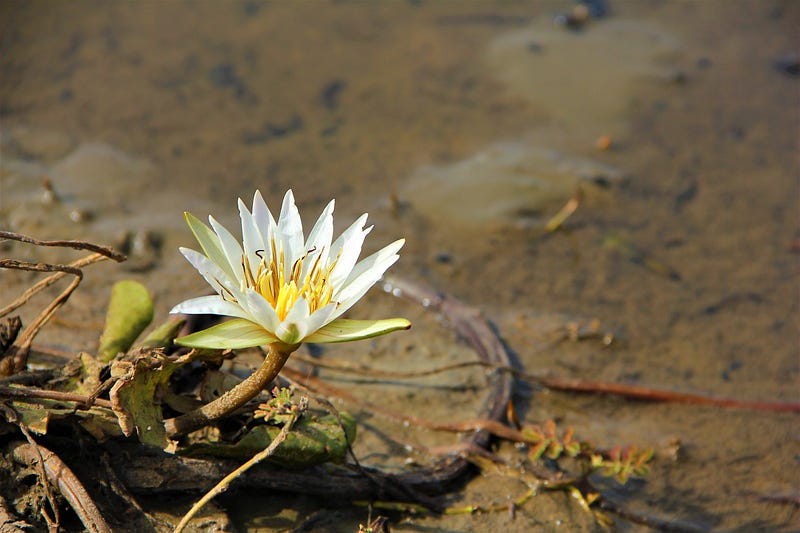
Donkeys were grazing on the meadows. Water lilies covered the shoreline. Birds were chirping and the sun was shining. A boy stopped on the far side of the lake with his donkey car to fill up canisters with water.
Nothing, absolutely nothing showed a dangerous scene there. Locals lived in peace with the environment. The guide explained to me that the villagers believe as long as they don’t do any harm to the crocodiles, the crocodiles will leave them alone. And apparently, no villager has ever been attacked by a crocodile.
While we were walking slowly towards the shore of the pond I felt like I was in some fairytale story and not in the real world. I was still waiting for the crocodiles to appear and did not see any of them lying in the grass as we walked past them. Only when the guide pointed them out to me I spotted them.
Wait, what? They were lying peacefully and well camouflaged in the grass. I walked just a few meters from them and didn’t even see them. This all seemed too unreal.
The call of the crocodile
But then the “ritual” started. If you’re an animal lover and start to cringe now, I’m sorry. This was surely made to make money from tourists. Like in so many other places in the world. But it was also part of their culture. To live in harmony with the crocodiles.
And chicken is food for the Ghanaians. Only those who can afford a chicken.
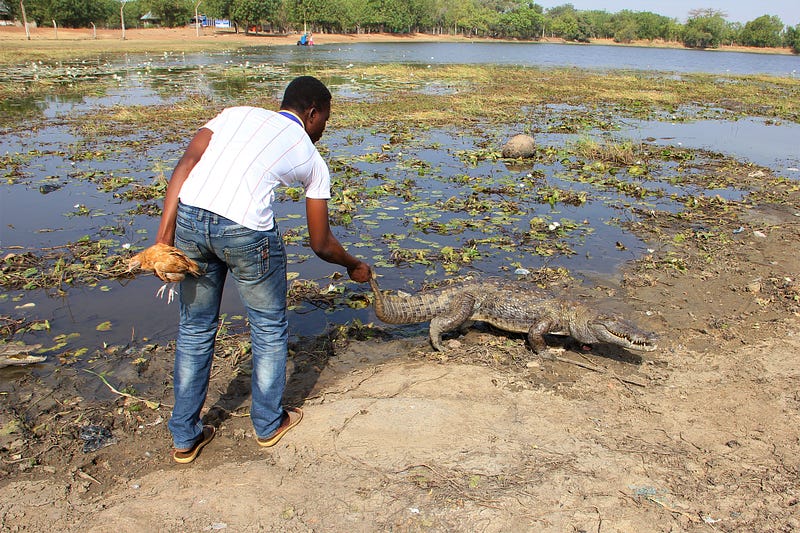
So, the guide started to shake around the chicken in his hand which obviously began to scream. The guide was trying to call one of the bigger crocodiles out of the pond because the ones lying onshore were “too small”.
They were surely not too small for me. I mean they were real-life crocodiles. They were wild animals and could surely bite off my leg if they felt like it. But the guide insisted on calling a bigger one out of the pond. I’m sure he also mentioned a name. Those bigger crocodiles had all names. Can’t remember them though.
It took some time of shaking the chicken and some more screaming before another crocodile appeared out of the water. It wasn’t the largest one the guide was hoping for but it was a decent-sized animal in my eyes. And it was surely too big for me being all exposed to this wild animal.
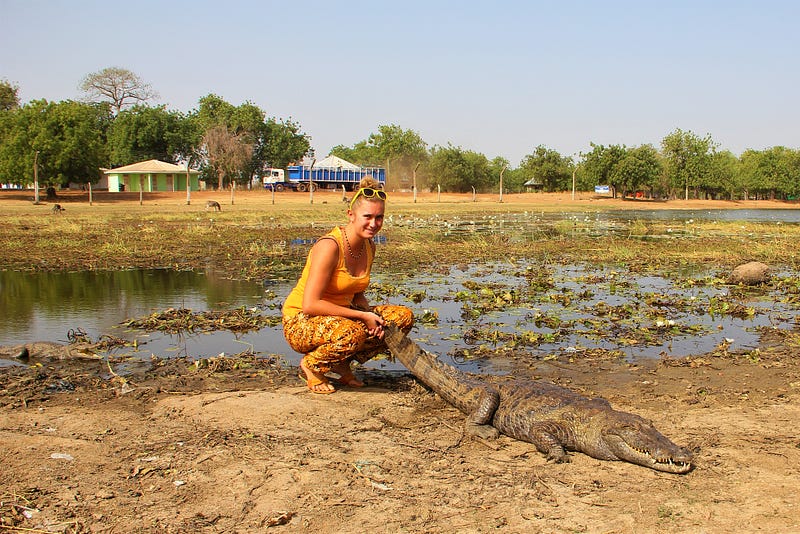
He called the crocodile out of the water where it then stopped. The guide walked towards the crocodile, grabbed it by the tail, and pushed a few meters further out of the water. I was just standing there, all alone and seemingly helpless.
The moment of truth
“Go there.”
Wait, what? No, why should I go to the crocodile? Right, because that was what I signed up for. To touch the crocodile, to take a picture with it, and to sit on the crocodile. Or something like that.
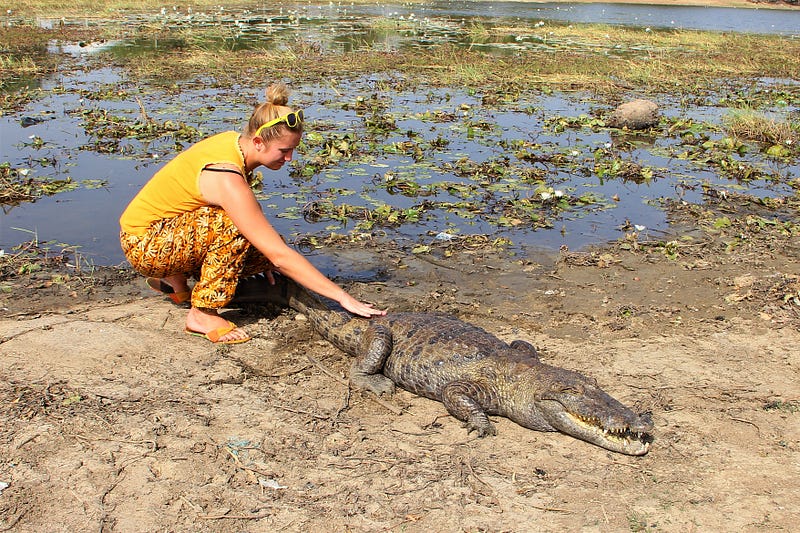
I walked in a large curve around to the back of the crocodile. I lifted his tail. It was heavy. I touched the skin. It felt weird. I pressed on the back of the crocodile. The skin barely gave in.
I was told I should not touch the sides of the animal or pet the skin. Then the crocodile would think I was a partner and would turn around. I surely didn’t want that.
In the picture, the crocodile looks so small next to me. And it is kind of small since there are bigger animals in the pond with almost twice the size of this one. But trust me. It seemed huge to me.
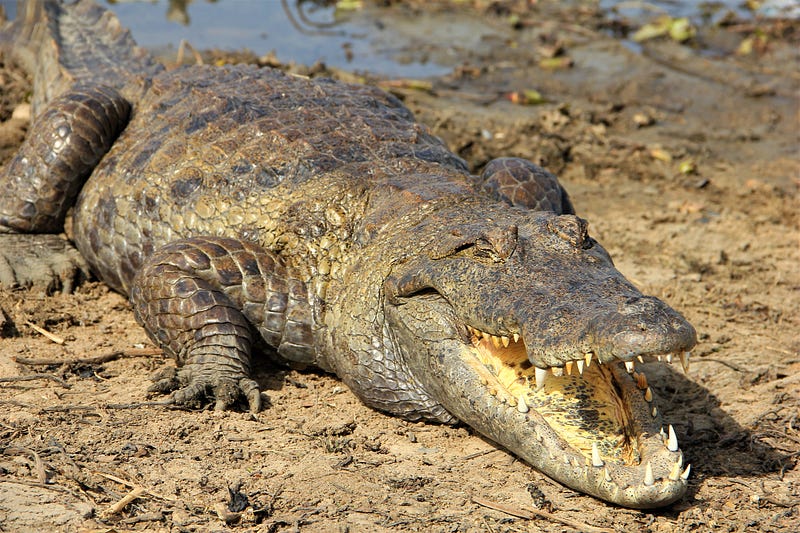
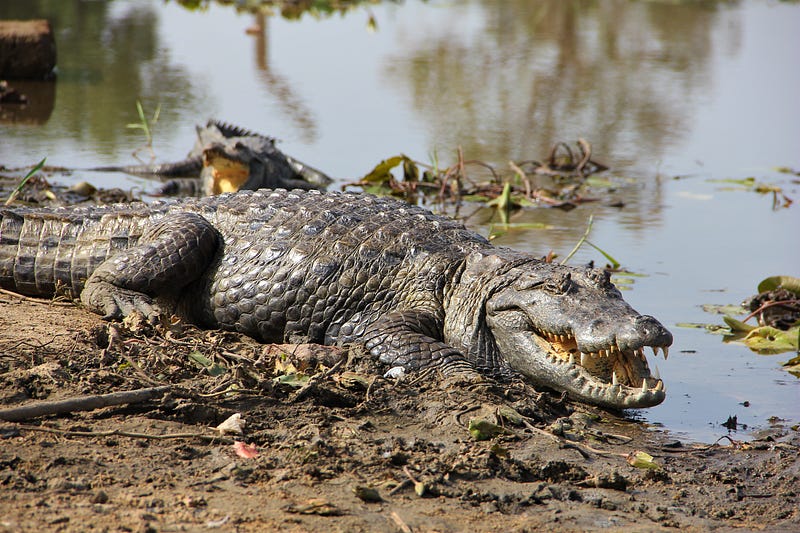
The crocodile had its mouth wide open. The guide explained to me it breaths like that. After taking in fresh air crocodiles can stay up to 10 or 12 hours underwater. That is impressive.
I looked at the pointy teeth. They surely looked intimidating. I felt one more time the skin of the crocodile and told the guide I was done. The guide was telling me to sit on the animal while he would take a photo of it but that was too much for me. Too much torture of the animal.
Or maybe I did get a little scared.
But I actually did not feel any fear the entire time. The guide had explained to me in such a calm and convincing way why these crocodiles don’t do anything to humans that I had no doubt about him being right.
I had been in Ghana for a few months already and had probably adapted to their easy-going and friendly lifestyle. That much I started to believe in their cultural traditions.
Peaceful co-living of wildlife and humans
In the end, this entire scene is just a wonderful example of how wild animals and humans can co-exist next to each other. In a world where humans try to rule everything and every part on earth, it was so beautiful to see such a moment of peace in the wild.
This surely would not have worked anywhere else in the world. But here, in this tiny little village in the very north of Ghana, here where the time seemed to stand still, crocodiles and children swim next to each other.
Not even when a herd of cattle came to the shore of the pond to drink anything happened. I had imagined similar scenes like in east Africa where the crocodiles are waiting in the rushing rivers for the antelopes to cross and just suck them underwater. But nothing. Nada.
Just peace and quiet. The only sounds to be heard were those of the donkeys neighing as they walked across the grass. And the birds singing in the trees.
A true fairytale in today’s world. And I am so happy I could experience this part as well. I was excited to have experienced something so special and unique. Something our western minds will never understand. But yet, it happened. And still does (hopefully) today.
Background information
I spend about 5 months in 2014/ 2015 in Ghana (West Africa) working in an orphanage and a school teaching children. It has been a life experience that has shaped me surely in many ways.
I am very grateful for all those small and big experiences I made over the months. I learned a lot about happiness, gratitude, and the hospitality of the Ghanaian people.
Those days were also the beginning of my career as a writer. It is where I wrote daily journals about my life in a different world. I published my thoughts on a blog and made years later a book out of it. So far, it is only published in German but I have shared many short stories of it in English on Medium. You find them in my list “Ghana”.
Today, there are two German girls in a small town in Ghana teaching children the English language and they are holding my book in their hands. It almost brought me to tears when they contacted me telling me they were reading my words and it helped them a lot to get used to the Ghanaian culture.
And therefore I will continue to share bits and pieces out of my life. Because of you, my loyal readers. Because you gave me from the beginning so much positive feedback that encouraged and motivated me to continue writing.
Thank you.
Read more about my adventures in Ghana in my book published in German or sign up for my email list if you would like to read more about my adventures in Ghana and other African countries…


