
2023: A Climate Odyssey
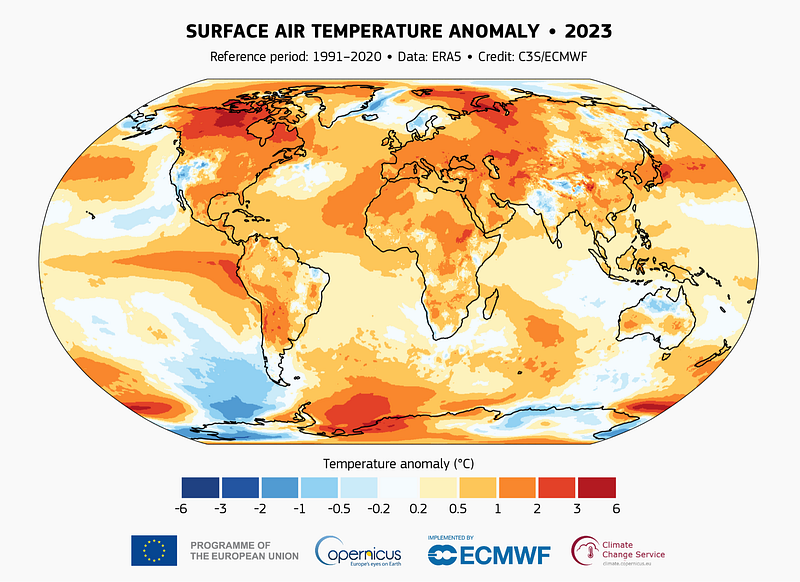
It’s official: 2023 was the warmest year ever measured; no surprises in Copernicus’ announcement. But just because we all knew this news would come, it’s essential to write about it. And that is because the news cycle is never kind to slow-moving processes, however deadly.
There are always reasons not to prioritize climate change in the media and politics. First, the scientists predicted that 2023 would be a record-breaking hot year, which was not newsworthy since it wasn’t a fact yet. That was followed by the official confirmation today, which you might easily ignore since we knew it was coming.
You will likely have experienced more extreme weather this year; I know I did. My year started in Ottawa, Canada, where, for the first time ever, the Rideau Canal didn’t freeze sufficiently to make it the biggest skating rink in the world. Then, Canada was plagued by record-breaking wildfires that were much larger and more spread out over the vast country than ever before. Those persistent wildfires played a significant role in the increase of 30 percent of estimated global wildfire carbon emissions in 2023.
When I arrived in Spain in late June, the smoke of those fires had traveled with me across the rapidly warming Atlantic Ocean. And in the following weeks, while walking the Camino de Santiago, Spain experienced record-breaking temperatures, drought, and disastrous floods.
By then, a string of monthly global temperature records being smashed had begun and continued for the rest of the year; the new year started with blossoming roses in my small garden on this Dutch island.
If you were lucky to live in a part of the world without too many extreme weather events, you may have followed the news. Deadly heatwaves, droughts, floods, and storms unfolded in many countries, resulting in untold suffering of hundreds of millions of people all over the world. Not that the burden is evenly shared: the most innocent, the poor in the poorest countries, suffer while the rich in the wealthiest countries still fly their private jets.
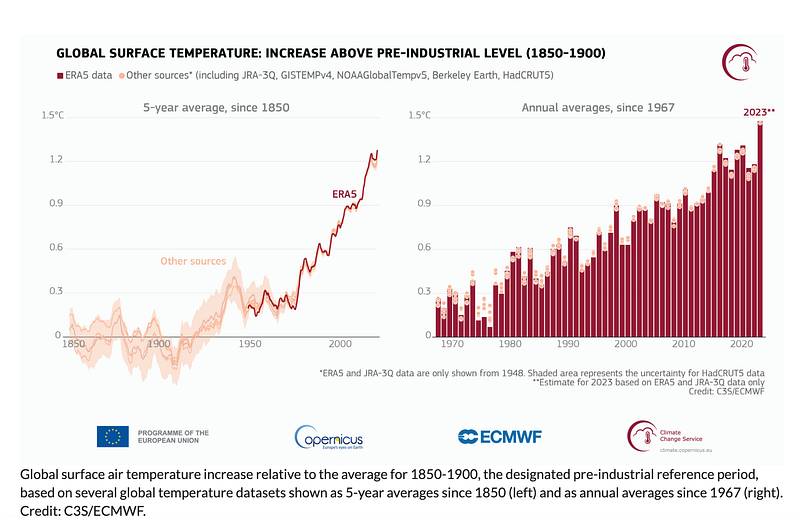
Last year was nearly 1.5 degrees Celsius warmer than in pre-industrial times. If someone were in charge of the world’s thermostat, they would reset it to normal. But our feverish planet is governed by many, and there are too many doctors around this patient’s bed to decide how to cool her down. Not that any politician needs to have studied rocket science to know the right medicine; just stopping burning fossil fuels would be a good start.
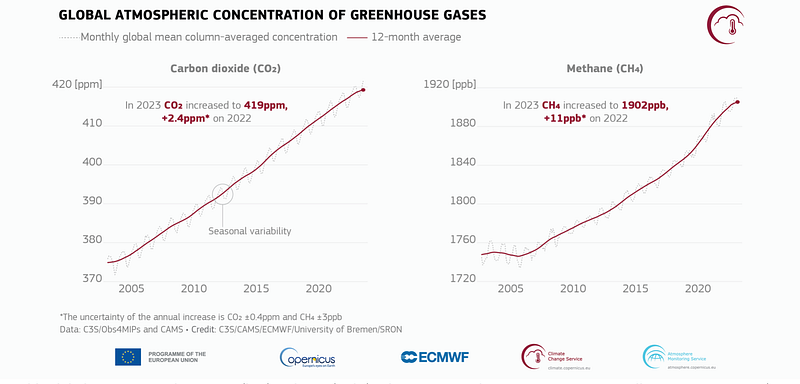
This brings me to another record broken this year: never before did we collectively produce such high greenhouse gas emissions as this year. Which is like those doctors putting extra layers on blankets on the overheated patient.
Copernicus reports that 2023 marks the first time on record that every day within a year has exceeded 1°C above the 1850–1900 pre-industrial level. Close to 50% of days were more than 1.5°C warmer than the 1850–1900 level, and two days in November were, for the first time, more than 2°C warmer.
Although I have worked for many years on climate change impacts and policies, I’m not a climate scientist, so I trust the scientists when they assure us that this year’s extreme records are still within the expected margins of our trend. But looking at this year’s graphs compared to previous decades, it seems to me we dramatically changed course last summer. I’m told it’s too soon to say, but I fear we may see a new trendline of accelerated heating this year and beyond.
As every climate scientist will tell you, we have no time to lose.
Subscribe to receive email notifications when I publish new articles.