
10 Qualities You Need to Succeed as a Digital Nomad
How to thrive as a full-time traveler
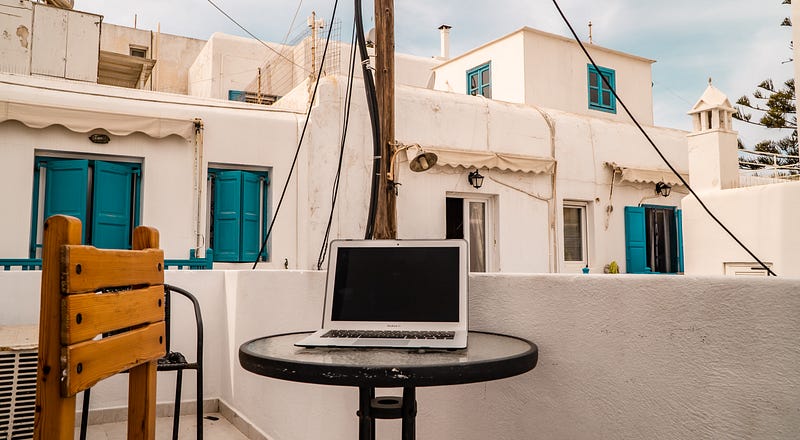
Throughout the last decade, digital nomadism evolved from a niche movement into a well-established, alternative lifestyle.
From globetrotting entrepreneurs to remote employees and adventure-seeking content creators, more and more people build successful careers as full-time travelers.
The allure is obvious.
Geoarbitrage guarantees a higher standard of living. Ever-expanding online markets provide endless opportunities. And the digital nomad lifestyle stills many millennials’ thirst for adventure.
All well and good, but who are those digital nomads? What type of person succeeds as a remote worker?
10 decisive traits of successful digital nomads
Having spent the last few years working on the road, I decided to compile a list of 10 decisive traits of successful digital nomads.
Paths vary, and every nomad has different priorities, but these are the most common qualities.
1. Flexibility
When it comes to qualities you need to succeed as a digital nomad, flexibility is undoubtedly one of the most crucial.
In this context, flexibility encompasses three main aspects of life.
First, you need to be flexible at work.
No matter if you work remotely for a company, manage a startup, or create content, full-time traveling will add a new layer of flexibility to your job.
Being on the road will both simplify and complicate your working patterns.
On one side, you’ll gain motivation from seeing novel places and freely choosing your nomad base.
On the other side, constant traveling and the need to adapt to new locations demand more time, effort, and flexibility than an office job.
Secondly, your relationships need to be flexible.
As a full-time planet roamer, making friends is not easy, but doable if people are on the same wavelength.
The same goes for dating. Don’t make the mistake of dating a person with a completely different lifestyle.
Unbalanced relationships — where one person lives a nomad lifestyle and craves adventure while the other one wants a stable, secure office environment — rarely succeed.
Finally, successful digital nomads have flexible daily routines. If you want to travel full-time, you can’t expect the same breakfast, small talk, and English levels everywhere in the world.
If you love traveling but want to cling on to your beloved routines from home, stick to a few core habits that secure your productivity.
As an example, I cook chicken with rice and vegetables no matter where I am in the world because I know that this food is essential to my physical wellbeing.
I also go for walks in the morning and read at night. These habits work anywhere in the world and bolster my productivity in any environment.
2. Confidence
If you want to succeed as a remote worker, you need confidence.
Even though the lifestyle is more established nowadays, many people still see it as a fringe movement. In short, most of society doesn’t know what the heck it is you’re doing.
That’s why you can’t count on society’s approval or social confirmation. You need confidence in your abilities, projects, and life choices.
Your family may support you, your friends might show interest in your career path, and many people will share their appreciation online, but all of this will never replace the mental drive you need to succeed as a remote worker.
3. Passion
Along those lines, confidence and passion go hand in hand.
Passion is a prerequisite to succeed as a digital nomad. Because you’re setting unconventional priorities and design your preferred lifestyle, you need to work toward your objectives with passion and tenacity.
Remote work is riskier than a cozy cubicle job. As such, only genuine passion can offset the mental uncertainty that comes with working on the road.
Most remote workers love traveling but also have a passion for their professional activity.
Ask yourself the following: if you don’t enjoy your work in a usual office setting, how much would you enjoy it in coffee shops, Airbnbs, or coworking spaces?
Remote work requires solid work ethics. And these work ethics are usually the result of a strong passion for your job.
4. Hunger for adventure and novelty
Few digital nomads are couch potatoes.
If you’re wondering whether this lifestyle is for you, ask yourself how much you value adventure and thrill.
After leaving the corporate world, I continuously faced this dilemma.
Do I prefer adventure and adrenaline over a fancy car, a shiny business card, and champagne-flowing corporate events?
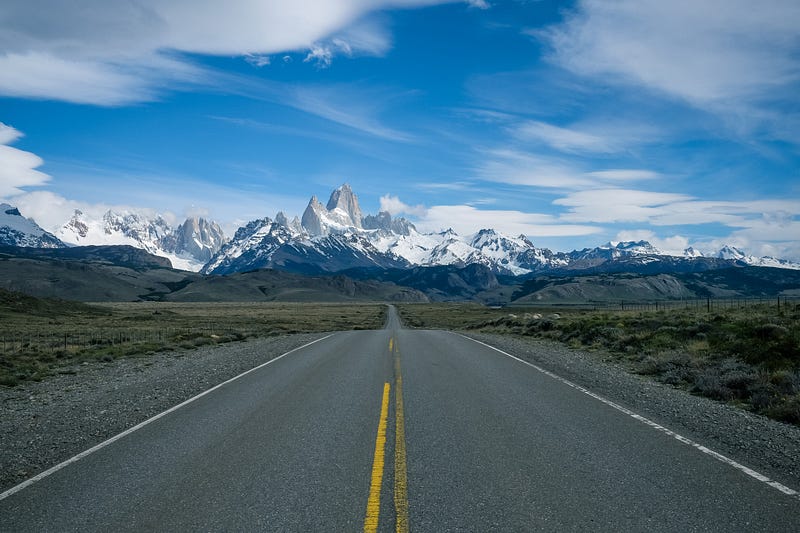
After admiring the awe-inspiring Cerro Chaltén in Patagonia, I had my answer. I knew that this was the life I wanted, and I realized that I needed to make it work.
Roaming the planet in search of captivating stories, inspiring places, and intriguing cultural exchanges became my priority, and I would design my lifestyle accordingly.
Many people, however, struggle with prioritization.
They see a highly-embellished remote working fantasy on Instagram and feel triggered.
The problem is that many aspiring nomads aren’t familiar with the day-to-day happenings of full-time traveling.
Are you prepared to live a minimalist lifestyle? Do you feel comfortable alone? Are you willing to navigate unknown cities, communicate in foreign languages, and adapt to new cultures on a whim?
When measuring your taste for adventure, these are the questions you should ask yourself.
Of course, there are different degrees of adventure when it comes to nomad lifestyles, but for most, it won’t be coffee in a neighboring city.
5. Discipline
If I had to name one overriding trait of successful digital nomads, it would be discipline.
If you want to make a living online while traveling the world, discipline is the cardinal requirement.
Discipline is also where most would-be remote workers fail. They envision themselves working on the beach in Tulum with mezcal and no stress whatsoever.
Whether you’re managing a business, creating content, or working for an employer, you’ll have to invest time and effort in your endeavor.
Working remotely doesn’t mean working less, it means working in a different setting.
Consequently, if you’re not disciplined in a conventional office, your troubles will multiply on the road.
In this context, working from home is a good way to test the waters.
If you’re disciplined, committed, and productive at home, you’re well-equipped to succeed as a full-time traveler.
The environments are different, but the struggles are similar.
To work from anywhere, you need a disciplined mindset and a dependable working mentality. Your home could be the ideal place to start building that mindset.
6. Open-mindedness and willingness to learn
If you’re longing for a digital nomad adventure, chances are you won’t travel to the next town.
You’re thinking about faraway lands, exotic food, and whacky cultural norms.
That’s where cultural adaptability comes into play. Most successful remote workers share this trait, and most have a strong desire to immerse themselves in foreign cultures.
There is a simple reason why a successful nomad lifestyle and cultural adaptability are inseparable.
The longer you travel, the more you’ll crave a deeper bond to the countries you’re visiting.
If you go on a two-month backpacking trip to Southeast Asia, you can get by without having local acquaintances. And even as a digital nomad, you can find your bubble in Chiang Mai and “ignore” the local culture.
However, after traveling and working on the road for years, you might become tired of futile connections with fellow travelers.
Your adventurous soul wants more, and foreign cultures become more and more intriguing.
That’s when successful nomads will adapt, learn new languages, and form life-changing connections with people from different backgrounds.
7. A thirst for unconventional life choices
Digital nomadism is an unconventional lifestyle and a manifestation of courage, boldness, and risk tolerance.
People with those attributes usually have suitable personalities to become remote workers.
If you don’t have those qualities yet, there is no need to despair. Many people become more courageous over time and learn how to calculate risk.
Nevertheless, be aware that acquiring those traits will take time, effort, and perseverance.
In terms of unconventional life choices, digital nomadism is a big step.
If you’ve never taken an unorthodox decision before, full-time traveling might be one step too far.
Some people need to improve their swimming skills before jumping into a frosty lake.
If you’re unsure whether you have enough grit and determination to succeed as a remote worker, try a smaller endeavor before going all in.
Take a one-month trip to a familiar place and work remotely from there. Start with an uncomplicated remote working experience before selling all your stuff and becoming a fully-fledged nomad.
8. Frugality and financial foresight
Most of the qualities you need to succeed as a digital nomad are mental, but budgeting and financial foresight are also essential pieces of the puzzle.
Especially as a globetrotting entrepreneur, you’ll need to master your finances and live frugally in certain periods.
Depending on where you’re from, traveling could be cheaper than staying in your hometown.
Such is the case for myself. I spend less money traveling than I would at home because my country is expensive.
However, before becoming a digital nomad, I calculated how much I would need to make every month. The figure evolved, but my budgeting tactics didn’t.
I know how much I can spend on consumer goods, housing, and travel expenses. After that, I also try to save and invest every month.
If my business goes through a rough patch, frugality becomes the norm. And this also means that my travel expenses will go down.
To sum up, you always need to calculate your “lifestyle budget.” And if your income doesn’t suffice at the end of a given month, you need to change your spending habits.
As a digital nomad, this can create challenges because you’re used to a certain travel style.
After all, most nomads wouldn’t want to return to hostel dorms after spending months in comfortable Airbnbs.
9. Minimalism
Minimalism is an essential part of digital nomadism.
As such, most successful remote workers value their lifestyle over material possessions.
If you’re serious about traveling full-time, that’s one of the choices you’ll have to make.
Some nomads carry more stuff than others, but there are always limits. The main point is to define your essentials and get rid of the rest.
About 70% of what I own now fits into two 45-liter bags. The remaining 30% are sentimental objects and seasonal clothes that I keep in storage in my hometown. I buy long-lasting, quality items that are versatile and fit for every purpose.
However, minimalism goes far beyond decluttering.
If you want to become a full-time traveler, you need to minimalize your commitments, financial constraints, and other travel limitations.
You need to design your lifestyle in such a way that it suits full-time globetrotting. Use minimalism to filter your possessions and later to declutter your life.
10. The ability to enjoy your own company
Finally, many aspiring nomads underestimate the importance of relishing solitude.
No matter what type of remote work you do, you’ll probably spend a lot of time by yourself in front of a screen.
That’s why the best digital nomads usually enjoy their own company and don’t fear the prospect of having some me-time.
Are you scared to eat alone at a restaurant? Do you need people around you at all times? And would you spend hours working in a coffee shop without talking to people who are not staff?
Don’t get me wrong, there are always opportunities to meet people, and full-time traveling can be the opposite of lonely.
Nevertheless, you’ll eventually encounter lonely moments, and you’ll have to deal with them.
Akin to other nomad qualities, training your response to loneliness before setting off on your nomad journey is a great way to acquire the right tools for a successful career as a full-time traveler.


