
How to Choose Your Nomad Base as a Remote Worker
7 essential conditions for a great nomad base

Many aspiring remote workers dream about lying on the beach with their laptops, an ice-cold margarita, and unlimited sunshine.
The image might seem appealing, but it’s not a viable idea for long-term professional success.
If you want to excel as a remote worker, you need bases. You have to find temporary locations that will both secure your productivity and satisfy your wanderlust.
First and foremost, let’s define the concept of a “nomad base.”
What is a nomad base?
A nomad base is a city or town where you decide to relocate temporarily as a remote worker.
For some, temporary relocation means living in a city for at least six months, while others never spend more than four weeks in one spot.
No matter how long you’re staying in your nomad base, the essential point is that you are not visiting as a tourist and then work a little bit on the side.
You choose a specific city to work remotely from there. You can naturally go on weekend trips, but your base remains your main residence for a certain period.
7 criteria for choosing a nomad base
The following are my seven main conditions for choosing a remote working base.
#1 Infrastructure and connectivity
The first criterion for a suitable nomad base concerns its infrastructure and connectivity.
A city’s infrastructure encompasses many elements. We generally want clean and well-maintained streets, with a passable public transit network.
Most nomads won’t have a car in their base. As such, choosing a city with great public transportation and a walkable center is crucial for remote workers.
Better still, walking the streets of your base is an excellent way to soak in the atmosphere when you’re new in town.
The next condition is the city’s Wifi network.
Most cities nowadays have good Wifi, but depending on your digital occupation, good Wifi might not be enough. You may require high-speed internet at all times.
Such is the case for myself. As a photographer, I upload thousands of pictures and videos to stock sites, making fast Wifi a lifesaver.
In many cities, Airbnbs and coffee shops do not have the kind of Wifi that my work requires.
To tackle Wifi problems, here are some pro tips:
- Ask your Airbnb host how strong the Wifi is before confirming your booking.
- Research the city’s Wifi standards. Places like Portugal, Estonia, and Lithuania have some of the fastest connections in the world without many people knowing about it. Their more prominent neighbors, like Spain and Germany, on the other hand, have much lower standards.
- Research whether your potential nomad base has a coffee shop culture. In many Northern- and Central European, North American, and Asian cities, coffee shops are popular working spots, complete with fast Wifi and delicious roast to sweeten your daily grind.
#2 Cost of living
Many nomads cite the cost of living as their number one criterion for choosing a base.
I will spend a few months in city X. It’s cheap and convenient.
The prices are certainly important, but you need to look beyond the numbers.
When measuring the cost of living in a potential digital nomad base, consider the following aspects:
- How much do you get for your money? As an example, certain cities are cheap because of their dilapidated infrastructure, lack of cultural sights, and low livability. Basing yourself in such a location might serve your wallet, but nothing else.
- What kind of products are cheap or expensive in city X? Alcohol and rent are ridiculously expensive in Dubai, but gasoline, food, and hotels are not. Depending on your lifestyle, you might find Dubai an affordable or expensive place to base yourself.
- How do the city’s prices affect your work? If you’re reliant on fast internet, you probably won’t want a base where you pay extra for high-speed Wifi all the time.
Consequently, when assessing the cost of living, look at the big picture. Check how specific prices will impact your particular situation.
#3 Cultural offer and things to do
A great nomad base should provide the perfect setting for remote workers, but it should also offer enticing cultural and culinary things to do.
After all, as remote workers, we love traveling, exploring, and encountering foreign cultures — that’s why many of us became nomads in the first place.
In this context, I wouldn’t base myself in a city with less than one million inhabitants. There are exceptions, but most cities with less do not offer the same “big city perks.”
As such, I look for cities with varied culinary scenes and buzzing nightlife areas. Museums, art galleries, and intriguing architecture are other plus points.
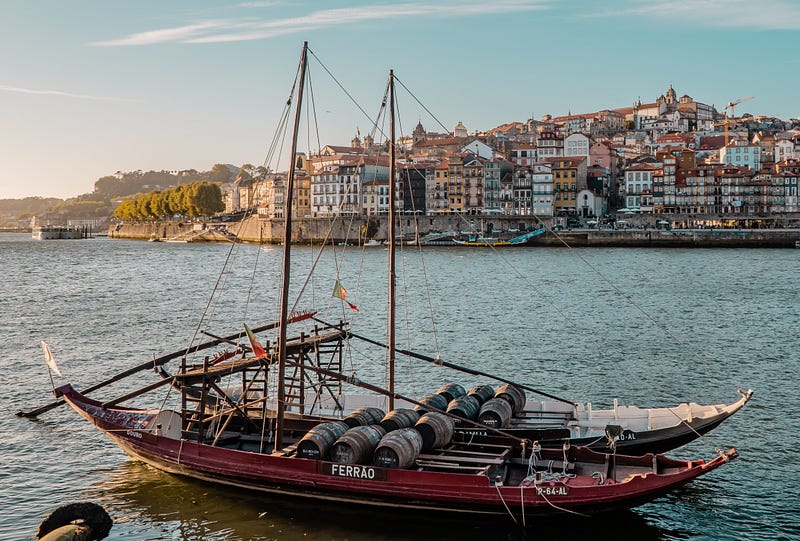
As an example, my last nomad bases were Bangkok, Thailand; Istanbul, Turkey; Zagreb, Croatia; Naples, Italy; Porto, Portugal; and Athens, Greece.
These cities were far from perfect, but they fulfilled all my criteria in the cultural spectrum.
#4 Personal preferences in terms of regions
As nomads and travelers, we all have our regional preferences when it comes to choosing a base.
Some of the most popular regions for digital nomads include Southeast Asia, Eastern- and Southern Europe, and Latin America.
In terms of regional preferences, many factors come into play.
First, some regions have lots of cities that make great nomad bases, like Southeast Asia.
Between Bangkok, Chiang Mai, Bali, and Kuala Lumpur, there are many places to choose from in this part of the world.
Aside from that, many nomads enjoy the hustle and bustle of Asian cities, as well as their uniqueness.
Central- and Eastern Europe, on the other hand, are home to lots of quaint medieval cities, all boasting great infrastructure and accessibility. Prague, Budapest, Bratislava, and Krakow are hotspots in this regard.
You’ll also want to consider the English levels of your potential base.
Spanish might be an appealing language to learn, but few remote workers are prepared to learn Thai, Polish, or Turkish.
#5 Visa requirements
Visa requirements aren’t dealbreakers, but they certainly add to the attractiveness of a potential digital nomad base.
As an example, Mexico gives most nations six months visa on arrival without any formalities. Thailand and Indonesia, on the other hand, give one.
Most remote workers stay in their destinations on tourist visas. Because we work for ourselves or foreign companies, we usually don’t qualify for work visas.
That’s why countries with tourist visas of at least three months offer the best remote working bases.
It depends on your passport, but most countries nowadays give three months to a wide variety of nations.
#6 Safety and general livability
Akin to having modern infrastructure, you’ll want to be in a safe and livable environment.
That’s where you need to do your research and check whether your potential base ticks those boxes.
There are a few points to highlight here.
First, certain tourist hotspots offer great places to visit, but not all-around livability.
Many South- and Central American cities have highly policed tourist neighborhoods with lots of cultural sites, but not the best remote working spots.
The same applies to certain Southern European towns. They might be superb postcard locations, but their general livability is not on point.
Always remember that you are looking for a base, not a tourist destination.
A great base is a city in which you’ll live, not a location where you spend a few days exploring tourist sights.
#7 Presence of remote workers, digital nomads, and other people to connect with
Finally, many nomads elect bases according to their popularity among fellow remote workers. And there are lots of advantages to this approach.
In a city like Chiang Mai, you won’t struggle to meet other digital nomads. They will help you with the minutiae of daily life, and they’ll simplify your settling-in process.
Better still, you’ll have an instant connection, both on a personal and professional level.
It’s always easier to connect with people who are in the same boat, who face the same struggles, and who chase similar goals.
Nevertheless, don’t rely exclusively on other remote workers. By choosing your bases that way, you’ll run the risk of getting trapped in a digital nomad bubble, with no ties to the local population.
Try to find a balance between connecting with fellow nomads and immersing yourself in the local culture.
Summary and final thoughts
Choosing a nomad base isn’t easy, especially for first-time digital nomads.
Here is a summary of seven criteria that will help you decide:
- First and foremost, choose cities according to infrastructure and connectivity.
- Second, measure the cost of living in real terms — not simple numbers.
- Third, research a potential base’s cultural and culinary offer.
- Fourth, act according to your regional preferences. Choose the region that suits you best as a remote worker.
- Fifth, check visa requirements.
- Sixth, learn about a city’s safety and general livability. Gauge these aspects in relation to locals, not tourists.
- Finally, the presence of fellow nomads should be a criterion, but don’t base your choice exclusively on other remote workers.


