
The Benefits And Disadvantages of Being a Digital Nomad
What to expect when you’re “living the dream”
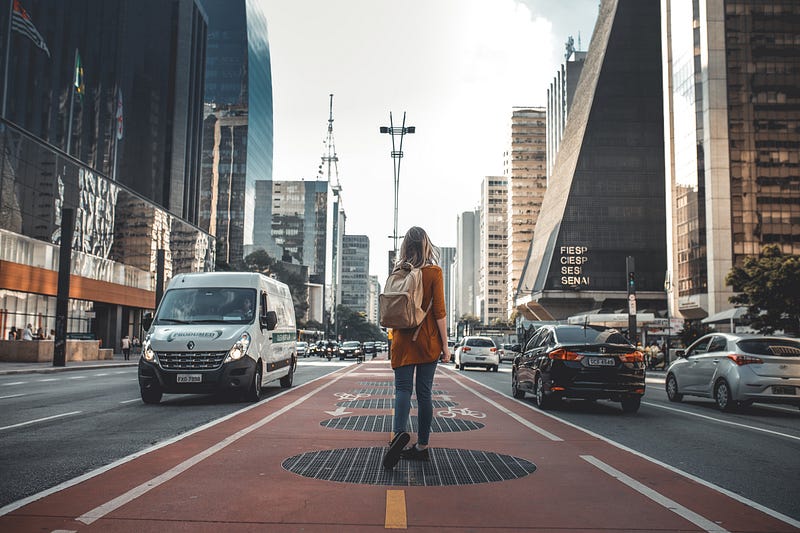
Yesterday evening, I had a glass of delicious Port wine on the banks of the Douro river.
Today, I work in a coffee shop overlooking Madrid.
And tomorrow, I’ll be on my way to Mexico, exploring the colorful streets of Oaxaca before setting up my remote office in a beachside condo in Tulum.
All of this wouldn’t be possible had I not become a digital nomad.
Over the last couple of years, I built several online businesses, invested my corporate salary, sold most of my possessions, and set off to travel the world.
It was a long and difficult road, but I am now at a point where I can live and work anywhere at any time. I’ve achieved what many people see as a fantasy, a dream only Instagrammers live.
Working remotely while traveling the world: a dream?
Before committing to the digital nomad lifestyle, I had limited first-hand knowledge about working on the road. I had been all over the place, but I had never managed a business while traveling.
The first year was eye-opening.
It took me more than twelve months to establish my ideal digital nomad lifestyle, with countless trial and error lessons.
Through positive and negative takeaways, I’ve identified six main benefits and six main disadvantages of digital nomadism.
On this basis, here are the pros and cons of being a digital nomad.
The benefits of being a digital nomad
#1 Freedom to work from anywhere at any time
Location independence and flexible hours are the obvious benefits of being a digital nomad.
As remote workers, we choose our temporary home base, our working schedule, and our office setup.
A cute café in Bali? Let’s set up shop here for the next couple of weeks.
A penthouse condo in Buenos Aires? That sounds like an adequate working spot for the next month.
Or maybe a remote beach hostel in the Algarve? When you’re a digital nomad, there are virtually no limits to where you can be.
The same applies to work hours.
If I want to go on a volcano tour tomorrow, I’ll just set up my meetings for the day after.
Of course, I have to put the required hours in, but I don’t have to ask anyone for permission to take a day off.
In that same vein, I can work 10–12 hours today but 4 tomorrow. If my organizational specificities allow it, I am the master of my schedule.
#2 Inspiration from nonstop travel
Traveling has been a passion of mine for as long as I can think. Ever since I was a kid, I dreamed of becoming a modern-day explorer, discovering faraway lands, and immersing myself in foreign cultures.
My digital nomad lifestyle guarantees unlimited travel, with an average of 12 countries per year.
You could do more, but I think that one month per country is the minimum you need to feel somewhat settled and avoid travel fatigue.
No matter the number of countries, constant globetrotting has one main benefit: inspiration.
If you’re travel-addicted like me, you’ll find that nothing beats the inspiration you get from seeing captivating places, meeting interesting people, and overcoming cultural barriers.
Inspiration for what? You might ask.
The answer is simple: inspiration for life.
Traveling is a drug that fuels your motivation to live a life worth living, to understand the world a little better, and to demand more from yourself.
Consequently, all the inspiration you get from extensive traveling can foster your personal growth but also provide courage for your entrepreneurial route.
#3 Geoarbitrage
Another great benefit of digital nomadism is geoarbitrage.
Geoarbitrage is a relatively modern term. LetsReachSuccess defines it as “relocating in order to take advantage of the lower costs of a city/country.”
As such, geoarbitrage allows you to increase your quality of life by moving to a cheaper location.
Let’s compare housing prices in New York and Austin. In this context, the same salary will get you a much better place to live in Austin than in NYC.
As a digital nomad, you can take full advantage of price differences. Better still, you can go one up by switching to a low-income country.
As an example, last year I spent a month living in Bangkok. I lived in a nicely furnished, brand-new condo with a gym and a rooftop swimming pool in an upper-middle-class neighborhood. The rent was just over 500 Euros, utilities included.
In most European or American cities, the same type of apartment would set you back well over 1,000 Euros, without mentioning the lower cost of living in Bangkok.
Consequently, I was able to benefit from Thailand’s lower prices and live a more lavish lifestyle.
#4 Adventure
Much like inspiration, full-time travel is a reliable source of adventurous experiences and memorable moments.
Rafting in Bosnia and Herzegovina, hiking around volcanoes in Costa Rica, and wine tasting in the Chilean Andes are just some of the activities I took part in throughout the last couple of years.
If you’re a digital nomad, a new adventure looms around every corner.
The only limit to what you can experience is your imagination. Oh, and your bank balance, but that’s obvious.
#5 Personal growth
As a digital nomad, you constantly expose yourself to new situations, challenges, and ideas.
Whether it’s navigating a country’s subway system, meeting like-minded entrepreneurs, or suffering from setbacks, personal growth is a key aspect of digital nomadism.
You’ll become more open-minded, more confident, and better at organizing things.
All of these qualities will serve you later, no matter if you stay on the road or put down roots eventually.
#6 Opportunities
Finally, the last major benefit of a digital nomad lifestyle concerns opportunities.
When I look back at my entrepreneurial journey, I see that most opportunities came from meeting fellow digital nomads on the road.
A while ago, in my first year as a digital nomad, I met a well-known travel blogger in Hong Kong.
Even though he migrated his business to Youtube, I still use his advice regarding SEO, content strategies, and traffic growth. He also introduced me to a six-figure online entrepreneur from Seattle, whom I partnered up with.
You might find it hard in the beginning, but once you’re inside the coveted bubble of digital nomadism, opportunities will come your way, and you’ll realize that these wouldn’t have come in your hometown.

The cons of being a digital nomad
Digital nomads supposedly “live the dream”, but there are also many downsides to the lifestyle — most of which you’ll learn the hard way. On this basis, here are six main disadvantages of being a digital nomad.
#1 Coming up with the patience and discipline to build your dream
If you think that staying disciplined is hard in a familiar, safe environment, imagine being in a sunny, beautiful location with endless cultural and culinary options.
The biggest struggle for most aspiring digital nomads is the holiday trap.
They travel to Bali, Chiang Mai, or Medellín and imagine a thriving digital nomad community where fellow freelancers will help them succeed.
Bali’s beaches, Chiang Mai’s nature, and Medellín’s parties are a mere bonus. Or so they think…
Unfortunately, most of these would-be entrepreneurs return to the corporate world after six months or less.
I’ve seen it time and time again; people traveling to digital nomad hotspots with high-minded ambitions only to spend three months chilling and partying before ending up broke.
You need a healthy chunk of discipline to progress in your corporate job at home. Multiply this by fifty, and you’ll know how much discipline digital nomadism requires.
Ask yourself the following: are you more interested in travel than business?
If it’s the former, go on a gap year. Travel, enjoy life, and don’t worry about running a business.
If you don’t have the discipline to work hard on the road, it’s better to build your business at home and travel once you can afford it. Don’t try digital nomadism if you don’t mean business.
#2 The fear of missing out on travel opportunities because of work
At the outset of your digital nomad journey, you envision working on the beach, visiting intriguing sites every other day, and meeting fellow travelers.
The truth is that unless you’ve already built your online empire, the first few months will be work, not much else.
In this context, I remember my first two months in Asia. I set off with ample passive income streams, but most of my work was still freelance, reliant on clients giving me jobs and deadlines.
Especially in the beginning, the dream felt more like a never-ending sea of lost travel opportunities.
Working 24/7 in a small Airbnb without properly exploring the city I was in became the norm. After two months, it was clear that I needed a change.
I decided to spend more time in each location — guaranteeing enough free time to do at least some tourism.
I improved my rhythm, and with fewer but better clients, I could also take more days off.
Nevertheless, finding a balance between properly enjoying a location and working as a freelancer remains challenging.
#3 Loneliness and short relationships
Solitude and fleeting relationships are common among digital nomads.
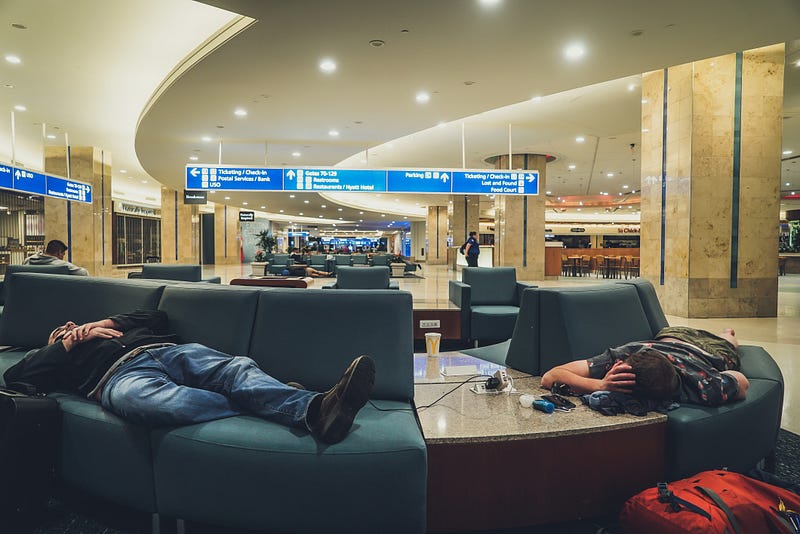
If you’ve traveled solo before, you’ll know that people come and go and that it can get lonely sometimes.
Even if you spend a month in city X, you’ll face the same problem. You invest time and energy into meeting people and making friends. Before you know it, you’ll move on, or they’ll move on.
I am not even mentioning dating. Yes, dating apps make it easy to find someone for a quick adventure, but finding a serious partner is a different story.
#4 Travel fatigue
Akin to loneliness, travel fatigue can become a side effect of digital nomadism.
People only used to all-inclusive annual holidays don’t know this, but long-term traveling is exhausting.
In my first two months as a digital nomad, I visited six countries, eight cities, and over twenty locations.
For a backpacker, this may sound like a piece of cake. It works out to three days per location, after all.
Nevertheless, traveling this much while working freelance is extremely draining.
After those two months, I had no more energy in the tank, and I needed a break.
As a passionate globetrotter, I would never have thought that traveling could be this annoying.
I had to face facts: as a freelancer, moving locations had become more of a burden than an adventure.
Even if you’re traveling slowly — which you should as a digital nomad — you’ll still get tired of taking planes, navigating new cities, and hearing languages you don’t understand.
The antidote is to go home once in a while and give yourself some time off — not from work, but from traveling.
#5 A lack of social confirmation
Another disadvantage of being a digital nomad is the fact that most people aren’t familiar with your lifestyle.
Even though digital nomadism is quite common nowadays, most people still don’t have a clue about the ins and out of location independence.
Consequently, you have to explain time and time again that you are working remotely, change countries frequently, and most importantly: that you are not on holiday.
Worse still, even if people know what digital nomadism is, you won’t receive a lot of social confirmation. Most people value stability and conformity more than freedom and adventure.
And that’s their right. No one has to agree with the principle of geoarbitrage.
Nevertheless, if you’re an aspiring digital nomad, keep in mind that you’ll have to earn people’s respect, and this won’t be easy. Most of them are either envious, incredulous, or indifferent.
Whichever it is, both at home and in your nomad base, your “social status” will be lower than other people’s, even if there’s no logical reason for it.
#6 A lack of feeling “at home”
Finally, the freedom of location independence comes with a catch. You’ll never feel “home” again.
Remember your childhood, when you spent your days playing football on a dilapidated pitch near your house? And later, when your friends would gather at the same bar every weekend?
Those experiences signify a feeling of “being home.”
Once you take the leap and become a digital nomad, that feeling will disappear.
Yes, you can always revisit your hometown, but it won’t be the same.
Your friends will go on with their lives, and they won’t share the same passion for business and planet roaming. They’ll still be your friends, but your priorities will have changed. And so will theirs.
Your hometown will feel boring and predictable, not homey.
You’ve become used to exhilarating adventures and consistent novelty, something our hometowns simply cannot provide.
You might think that this homely feel can be found in one of your nomad bases. I’ve got some bad news for you.
It might be possible to establish a deep connection with a foreign city or country — I’ve done so on many occasions — but it will never replace the feeling you had in your hometown.
Unless you’re moving to your location of choice permanently, and willing to fully integrate into the local society, you’ll have to say goodbye to the concept of “home.”
Subscribe to my stories for more insightful info on remote work and personal growth.
You might also like
Gain Access to Expert View — Subscribe to DDI Intel


