avatarJonathan Poletti

Free AI web copilot to create summaries, insights and extended knowledge, download it at here

5417

Abstract

f="https://www.forbes.com/sites/oliviapinnock/2020/10/01/coco-chanel-nazi-connection-matter-for-fashion-today/?sh=4df7245654a5">notes</a>:</p><blockquote id="840a"><p><i>“It’s clear that Chanel’s far-right ideologies influenced her designs. She championed minimalism and the austere. It’s very white European.”</i></p></blockquote><p id="6989">No one could say that Nazis didn’t have style.</p><h1 id="72e8">5. Mircea Eliade</h1><p id="b2d2">If you study religion, you’re likely to encounter Mircea Eliade, the Romanian scholar. His books, like <i>The Myth of the Eternal Return </i>and<i> The Sacred and the Profane, </i>are as famous as scholarly texts get.</p><p id="c5bc">He came to the United States in 1956, and died in 1986. In the time between he worked at the University of Chicago. It appears the school knew of his Nazi past. In 2000, the novelist Saul Bellow, in the semi-fictional <i>Ravelstein</i>, <a href="https://www.google.com/books/edition/Ravelstein/0dKkDQAAQBAJ?hl=en&amp;gbpv=1&amp;dq=%22He+had+been+a+foreign+service+cultural+official+in+the+Nazi+regime+in+Bucharest.%22&amp;pg=PA91&amp;printsec=frontcover">noted</a> the talk around campus: that Eliade was a “Hitlerite” who had been “a foreign service cultural official in the Nazi regime in Bucharest.”</p><p id="2fc0">But in 1988, a biography shocked with details: Eliade had been part of Romania’s Nazi-linked Iron Guard, and wrote for the fascist press.</p><p id="c1cb">Stephen H. Norwood’s 2011 study <a href="https://openlibrary.org/works/OL4795239W/The_Third_Reich_in_the_ivory_tower?edition=ia%3Athirdreichinivor00norw"><i>The Third Reich in the Ivory Tower</i></a><i> </i>goes into the horror. Eliade worked in the organization known for gruesome torture and murder of Jews. He did a Romanian translation of <i>Protocols of the Elders of Zion</i>, a hoax text about a Jewish conspiracy to take over the world.</p><p id="9449">“He considered Jews an invasive and destabilizing presence in Romania,” Norwood writes.</p><p id="6a11">This is the ‘genius’ scholar whose ideas on religion mattered.</p><figure id="4b13"><img src="https://cdn-images-1.readmedium.com/v2/resize:fit:800/0*fg7ktslcxNctGIPc.jpg"><figcaption></figcaption></figure><figure id="17f0"><img src="https://cdn-images-1.readmedium.com/v2/resize:fit:800/1*hLa4OKV4TKF9tSdLhUcg6w.png"><figcaption>Mircea Eliade; Marshall McLuhan</figcaption></figure><h1 id="72c7">6. Marshall McLuhan</h1><p id="afc9">His 1964 book <i>Understanding Media </i>is a classic. But Marshall McLuhan was never a fan of the world he studied. He was ultra-orthodox Catholic, and as a scholar <a href="https://www.google.com/books/edition/Marshall_McLuhan_Theoretical_elaboration/4Ve7_jMQPysC?hl=en&amp;gbpv=1&amp;bsq=pound">notes</a>, “constantly and quite seriously homophobic…”</p><p id="9e0c">McLuhan saw the world as torn between masculine Christianity, and the ‘perpetual fantasy and emotional immaturity’ he identifies with the effeminate Peter Pan. Civilization was, then, Peter vs. Peter Pan.</p><p id="5df3">And McLuhan saw Nazism as a useful dash of “Peter” power. For him, as a biographer <a href="https://www.google.com/books/edition/Marshall_McLuhan/oMBn4mwLP_MC?hl=en&amp;gbpv=1&amp;dq=%22Peter+Pan+was+taking+his+lumps+in+Franco%27s+Spain+and+in+Nazi+Germany.%22&amp;pg=PA56&amp;printsec=frontcover">summarizes</a>, “Peter Pan was taking his lumps in Franco’s Spain and in Nazi Germany.”</p><figure id="e90d"><img src="https://cdn-images-1.readmedium.com/v2/resize:fit:800/0*PIIjVLQlpJxtrbuJ.jpg"><figcaption><a href="https://www.kunstkaufen.at/kuenstler/gottfried-helnwein/mickey-und-hitler/">Gottfried Helnwein, “Mickey und Hitler”</a></figcaption></figure><h1 id="5390">7. Walt Disney</h1><p id="292c">Walt Disney wasn’t much like his public image, and there’s a good case he was a Nazi. In 1938, he hosted <a href="https://www.hollywoodreporter.com/movies/movie-features/leni-riefenstahl-hollywood-1235001606/">Hitler’s filmmaker</a>, Leni Riefenstahl, when other studios wouldn’t. She seemed to think they were on the same team.</p><p id="e1cd">He <a href="https://archive.org/details/waltdisneyhollyw0000elio">attended meetings</a> of the American Nazi party. According to his animator Art Babbitt, “Disney was going to meetings all the time.”</p><p id="e69f">Biographer Marc Elliot reports that Disney <a href="https://archive.org/details/waltdisneyhollyw0000elio">appeared at several “America First” rallies</a> alongside Charles Lindbergh, another notorious Nazi sympathizer.</p><p id="9111">The Disney company did make anti-Nazi propaganda films for the American government, but those films <a href="https://www.amazon.com/Jewish-Science-Fiction-Fantasy-through/dp/1793637121/ref=tmm_hrd_swatch_0?_encoding=UTF8&amp;qid=1663636028&amp;sr=8-1&amp;asin=1793637121&amp;revisionId=&amp;format=4&amp;depth=1">erase</a> Nazi anti-Semitism.</p><p id="e1f7">There are no <a href="https://www.google.com/books/edition/Jewish_Science_Fiction_and_Fantasy_Throu/wkIxEAAAQBAJ?hl=en&amp;gbpv=0">Jewish characters</a> in any classic Disney films, except for witches and other malevolent women. Cinderella’s evil stepmother, <a href="https://pitjournal.unc.edu/content/witch-perspectives-burning-down-old-standards">notes</a> the scholar Ellie Baker, is coded in anti-Semitic imagery:</p><blockquote id="c5f8"><p>“…the distinctive nose, over-sized dark eyes and heavy eyelids, pointed c

Options

hin, and, with the latter, the dark curly hair, as well as a greedy and deadly obsession with their children.”</p></blockquote><figure id="7597"><img src="https://cdn-images-1.readmedium.com/v2/resize:fit:800/0*6pb4ko2D4FCmm6D8"><figcaption><a href="https://www.odt.co.nz/opinion/billy-graham-last-his-kind">Billy Graham at Shea Stadium</a></figcaption></figure><h1 id="c857">8. Billy Graham</h1><p id="a6f9">On February 1, 1972, Evangelical leader Billy Graham was in Nixon’s White House. In 1994, a Nixon’s staffer’s memoir noted Graham had been on <a href="https://readmedium.com/billy-graham-the-synagogue-of-satan-681360ae5b99">an anti-Semitic rant</a>. Graham denied it, saying he’d only ever spoken of Jews in “the most positive terms.’’</p><p id="b940">In 2002, a partial transcript was released. “They’re the ones putting out the pornographic stuff,” Graham says, agreeing that Jews dominate the news media. Again questioned, he <a href="https://www.nytimes.com/2002/03/17/us/billy-graham-responds-to-lingering-anger-over-1972-remarks-on-jews.html">again denied it</a>.</p><p id="9bf6">Graham died in 2018, making possible the release of the unedited tape from the Nixon Library. It turns out he’d <a href="https://currentpub.com/2022/09/11/billy-graham-to-richard-nixon-satan-was-working-through-the-jews-but-hitler-handled-it-all-wrong/">spoken at length</a> about Jews as <i>“energized by a supernatural power called the devil.”</i></p><p id="32bf">He supported Israel publicly, he said, but hated Jews. Hitler, he says, had faced the problem of Jews having a “stranglehold on Germany…”</p><p id="7044">Hitler <i>“went about it wrong,”</i> Graham allows. <i>“But this stranglehold has got to be broken or this country is gonna go down the drain!”</i></p><figure id="dbef"><img src="https://cdn-images-1.readmedium.com/v2/resize:fit:800/0*RqBdTDhTAKY_Jao2.jpg"><figcaption>Gerhard Kittel</figcaption></figure><h1 id="8f29">9. Gerhard Kittel</h1><p id="8420">Your local Protestant pastor probably has his books. Gerhard Kittel was the editor of the famous <i>Theological Dictionary of the New Testament</i>.</p><p id="147a">He was also a Nazi who worked on his dictionary as a <a href="https://www.jstor.org/stable/1561385">key expression</a> of his Nazism. The great Protestant effort of the time was to purge Jewishness from the Bible, to create <a href="https://www.academia.edu/1175072/_The_Nazi_Quest_for_an_Aryan_Jesus_Journal_for_the_Study_of_the_Historical_Jesus_2_2004_56_90">an Aryan version of Jesus</a>.</p><p id="9a72">It’s fascinating to study Kittel, since he was personally kind to Jews, and helped a few escape Nazi Germany. As the scholar Wayne Meeks <a href="https://www.google.com/books/edition/The_Idea_of_Biblical_Interpretation/Wde9LO-_FPIC?hl=en&amp;gbpv=1&amp;dq=%22Kittel+the+scholar+honors+and+works+closely+with+individual+Jews%3B+Kittel+the%22&amp;pg=PA543&amp;printsec=frontcover">notes</a>, the anti-Semitism worked on two tracks:</p><blockquote id="7023"><p><i>“Kittel the scholar honors and works closely with individual Jews; Kittel the Party member urges the removal of all Jews from academic and professional life.”</i></p></blockquote><figure id="1d82"><img src="https://cdn-images-1.readmedium.com/v2/resize:fit:800/0*CQwuaek-8G0zzhXN.jpg"><figcaption></figcaption></figure><h1 id="0761">10. Joseph Campbell</h1><p id="9260">He became a star in 1988 with the PBS series <i>The Power of Myth</i>, but his actual influence had been happening for decades. His idea of the “<a href="https://readmedium.com/joseph-campbell-was-a-right-wing-racist-and-anti-semite-eeb13d07515e">hero’s journey</a>” became the template for many Hollywood movies.</p><p id="8e13">It turned out he’d learned all his “hero” talk from German hero worship. And as the scholar Maggie Macary <a href="http://jmr.dk/mccary01.htm">noted</a> in 2004, Campbell’s initial reaction to Nazism had been “enthusiasm.”</p><p id="51ad">Only in 1988 were there <a href="https://readmedium.com/joseph-campbell-was-a-right-wing-racist-and-anti-semite-eeb13d07515e">public reports</a> of Campbell being a hard-core racist with a special hatred for Jews. He was given to comments like <i>“not all of the Nazis’ ideas had been so bad.”</i></p><p id="3182">At a lecture, he’d spoken of humans as predators who ought to act like it. A woman in the audience <a href="https://www.nybooks.com/articles/1989/11/09/joseph-campbell-an-exchange/">asked</a>:<i> “What about the six million who were gassed during World War II?”</i></p><p id="c3ec">Campbell shrugged and replied: “That’s your problem.”</p><h1 id="9693">And that’s how to get famous?</h1><p id="23c5">There’s so many horrible, predatory humans in public I did start to wonder if being that way was a job requirement for fame. 🔶</p><div id="5ac8" class="link-block"> <a href="https://readmedium.com/was-hitler-a-christian-6e6b1d01a8fb"> <div> <div> <h2>Was Hitler a Christian?</h2> <div><h3>Scholars find the German dictator was more religious than his religion wants to admit</h3></div> <div><p>medium.com</p></div> </div> <div> <div style="background-image: url(https://miro.readmedium.com/v2/resize:fit:320/1*wAtcvfVYMTr4KH28pwFnxQ.png)"></div> </div> </div> </a> </div></article></body>

10 Major Cultural Figures Who Liked Hitler

From David Bowie to Billy Graham, the Führer had fans

They tell you to never meet your heroes, but the reality might be that if you learn about your heroes, you might not want to meet them at all.

I’m thinking about the many times I’ve learned of major cultural figures liking Hitler and Nazism. I was shocked.
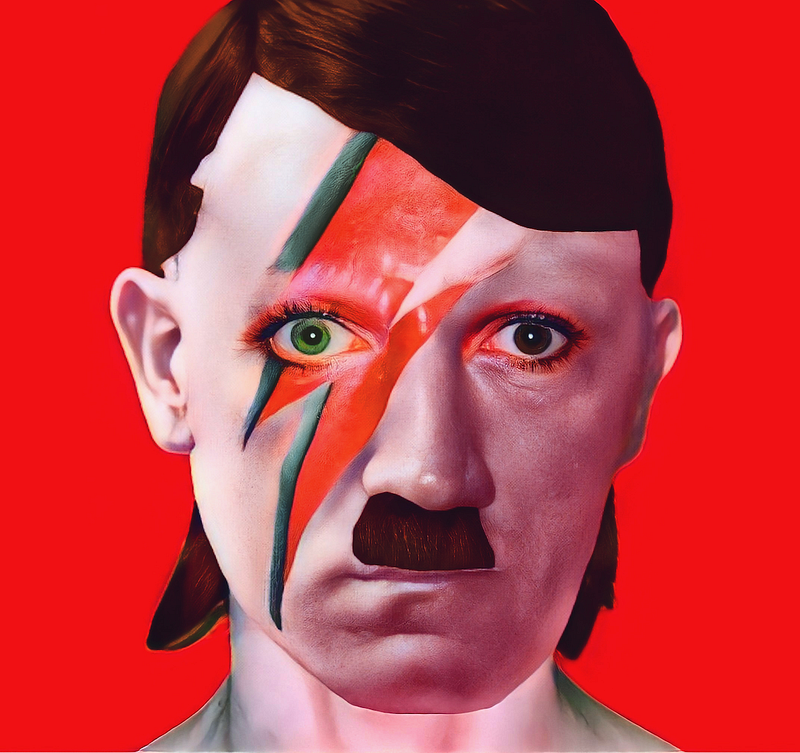
Hitler as David Bowie (credit: Libros Crudos)

1. David Bowie

You might think David Bowie, the futuristic Pop star, often colorfully androgynous, was on the liberal side. If you asked him, you’d learn otherwise. There he was talking up Hitler in 1975:

“Oh he was a terrible military strategist,” said David, “the world’s worst, but his overall objective was very good, and he was a marvelous morale-booster. I mean, he was a perfect figurehead.”

Bowie considered getting into politics himself, though he worried it would get messy. “You’ve got to have an extreme right front come up and sweep everything off its feet and tidy everything up,” he says.

“I believe very strongly in fascism,” he adds in 1976, calling for “a right-wing, totally dictatorial tyranny,” since people, he explains, respond “with greater efficiency under a regimental leadership.”

Then he’s back to Hitler, “one of the first rock stars,” as he puts it, as he goes on, and on. “He was a media artist himself. He used politics and theatrics and created this thing that governed and controlled the show for those 12 years. The world will never see his like.”
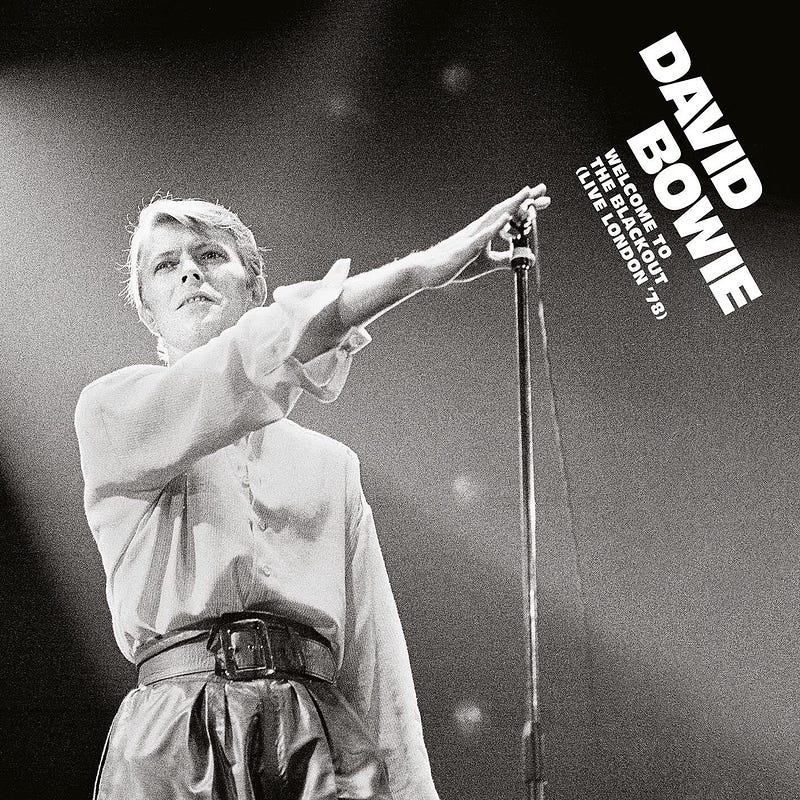
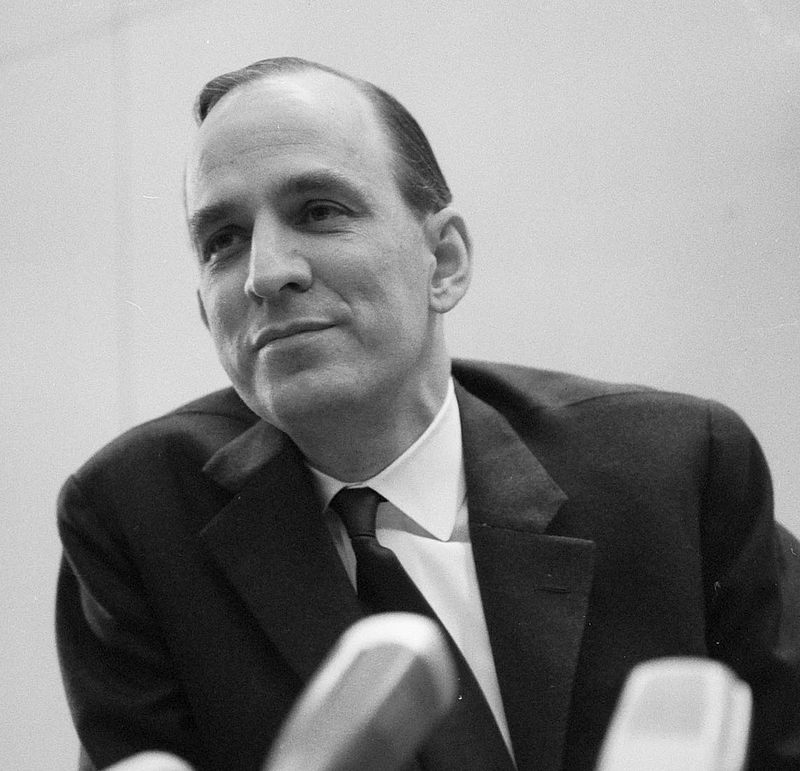
David Bowie, “Welcome to the Blackout” cover (1978); Ingmar Bergman (1966)

2. Ingmar Bergman

In the 1950s and 1960s he was the famed Swedish director of classic art movies, like The Seventh Seal and Persona. Back in 1936, Ingmar Bergman was a teenager in Germany and saw Hitler speak. As he recalled in 1999, he found the Führer “unbelievably charismatic”—and became a Nazi.

It was “fun and youthful,” he said. When the facts about the concentration camps came out later, he added, “it was a hideous shock for me. In a brutal and violent way I was suddenly ripped of my innocence.”

That’s what he said, but Berman’s later politics aren’t so clear. In 2008, fellow Swedish director Roy Andersson recalled him as “very right wing politically” and “not a nice person.”

3. Roald Dahl

You know him as the author of children’s classics like James and the Giant Peach and Charlie and the Chocolate Factory. He was a hard-core anti-Semite. In a 1983 interview, he went on. “There is a trait in the Jewish character that does provoke animosity, maybe it’s a kind of lack of generosity towards non-Jews.”

He added: “I mean, there’s always a reason why anti-anything crops up anywhere; even a stinker like Hitler didn’t just pick on them for no reason.”

So the Jews had that Holocaust thing coming?

Dahl’s children’s fiction, especially The Witches, features anti-Semitic imagery. Ironically, Dahl’s signature character, Willie Wonka, was played in the movie by Gene Wilder, a Jewish actor. Dahl complained about it.
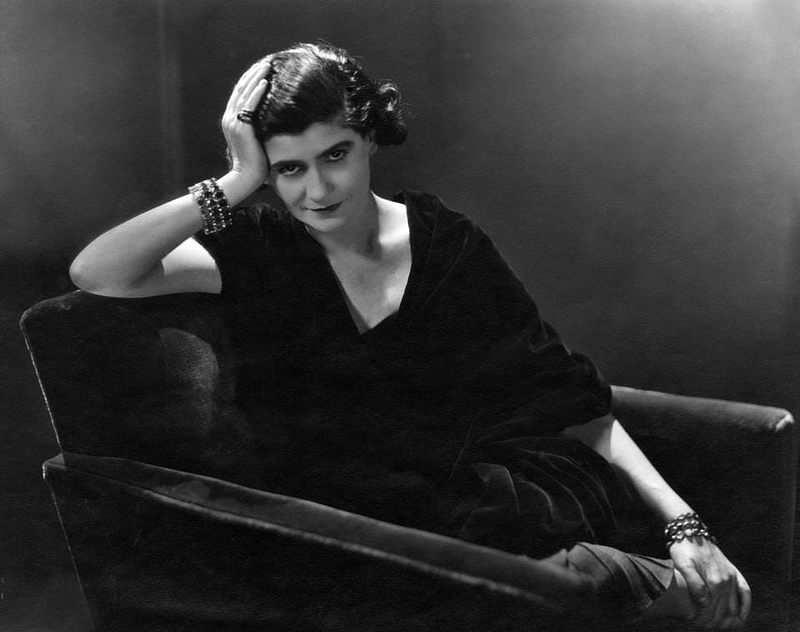
Coco Chanel

4. Gabrielle “Coco” Chanel

You know her from those chic clothes, the little black dress and Chanel №5 perfume. To Nazis, Coco Chanel was the spy named “Westminster.” In 2011, Hal Vaughan’s book Sleeping With The Enemy: Coco Chanel’s Secret War exposed a history of collaboration during the war.

She had a Nazi boyfriend, and was personally anti-Semitic, homophobic, and generally, as the New York Times noted, a “wretched human being.” It shows up in her clothes. The fashion scholar Tansy Hoskins notes:

“It’s clear that Chanel’s far-right ideologies influenced her designs. She championed minimalism and the austere. It’s very white European.”

No one could say that Nazis didn’t have style.

5. Mircea Eliade

If you study religion, you’re likely to encounter Mircea Eliade, the Romanian scholar. His books, like The Myth of the Eternal Return and The Sacred and the Profane, are as famous as scholarly texts get.

He came to the United States in 1956, and died in 1986. In the time between he worked at the University of Chicago. It appears the school knew of his Nazi past. In 2000, the novelist Saul Bellow, in the semi-fictional Ravelstein, noted the talk around campus: that Eliade was a “Hitlerite” who had been “a foreign service cultural official in the Nazi regime in Bucharest.”

But in 1988, a biography shocked with details: Eliade had been part of Romania’s Nazi-linked Iron Guard, and wrote for the fascist press.

Stephen H. Norwood’s 2011 study The Third Reich in the Ivory Tower goes into the horror. Eliade worked in the organization known for gruesome torture and murder of Jews. He did a Romanian translation of Protocols of the Elders of Zion, a hoax text about a Jewish conspiracy to take over the world.

“He considered Jews an invasive and destabilizing presence in Romania,” Norwood writes.

This is the ‘genius’ scholar whose ideas on religion mattered.
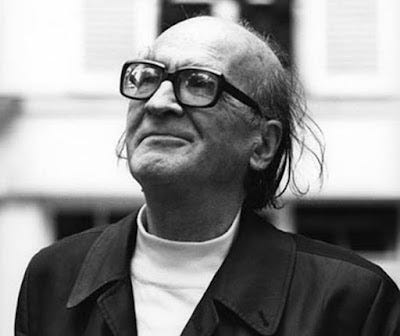
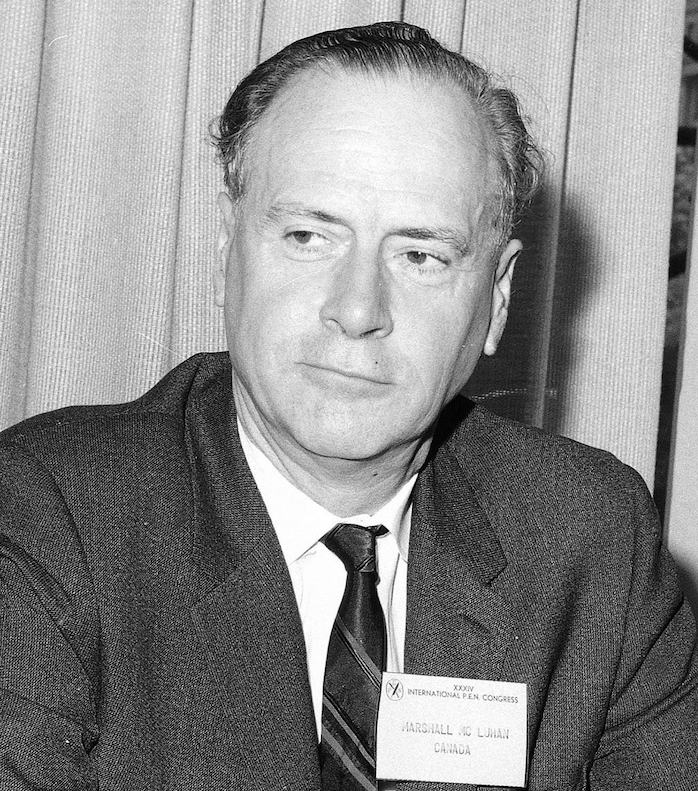
Mircea Eliade; Marshall McLuhan

6. Marshall McLuhan

His 1964 book Understanding Media is a classic. But Marshall McLuhan was never a fan of the world he studied. He was ultra-orthodox Catholic, and as a scholar notes, “constantly and quite seriously homophobic…”

McLuhan saw the world as torn between masculine Christianity, and the ‘perpetual fantasy and emotional immaturity’ he identifies with the effeminate Peter Pan. Civilization was, then, Peter vs. Peter Pan.

And McLuhan saw Nazism as a useful dash of “Peter” power. For him, as a biographer summarizes, “Peter Pan was taking his lumps in Franco’s Spain and in Nazi Germany.”
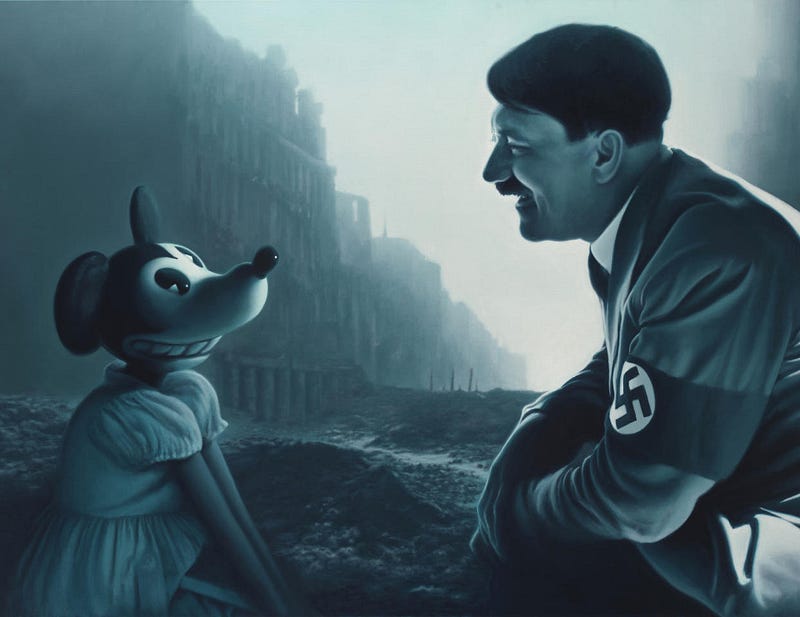
Gottfried Helnwein, “Mickey und Hitler”

7. Walt Disney

Walt Disney wasn’t much like his public image, and there’s a good case he was a Nazi. In 1938, he hosted Hitler’s filmmaker, Leni Riefenstahl, when other studios wouldn’t. She seemed to think they were on the same team.

He attended meetings of the American Nazi party. According to his animator Art Babbitt, “Disney was going to meetings all the time.”

Biographer Marc Elliot reports that Disney appeared at several “America First” rallies alongside Charles Lindbergh, another notorious Nazi sympathizer.

The Disney company did make anti-Nazi propaganda films for the American government, but those films erase Nazi anti-Semitism.

There are no Jewish characters in any classic Disney films, except for witches and other malevolent women. Cinderella’s evil stepmother, notes the scholar Ellie Baker, is coded in anti-Semitic imagery:

“…the distinctive nose, over-sized dark eyes and heavy eyelids, pointed chin, and, with the latter, the dark curly hair, as well as a greedy and deadly obsession with their children.”
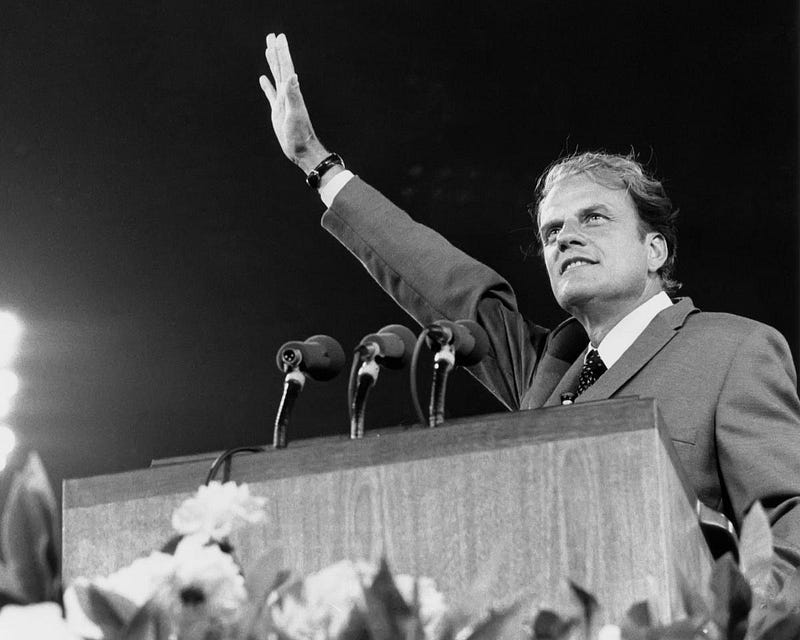
Billy Graham at Shea Stadium

8. Billy Graham

On February 1, 1972, Evangelical leader Billy Graham was in Nixon’s White House. In 1994, a Nixon’s staffer’s memoir noted Graham had been on an anti-Semitic rant. Graham denied it, saying he’d only ever spoken of Jews in “the most positive terms.’’

In 2002, a partial transcript was released. “They’re the ones putting out the pornographic stuff,” Graham says, agreeing that Jews dominate the news media. Again questioned, he again denied it.

Graham died in 2018, making possible the release of the unedited tape from the Nixon Library. It turns out he’d spoken at length about Jews as “energized by a supernatural power called the devil.”

He supported Israel publicly, he said, but hated Jews. Hitler, he says, had faced the problem of Jews having a “stranglehold on Germany…”

Hitler “went about it wrong,” Graham allows. “But this stranglehold has got to be broken or this country is gonna go down the drain!”
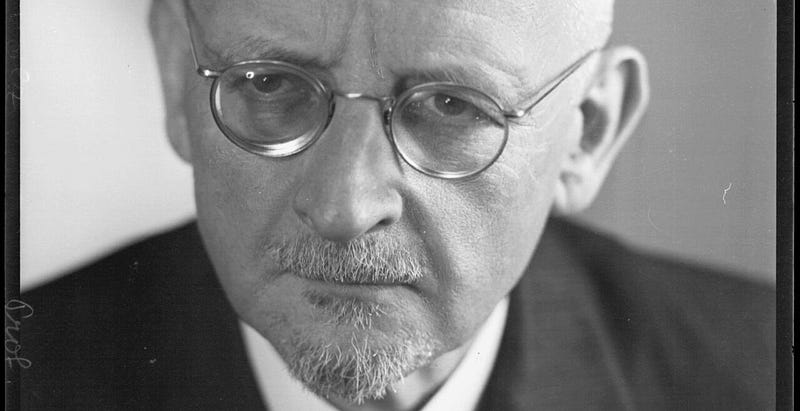
Gerhard Kittel

9. Gerhard Kittel

Your local Protestant pastor probably has his books. Gerhard Kittel was the editor of the famous Theological Dictionary of the New Testament.

He was also a Nazi who worked on his dictionary as a key expression of his Nazism. The great Protestant effort of the time was to purge Jewishness from the Bible, to create an Aryan version of Jesus.

It’s fascinating to study Kittel, since he was personally kind to Jews, and helped a few escape Nazi Germany. As the scholar Wayne Meeks notes, the anti-Semitism worked on two tracks:

“Kittel the scholar honors and works closely with individual Jews; Kittel the Party member urges the removal of all Jews from academic and professional life.”
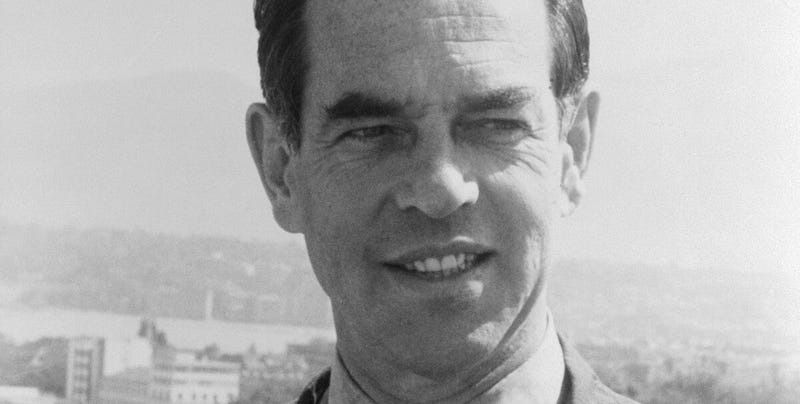
10. Joseph Campbell

He became a star in 1988 with the PBS series The Power of Myth, but his actual influence had been happening for decades. His idea of the “hero’s journey” became the template for many Hollywood movies.

It turned out he’d learned all his “hero” talk from German hero worship. And as the scholar Maggie Macary noted in 2004, Campbell’s initial reaction to Nazism had been “enthusiasm.”

Only in 1988 were there public reports of Campbell being a hard-core racist with a special hatred for Jews. He was given to comments like “not all of the Nazis’ ideas had been so bad.”

At a lecture, he’d spoken of humans as predators who ought to act like it. A woman in the audience asked: “What about the six million who were gassed during World War II?”

Campbell shrugged and replied: “That’s your problem.”

And that’s how to get famous?

There’s so many horrible, predatory humans in public I did start to wonder if being that way was a job requirement for fame. 🔶

History
Culture
Mental Illness
Nazism
Hitler
Recommended from ReadMedium