
10 Sex Facts About the Bible
Did the traditions get a few things wrong?
When I set out to learn about sex in the Bible, I kept saying: Can this be true? A God who really likes human sexuality?
In church, one tends to get a G-rated version. But Bible scholars evoke a text alive with sexual details. Here’s ten that got my attention.
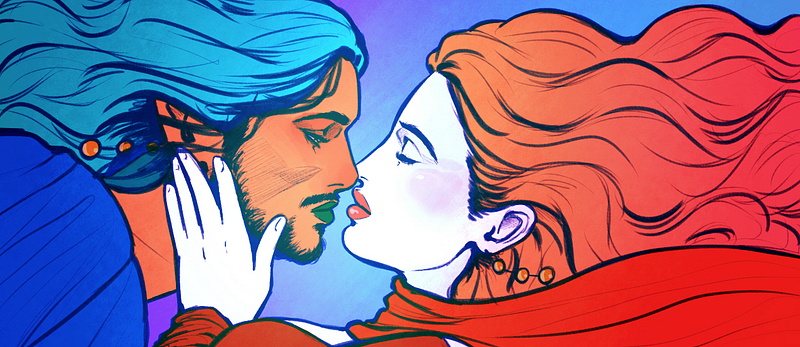
1. The human body is divine!
In the Bible, humans resemble God. This is the meaning of the line in Genesis: “made in the image of God” (1:26–28; 5:1–3; 9:6).
Christian tradition often explains this as meaning humans can reason or think. Except the ‘image’ language, as David J.A. Clines notes, refers to “a three-dimensional object.”
Being the “image of God” means we look like God.
As Benjamin Sommer notes in a study of the subject: “The God of the Hebrew Bible has a body.” The deity is often seen as a human-like form (cf. Exo 33:19–23; Isa 6:5; Ezek 1:27–28; Amos 9:1).
God made humans to look like Him, and seems to like the erotic body He has made. We listen to the man in Song of Songs 7:1: “The curves of your thighs are like jewels, the work of the hands of a master craftsman…”
2. Heaven is male and Earth is female
The Bible starts out with two realms created one after another.
“In the beginning God created the heavens and the earth.” (Gen 1:1)
As Annette Y. Reed notes, throughout the Bible we see “the male associated with the heavenly and the female with the earthly.” That God is more male isn’t a surprise. Note the pillars that are mark His territory (Gen 35:14, etc.), or the pillar of clouds and of fire during the Exodus.
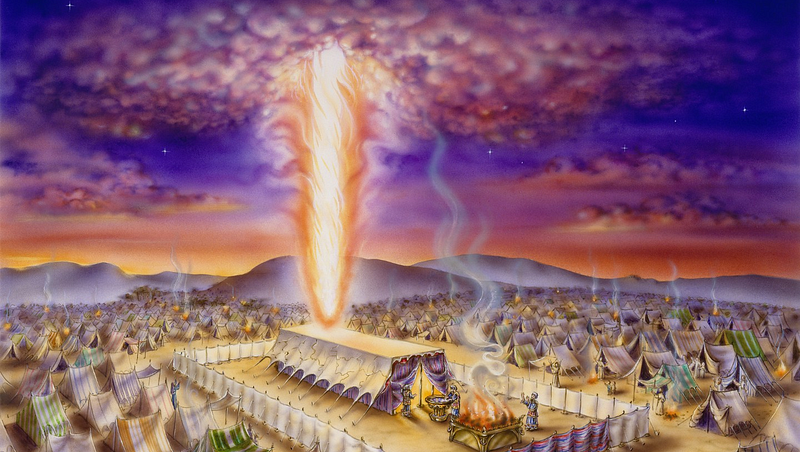
Similarly, the earth is seen as female. In “Mother Earth in Biblical Hebrew Literature,” Terje Stordalen details the references. Also note Romans 8:22, where the earth is “groaning” in childbirth.
The Bible is a sort of romance narrative, a love story. A male approaches a female, then they have the long ordeal of learning to get along! Interactions between Heaven and Earth are always explained in terms of marriage.
3. A ‘temple’ is the divine bedroom
Christians don’t usually know really what a “temple” is — except maybe a nice building where you have events? But in the Bible, a temple is a very special building. It’s where heaven and earth meet. Since deities (male) and humans (female) are seen as ‘married’ by a ‘covenant’, a temple is where they figuratively have sex.
Throughout the Old Testament, deities are encountered in temples, and this is given a sexual suggestion. In Ezekiel 23:17, the Jerusalem temple is called the “bed of love.” As Julie Galambush notes: “If the city is a woman, then the temple is her vagina…”
With Jesus, his body becomes a temple (cf. Jn 2:21), for he is divinely fathered as his mother is human. He unites, in his very person, the “male” and “female” of Heaven and Earth.
4. The original human was androgynous
The Creation story of the book of Genesis is widely seen to authorize the separation of gender role. Man and woman are created, and Christians like to see these as different.
As widely understood in Judaism and early Christianity, however, the first human is androgynous or hermaphrodite. “From Gen. 2:7 to 2:20, this creature has no name, no sex and no activity,” notes Mieke Bal. Why this original being is spit into two sexes is not clear. To follow the details of the Eden scenes, we appear to be witnessing a game of strategy between God, the serpent, and the humans.
And all along, the first, bisexed human is totally godly. It lives, as Kalina Wojciechowska suggests, “without trying to elevate oneself, rule over others, or impose one’s will on them.”
The trouble comes after the human is split! As she says: “Humans ceased to be whole, complete or perfect beings. Instead, they became incomplete and imperfect, and much more susceptible to manipulations and lies, which led them to break God’s prohibition.”
5. Israelite men were a little girly
When we think of a “biblical hero,” we’re thinking of a man who is described as different from other men, and not nearly as masculine. Jacob is smooth-skinned and tends to indoor activities, cooking like women, in contrast to his brother Esau, who is hairy and seen outside hunting.
But God’s preference is clear—he likes feminine men. Heroes like Joseph, Moses, David, etc., are described in striking contrast to their more masculine brothers, and who tend to use feminine references for themselves. David’s name, for example, means ‘Beloved’, a feminine counterpart to the ‘Lover’ who is God.
Jacob Neuser’s study Androgynous Judaism tracks how qualities identified as ‘feminine’ are seen in the Bible as the divine qualities. He writes: “Masculine emotions — arrogance, impatience — produce disaster; feminine ones, redemption.”
Similarly, many important female figures take on male properties. After the original human was sexually split, it seems the wholeness is to be reacquired.
6. Many divine beings change gender
The sexual vision of the Bible is never other than complicated. Many spirit beings seem to change sex—as is usually suppressed in English translations.
“The gender of Jonah’s fish changes twice in the course of its appearance in the book,” notes Thomas M. Bolin. Grammatically, the fish is male in 2:1. On swallowing Jonah, it becomes female (2:2). When God tells the fish to expel Jonah, it’s male again (2:11).
The important angels called ‘Living Creatures’ in Ezekiel 1:5–25 have oscillating gender. Walter Wink explains:
“Throughout the vision there are feminine plurals of verbs, and feminine pronouns are used of the ‘living creatures’ where one would have expected masculine forms exclusively. Almost one-third of these verbs and pronouns — 12 out of 45 — are feminine.”
In Ezekiel 28, the angel often seen as ‘Lucifer’ is “a mixture of masculine and feminine forms,” notes Margaret Barker.
7. Jesus is rather feminine
He will be called “son of Joseph” — by men — as in John 1:45, but as in Mark 6:3, Jesus seems better described as the “son of Mary.”
This expression, says the Bible scholar Andries van Aarde, notes that “Jesus is without identity, an illegitimate person without a father who could have given him credibility.”
But it probably just means that Jesus was rather feminine. Hanna Wolff, the theologian and psychologist, called Jesus “androgynous” and a model of psychic totality, the first “anima-integrated male in world history . . .”
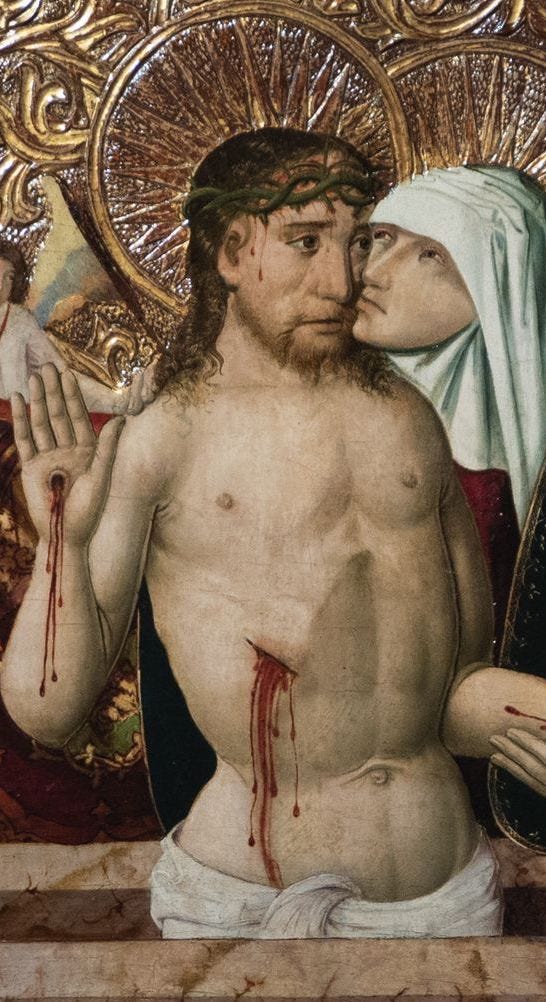
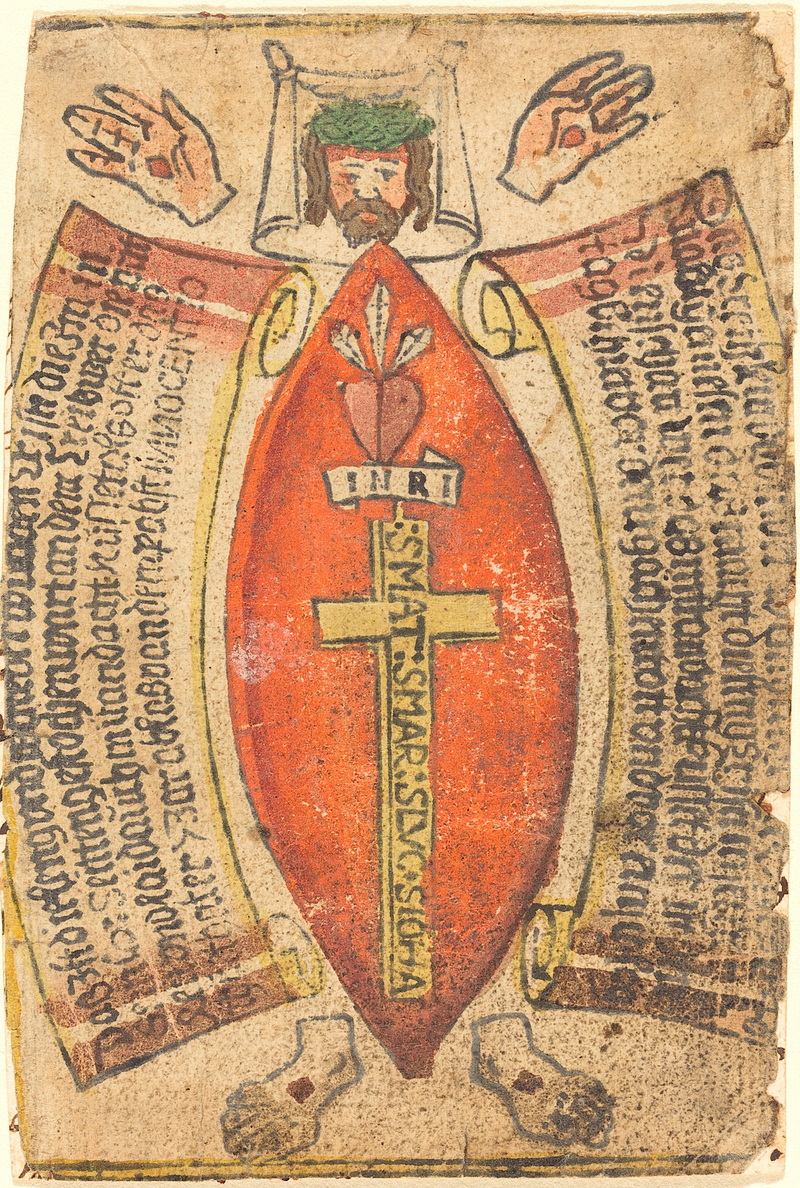
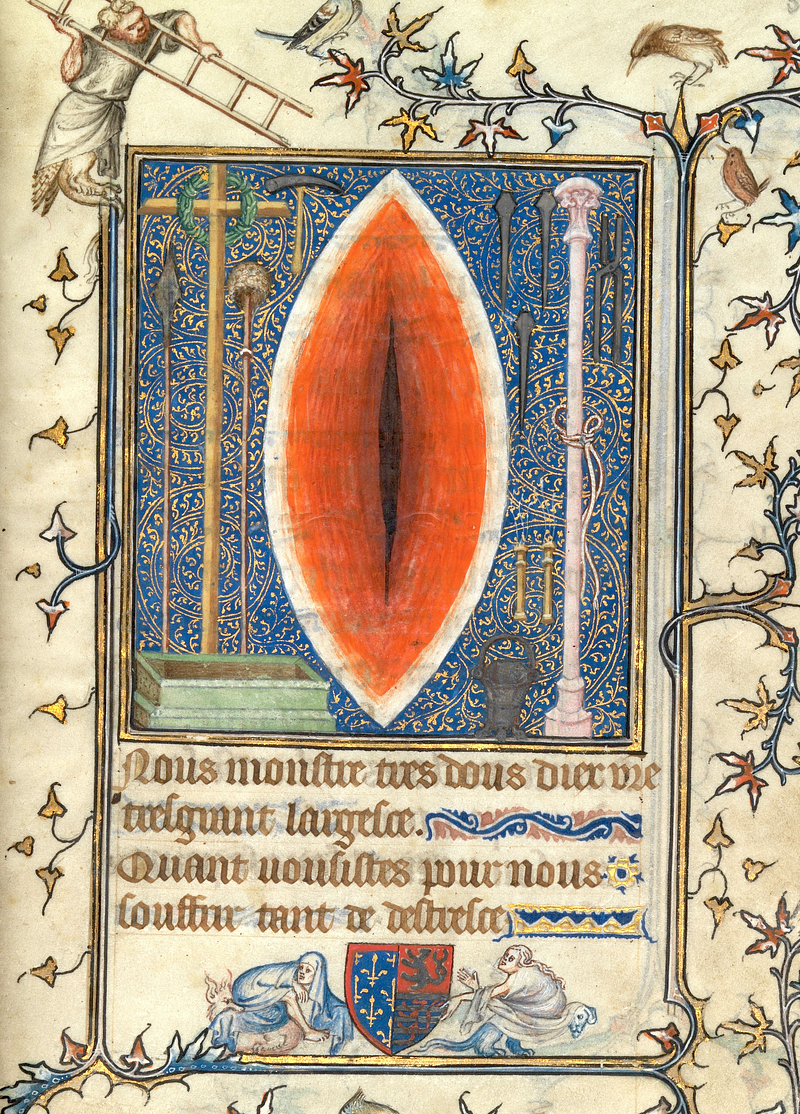
Jesus is very emotional, and doesn’t refer to himself as a ‘man’. He is always ‘the human’. The gospel narratives are full of unexpected gendering for the messiah. As Lloyd D. Graham’s notes, the bleeding wound at Jesus’ side can seem vaginal. It was seen that way throughout Christian tradition.
8. A black woman represents humanity?
Many very important women in the Bible’s narratives are black—Moses’ second wife, and the Queen of Sheba, for starters. These can seem to be the very image of a perfect, original human.
The girl in the Song of Songs is a black woman. This is not how it’s translated generally. In the Song of Songs, she’d be read to say: “I am black, but comely…”
I was shocked, later, to read the scholar Marcia Falk’s translation.
“Yes, I am black! and radiant —
“Clearly the woman sees herself as both black and beautiful,” says J. Cheryl Exum. This is what the first Christians thought. Origen speaks of the church as a black woman.
The “bride of Christ” next to Christ himself would seem to be an image of a somewhat lighter man and a darker woman, a man a bit feminine as the woman is biblically “bold”!—a contrast and yet a team.
9. Early Christian Baptism Was Done Fully Naked
For later Christianity, baptism seems to involve a clothed person taking a quick dip in the lake, or a tub — unless sprinkling will do? The purpose is seen as declaring membership in the ‘church’. But the original purpose, and method, was different.
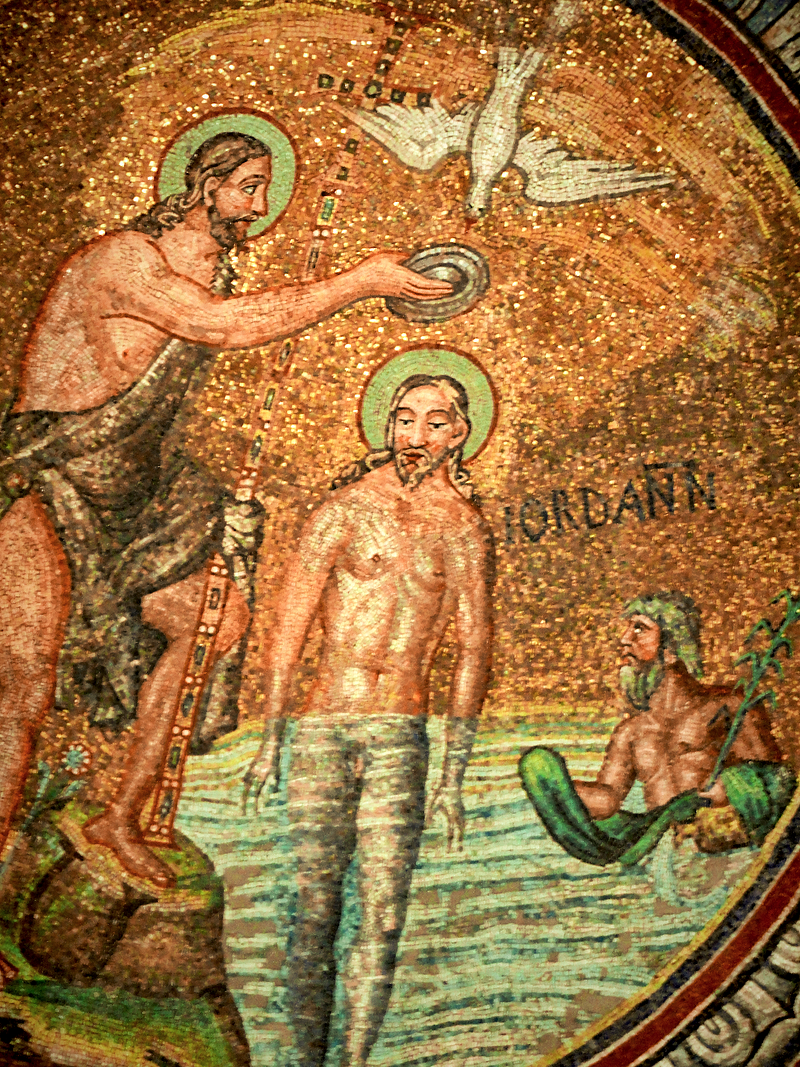
Among many descriptions of naked baptism, try John Chrysostom:
“After stripping you of your robe, the priest himself leads you down into the flowing waters. But why naked? He reminds you of your former nakedness, when you were in Paradise and you were not ashamed.”
Baptism, originally, was seen as re-gaining the Edenic state. As Jesus is the ‘new Adam’ (1 Cor 15:47), his nakedness is ideal. After a long, difficult journey, he’s regaining the first human’s state, as back in Genesis 2:25 . . . ‘naked and unashamed’.
10. Jesus is naked a lot
The Christian writer Mark Townsend muses that “the three most significant events in Christ’s life — his baptism, crucifixion, and resurrection — occurred when he was naked.”
There’s many more, however. Even the scene of his birth draws attention to a naked figure who is wrapped in ‘swaddling clothes’. He remains a figure who is veiling and unveiling. When Jesus washes feet he “removed his outer clothes, took a towel and tied it around himself” (John 13:4).
One might even think of the Gospel of Thomas, in that odd saying 37 when the disciples ask when he’ll be returning. Jesus replies:
“When you disrobe and are naked without shame…then you will behold the son of the living one, and you will not fear.” 🔶


