
Zo(o)id
An animal with and without the extra “o”
Today’s New York Times Spelling Bee letters:
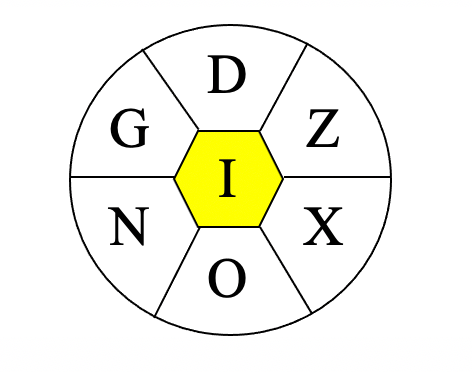
D, G, N, O, X, Z, and center I (all words must include I).
Merriam-Webster says…
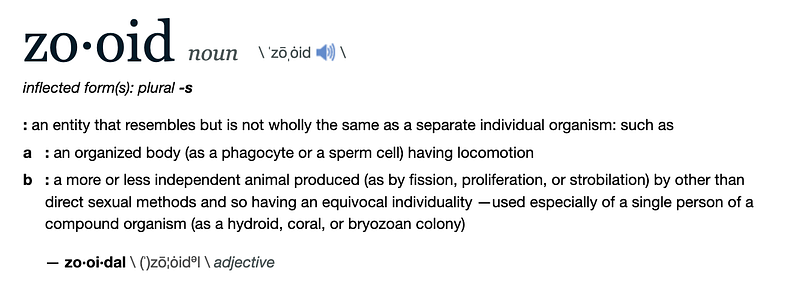
Silly little dictionary! Don’t you know zooid can’t possibly be a word if the New York Times says it ain’t?
For further fascinating facts, check out the Spelling Bee Master.
What’s your favorite dord* from today’s puzzle?
My Two Cents
The two rejected words that really caught my eye today were digoxin and dingdong. But the most common spelling of dingdong includes a hyphen between ding and dong, and I’m willing to concede the hyphen point to the New York Times, as far as not accepting those words.
Digoxin should not be considered an obscure word, however. Not after 797 episodes in 36 combined seasons between the four CSI franchise shows, plus dozens of years of TV medical dramas like Chicago Hope, ER, and even Grey’s Anatomy. Not to mention the eight thousand episodes of Murder, She Wrote aired between 1907 and 2245.
Tons of people have heard of digoxin, the foxglove derivative used to treat irregular heartbeats. Plus, if you watch a police procedural or murder mystery program long enough, digoxin is sure to appear as a guest star at some point.
Almost 20 years ago New Jersey had its real-life digoxin mystery when Charles Cullen was caught after having killed more than 40 people with it at the hospitals where he worked as a nurse.
All together now
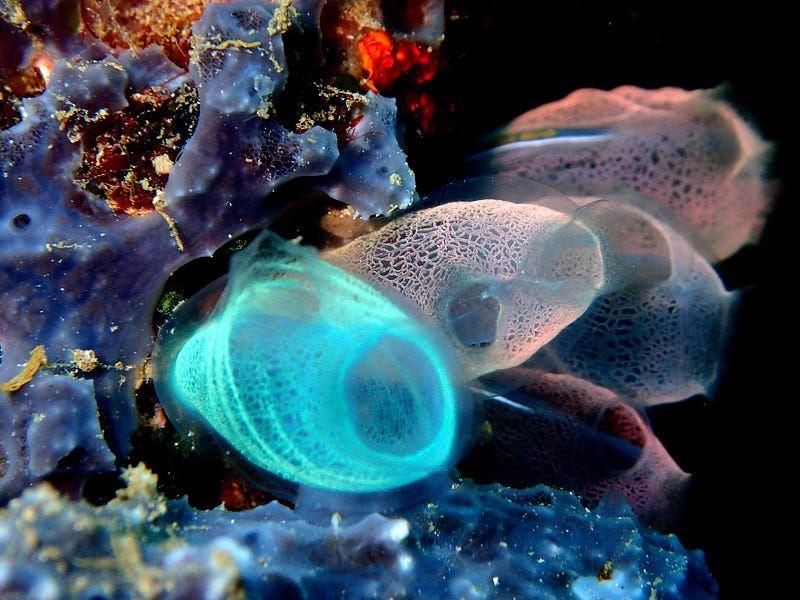
Although the foxglove is a pretty plant, the word zooid gives me a chance to use beautiful photos of corals, tunicates, and flatworms.
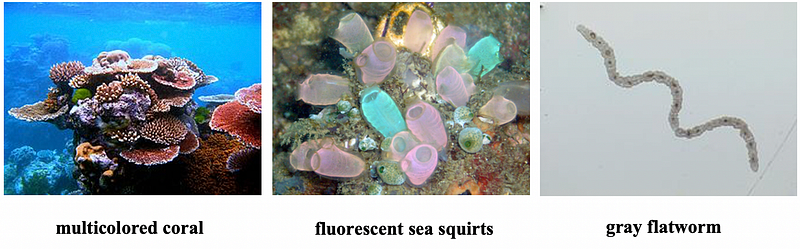
Okay, I’ll admit the flatworm is not that pretty. But remember, beauty is in the eye of the beholder. In the flatworm world, this little guy is quite the stud muffin.
The easiest way to think of zooids is as individual animals that form part of a colony. Sort of like Matt Damon in The Martian, before he was abandoned. (I think technically that’s not a spoiler, since it happens very early in the movie.)
Also technically speaking, we’re referring to biological modular colonies, not social ones. Zooids are multicellular and can be connected to their colonies directly through their tissues, like in the above three examples, or else share an exoskeleton. For example, the Bryozoa:
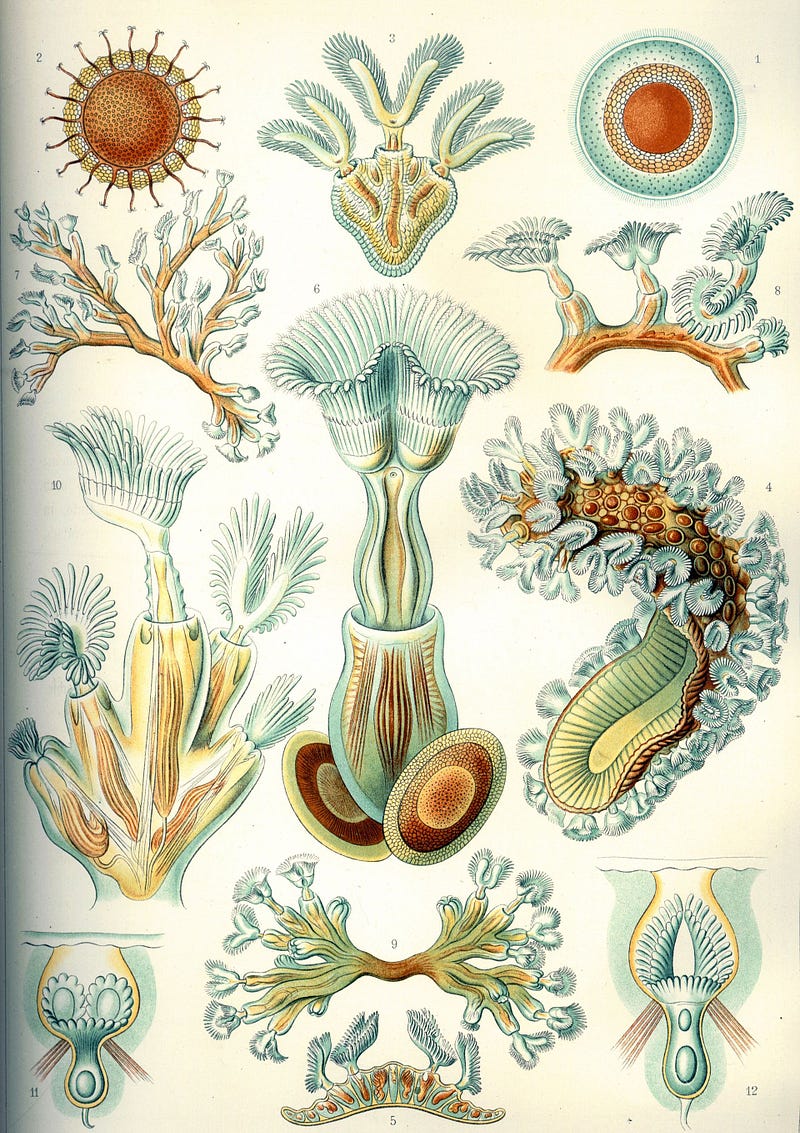
That beautiful print was done by German biologist Ernst Haeckel for his 1904 book Kunstformen der Natur, which roughly translates to “I love to paint weird and exotic sea creatures.” I think.
Haeckel was a classic Romantic Movement German, and as such he ran the gamut on all the things he loved to do. He was an artist, as you can clearly see, but also a philosopher — and which self-respecting artist isn’t a philosopher? Also a medical doctor, a zoologist, a naturalist, a professor, and a marine biologist (a real one, not like George Costanza). He discovered, described, and named a bunch of new species and coined many terms used today in biology: ecology, phylum, phylogeny, and Protista.
Oh, and he was also a eugenicist. Oooops!
Yeah, Haeckel was one of those turn-of-the-century guys who believed that hundreds of thousands of mentally and congenitally ill people should be killed by a medical control board. Sort of like that fake news some extremists were spreading about Obamacare years ago.
Haeckel also promulgated scientific racism. He held that evolutionary biology was proof that races were unequal in their abilities and intelligence. Hence, their lives also did not hold the same value. He was a big fan of social Darwinism and the “survival of the fittest” law, which would help improve certain races. His logical conclusion seemed to be that the “lower” races would eventually be exterminated.
Shortly after he died, Nazism came to rise in Germany. Hmm…
Coincidence? Actually, many people think so. You see, although some scholars argue that Haeckel was a big influence on Nazi philosophies, contrary to the swastika-bearing thugs of the 1930s and 40s, he actually placed Jews close to the top of his “racial pyramid”. (Contrary to popular belief, the Nazis did not consider Jews an “inferior race”, but the anti-race.)
And, although SS captain Heinz Brücher praised Haeckel as a “pioneer in biological state thinking”, Haeckel was actually on the Nazi list of banned authors. Several other high-ranking Nazis rejected him as an influence, mostly because his scientific evolutionary concepts did not match Nazi ideology.
That rings oddly familiar in these pandemic times…
Okay, maybe Haeckel was not a Nazi or Nazi predecessor. He was just a jerk with a stick up his you know what. A jerk with a stick up his you know what that made beautiful prints of weird and exotic sea creatures.
Mecha who?
Zoid with one fewer “o” and a capital Z is a toy brand and, as such, the Spelling Bee editors are justified in excluding it from its list of valid words for today’s puzzle.
The Zoids are a Japanese franchise created by a toy company called Tomy. They are considered mecha (メカ), an abbreviation of “mechanical” first used in Japan to describe giant robots that are piloted by a human from inside a cockpit located somewhere in the robot’s body. Mecha can also be used to describe other mechanical objects such as cars, guns, and computers.
The Zoids are mechas based on animal designs. Interestingly, they started out as toys and then became an anime TV franchise, not the other way around. The toys first sold in the United States in the early 1980s, and their success resulted in the Japanese release. Again, usually that happened in reverse order.
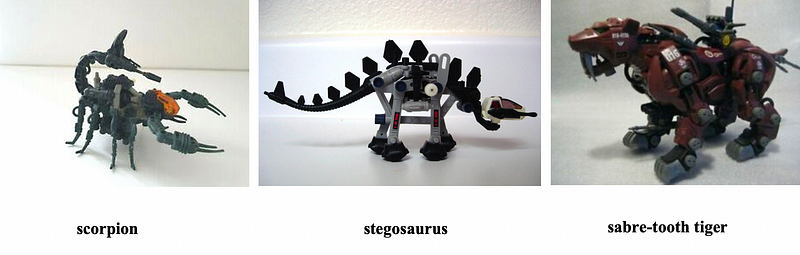
Okay, so maybe not as pretty as the zooid photos from earlier, or even Haeckel’s artwork, but I’m sure these beauties had kids begging their parents to get them some for Christmas. Or Chhanukkahah — sorry, even my Jewish heritage does not help me spell that word correctly in English. Let’s go with the Spanish version, which is much simpler: Janucá.
You can get yourself a vintage Zoid on eBay for as low as twenty bucks and as high as three grand. Just like practically anything else that is conned… I mean, sold, on that famous “one person’s trash is another person’s treasure” web site.
That’s about it for today. Oh, except that Zoid is also the last name of South African rock singer-songwriter-guitarist Karen.
And although it’s perfectly fine to mention Karen Zoid and the toy Zoids, we cannot add another “o” and use the word zooid.
Because the editors of the Spelling Bee puzzle decided that zooid is a dord.*
You can check out my previous entry on another dord* here:
*What the heck is a dord, you ask? Here’s the answer: