
Olla
The two els make a why sound
Today’s New York Times Spelling Bee letters:
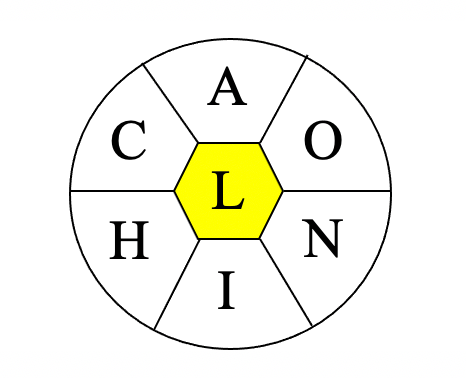
A, C, H, I, N, O, and center L (all words must include L).
Merriam-Webster says…
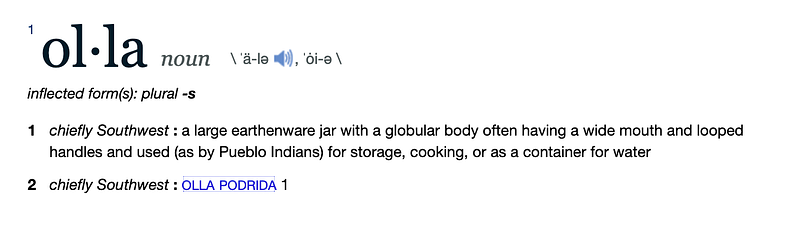
Silly little dictionary! Don’t you know olla can’t possibly be a word if the New York Times says it ain’t?
For further fascinating facts, check out the Spelling Bee Master.
What’s your favorite dord* from today’s puzzle?
My Two Cents
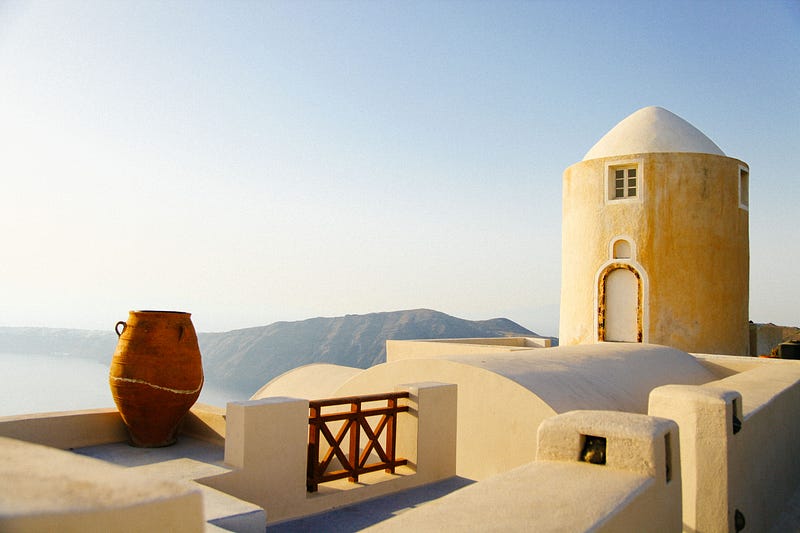
I highly suspect the photo above was not taken in the Southwest of the U.S. Maybe it’s the southwestern part of a different country, though.
The pot in the photo seems to fit the definition, however. A (1) large, (2) earthenware (3) jar with a (4) globular body, often having a (5) wide mouth and (6) looped handles. So thank you, Anthony Delanoix!
I’m not sure if that jar is being used for storage or is just posing nonchalantly. I’ll leave that up to your imagination.
I’m always surprised that olla keeps getting rejected by the editors of the Spelling Bee. It’s such a simple, straightforward word. I assume most kids may learn about it in school when they study Native American traditions. At least I did, decades ago. Maybe things have changed. In any case, every time I play the game I check to see if olla has finally been accepted.
Today was another resounding no!
Harried pottery
In Spanish, the word olla (pronounced OH-ya) means pot. Not the plant that can get you high, but the one you fill with water and use to cook leaves of that plant so you can make a tea that gets you high.
But olla in Spanish is not specific to earthenware pots; any pot in your kitchen can be called an olla.
In turn, the Spanish word came from the Latin olla, aulla or aula, which referred to a very similar type of pot the ancient Romans used. The Romans did not limit the use of their ollas to just cooking and storage; they also would convert them into urns for ashes of cremated loved ones.
Hopefully they remembered which olla was being used for what.
While Spanish settlers may have brought ollas with them to the Americas, Native Americans throughout both continents had already been making their own traditional pottery for millennia. Although much of the pottery work was decorated for artistic purposes, the ollas were mostly left unglazed.
What’s the difference between glazed and unglazed? This should clear it up:
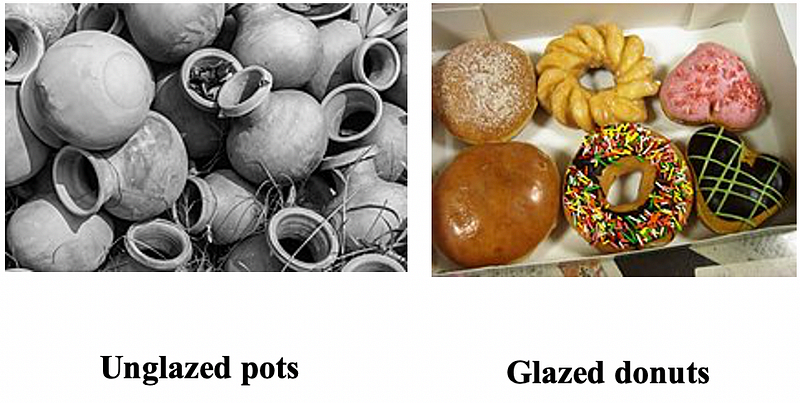
Actually, unglazed ollas were extremely useful for the following reasons:
▹ Because the clay material was porous, unglazed ollas allowed water to seep through them, which could be used for irrigation. An olla would be buried up to the bottom of its neck, with crops planted around it. When the olla was filled with water, that water would eventually reach the plants. If it rained, the olla’s water would stay in the pot and not be sucked out into the already damp soil.
▹ The same porousness principle was used to make ollas “sweat”. Ollas would be hung by a rope outside so that the sweating would evaporate, which in turn cooled both the olla itself and the water inside. This was so effective that the ollas could then be used to store butter or milk.
Something is rotten in the state of Spain
Olla podrida literally means “rotten pot” in Spanish. Although that doesn’t sound very appetizing, it’s actually a popular stew in the autonomous community of Castilla-León, especially. In the city of Burgos, it is considered a specialty.
There are two theories regarding the name of this centuries-old dish. One is that the original moniker was olla poderida, meaning “powerful pot”, because either it was a fantastic pick-me-up or because only the rich could afford it back then, being that it was made with beans and meats like pork, bacon, partridge, ham, sausage, as well as assorted vegetables.
For some reason the “e” in poderida was lost over the course of time and the good old game of telephone, and it became known as olla podrida.
The other theory says it was always called that because the slow, hours-long cooking process in the clay pot turned everything inside to mush, making it look like rotten food.
An early recipe was published in 1570 by Pope Pius V’s cook. The recipe was then translated into a 1612 Dutch cookbook called Koock-boeck oft Familieren kevken-boeck, which roughly translates as “I am stealing the Pope’s recipe but he’ll never know because he doesn’t speak Dutch”.
To save you the time and effort it takes to steal a recipe from the Vatican and translate it from Latin into English, here is a link for instructions on how to prepare some olla podrida. You can substitute vegan or vegetarian ingredients for the meats listed. (Ohhhh, how I miss those Morning Star veggie bacon strips!)
However, whether you’re shopping around in a Native American market or ordering food in Burgos, Spain, please avoid using the word olla.
Clearly the stubborn editors of the Spelling Bee puzzle don’t like that word, and have declared that olla is a dord.*
You can check out my previous entry on another dord* here:
*What the heck is a dord, you ask? Here’s the answer: