
Yung Birmingham: The Pivot (Part 2)
The Ultimate Chronicle of Birmingham’s Young Professional Evolution
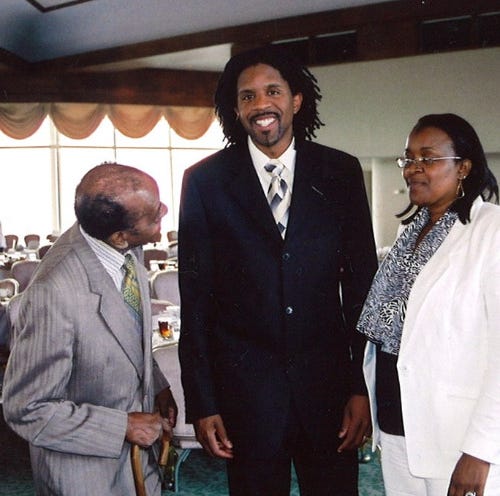
I am celebrating 20 years in Birmingham with #20For20 — a series of reflections, insights and homages to my journey. Follow me on Medium, LinkedIn and Twitter to be notified of new posts.
Yung Birmingham: The Ultimate Chronicle of Birmingham’s Young Professional Evolution
Part I: The Genesis Part II: The Pivot (read below) Part III: The Avalanche Part IV: The Legacy
My first post in this series set the stage for what would eventually be my generation’s rise to become significant influencers in Birmingham.
A pioneering social collective called M-Set (mature set) was borne in Birmingham in the late 1990s. This was one of the first branded and intentional efforts from a group of young professionals for young professionals — especially within Black Birmingham. Their vision for progress and connectedness laid the groundwork for a fundamental shift in how local leaders would eventually engage in and invest in the Magic City Classic.
Of course, I arrived in Birmingham in 2000 through cultural arts on the spoken word scene. Those were my first connections and all of my oldest relationships in Birmingham are connected to my time in that community. This was also one of the better formed networks of young leaders of my generation.
In fact, I first learned about M-Set because the local poets I befriended had partnered to produce culturally-relevant social events in Birmingham. It was as close as avant-garde as it could be in Birmingham at that time. Birmingham’s small leaps forward were borne from these forgotten, courageous experiments and experiences like that bougeious meets bohemian mash-up.
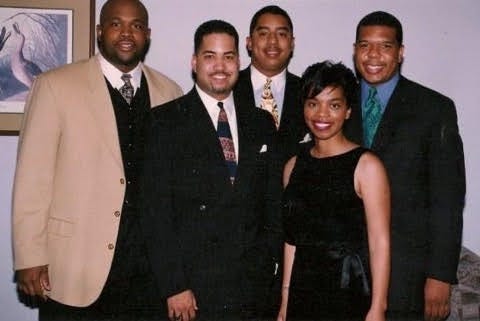
In hindsight, I landed in a curious place on the arc of the leadership transition in Birmingham. Many of my early conversations with my twenty-something peers were filled with frustration seeing all of Birmingham’s potential, but also sensing our distance from the goal. That frustration led to a tension and energy that fueled what would soon become an all out avalanche of new voices and new leaders creating their own platforms.
At the same time, there was a national young professionals movement underway as civic organizations and other membership based organizations were seeing significant declines in dues-paying memberships as Baby Boomers exited the workforce and newer generations were proving a new ethos was afoot. An ethos that did not value obligatory annual dues, or standing meetings, or stale missions and stale programs.
I think established leaders got caught flat-footed, not understanding that those coming behind them didn’t want what they wanted. We didn’t want their titles or stuff, per se. We wanted something different.
One of the very first bonafide young professional-led organization in Birmingham was Catalyst4Birmingham. If you google that organization right now you won’t find much at all, just an old blogpost from one of their former steering committee members, Andre Natta. That’s why I am going to share a bit more about them here.
Created in 2003, Catalyst4Birmingham (“Catalyst”) was a civic activist group fueled by a network of diverse young professionals, yet founded by Birmingham native and MTV legend, Alan Hunter. Hunter and his merry band of young professionals supported everything local — entrepreneurs, restaurants, bands and film (Hunter also founded the Sidewalk Film Festival a few years earlier.) The main goal of Catalyst was to foster a deeper sense of civic pride and connectivity by activating civic projects with meaning in the moment. The group did not survive the transitions of volunteer leadership, but they served their purpose, connecting people who would not have ordinarily found each other and laying the ground for the dozens of organizations that followed.
Few know that the leaders of Catalyst were quietly approached by the leadership of City Stages and asked to help save the city (and state’s) largest music festival. To ask a fledgling group of young professionals with little fundraising experience or no real program of their own to step up and protect this significant cultural asset was eye-opening for me. It taught me to not assume the grown ups with gray hair have everything figured out. It showed me what kind of value my generation had or was perceived to have.
All these years later, this could not be more true. Some of our most prized institutions are still very vulnerable and as I look in the mirror I can definitely tell you the folks with gray hairs do not have all the answers. But, we damn well better have a plan.
As Catalyst was pioneering, there were other conversations and organizations percolating in several corners of the city. From my perspective, there were a handful of organizations that anchored Birmingham’s young professionals movement alongside some pretty cool social events.
In 2003, I was serving on the board of the Birmingham Urban League when our CEO, Elaine Jackson, asked me to organize our BULYP (Birmingham Urban League Young Professionals) auxilary. The National Urban League had launched chapters in major cities and the South was coming on line in a big way. The national president came to town to meet with us, advised us on the organization our charter and 11 of us served as founding members.
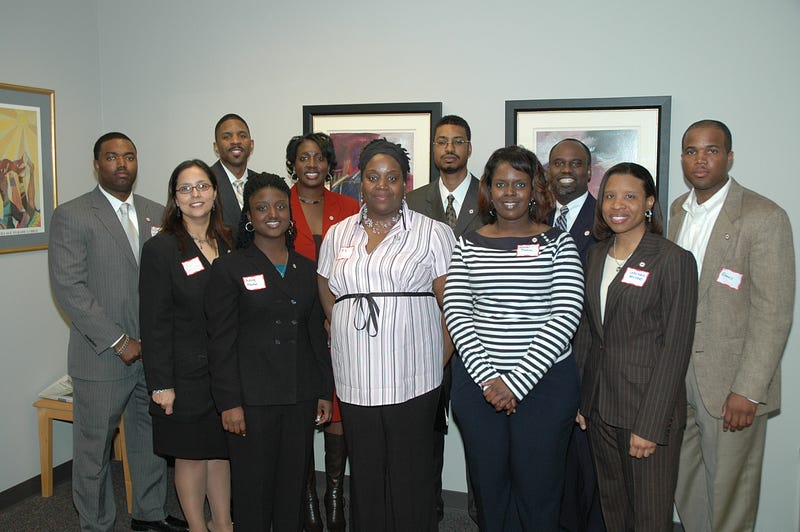
I was proud of the effort. But, I was most proud that I was able to contribute and not hold a title. We had a series of strong volunteer leaders with a small army to back them up. One of the most humble and transformative leaders of us all was Marquelon Sigler. Marquelon, as a servant leader was zealous about everything he did — comic books, civic engagement, politics, selling real estate. It was his early zeal that drove up the energy around the BULYP in a way that more established and more credentialed leaders never would. They were too “cool”. No pretense or reservations with this group — we are going to do this. That spirit pervaded for many years declining only as the mothership affiliate declined.
For years, the Birmingham Urban League Young Professionals served as a significant portal for Black and Black-allied individuals to connect, serve the community and socialize. BULYP was a highly visible welcome mat for people new to town; a critically important function in a town with a reputation for being cliquish.
At the same time, a peer organization, unsanctioned by anyone but themselves, was formed to serve an entirely different purpose. The Birmingham Change Fund was a collective of young black professionals who matched cash and social captial to collectively influence issues impacting Birmingham. We created a donor advised fund at the Community Foundation of Greater Birmingham, who, seemed resistant to our presence.
It was a novel concept that inspired interesting and varying reactions; all positive, but quite quizzical at times. We were young professionals, we did not have big dollars, but over the years our $250 per year and occassional matching dollars from our employers and major foundations led to a $70,000 fund. There, we invested in organizations like Pathways, the Urban League and McWane Science Center, among others.
Along with our cash investments, members of the change fund went on to serve on boards of the organizations we funded. This strategy was a major contributor of how the young professional movement spread in Birmingham. Key leaders seeing us create on our own — without their permission — and adding value to their organizations in spite (rarely because) of them. It took awhile but many came around.
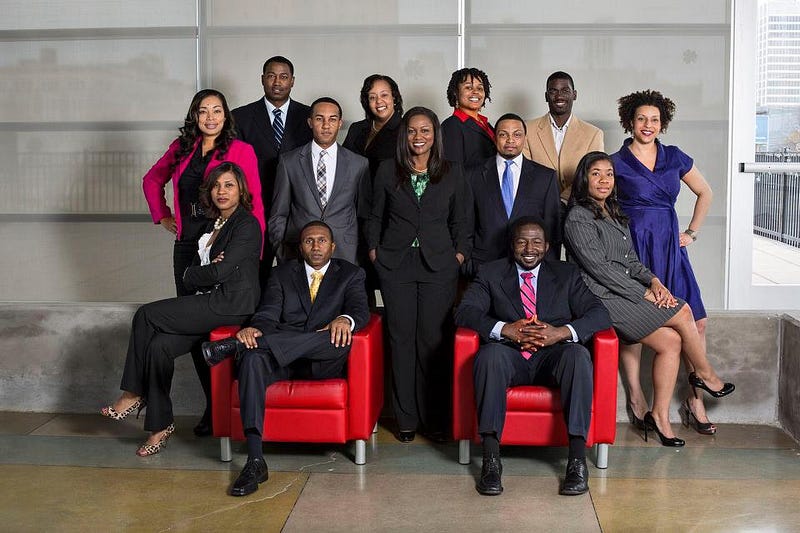
But, BCF was insular. Our impulses to remain familial and protective overwhelmed our competiting desires to spread the movement and onboard new members en masse. So, our numbers remained very small. But, what we lacked in breadth we had in depth. The depth and durability of our relationships were and are not insignificant — many of us met Mayor Randall Woodfin through the Birmingham Change Fund. Lyord and Katrina Watson met and married through the Birmingham Change Fund. And, Zhaundra Jones (who currently leads BCF) segued into a senior role in at the Community Foundation of Greater Birmingham — the same organization that showed initial resistance to our presence. Not insignificant at all.
As one of the few people involved with both the BULYP and BCF I saw our missions coming to life in ways I’m not sure many of us still appreciate.
Consider this: The mission of BCF was to ‘make Birmingham the best city for African Americans.’ The best city for black folks in America, period. We contributed cash to the BULYP in support of their financial education programs. The BULYP went to their national young professionals convention to showcase their programs and was named the top YP chapter in the country — beating Chicago, D.C., Atlanta and other major cities. In other words, for a moment in time, the nation’s leading organization for urban young professionals looked at Birmingham as ‘the best city’ representing the ideals of the Urban League mission. BCF and BULYP were decidely different, but very much pulling in the same direction. Where is the cohesion among young Black professionals in Birmingham today? This is a geniune question, not a statement. But, it is the question that drove the formation of these groups.
My time building and supporting these organizations represent the full spectrum of my oldest relationships in Birmingham. Relationships of all stripes; deep, sweet, torn and broken.
But, these were the organizations I spent the majority of my time with. There was plenty of very significant activity in other parts of the community.
In fact, Birmingham young professionals were just getting started. I get into that in my next post.
I am celebrating 20 years in Birmingham with #20For20 — a series of reflections, insights and homages to my journey. Follow me on Medium, LinkedIn and Twitter to be notified of new posts.