
You’re either Free and Alienated or Enslaved to Physics or Society
All living things are withdrawn from nature, but some people know why that freedom is a blessing and a curse

Relatively few people feel alienated, as in isolated, withdrawn, or hostile to their environment.
Yet alienation amounts to freedom, to an inner directedness that resists oneness with the environment. Any such oneness would be pure enslavement, the kind that would make an organism an object or a mere thing. Thus, the opposite of that oneness, namely some degree of alienation from the world must be intrinsic to life.
Physical enslavement, or oneness with the environment
In so far as mystics seek a feeling of being at one with the world, their ideal state is something that of the rock that lies on the beach. The rock is a type of thing with no organic properties, so it exists physically according to its chemical composition and its mass, position, surface dynamics, and so forth. If the wind blows on the beach, the rock may resist that influence by staying put, assuming it’s too heavy to be moved. But if the wind becomes a gale force gust, it may blow the rock down the beach and into the water.
Thus, the rock is united with its environment, corresponding slavishly to its surroundings because the rock’s nature is defined by its physicality. After being blown by the wind, the rock won’t roll back to its former position in the sand, by any power of volition or interest. The rock doesn’t care where it is. It merely exists as that type of thing which is in causal contact with its environment. The rock came from underground, perhaps thrown up long ago by a volcanic reaction, and if a strong breeze happens to blow, the rock will react accordingly, given the physical forces and patterns that unite all inanimate things.
Physics is the essence of mystical monism since physical laws apply to everything, uniting them in a web of causality. And the oneness of any apparent multiplicity of things, or the enslavement of some parts to others in an environment would be the opposite of those things’ alienation from anything. A rock can’t be isolated or withdrawn because it’s at the mercy of the physical forces and circumstances that bear on it.
The behavioural alienation of organisms
From a world of such physicality (and chemistry, geology, astronomy, and all the other aspects of nature that are explained by the natural sciences), life emerged, and with life some degree of autonomy, or separation between organisms and their environment. An organism is a semi or fully liberated object, which is to say it’s no longer an object at all, in that it’s not a slave to nature’s mindless (monstrous) unity.
This is so for even the simplest organisms such as viruses and insects. Viruses have an inner compass, coded by their DNA and protected from the environment by a membrane, so they prefer to be some places rather than others. They seek out hosts to replicate themselves.
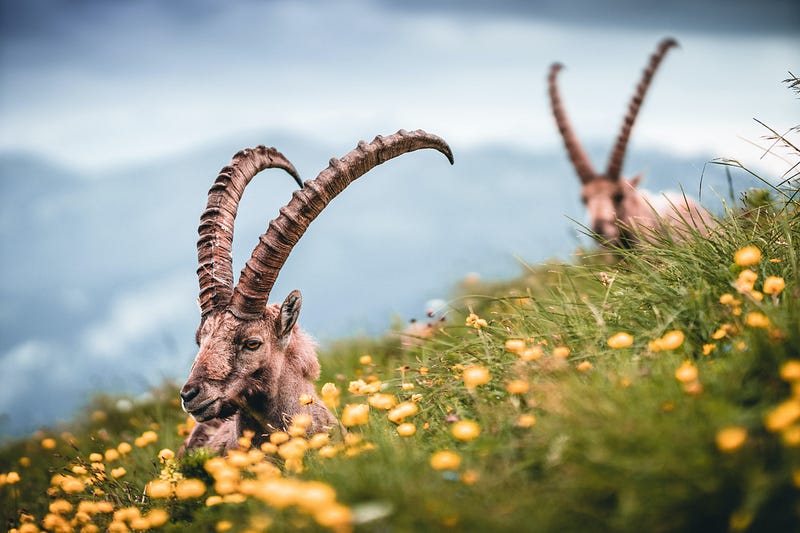
And more complex organisms demonstrate their isolation from the natural environment by seeking or building a shelter. Spiders spin webs, ants and rabbits burrow underground, birds build nests, bears occupy caves, and so on.
If the wind blows an ant along the forest floor, the ant will eventually return to its colony which is its home. By contrast, a rock has no home that’s distinct from the entire universe since a rock would be equally content to be anywhere. The ant’s body isn’t just an enslaved physical object like a rock, but an evolved biomachine that carries out the ant’s will or that of its colony or genes.
Alienation is therefore baked into the biological makeup of this organism. Having an organic nature rather than a purely physical or chemical one entails being at least partially or potentially independent from an environment.
The wind would have the ant over there, according to the wind’s strength, the ant’s mass, the effect of gravity, and other physical considerations, but the ant isn’t united with (enslaved by) those factors. The ant has a constitution that drives it not just to react helplessly to stimuli but to help build an antish world on top of nature. The ant takes as given the environment that hasn’t been cultivated according to ant standards, and implicitly condemns that situation, preferring to build a thriving ant colony.
Now, ants, rabbits, and birds don’t likely feel much alienation. Their separation from the world, their degree of autonomy is more behavioural than psychological. This means that animals generally model the environment but not their mental capacities. In other words, animals don’t have fully worked-out selves. They have some sense of themselves as bodies distinct from their environment that pursue some interests, but most animals don’t explicitly and exhaustively think about their thoughts. They don’t have the capacity for elaborate second-order cognition, which makes for complex emotions.
The psychological alienation of people
To add psychology to the mix is to move from animality to personhood, and from behavioural alienation/freedom to the psychological kind. Animals’ bodies are liberated to some extent, depending on their adapted traits. People’s bodies are behaviourally free in that sense too, but people’s minds are also at least potentially free even from their bodies because of their greater mental organization and isolation (behind the skull’s blood-brain barrier).
We use language, for instance, to carve out fine conceptual distinctions and to track our thoughts and feelings, to situate them in powerful personal or collective worldviews, known as “cultures” or “ideologies.” Our liberation from physical servitude, then, is multi-layered. Whereas animals’ armor that protects them from being enslaved to physicality consists mainly of the membranes and adapted traits found throughout their cells and organic bodies, ours extends to the levels of our thinking and social planning. We don’t just find physical shelter in houses but develop societies that depend on institutions governed by social laws and principles to which nature is blind.
Even so, most people, as I said, don’t feel alienated because they’re absorbed in their personal and social problems and opportunities. Instead of reflecting on themselves and on their existential position in the world, they’re preoccupied with behaving and with playing out their social roles. Here, then, is another order of servitude, one that affects animals and people too, namely the individual’s service to the group or to its genes, character, or physiological capacities.
As organisms we’re free to pursue our independent nature, but we’re not necessarily free to dissent from that nature. Ants, for instance, have rigid social functions and castes, and animals generally live out a cycle that’s genetically determined. They seek mates to transit their genetic code to another generation, to perpetuate their kind.
Social servitude in humans can be dispelled by circumstances, as when a natural disaster destroys the social order. In addition, subcultures may develop that subvert the mainstream social conventions, enabling some members of society to dissent from the status quo and to pursue an alternative way of life. Philosophy, art, cults, and the like foster these subcultures even in some large societies that depend on mass conformity.
Philosophy especially is liable to divert an individual from his or her social role, by honing the person’s meta-cognition. A philosophical individual will ruminate on the objective or existential status of everything, including the person’s role in history, society, and the natural environment. Those meta-thoughts provide a higher degree of alienation and thus of freedom not just from nature but from society, history, and even from this person’s desires and predilections.
The height of alienation, then, is to feel distant from yourself, to have developed these second-order doubts about your personal and social norms. You can go on to develop third-order doubts about those doubts, entering a never-ending spiral of rumination and objective detachment, known as “skepticism” or “melancholy.”
Or if you’re an artist, you may pursue the unattainable ideal of artistic perfection, and you might obsess over this ideal, which can alienate you from your other, “lesser” social responsibilities. You may even segregate yourself from society, living as a recluse as you commit entirely to this meta-self-directed path.

The existential alienation of transhumans
The point of all this is that we shouldn’t think of alienation as a mere deviation or disorder of maladjustment. Alienation may have unwanted personal and societal consequences in which case an alienated individual might choose to curtail his or her involvement in some subculture and to reengage with the wider world.
But alienation is also inherent to what we are. We live as alienated beings in so far as we’re organisms that behave in ways that aren’t fully explained by physics. Just by having organic bodies, we’re not slaves to physical nature; rather, we respond out of some degree of self-interest, implicitly or explicitly viewing physical materials and patterns pejoratively as things we ought to exploit.
The original meaning of “alienate” is only social since the word in that root sense has to do with foreign ownership. In that sense, you’re alienated from something if you recognize that someone else possesses it. In so far as we’re alienated from nature, then, we’d have to assume that a deity rules over the universe so that the greater environment would be only superficially wild or unintended.
The modern sense isn’t so theistic or anthropocentric. Instead, the existential, psychological kind of alienation towards the world at large would be based on the realization that we collectively pursue human ways of life not just because our genes gave us these bodies but because we recognize nature for what it is and are at least unconsciously revolted by the world’s godlessness and impersonality. In other words, existential alienation includes a philosophical justification for the course of history and even for what may be our self-destructive assimilations and exploitations of everything that’s not us.
Indeed, the fact that we collectively grow our economies and consume resources even as this way of life clashes with the carbon cycle and upsets the equilibriums of the world’s ecosystems indicates some such anomalous drive in our species. We’re not just free from nature, but we may know why we’re free and why we’re glad to be free.
Paradoxically, alienation becomes a burden and a benefit. We’re glad we’re not enslaved by nature, but we’re anxious about our proximity to a monstrous, inhuman environment. We obsess over our cultures and our status in our artificial refuges because we’re disgusted by the grotesque reality of the universe’s naturalness.
Physical causality isn’t the mark of a sovereign deity but is, according to scientific objectifications, the absurd, zombie-like shuffling of mindless things in space and time. The urgency of our cultural preoccupations, or our willingness to immerse ourselves in delusions follows from the existential awakening that awaits us as highly intelligent primates.
Those who are fully awakened in that sense may be harbingers of a more heroic species, as Friedrich Nietzsche speculated, of a race of Übermenschen or transhumans that accepts what nature is, on scientific grounds, without going mad and that compensates with the creation of alternative worlds. This species would be existentially alienated from nature and would relish its freedom.
I collect my Medium writings in paperback and eBook forms, and I put them up on Amazon. Check them out if you’d like to have them handy and to support my writing in that way. The newest one is Questing for Epiphanies in a Haunted House, and its 600 pages include 99 recent, wide-ranging articles of mine.


