
Can We Submit to Nature’s Carbon’s Cycle?
How progress begins with revulsion for the inhumanity of wild places
If all things are one, as many mystics and gurus like to say, how is there an illusion of multiplicity? If God is omnipresent, as monotheists contend, how can there be evil in the world? Or if everything’s natural, as scientists assume, how can our species threaten nature on Earth?
We like to discern patterns in apparent differences, so that we arrive at comprehensive categories such as “substance,” “God,” “nature,” or “universe.” But we also like to zoom in on apparent differences, ignoring the context and analyzing a whole into its various parts, to understand the world piecemeal rather than just glossing over the parts.
Perhaps as Iain McGilchrist argues in The Master and His Emissary, these dual ways of thinking are due to the different functions carried out by the sides of our brain. In any case, we can see how these holistic and analytical ways of understanding can come into conflict, in a documentary called “Carbon: The Unauthorized Biography,” which is an episode of David Suzuki’s television show The Nature of Things.
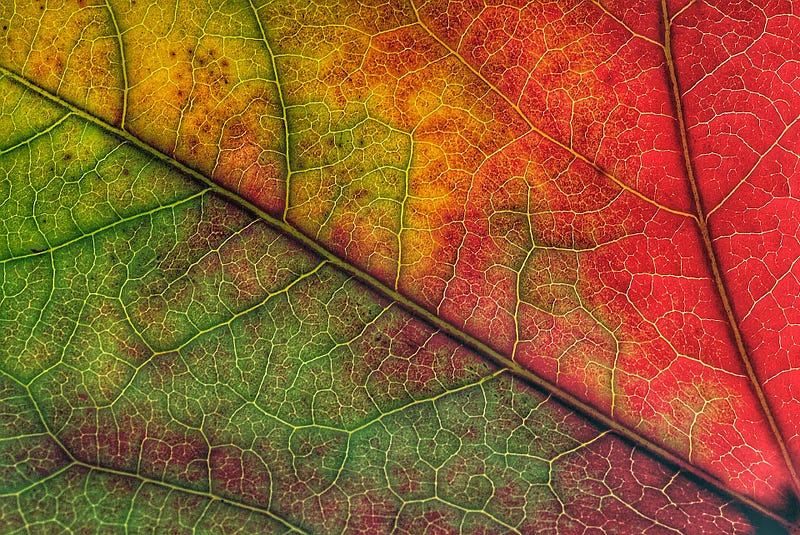
The carbon cycle
The documentary (CUB) features Neil deGrasse Tyson and other scientists, along with the voice of Sarah Snook who acts as the documentary’s host in taking on the role of the carbon atom itself. CUB’s main point is that we often misunderstand carbon. When we speak of our dangerous CO2 emissions, implicitly we blame the problem of environmentalism on carbon, as though carbon were somehow inherently bad. Instead, we should appreciate the wonders of the carbon cycle, and indeed how all life is made of carbon. Far from being our main problem, the documentary says, carbon is a virtual miracle.
Going back to the Big Bang and to the birth of stars, CUB points out how the carbon atoms that were eventually fused in stars and then launched across interstellar space by solar ejections and supernovas are special because of their instability. Indeed, CUB personifies carbon by speaking of these atoms as “the life of the party” in that their structure enables them to easily bond with other types of atoms. That flexibility made the emergence of life possible.
Photosynthesis is part of the carbon cycle on this planet since plants trap sunlight and combine it with water and CO2 to produce glucose, a sugar that fuels plants, enabling them and the animals that eat plants to live. After the Great Oxygenation Event changed the planet’s atmosphere over 2 billion years ago, by creating oxygen for animals to breathe, animals and plants formed a happy equilibrium.
Animals emit CO2 as waste, which plants need to breathe, and plants produce oxygen as a by-product of photosynthesis, which animals need to breathe. Moreover, plants trap carbon from the atmosphere and bury it in the ground through their roots, as part of their digestive cycle, avoiding a life-threatening buildup of carbon in the atmosphere.
Carbon, then, is like any good thing. Within limits carbon is indispensable to life, but in excess this good becomes a poison. The carbon cycle is an equilibrium reached over millions of years, keeping the balance that sustains both plants and animals, including us.
A biologist on CUB expresses this point in almost mystical terms: “We are embodied sunlight,” she says, since we eat the product of photosynthesis. More boldly, she says, “We don’t exist independently of nature. We are nature because we are made of carbon. So is everything else,” from our bodies to the plastics we learned to fabricate.
Now, that last point is intriguing because it makes the documentary’s second, more environmentalist half paradoxical. The second half switches from talking about plants to talking about human societies. As Snook the narrator says, playing the role of carbon speaking directly to us, “Like magicians, you bend the world to your will in the blink of an evolutionary eye.”
And a scientist on the show specifies, in effect, how strange and dangerous our activities are:
Humans use just immense amounts of carbon and other materials to make our stuff. The total amount of materials that humans have manufactured — and that includes plastics, steel, asphalt, and all kinds of materials — is greater than the total mass of all the biosphere — the trees, the elephants, and the ants and the coral reefs, all that stuff. Humans have made more than all of that biomass put together.
Carbon chimes in again to warn us, “You think you control me, but you forget that I have changed your world in the past. I will do it again.”
The environmental problem is that what we naively count as progress leads to a dangerous buildup of carbon in the atmosphere, which warms the planet, threatening the biosphere. We do this by emitting carbon as industrial pollution and by clearing forests that trap carbon. Thus, we’re upsetting the carbon cycle, and undoing the equilibrium that’s lasted for hundreds of millions of years.
An incoherent pitch for environmentalism
The question I want to ask is how this disequilibrium is possible if, as the biologist says, “We don’t exist independently of nature.”
Evidently, there’s an equivocation here. Materially, we’re made of carbon atoms and since those atoms are natural, we’re natural too. But in another sense, we’re not natural at all. No other species produces more than the world’s biomass. Indeed, when CUB calls carbon special because of its number of electrons, the documentary implies that carbon itself isn’t so natural. By creating carbon, the universe evolved new forms of complexity, namely the potential for organic ones.
So, think of it this way: If we have something that keeps recreating itself, what’s the point of generalizing about this thing’s nature? We can say that nature is creative, but if this means that nature periodically undoes itself by evolving different kinds of creativity, this notion of nature’s “creativity” is as vacuous as “nature.” If all kinds of creativity are natural, so is the civilized kind, in which case if there’s nothing wrong with nature’s use of carbon, there’s nothing wrong with our global warming. Case closed against environmentalism.
You see, then, how the holistic and the analytical impulses are in conflict here. Scientists want to emphasize the unity of natural processes, to counter what we might call Nietzschean pessimism about the nihilistic implications of modern knowledge. That’s the holistic impulse, which says that all living things are united with nature by their reliance on carbon.
But these scientists also want to acknowledge the drastic threat that our species poses to the evolutionary balance. Here, the scientists are speaking as life-affirming environmentalists: as bonded as we are with “nature,” we don’t want to threaten the survival of many species, including ours, so we need to learn to work with carbon in a sustainable way. That’s the analytical perspective, which acknowledges an implicit distinction between what we might call nature and humanity, or more precisely the wilderness and civilization.
The documentary labours to obscure that latter distinction, though, and thus comes across as incoherent, by personifying carbon. As I said, the scientists speak repeatedly of carbon as being the life of the party, and CUB literally uses Snook’s voice to speak as carbon directly to the viewer. Of course, it’s easier for people like us to identify with nature if we’re quick to personify chemical reactions, to think of the wilderness as our benevolent but stern goddess or mother figure.
But in their professional capacity, scientists themselves would dismiss that personification as a mere sales tactic that’s meant to appeal to the average television-watcher. Once we appreciate that the truly natural use of carbon is mindless, amoral, and zombie-like in the eerie persistence of this creativity that lacks any inner life or ideal directedness, we arrive at the obvious dualism. As dependent as we are on carbon, the problem is precisely that we want to be independent because we’re people rather than animals or impersonal processes.
Nature thus undermined itself by creating carbon that sustains the evolution of life, which led accidentally to the emergence of personhood, culture, and the desire for progress. Progress for people includes an unnatural (anomalous) kind of creativity, namely intelligent design which aims to improve on nature. Nature keeps itself wild, whereas we prefer to live in artificial refuges from the tyranny of nature’s blindness. Those who act as wild animals in society we lock away in cages because they violate our laws, not nature’s.
The scientist’s warnings about the damage our progress is doing to the environment are of course prudent. If we want to sustain our progress, we’d better find a way to express our creativity without drastically altering the terrestrial equilibrium. But acting out of prudence in inventing some technologies that will save us or by scaling back some of our economic excesses is a far cry from changing our behaviour based on a mystical identification of us with nature.
CUB’s rhetorical tricks that spread the message of environmentalism in an appealing way are themselves unsustainable because the problem of environmentalism can’t even be stated without assuming, at least, the waywardness of our desire to be independent of nature in so far as nature is a wild place, and we punish any trace of wildness in ourselves and in society.
The existential revulsion for nature
As I’ve argued elsewhere, the root of the environmental problem is this rejection of wildness by behaviourally modern, encultured people who long to be civilized and free. However much they may wish to whitewash their work with cheap personifications, scientists exacerbate this rejection of nature by explaining in excruciating detail nature’s godlessness and inhumanity, which is to say the universe’s sheer physicality.
In contrast to the mindlessness of nature’s shuffling from cause to effect, or from one developmental stage or level of complexity to the next, we’re social mammals that learned to think for ourselves and to carve out artificial refuges from the wild parts of the planet, from the no man’s land that falls only under nature’s pseudo “laws.”
Why do we reject nature even as we depend on nature to live? Why, then, are we alienated not just from the wilderness but from ourselves? Why do we fear that forests are haunted, as indicated by our folklore? Why do we populate the cosmos with imaginary gods or ancestral spirits? Why do we prefer our fantasy worlds to the objective reality that scientists explain with their models?
Partly, it’s because we fell into a cultural, civilized way of life as we stumbled along with trials and errors in the late Stone Age. But I suspect the division between people and nature is also existential. Unconsciously, as we seek to assert ourselves as the anomalous, godlike beings we are, we inevitably judge nature harshly for being other than us. How else could we be proud to know ourselves, other than by contrasting our creations, for instance, with nature’s?
Obviously, nature’s a far more prolific and awesome creator than our species. We can’t create stars and planets, nor indeed a whole universe. But we have one advantage over nature: we create consciously, with intention and planning in the pursuit of goals and principles that stand in contrast with anything that falls short of them. Just by envisioning ideals and by rationally planning to achieve some goal in a cultural context, we reject one possibility — the failure to fulfill the standard and to achieve what’s intended — in favour of the more optimal, successful option.
That’s what it means to be a person, which is to say that personhood is inherently at odds with everything that could be improved, according to our mental powers of understanding. We left the wilderness by inventing the culture of animism because we preferred to think of nature as being full of gods, which is to say full of spirits like ours. And we left nature when we settled into large societies that concentrated our mentality to produce more ambitious or foolhardy, progressive cultures that eventually took over the world in the Anthropocene.
In doing so, we implicitly saw what nature is and we went in another direction. We imagined a humanized alternative to the wilderness, and we deemed that civilized alternative to be preferable to the universe’s monstrous, impersonal nature. We stood up for personhood and we governed ourselves according to our concepts, languages, and cultures, deeming them preferable to animal life in the wild. Pride in human accomplishments is tantamount to revulsion towards nature’s brutishness. And that existential reaction to nature is no mere prudential calculation.
Just by exercising the powers of personhood, we’re existentially opposed to nature. The paradox, then, is whether we can be people in the cultural, symbol- and tool-using sense without setting ourselves on a progressive course that threatens nature’s mindless equilibrium, the latter being the wilderness’s totalitarian control over animals which is what makes them animals rather than people in the first place.
What could it mean to be a person who surrenders to nature, who surrenders the ability to imagine possible innovations along with the ambition and the ingenuity to realize them? Wouldn’t this be a retreat to animality that would entail our extinction?
I collect my Medium writings in paperback and eBook forms, and I put them up on Amazon. Check them out if you’d like to have them handy and to support my writing in that way. The newest one is Questing for Epiphanies in a Haunted House, and its 600 pages include 99 recent, wide-ranging articles of mine.


