
Your Shadow May Be Capable Of Doing Bad Things, But Does That Make You A Bad Person?
A quick look into Carl Jung’s “shadow self” theory.
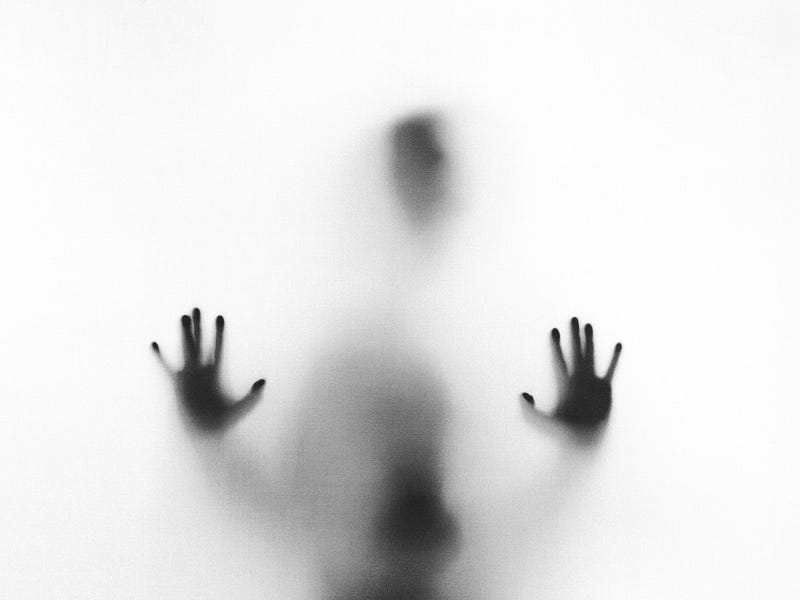
How well do you know yourself? In case you're similar to the vast majority, you most likely have a conventional thought regarding your very own wants, qualities, convictions, and sentiments. You have a personal code that you pursue that dictates whether you are being a "good" person.
In the event that there is any, one thing you can know in this universe, without a doubt it is the kind of person you are. Yet, what if you are incorrect, imagine scenarios where quite a bit of what you have come to accept about yourself, your ethical quality, and what drives you, isn't an exact reflection of who you genuinely are.
Before you get defensive and say things like "Hello, you don't know me, you don't have the foggiest idea about my life, you don't have any idea what I've experienced!" Think about this for a second: Have you at any point said or done something extremely crappy, for the most part hastily, that you later felt bad about? After the harm was done and the other person included, was harmed, you couldn't cover your disgrace quick enough. "Why did I say that?" you may have asked yourself in disappointment.
It's that "Why?" question that points out that you have a side to you that is subject to scrutiny. What's more, however, the purpose behind your response may have been self-evident (maybe even "advocated"), the absence of control you had over yourself sells out the presence of an alternate person hiding underneath your deliberately built thought of what your identity is.
In the event that this person is coming into the center for you, congrats you've just met your shadow self/the shadow man.
“The shadow is a moral problem that challenges the whole ego-personality, for no one can become conscious of the shadow without considerable moral effort. To become conscious of it involves recognizing the dark aspects of the personality as present and real. This act is an essential condition for any kind of self-knowledge.”
— Carl Jung, Aion (1951)
The "shadow" is an idea previously authored by Swiss psychiatrist Carl Jung that portrays those parts of the personality that we dismiss and stifle. For some reason, we as a whole have portions of ourselves that we don't care for or that we figure society won't care for so we drive those parts down into our oblivious minds.
It is this accumulation of curbed parts of our personality that Jung alluded to as our shadow. In case you're one of those individuals who for the most part love what their identity is, you may ponder whether this is valid for you. "I don't dismiss myself," you may think. "I adore every little thing about me."
In our quest to grow in all aspects of humanity, there is no doubt that we all have the ability to hate, love, feel, not feel, care, not care, and so on. It is within all of us to be good over evil and I do not believe there is a human that is inherently evil. So we can choose to give life to this shadow man or to suppress the shadow’s power by choosing to be good over evil.
That being said, the shadow is just as much a part of us as all the good we choose to look at. In order to truly understand ourselves and grow in life, we may have to take a good look at the worst parts of ourselves.
When we hide from these things and pretend they do not exist the shadow sits in well…, the shadow of the mind possibly growing and becoming a sub-conscience monster.
It is my opinion that you should never be ashamed of your shadow. It’s a valuable tool in life. Don’t let it take over who you are or what you want to become. Simply know it and understand what evil you are actually capable of if left unchecked. Use it to grow so that you can control your unpleasant side and let the good in you shine.
Thanks for reading!


