
How Toxic Positivity is Ruining Your Life
Living in denial of the “bad” things means you never grow from them.
About a year ago, one of my coworkers abruptly quit his job mid-shift. He also happens to be one of my best friends, so I was left to answer the questions for him when he was gone, the main one being:
“Is he okay?”
Well no, he isn’t. But he won’t tell you that.
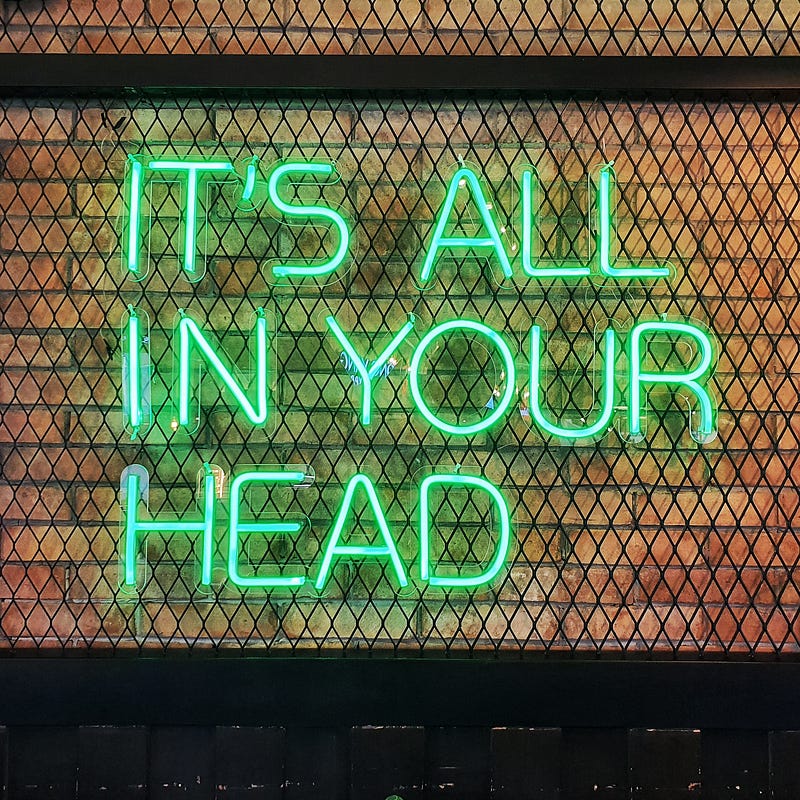
For weeks leading up to his sudden departure, I watched him slip into a deeper and deeper depression. It started with a totaled car, which has admittedly sunk me into a depressive state before. Admirably, he tried to spin it into a positive. He bought a bike.
“It’s cheaper, for one,” he told me. “Plus it’s good exercise.” These were both valid points, but there were a few complications I thought he might want to consider. Firstly, it was December in Pittsburgh which meant bitter chills and icy ground. Secondly, we didn’t live in the city where everything was connected and bike accessible. We lived along McKnight Road, which notoriously floods so badly that it causes sinkholes. But hey, he made it work.
Then, there was the date he went on. He’d met a girl on Bumble. They had been talking on and off for a few months when I finally told him to ask her out or move on with it. He opted for the former. They met at a moderately nice restaurant in a trendy neighborhood, enjoying red wine and decent food. He called me immediately after the date to joyously exclaim how well it went and how much fun he’d had.
A few days later, he asked her out again. She rejected him. She’d appreciated the drinks, she told him, but didn’t feel much of a spark. These things happen. He’s a bit older than me, my friend, and has dated much more than I have, so usually I’m the one turning to him for advice. He certainly seemed bummed out, but he repeated the same mantra to me: these things happen.
But the cracks had started to form. He was unsatisfied with his job (which, I’d like to remind you, was the same restaurant job I had) and wanted to focus more on his art. Of course, he was going through a bout of burnout artistically as well.
“I just need to make every day a good day,” he said to me during one particularly rough shift.
It seemed that, with every gradually defeating moment, his mind was attempting to rewire itself and spin everything into a positive. That wall came crumbling down just a few days before he quit. He was being withdrawn and passive, unusually quiet at work when normally he was loud and boisterous and goofy. He went home that night and sent a text to a few mutual friends:
“Be completely honest with me,” he started. “I don’t want you to hold back or anything, but what about me makes me completely unattractive?”
It isn’t a reassuring text to read when you know your friend is in a bad place. Naturally, nobody knew what to say. Words of encouragement and positivity were funneled back at him, and he didn’t want to hear any of it. He confided to me, a few days later, that he wanted to completely change every aspect of his personality. In his eyes, if he received the criticism he’d asked for, he was going to undergo a complete paradigm shift and become someone who was “more attractive.”
This, to him, was deeper than a surface level view of “attractiveness.” He believed that he was, fundamentally as a person, unworthy of love.
It was in the middle of this low mental state that he quit. There had been an issue with a table — a relatively minor thing, if I remember correctly. Their food was taking a while, so he went to check on it — and they believed that he “made a face” at them. He was pulled aside by the manager on duty and scolded, resulting in the two of them getting into a screaming match and arguing in the office. He quit right after.
Really, the incident wasn’t anything major. It’s something, I’m convinced, that had it happened a month earlier would have been brushed off as another stupid restaurant thing. The problem was that, beneath the surface, there were all of these things bubbling up to the surface, things that had been kept neglectfully tucked away beneath a mask of false positivity.
In his attempt to make “every day a good day,” one bad day detonated a series of explosions that caused him to upend his stable life and fall into a depressive pit for months.
For what it’s worth, he’s doing much better now.

It’s a cautionary tale, I suppose. There is a very obvious word for this dilemma, which I’ve been avoiding using, although it seems that it’s really the only one that fits:
Denial.
Ultimately, you can’t just flip a switch in your brain and make every day a good day. That’s the point of life. The good comes with the bad. Or, to put it another way, the good only exists because of the bad.
“Good” and “bad” are relative terms that require differentiation in order to make sense. If every day is a “good” day, then isn’t it really just a day? How can you determine a day’s “goodness” if you don’t have any “bad” ones as a margin of comparison?
If you try and spin every event in your life into a positive, you’re denying yourself the ability to grieve, learn, and grow. We often think about the “stages of grief” as a response only to death, but the truth is that we can grieve over any kind of loss: loss of love, loss of a job, even the loss of a favorite toy.
Denial is just one stage of grief, and while everyone experiences things differently, lingering in it can be detrimental. Denial can be a useful coping mechanism, at least at first, but after a while it also means that we are contradicting the reality of a situation.
The important thing to understand is not that we are in denial, but why we are in denial. What feelings are we trying to protect ourselves from?
Clinical Psychologist Mary Lamia has this to say:
Sometimes feeling positively may be just as threatening as negative feelings. We may want to deny the reality of our emotions, because accepting a reality that is uncomfortable, painful, or incongruous to what we expect means we must also alter our perception of ourselves.
Fighting our true emotions and living in denial limits our growth. Personal growth is something that comes as a result of experience, not as a consequence of it.
Nobody is perfect, so the only thing we can do is try, every day, to be better than we were the day before.


