
Your Vocabulary Limits your Ability to Think and Experience Life
To live a full life you must expand your vocabulary around familiar topic areas and entirely new ones
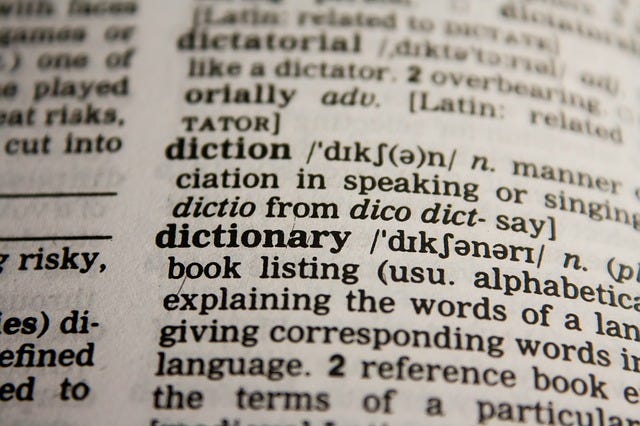
An English speaker can get through most daily situations with a vocabulary of about 3000 words. Most other languages have a similar number of words required to get through the day-to-day.
If your vocabulary is significantly less than this — you will struggle to communicate your message and intent to others or understand theirs.
Why then, is it important to learn more than this?
Because words allow you to identify, analyse and communicate experiences and ideas that are difficult to otherwise get your head around — let alone succinctly. This applies to familiar topic areas as well as entirely new ones.
Familiar topic areas:
You’ve probably drunk a glass of wine before. If you’re an average person — you can probably tell if a wine is red or white, sweet or….not sweet. You’d also describe it as such.
Having a greater vocabulary around wine tasting would allow you to make a statement like this:
“It is a cloudy dark ruby drop. On the nose it was earthy with cedar overtones. Strong tannins coming through on the palate, with only a little bit of acidity. Had a very smooth finish.”
Having the descriptor words like the above in your verbal arsenal allows you to break the wine tasting experience beyond your tongue — but to include your eyes and nose.
It also equips you to look for those particularly nuanced smells and tastes whilst drinking the wine itself — thus allowing you to have a more immersive experience.
Now imagine trying to communicate the above experience to a friend by being limited to saying “oh yeah, it was red and it wasn’t too sweet”.
Now consider how building your vocabulary around activities from your everyday life might change how you experience life. Having words to better describe your food and coffee; the clothes you wear; movies you watch; buildings you walk past and so on.
Expanding your thinking into new topic areas:
Once upon a time, I knew nothing about economics.
Then I learned terms like inflation, marginal utility, comparative advantage, opportunity cost and scarcity.
Now — not only can I understand finance-talk in the newspapers, but I can apply those concepts to completely different contexts my daily life. For example:
- Inflation: When the amount (supply) of a particular commodity increases at a greater rate than it is consumed (demand) — the value of that commodity reduces. This can be applied to selling your property — if the number of 3 bedroom houses for sale on the property market doubles — you’ll see their value drop and thus it might not be a good time to sell. Similarly from a career perspective — if the number of java programmers in the job market halves (and demand remains the same), their salaries will increase significantly, and thus might be a good time for you to get into that line of work.
- Marginal Utility: I’d love one slice of chocolate cake. A second slice is nice — but slightly less amazing. A third slice — and I’ve kind of had enough (and feeling a little guilty — pledge to hit the gym tomorrow). If I gulp down a fourth slice — well now I feel sick. The idea of marginal utility allows me to know: stop at 1.5 slices and share the remainder with my wife. Not only will I not feel sick — but I’ll get brownie points for being a good husband!
- Comparative Advantage: I’m not a particularly talented handyman. I always botch things anytime I try to build or fix items at home. Using the principle of Comparative Advantage — I know I’m better off paying someone to fix that do-hicky at home while I work an extra hour to pay for it!
- Opportunity cost: This is the notion that when presented with some choices— taking one of the options means that the fruits of taking the other options are forever lost to you. The Road Not Taken if you will. My previous job involved working on some pretty amazing projects whilst getting to stay at some cool places around the world — but the crazy hours, and extended periods of travel involved meant that I was going to miss out on seeing my boys grow up. There was an opportunity cost involved.
- Scarcity: Economics says that scarcity of goods is a key component in price increases (or decreases). When I am making a routine purpose — I am able to assess whether I believe the item is worth the price. Not only based on the scarcity of the good — but also against the scarcity of money in my bank account! It always seems easier to splurge a bit more after my Christmas bonus comes through.
Having words to describe these concepts allows one to more easily grasp the concept itself, notice similar patterns in other areas of life, and obviously take action accordingly. Expanding your vocabulary around any topic area would be useful — it could be politics, philosophy, computer science, or biology.
Conclusion
The extent of your vocabulary has a direct correlation with how you experience life. It can liberate your mind to explore much more complex ideas.
Pick a subject area — and try to learn the key words relevant to it. Then repeat ad infinitum. Live a full life — not just physically, but mentally too.
You may also like:

📝 Read this story later in Journal.
🍎 Wake up every Sunday morning to the week’s most noteworthy stories in Wellness waiting in your inbox. Read the Noteworthy in Wellness newsletter.