
Your Genes Are Not “Selfish” (Part 1) — I Team, Therefore I Can
They are way more cooperative than you thought
Disclaimer: This is a book review and the direct quotes extracted from “The Selfish Gene” are available on the free preview pages on Google books.
You have probably heard of “The Selfish Gene”, whether you have actually read the book or not, by this provocative terminology alone, you must have lots of questions popping up in your head. So, let’s walk together to see what’s the fuss and buzz about it. I must first applaud that the Selfish Gene was a great literary success, a good repository of knowledge then, and it was way better than trying to explain evolution through selection at the arbitrary level of “individual”. While it is true that most traits (i.e., the actual “entity” to be selected) can be traced back to some influences of genes, it is only a minor story of “information descent”, and even less can be ascribed to the so-called “selfishness” or “ruthlessness” of a gene. You will see why.
The meme of “selfish gene”
“We are survival machines — robot vehicles blindly programmed to preserve the selfish molecules known as genes.” — Dawkins
The basic thesis of his book can be summarized as follows: genes are by his definition “selfish” or “ruthless”, as they compete with rivals for resources or loci¹ to persist, everything that comes after via evolution, i.e., cells, bodies (the so-called robot vehicle) and perhaps even families and communities can be understood as being controlled by this nature of genes, i.e., you and I are here to “serve” their selfish gene goal. It follows that natural selection favors genes that are “more selfish” (I’ll come back to the definition of “selfishness” used by Dawkins). Another recurring theme is that he further extends his gene logic with a fair bit of provocative speculation, such as below.
“I shall argue that a predominant quality to be expected in a successful gene is ruthless selfishness. This gene selfishness will usually give rise to selfishness in individual behavior.” — Dawkins
Going along with the provocative nature of his words, Dawkins also took on cultural evolution briefly. There he applied the same reductionist logic and coined the term “meme”, which is similarly selfish. But memes are even less clearly defined as physical objects like genes. Take language as an example, is a single word (i.e., a bunch of alphabets) a selfish meme? A single sentence? Maybe an adage that associates with some “phenotypes” in the real world (i.e., a coherent package of both symbols and sensory information)? Would its chemical equivalent be a gene or something more (that includes higher-level interactions with the real world)? Is it appropriate, even just metaphorically, to describe a genius idea, truth, or fact, to be a “selfish competitor” if it spreads? (how useful is such a metaphor?)
Nonetheless, the notion of “selfish gene” literally turned into a “selfish meme”, because of the catchy/provocative choice of words. You know something dangerous might be cooking up when things have gone viral for this reason. (FYI, I might now tell you that Dawkins himself regretted not using “the Immortal Gene” instead and also retracted some controversial statements in his original edition).
Problems from the get-go
Many criticisms can be made about the book, but the first one concerns the starting point of his thesis — a gene is not well-defined in Dawkins’ usage (I know definitions might bore people…but bear with me, the fruit will come). He gave the definition: “any portion of chromosomal material that potentially lasts for enough generations to serve as a unit of natural selection”. You can already see the problems, what is “any portion”, “potentially last enough” etc.?
Nonetheless, this departs from the standard definition that a gene is a segment of DNA that encodes for a protein, but sometimes Dawkins reverted back to this standard when he explained things, other times the entire Y chromosome of humans would be considered a gene because it doesn’t get broken up during recombination (hence “last long enough”), which appear rather “modern-centric” and rule out early or non-sexually-reproducing life in the discussion, despite his thesis was aiming at universality. Its strong emphasis on the “loci” of chromosomes also skips how a present “fixed” structure of chromosomes has arisen in the first place. “Cells” — presumably a robot vehicle, in fact, may have arisen earlier (from LUCA) than chromosomes with certain “fixed” loci, which produces loopholes in his narrative. To highlight Dawkin’s own muddles about definitions, he wrote:
“(The book should be called) The slightly selfish big bit of chromosome and the even more selfish little bit of chromosome.” — Dawkins
Other entities have sprung up e.g., “gene-complex”, “linkage group” or “replicator”, probably as he noticed the potential problems with his fluid gene definition. But these terms are also more open to being “abused” in however way he wants (although they are more correct than “gene” in a sense). Even a cell membrane, which is arguably more immortal than a gene, “replicates”. What then, is in a gene that makes it stands out to be the special molecule that undergoes such splendid evolution we see on Earth? And what is stopping Dawkins from claiming that selection should act on a single nucleotide (which perfectly satisfies his conditions of “a little bit of chromosome”)? I will come back later for the answer.
Another issue of definition is of course regarding “selfishness”. According to the dictionary: it means “the quality of behaving as to only benefit oneself”. In biology terms, behaviors that are considered parasitism or predation can qualify to be called selfish². It is obvious that some “genes” or “replicators” do behave like that, but is this a universal case?
Of course, Dawkins does not use the word “selfish” in its common sense. But loopholes appear even under Dawkins’ own framework — that gene is selfish for the reason that its “goal” is to maximize the no. of copies that survive relative to its rivals. But in what timeframe? We (he) don’t know. As an analogy, ozone molecules in the atmosphere can multiply or disintegrate, but they don’t get to “maximize or minimize”, it sounds incredibly odd no matter what worldview one has. Simply put, a gene itself does not encode enough information to run simulations to foresee the future, it is the environmental pressure that determines which gene (carried inside a phenotype) gets to pass on more, yet the book does not discuss selective pressure and just pull some “intrinsic” gene fitness values out of nowhere. There is a recurring mix-up of cause and effect in his book, a remnant of perverse logic common in the adaptationist optimality principle.
Moreover, the claim that genes are “selfish” because an increase of one allele would reduce another allele in the same “loci”, given a fixed no. of loci, is basically misguided circular reasoning. There is nothing to preclude that the no. of slots (loci/niches) could change (hence multiple alleles could increase together), the location of existing slots can change, etc., which is a major part missing from Dawkins that concerns the true nature of evolution (this echoes the kind of short-term view of evolution I wrote here). Without these changes, how else would speciation, a quintessential part of evolution be conceived?
The take-home here is that, Dawkins tried very hard to apply a blanket generalization and justify his worldview and anthropomorphic languages (which is redundant and misleading). To him, “if a gene (or any other biological entities) persists, then it is selfish”, basically tautologous with the definition of all life. No clear evidence of harming others for its own benefit is required.
“This comes perilously close to being a circular argument, since the existence of sexuality is a precondition for the whole chain of reasoning that leads to the gene being regarded as the unit of selection.” — Dawkins wrote when discussing how sexual reproduction and chromosomal recombination arose in the first place.
The ultimate cooperator
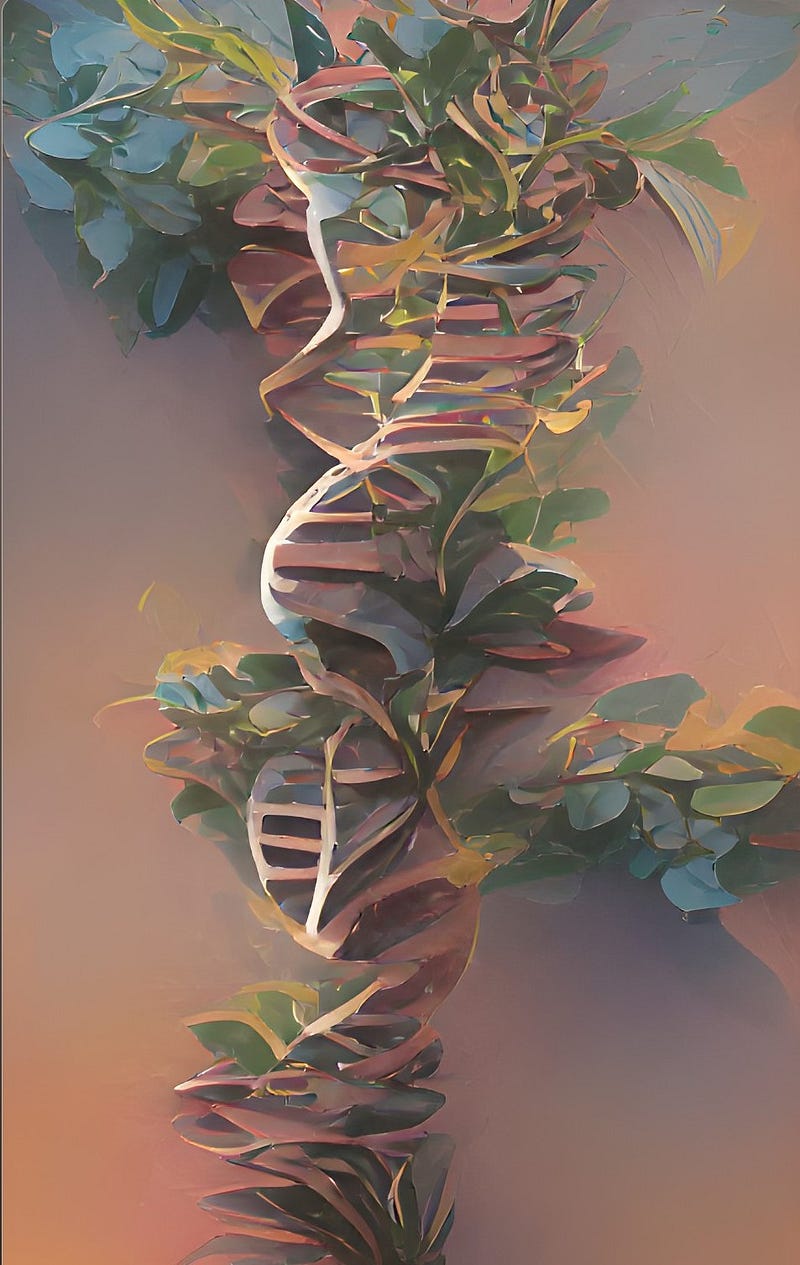
Recall what Dawkins wrote: “The slightly selfish big bit of chromosome and the even more selfish little bit of chromosome”.
Whether a gene is a sequence that encodes a protein, or a segment of a chromosome that doesn’t break up in recombination, on its own, they are way too tiny and “impotent” to be an adaptive unit that can stand against an ever-changing environment. In this minimalistic state, they are not really so different than any random drifting particle, it takes good courage to call e.g., some randomly floating salt ions “selfish”. That’s perhaps where Dawkins got the most wrong — the smaller the bit of genetic material, in fact, the less capable it is to be selfish. That’s why genes are almost always inherited as a collective. They are in fact at the mercy of the collectives, as opposed to being a “tyrant” that dictates evolution as touted by Dawkins.
Essentially, the smaller the gene sequence, the more it needs to cooperate and conjoin with other genes, proteins and other biomolecules first, in order to persist under the merciless physics of the environment (“first” is important here). It might even need to cooperate and compromise with direct “rival” alleles/vehicles to maintain a diverse enough gene pool that can stand macroscale selective pressure in long timescales. It is clear that for life chemistry on Earth, the force of cooperation giving rise to ever more complex beings and relationships is overwhelming, although it is possible that in other exotic life chemistry, this isn’t necessarily the case.³
“Selfishness beats altruism within groups. Altruistic groups beat selfish groups. Everything else is commentary”- D.S. Wilson and E.O.Wilson
It might take an overthrow of your belief system to digest this — Life tends to more and more mutualism/cooperation. It is because the bar of the game is set by “teams”, not “genes”, a group of entities working well together beats atomized entities working only for their own good, under the scarcity of resources (follow the thought experiment in the footnote!⁴). From there, cooperating gene-biomolecule complexes recruit bigger and bigger teams and finally become a proto-cell by natural selection. Then, single drifting cells were outcompeted by colonies of cells, colonies of identical cells outcompeted by differentiated multi-cellular organisms, simple multi-cellular organisms outcompeted by large complex organisms, and finally, solitary individuals outcompeted by cohesive social groups — hence the social conquest of the Earth (and now we are contemplating to conquer another planet…). However, whether this is something “good” is debatable, which will be explored in Part-2.
(Of course, Dawkins would frame all of the above as genes being “selfish” or “ruthless”)
Extra: Check out this super interesting article about the powerful super-colonies of Argentine ants!
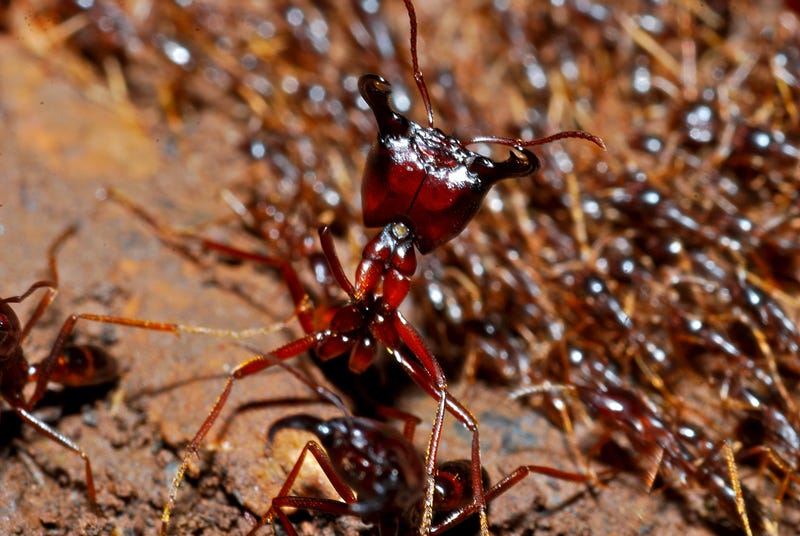
Think in another way, cancer cells or cancer-inducing genes can be called the most selfish from the neighbors’ (or observer's) perspective. However, their boom is very short-lived and in the larger population, they are kept to a low percentage — natural selection generally does not favor selfishness (under the normal definition, not Dawkin’s blanket definition), because cooperative teams set the bar higher. The same is true for other evidently selfish entities like segregation distorters, cannibals, intra-colony cheaters, etc., they are typically suppressed to a good extent due to various selective pressures acting on a longer timescale. Even transposons and non-coding sequences, which used to be hailed as strong evidence by the selfish gene camp (Dawkins once claimed they are parasites, ironically they are what gives him the useful structure of chromosomal loci…), are now increasingly being recognized to have evolutionary benefits when viewed from a broader, more holistic perspective. They even create entirely new genes and have been implicated in the evolution of the placenta and the adaptive immune system!
Therefore, except in the earliest history of drifting molecules, we can conclude most genes are not narcissistic loners, they are first and foremost driven to form diverse and coordinated teams. They even compromise, by helping entirely unrelated genes to express and replicate (much like a human helping a disabled or foreigner, call that “selfish” as you will). At the genome/cell level, in fact, all genes in a vehicle, whether they themselves are capable to replicate or not, are passed on equivalently — the closest example of a communist system in all of nature.
Why then, is there undeniably some percentage of selfish entities that persist? The reason is that mutation does not preclude any traits from arising — selfish, altruistic, violent, docile, there is no discrimination. Also, evolution doesn’t minimize or maximize, nor does it improve life fully and instantaneously, it isn’t perfect as implied in the adaptationist community. In addition, a sneak peek at Part-2 is that the larger the cooperative unit, in fact, the more selfish it becomes, i.e, teams are more selfish than genes, just like corporations are more selfish than individuals.
Beyond Reductionist
To end Part-1, I would like to give you another thought exercise to clear up your mind: Why do complex individual bodies (i.e., us or any intricately-built robot vehicles) have to exist at all? It seems very possible that a free-drifting minimalistic but efficient replicator can still spread their copies like wildfire, given it behaves ruthlessly and replicates with high speed, fidelity and stability as Dawkins said. Why doesn’t the biological world look “dull” like some salt crystals growing in abundance (but not complexity) incessantly?
When two large space rocks are drawn together by gravity, thereby colliding and creating new rocks of different shapes, should we describe it from the narrative of some atoms being more “selfish” than others? In Dawkins’ own favorite analogy of a rowing team, what Dawkins didn’t realize is that his oarsmen (alleles) on the boat don’t necessarily get replaced one-by-one by a coach. In reality, there is no coach, no sky daddy, the boats have already been in an ongoing race since 4 billion years ago, some chance events could flip one of the boats, or many boats can be struck by a tsunami together, or only one oarsman unluckily fell into the water, there is no evidence for emphasizing individual genes being the prime unit of natural selection.
I hope you are convinced that there is more to evolution than just “selfish genes” and there are important issues with definition, portrayal and narrative, which can turn into bad “memes” that have a realistic adverse impact on our understanding. If you are interested in learning more about alternative narratives of how life comes to be, stay tuned for my upcoming Part-2! I will explore and expand on what comes after the cooperative genes and offer a way forward, for how humanity should navigate in this sea of complexity!
If you like this story, I strongly encourage you to subscribe and support me here, and share it out far and wide. I write for the benefit of humanity and all life on Earth!
(Feel free to send this to Richard Dawkins, the author of The Selfish Gene, I would be thrilled to hear his response).
Footnotes
- Gene loci is a “slot” occupying a fixed location on a certain chromosome. Different genes competing for the same slot are called “alleles”.
- Competition is not necessarily an active “behavior”. It is merely the inevitable result of co-existing in limited resources, it can drive -/-, +/+, +/- consequences when compared with one entity existing alone. That said, active competition is still possible, if the competitor produces some substance, or physically damages its rival directly to weaken it (basically a weak form of “predation” without outright killing and eating its rival).
- Going back to the example of cell membranes as replicators, the problem is that it is a “dull” molecule with a very limited set of potential traits, thereby natural selection on it is very monotonic (if it is the sole replicator). Whereas in genes, their ability to join forces with diverse molecules and interact with the environment in multitudes of ways (i.e., lots of phenotypic information encoded) is what gives Earth’s evolution the signature of great diversification. It may well be that many extraterrestrial replicators are “dull”, where the evolutionary trajectory consists of one big oscillation of one species (i.e., from boom to total/near extinction).
- If we have multiple bacterial colonies or communities, and we give them the same set of living conditions (e.g., a fixed amount of nutrients, to generate selection pressure), the one that stays in the game the longest is the one where 1) the microbes moderate their resource consumption or 2) manage resources cooperatively and sustainably e.g., recycle waste, both of which require cooperation and compromise. This is the same situation as in the wilderness where populations inhabit different parts of a landscape (especially true for non-migrating organisms), no direct competition or tribal warfare is even required to generate this differential survival.
- To be fair, Dawkins didn’t mean genes don’t cooperate, he meant they could “appear” cooperating but insist they are really just “selfish” (which goes back to his problematic definition of “selfishness”). He highlights two mechanisms that explain cooperation, reciprocal altruism (all parties benefit, which I have no issue with), and kin selection which favors the gene-eye narrative, but has been shown to be highly limited. For an extended discussion and further references, check here.


_(6927770850).jpg)