
Your Genes Are Not “Selfish” (Part 2) — The Selfish Team
Diversity is at the mercy of over-powered teams.
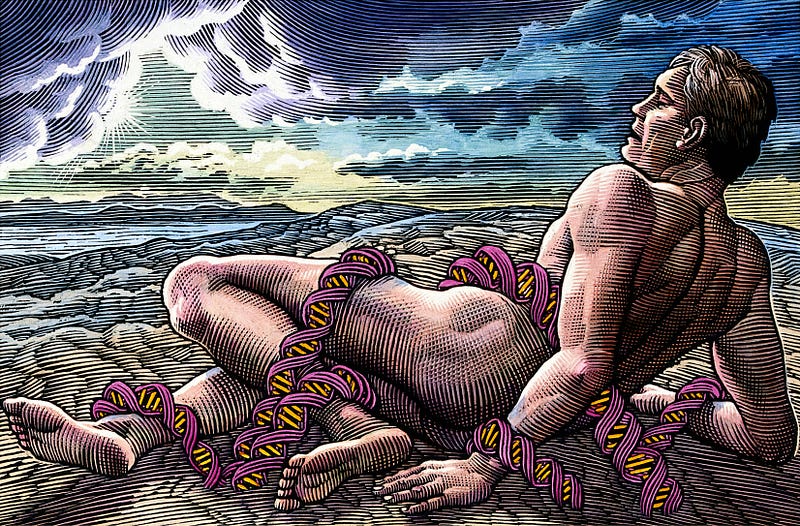
“Dedicated to those puzzled by the complexity of life and its meaning.”
In Part-1 — I team, therefore I can, I covered two narratives to describe the story of life (and genes). First is the “Selfish Gene” framework popularized by Richard Dawkins. To briefly recap, he posited that the evolution of any traits in life — altruistic, greedy, violent, friendly, fast, slow, etc., all comes down to some genes “trying to” out-do others, and he therefore likes to call genes “ruthlessly selfish competitors”. Further, anything that genes part-take to build i.e., cells, bodies, and families can hence be said to exist solely as machines to fulfill the underlying selfish gene’s goal to dominate.
It is not without any merit to view evolution this way, because (some) genes do need to survive through eons at the expense of others to propel evolution. However, this narrow portrayal plus confusing, anthropomorphic terminologies muddle our understanding of the true nature of evolution. A close examination of the book reveals that Dawkins applied a blanket generalization — anything gene (or life) does, if it leads to “survival benefit” through time, is considered “selfish” in his dictionary (i.e., anything that has ever existed must hold some “survival benefits” — his idea of “selfishness” is tautologous to all life and anything life does, and hence confer zero explanatory power). It gives a false liberating feeling to lay readers because everything is simplistically reduced to “for the benefit of some genes” in a perfect adaptationist world, something which has been heavily disputed in the evolution research community.
“To a survival machine, another survival machine (which is not its own child or another close relative) is part of its environment, like a rock or a river or a lump of food. It is something that gets in the way, or something that can be exploited.” — Dawkins
The selfish team
Here is a more realistic way to tell the story. Ancestral “genes” (that managed to descend into life as we know it) must first have a rudimentary ability to cooperate with diverse molecules and over time this endless pursuit for new cooperation has been refined by natural selection to culminate in the complex, tightly-coordinated biological orchestra we now see. That is, the more minimalistic and impotent an entity is (i.e., like a short nucleotide sequence), the more it needs to rely on cooperating with others in order to persist under the merciless laws of physics. Otherwise, its fate would be akin to any randomly drifting particles easily lost in the chaos, no order can be formed. This is the true predicament of genes. You can see how this easily reconciles with our knowledge of the laws of thermodynamics and life history, without needing to invoke perverse metaphors and definitions.
“Life did not take over the world by combat, but by networking.” — Lynn Margulis
In other words, ancestral genes must first bear the ability to join forces with diverse molecules in order to build more durable structures and gain more “potential freedom” to do stuff (functions). Selfishness, being one of the many traits allowed by a higher degree of freedom¹, is largely emergent above the level of genes (it comes “second”). As a matter of fact, there are very strong reasons that indicate the higher up the biological organization, the more selfish an entity can potentially behave towards outsiders (exactly the opposite of Dawkin’s conception where tiny sequence of genes are the most selfish), e.g., the Fossil Empire or Russian army are orders of magnitude more selfish than any individual or tiny gene could ever dream of; all forest ecosystems are dominated by a few groups of trees or a climax community. Diversity is at the mercy of overpowered teams.
In general, genes are the least and social groups (tribes) are the most selfish if we consider a normal, dictionary definition of selfishness. This is because cooperative teams continuously set the bar of selection higher and higher (see Part-1). The tiny unipotent genes that arose some billion years ago, having undergone many more rounds of natural selection than entities up the biological organization, must be more “tamed” as a great team player that joins forces with others rather than being a selfish jerk. This can be seen in how much compromise genes can make for other entirely unrelated genes, how thousands of individual genes (+ other biomolecules) function together seamlessly to build a bigger collective, constituting the only near-communist system in nature — genome². It follows that individuals and larger groups must be less tamed because they have undergone much fewer rounds of team-forming and team screening.
To further illustrate, the same happens for “memes” (see Part-1 for what a “meme” is). Small pieces of knowledge are more easily mixed, integrated and inherited together, but large schools of thought/ ideology/ academic fields are harder to “mix” together and are constantly fighting, hence there is so little transdisciplinary research and so much hostility between ideologies.
In physical terms, genes have it way easier as they cooperate through the guidance of some fundamental physical forces that operate extremely fast (mainly electromagnetic forces). With individuals and larger groups, it is a different story as there are no strict, simple laws of physics that can help you cooperate and bond with one another. Both gravity and electromagnetic force are too weak in this embarrassing middle-land we are caught in. That’s the predicament of all life at this mesos-cale, including us (which is different than the predicament of genes).
Not all hope is lost, however, there are still “emergent forces” that could bring us into compatible teams. Basically, our ability to be drawn toward something we “like” (to cooperate with), and get away from something we “hate”, has culminated in the miraculous tendency commonly known as behavior (a force is equivalent to a tendency of action!).
The amazing thing is that there exist a great number of possible behavioral forces (i.e., degrees of freedom) unlike just four fundamental forces in Physics. In essence, this is what makes life “alive”. That’s why no one would consider one tiny drifting nucleotide sequence to be alive by any stretch for the same reason we’d think a virus, or an incapacitated person locked up within four walls to be “less alive”. We won’t ever think the trovant stone in Romania is alive despite it grows and even multiplies (but not much else). Life is life not because of the ability to replicate and outnumber others (in fact, many chemical systems can self-replicate), but because of the potential degree of freedom that gives rise to ever more phenotypic possibilities!
“The magic of evolution comes from the potential ‘growth’ of the degrees of freedom of behaviors, which at the base is due to intricate and diverse cooperation between different base units. The much debated concept of free will and consciousness is also an emergent phenomenon that encapsulates a very high degree of freedom. Be free like water, my friend!” — Marmotian
Extra: Check out how scientists and philosophers have struggled to define life here.
However, this enhanced possibility and creativity, plus our predicament as meso-scale creatures also brings trouble. Intentionally or unintentionally, we are free to do (too) many things in life, and in doing so we inevitably change the environment and fitness landscape around us. Our agriculture drives the extinction of much native flora and fauna, while our fossil-derived technology now likely results in a near-total annihilation of the biosphere. Now, we are even talking about colonizing another planet (and destroying it?). It seems that selfishness emerges at the large-scale so long as we pick tribes to cooperate with a small subset of our surroundings.
Unwitting people who initially have no selfish intention have participated in building things as recklessly as planned obsolete systems of extraction and production in hindsight. Same goes for genes, they do not have the foresight of what “robot vehicles” they actually built. Thus, contrary to Dawkins’ belief, genes are as unwitting passengers as we are as unwitting vehicles sailing in the sea of gargantuan turmoil and chaos. Just like we’ve all felt that the forces and structures in the larger society we were born into dictate most of our personal fate, not the other way round (Ever felt being dragged into a tiresome rat race no matter how much calmness you are trying to practice?).
Clearly, there is no naïve 1:1 mapping that genes are “selfish” and so we individuals must also be selfish to any non-kin. If some future AI turns out to be violent, peaceful, dorky, calm or anything, it does not necessarily mean that the things that created it have the same quality i.e., complex systems have emergent properties. And one such common property seen especially in large inertial systems is “selfishness” (inertial here means systems that tend to do the same thing over and over).
“What you own could end up owning you. Being more conscious about what kind of collective forces we are creating is the first step to alleviate this. The mind, with the ability to be conscious, is the greatest invention nature has offered to break free of this fate.” — Marmotian
Realism over optimism and pessimism
So, genes are super cooperative in general, but large social groups are most likely not. Also, genes, us, and societies face different predicaments. What then?
The first step is to understand that our genes (i.e., genetic information) have limited control over us besides the basic structure and functionalities that all humans share. In truth, the higher the biological level, the more environmental information is inevitably incorporated to shape our traits e.g., we have brains storing and processing information all coming from the environment. Zooming out, a large social group is integrally composed of a substantial part of “non-genic” environment, i.e., traits change according to the societal and physical environment even when our genes stay the same. This means that there is little room for absolute genetic determinism. In reality, genes are a direct slave to the overwhelming laws of physics and environment, the same way a meme is a slave to how the world chooses to communicate and tell stories.
“We, alone on earth, can rebel against the tyranny of the selfish replicators.” — Dawkins → “We, enlightened, can take responsibility and stop blaming an imaginery ‘selfish’ replicator.” — Marmotian
As explained earlier, the most stubborn learner of cooperation is between large social groups. We can all see how tribes and nations have been at war for millennia with no sign of easing. Natural selection is a very slow “taming” process at this level, and it does so mainly via cycles of war, death, and even extinction. The reason why it is so hard to cooperate at this level is that unchecked selfish groups always win in the short term, much like how cancer cells are more “fit” in the short term (i.e., modern humans have barely existed in the species evolutionary timescale, just like the short lifespan of cancer cells). The phenomena of imperialism, colonialism, slavery, and the likes of capital-intensive, quick unilateral economic development are fleeting flukes in evolutionary timescales that result in momentary superiority for groups employing these selfish strategies, and will only mean an ensuing collapse. This is in all honesty settled evolutionary science that we should widely acknowledge and be taught at schools as hard facts.
The new evolutionary game
It seems that within the foreseeable remaining lifetime of industrial civilizations, it is nearly impossible for groups as large as countries to be “tamed” and become cooperative by natural selection on genes alone. But this is not the end of a grim story. Knowledge, a new type of information capable of evolution and descent, is a shortcut for us to learn and achieve cooperation much sooner and in a more peaceful way. Its advent signifies the dawn of a new chapter in the evolution of the biosphere.
In essence, once advanced neuron networks and external information networks have been developed, they gradually overtake the importance of gene-based information for evolution. Such non-genetic information is arguably even more robust, in that books, online documents, hard drives and collective memory etc. serve as very stable templates, ready to be read and propagated into new minds much more quickly. More importantly, brains greatly facilitate organizing and “mixing” information to synthesize new knowledge, unlike genes being mere slaves to uncontrollable electrostatic force and are heavily compartmentalized from each other at the mesoscale except during copulation (i.e., our brains generate new information far better and faster). In all rights, knowledge dissemination is a revolution that can potentially lead up to a very high degree of freedom for our adaptation, freeing us from the recurring roller coaster trajectory of rise and fall.
In order to empower ourselves and our intellectual quest to cooperate with the rest of the biosphere, we need to be aware that there is a difference between “potential” and “actual” degrees of freedom. We are all endowed with a large potential degree of freedom by virtue of our versatile brains. In fact, it is more realistic to say that evolution gave us (and indeed, most latecomers of the tree of life) “plasticity” and “flexibility” rooted in adaptive learning, rather than a fixed, innate tendency of either selfishness or cooperativeness i.e., we can exercise both of them at different degrees at will. However, our “actual” degree of freedom need not match this gift we have. Dogmatic religion, polarized politics, slavery, manufactured poverty, monopoly of consumer products and fashions, and even individualistic dog-eats-dog culture are ways that reduce our actual degree of freedom to learn and exercise new knowledge and behaviors (i.e., phenotypes).
In other words, we can be locked up physically behind bars and coercion, or likewise with our own ego of dopamine cell and guilt prison, etc. Similarly, when society becomes too monopolized and bureaucratic to the point it is doing one and only one thing with great inertia (i.e., profit-making), you know our time has come to an end in the game of evolution. Even tiny unwitting genes need to cooperate with numerous other molecules to generate great diversity and plasticity for adaptation, why would a society based on one and only one meme be successful?
“It is called degree of freedom, not degree of prison for a reason. The bright side is that once we realized this, we can now let down our ego and embrace changes rather than constancy.” — Marmotian
Unfortunately, we can’t just call the job done by declaring we will freely cooperate and share knowledge with everything around us. Cooperation is not easy to master and I don’t know the one and only true way to succeed. Nonetheless, given that we pride ourselves to have immense free will, nothing shall stop us from attempting to create novel bonds, knowledge and alternative ways of life.
Humanity’s (old) trajectory is largely dictated by superficial ego, bluffing, and speculation. Because of this, ecosystems weaken, inequality widens, and historical conflicts deepen. Despite being a powerful social group, we aren’t nearly as powerful as the force of nature (the force of nutrient cycling, climate, geology etc.) and our ego prevents us from acknowledging this fact. The honesty to admit we have no control and to embrace uncertainty is the first step to breaking free of this old trajectory. Only then can we learn to be humble and moderate our excessive ego, and begin to truly figure out what are the potential consequences of our actions in the larger context of Mother Earth. Then changes will follow.
Moreover, being too cooperative or pathologically kind to a subset of your surrounding isn’t a good thing (which is essentially a mechanism of creating selfish teams and hence inequality). However, there is still no need to rush and go out to cooperate with every being across the globe. Cooperation cannot be rushed as it should be an organic mutual relationship and not a one-sided push. If everyone simply learns to integrate with their surroundings (not just genetic kins) gradually, then it already creates an extended interlocking system of “cooperative rings”. Remember the world can never be one big harmonious utopia, neither is evolution perfect, moderation is key.
Recall a thought experiment about bacteria colonies in Part-1 — there must exist a situation where fast, rampant colonies have depleted resources and become locally extinct, whereas another colony (either initially spatially isolated or good at self-defense) that is slower and moderates its resource use could persist longer. These “moderates” are then able to take advantage of the periodic collapse of the faster reckless colonies and gradually replace them. We can see a lot of recurring examples e.g., the “ultra-prolific” carboniferous lycophytes only left inconspicuous modern descendants e.g., clubmosses after the Carboniferous rainforest collapse; The once fearsome dinosaurs now descended into tiny birds singing lovely songs for us every day. This could very well play out in the human world as well e.g., nations like Bhutan will be able to stand the test of time longer than its fast, greedy industrial counterparts.
“Moderation is the long-term trend of life. It turns out, ‘less is more’ is really the universal way for life in the long run, not bigger, not scarier, and definitely not greedier. It takes time and effort to become ‘organically’ humble and we are now running far behind our molecular ancestors.” — Marmotian
Finally and most importantly, we have to master the art of becoming like water (but not like gas that can never cohere into orderness), embrace mixing and mingling to broaden our limit of interaction, rather than forming isolated groups. Recall the brain greatly facilitates “mixing” information to synthesize new knowledge. Why is this important? The prominent biologist Lynn Margulis and related works have put forward that the major leaps in evolution: e.g., the transition from simple prokaryotes to eukaryotes (the ancestor of all complex life), was accomplished by “mixing” different simple bacteria (+ other types of mixing like horizontal gene transfer and transcription hybridization) that create new and diverse interactions and ecological niches³. Later works have expanded into the evolution of specialized multicellular organisms e.g., the evolution of organs and even speciation is attributed to the co-evolution of different symbiotic relationships that set species into distinct niches. It is abundantly clear that the human world also needs a great leap out of the devastating status quo by thorough mixing and exploring new interactions.
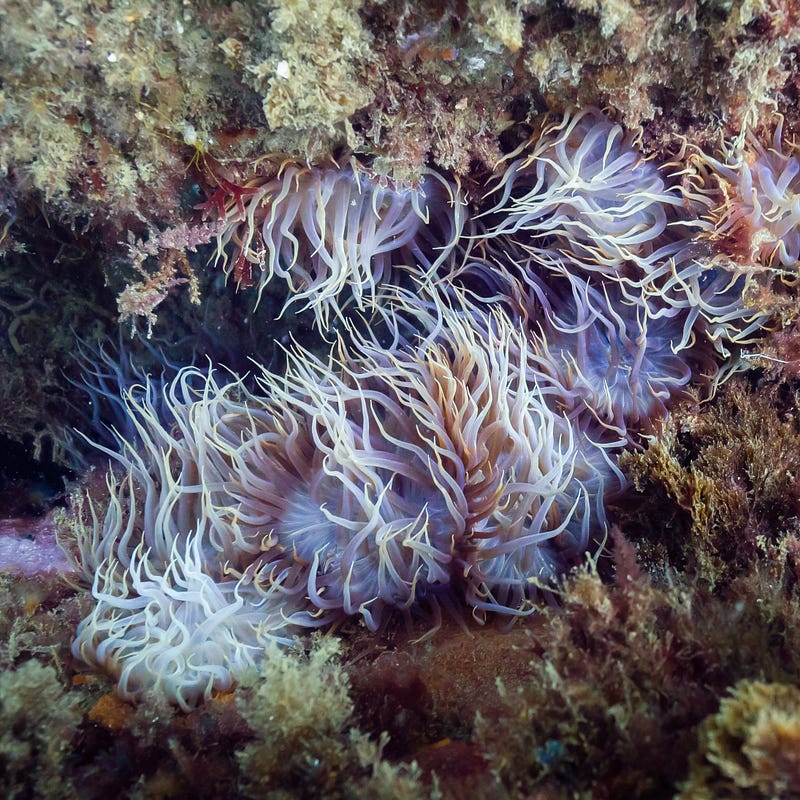
If you think hard about it, you’ll start to understand why flowing water is the ultimate life force behind biological evolution. That’s why habitat connectivity (both natural and urban greenery) is worth conserving and fragmentation into islands is to be avoided since it severs the chance of dynamic interaction. In a distant history, the persistence mechanism was once constancy and rigidity, like a piece of rock, or a tyrant trying all it could to solidify its power. But water, mixing, and multi-level interactions have changed this rule forever. Essentially, bringing diverse streams of information (energy) to interact is now the way to generate ingenuity to pass the eternal test of time. Without exaggeration, the journey of all life is thus learning to truly “go with the flow”. It is time to ditch the dead-end known as constancy.
If you like this story, I strongly encourage you to subscribe to me, and share it out far and wide! I write it for the benefit of humanity and all life on Earth! Support me here and join Medium membership here.
Footnote
- Here, “degree of freedom” is used similarly to the definition used in molecular kinetic theory. It means the no. of motion/action an object can take. It can also be conceived as the number of parameters required to represent all the possible behaviors of the object.
- This leads to why a full communist system would never work with humans, the “parts” of the “whole” of such systems must have a very low degree of freedom individually in order for it to work. To limit a being with an inherently high degree of freedom to an actual low level means mass slavery and imprisonment are inevitable.
- The creation of new ecological niches is the only way that the game of evolution is not zero-sum.


,_Parque_natural_de_la_Arr%C3%A1bida,_Portugal,_2020-07-31,_DD_92.jpg)