You Should Start Collecting Antiques: It’s Cooler (and Cheaper) Than You Think
First, a disclaimer: This isn’t how to become an antiques dealer. I’m not a dealer; I can’t give advice on that. This is about becoming an enthusiast, a collector…an antiques appreciator, if you will. I’m also not an expert on antiques; just a nerd who enjoys sharing what I learn.
There was a time when, probably like you, I thought antiques were just expensive, dusty crap that people with too much discretionary income filled their too-large houses with so they could brag about “19th century this” and “Colonial-era that”. And antique shops? Snoozefest.
But I’ve always been someone for whom collecting antiques actually kind of makes sense. I was basically born a 40-year-old librarian and have been more or less waiting for my body to catch up (I’m starting to get uncomfortably close). I can’t remember when it happened, but one day I started to find all that “old junk” pretty fascinating. And you might find the same, if you give it a try.
Become a historian, environmentalist & detective, all in one
Okay, maybe not exactly. But when you collect antiques, you are quite literally saving a piece of history from the landfill. When you own antiques, you are touching some small part of the past. How cool is that?? And if you actually use the item, you may avoid buying some newly-manufactured piece of commercial crap that’s just going to break in a few months, so it’s also sustainable.
But my favorite part about antiques is that it makes you a detective. Or at least, it made me one. Every time I get a new piece, I spend hours researching it online. I’ll try to find out where it’s from, how old it is, what it was used for, even who owned it if at all possible (and it sometimes is).
First up: some definitions
- Antique: The more-or-less industry-wide accepted timeframe for the use of this term is anything more than 100 years old, counting from the present.
- Vintage: Items that are more than 20 years old, but less than 100. Personally, I take some offense at being vintage.
You don’t need a huge budget (a.k.a, antiques aren’t just for the rich)
Yes, it’s true that lots of antiques are expensive (in particular, furniture, rugs, art, jewelry and anything very rare). But you don’t need to spend thousands. I certainly don’t. Here are a few lower-cost entry points that I have in my own collection:
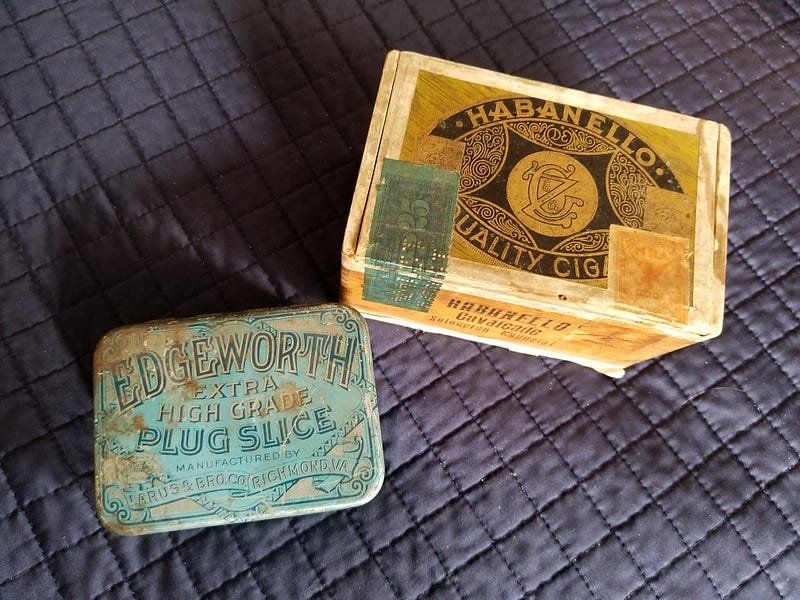
Advertising tins: I love these. They’re fun, make great decorations and are also pretty inexpensive so they’re an easy item to get started in. My tins (I’m shoehorning a non-metal cigar box in here too) were originally manufactured for products like tea, chewing tobacco and cigars. You can date tins based on the material, hinge type, label material and, of course, what’s on the label itself. You can find some pretty amusing old-timey advertisements (the inside of that Edgeworth Plug Slice tin promises that the tobacco “is guaranteed not to burn the tongue and to give satisfaction”). And it’s really cool to try to date tins by determining the style of a brand’s logo at a specific point in time. The oldest brands have evolved their logos many times, and identifying the version helps you get a sense of when something was made. All of my tins were purchased for under $30 each, and most were around the $10-$15 mark. Here are a few of my favorites, purchased at an antique shop on Long Beach Island in NJ.
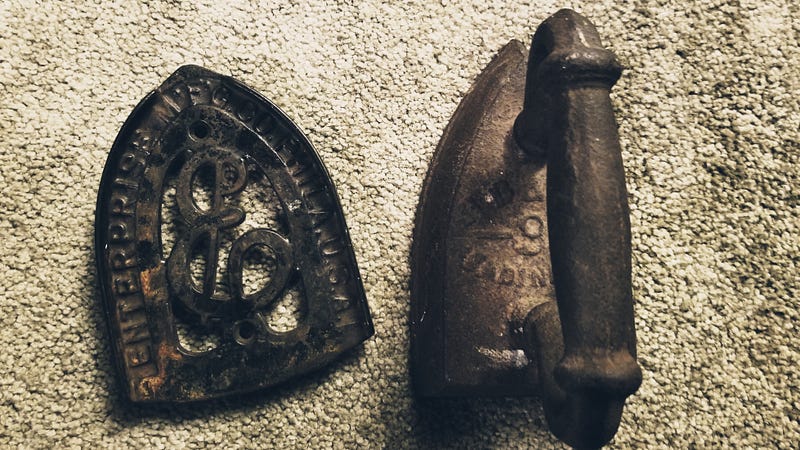
Sad irons / sadirons: I guess they’re sad because these cast-iron, well…irons, were pretty damn dangerous for the women who were fated to yield them against wrinkles. Okay, it’s actually because in Middle English, “sad” meant “solid”. But they have an interesting and kind of scary history (I refuse to iron now, but seriously, you did not want to be tasked with ironing in those days), are relatively easy to find today and aren’t expensive. I have a couple from local manufacturers now long-defunct, and they were in the $20-$35 range to purchase. These will be true antiques; the ones I have are dated back to the late 1800s. Fun fact: you can also collect the cast-iron decorative trivets that the irons once sat on, since a burning hunk of solid iron takes a long time to cool enough to safely set down.
Luggage: I only have one piece so far, a vintage mid-century hardshell suitcase in light blue, and it once belonged to a relative. I’ve used it for overnight stays on several occasions. Luggage is another inexpensive place to start, and it makes great combination storage/decoration pieces for your house. I keep mine stacked in my den along with a vintage tackle box that holds art supplies.
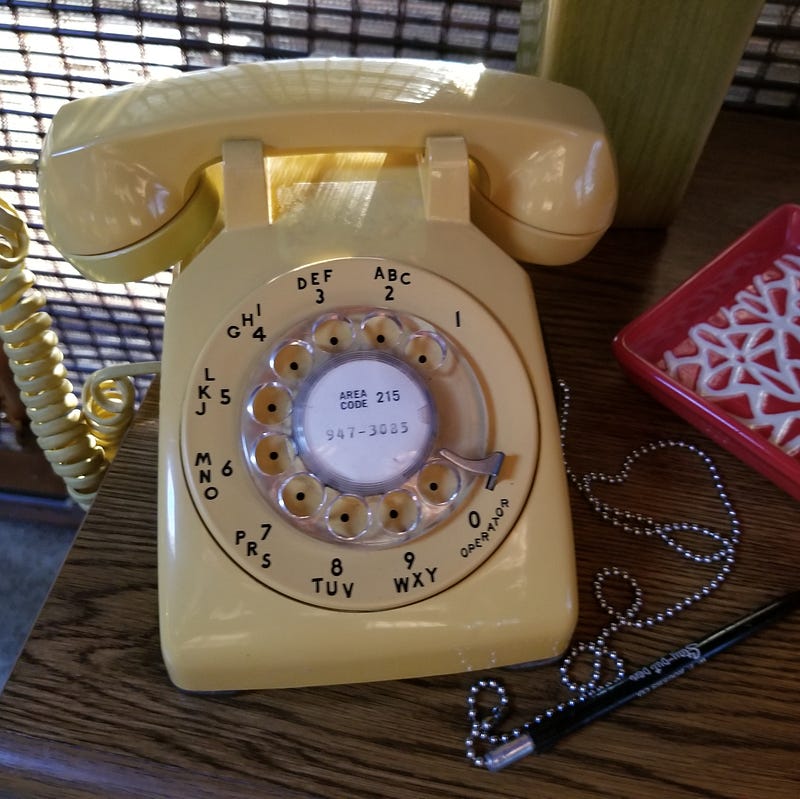
Phones: I LOVE collecting vintage phones. I have a couple rotary Model 500s, which were manufactured by Bell and distributed widely across the US and Canada from the 1950s through the 1980s. They may not be rare or offer much resale value, but that’s fine with me. I keep them for decoration, both at home and in my office at work. The ones I have are late-’70s models, and were affordable at $15-$20 each to procure. I’ve got my eye out for a more costly Model 302, which is the 500 series’ predecessor, invented in 1937 and available through 1955.
There are tons of other great low-cost antique or vintage items that can kick off your own collection. You could check out technology (I have a cool Bakelite UHF/VHF television converter), books (first editions will cost you a boatload, but a collection of any antique hardcovers is going to look pretty awesome on a shelf), eyeglasses, tobacciana, plates, bottles (check out poison bottles — but seriously, be careful when handling), carnival glass and so much more.
Some free resources to get you started
If you’re curious and want to learn more, I found the following resources (all free!) both informative and interesting.
- Antiques Freaks podcast: Not for the faint of heart, this sarcastic and expletive-laden series dives into a different type of antique in each episode. I find it both informative and entertaining, but it’s definitely not going to be everyone’s cup of tea.
- Kovels enewsletter: Kovels issues one of the industry-standard annual pricing guides, and that isn’t free — it’s targeted to dealers to help them price their wares. But their enewsletter is free, and it’s another great source of both info and inspiration.
- Collector’s Weekly: You can sign up for weekly digests on different themes (I get issues on mid-century modern, office supplies, tobacciana, advertising, toys and some others). It’s sales-focused: a roundup of recent online antique sales and bids, but it’s great for ideas and to get a sense of how much you should be paying for something (or how much you should charge if you do want to resell).
Now go forth, and become your very own history detective!