
Music
You Need to Listen to this Song Right Now #48
Heavy Rotation — Bright Lights, Placebo (Battle for the Sun, 2009)
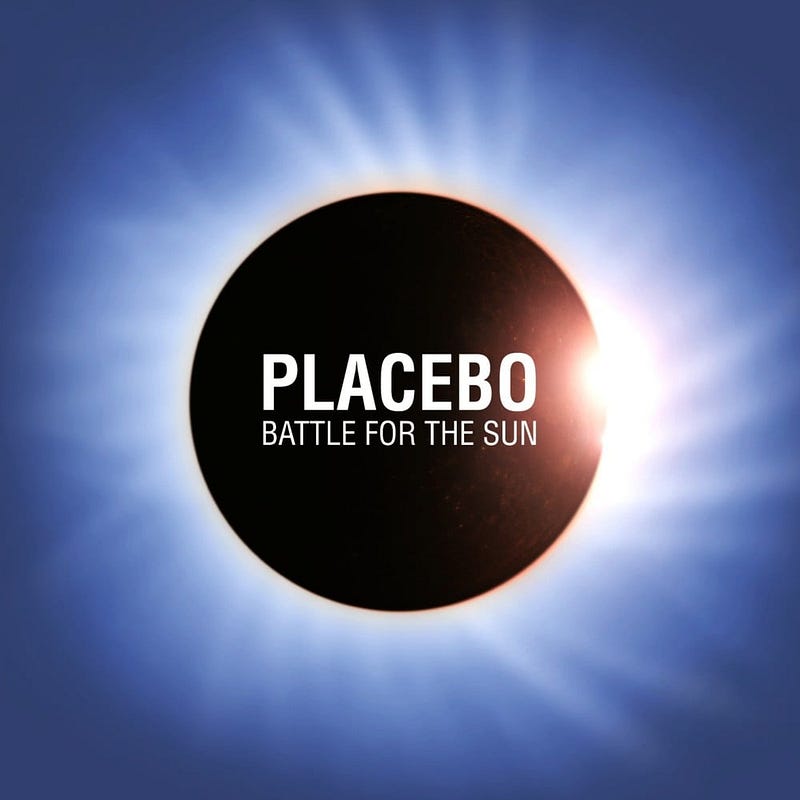
Heavy Rotation was a music industry term for songs that, one way or another got incessant airplay. It referred to the large amount of rotations that a particular record was given on turntables at radio stations. Since, until the 1980s, this was the only way to get new music into the ears and brains of listeners, heavy rotation meant increased sales — good for record companies and artists alike.
Today, some people still put records on at home and give them a spin. Most of us don’t. However, the term still applies, just in a different way. Streaming services like Spotify sell subscriptions to listeners and then pay artists based on listens. At least, that’s the way we think it works.
For me, heavy rotation means a song that is in my head for some reason. Maybe for a moment, maybe for a day, maybe for longer. It’s a song that I come back to from time to time, and it still feels just as good. This series of articles is dedicated to these songs.
My aim is to highlight a particular song by a particular band or singer. We should know a bit about the band, where the song fits into its history, and where it fits into what was happening in music at that time. Then there’s the song itself. Who’s playing on it, what are the lyrics getting at, and why is it so good? How does it still occupy sonic space in our lives?
I’ll (try to) keep it short. It shouldn’t take you any longer to read this than the song itself. To that end, I put a Youtube clip of the original recording at the top of the article so you can listen as you read. Or not. And because a song is often much different live than in the recording studio, I stick a live clip on at the end.
What song is in your head right now? Here’s the one that won’t leave mine today:
#48 — Bright Lights, Placebo (Battle for the Sun, 2009)
Placebo is probably the only band in my personal Top 10 that I haven’t written about yet in this series. I’ve seen their mesmerizing live show three times, in Vancouver in 2003, at the Sziget Festival in Budapest in 2009, and in Barcelona in 2012. Given that we will see them in Denver at the Fillmore next weekend, I’ve been listening to a lot of the band lately, and truly I can’t wait to see them again. Pure rock and roll.
I’ve always been drawn to their very distinct sound, between the nasal twang of Brian Molko’s lyrics and his grinding but soaring lead guitar, Stefan Ohlsdahl’s spare and muscular but pulsating bass, and the driving beat of one of the four people who have been their drummer since their inception in 1994.
They arrived as mid-90s Britpop was already declining, which was probably just as well. Their angst-ridden, hook-laden rock music for the underheard and misunderstood misfits on the crowd's edge stood in stark opposition to the laddishness of Oasis, Blur, or any of their copiers at the time. Think the angsty equal of the Smiths but far harder-edged. A more melodic Joy Division. A heart equally on their sleeve as Echo and Bunnymen. Probing the darkness like Depeche Mode, but with fewer keyboards.
Molko was never one to hide his bisexuality and overlapping androgyny, nor Ohlsdahl his homosexuality, and Placebo burst onto the scene in 1996 with “Nancy Boy,” a song that they described as “for outsiders, by outsiders” and then really hit the big time with the hypnotic dirge “Pure Morning” and the insistent “Every You Every Me” from “Without You I’m Nothing” in 1998. Six further albums have followed in the twenty-five years since.
This song, Bright Lights, comes off their sixth album, “Battle for the Sun” in 2009. It is written from the perspective of someone (ie, Molko himself) reflecting back on his life and how difficult it would have been for someone like him to stay true to himself, not to compromise, to pick himself up when he got knocked down and to look back now and be glad his perseverance got him through.
It is instantly catchy.
A short drum introduction gives us a burst of a guitar hook that will lead us through the song. Its fuzzy and melodic glory explodes into the ears at 00:09, and Molko’s first vocal begins at 00:26. The lyrics tell the story of his early life, but what I like most about these first two verses is how the vocal is laid over a bare-bones drum and bassline, without guitar, giving it a stripped down and raw sound.
“Cast your mind back to the days / when I’d pretend I was ok / I had so very much to say / about my crazy living / Now that I’ve stared into the void / so many people, I’ve annoyed / I have to find a middle way / a better way of living”
The guitar blasts its way back in at 00:53 and is paired with a backing vocal that sighs out four times, evoking a sense of peace and contentment after everything that has happened.
“So haven’t given up / All my choices, my good luck / appear to go and get me stuck / in an open prison / now I am trying to break free / in a state of empathy / find the true and inner me / eradicate this schism”
He recognizes that things have turned out alright, but he doesn’t want to be satisfied with that. There is more to do and more to push himself towards. No matter what happens though, “no one can take it away from me / no one can tear it apart”. He has not conformed, nor will he.
The second chorus ends with the key lyric in this song for me: “A heart that hurts is a heart that works.” You are hurting. Nobody understands you. But you are feeling emotions. That’s what you do. That’s how you know you are alive. Your heart only belongs to you.
The crescendo of the second chorus leads to the bridge, where “bright lights in black holes” reminds us that if we are down, we must look around for the things shining on us, lest we miss them in our sadness. Step out of the darkness and into the light. This sentiment carries on through the third chorus to the end.
“It may be elaborate fantasy / but it’s the perfect place to start.” There is one more message as this driving, joyful song ends: yeah…get down on yourself; that’s fine. But then pick yourself up and start somewhere. Let your heart do what it does best.
A song for the outsider inside in all of us.
Here they are live at the Area 4 Festival in Ludinghausen, Germany, in 2010. Rock and roll energy on stage.
If you have made it this far, it will occur to you that if this is #48 in this series, then there must be 47 previous ones. This is a correct assumption, and here I will link #47. At the bottom of it, you will find a link to #46, and at the bottom of that, you can — if you so choose — be taken to #45. This ingenious system that I thought up all by myself continues all the way to #1.


