You Can’t Escape Friends Like These
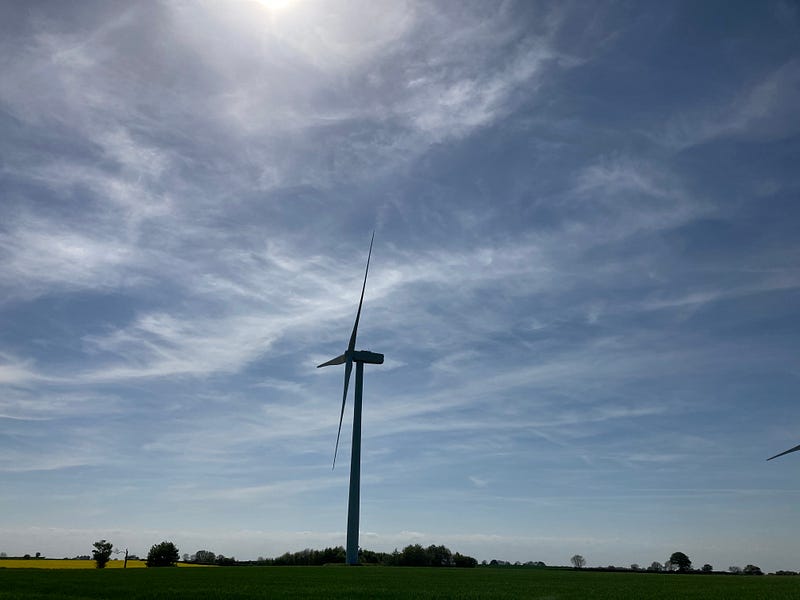
We set out today to see a trio of old friends we’ve not visited since the covid pandemic started. Not that they have the least interest in seeing us, but we were regular visitors up to a couple of years ago.
After the meridian line (zero degrees longitude) leaves the Arctic Circle, it doesn’t hit land until it comes ashore on nearby Tunstall beach. We were heading into an area that takes wind direct from the Arctic with little to get in its way. Even on a warm spring day, several layers of clothing are needed.
We could see our old friends long before we could reach out and touch them — tall, elegant, languid, and hard at work.
“Hello Friend T1"
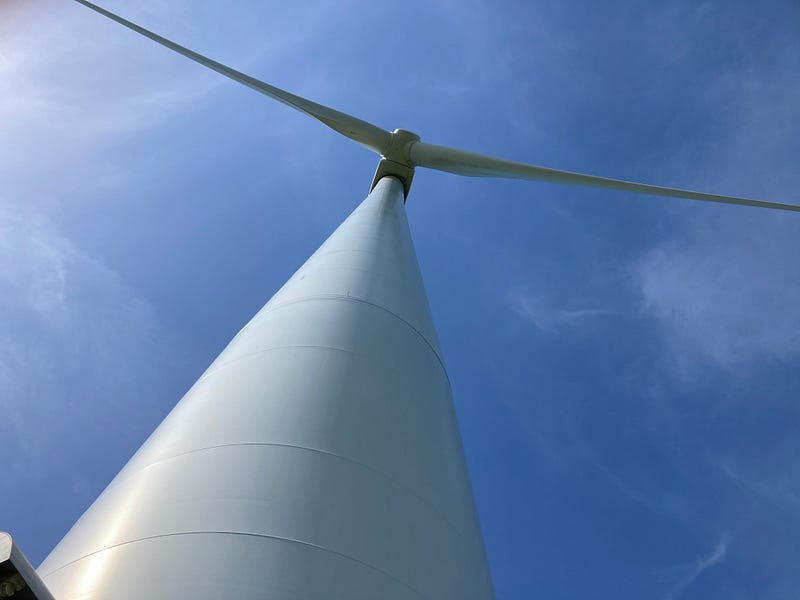
T1 swished her giant blades above us, perhaps saying hello, but more likely just doing her thing of powering an average house for 24 hours per revolution. “That’s quite impressive, T1”
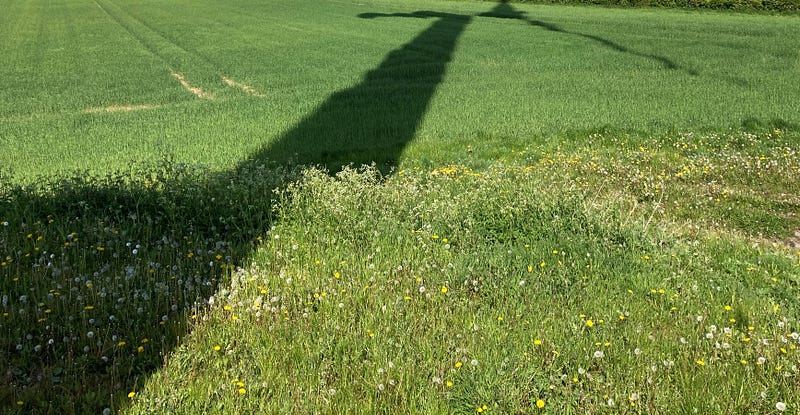
She throws her image out across the crops towards T2, and it’s hard to imagine that the shadows of her turning blades don’t hit her fellow windmill at their furthest stretch, but they don’t. When things stand this tall, distances are deceptive.
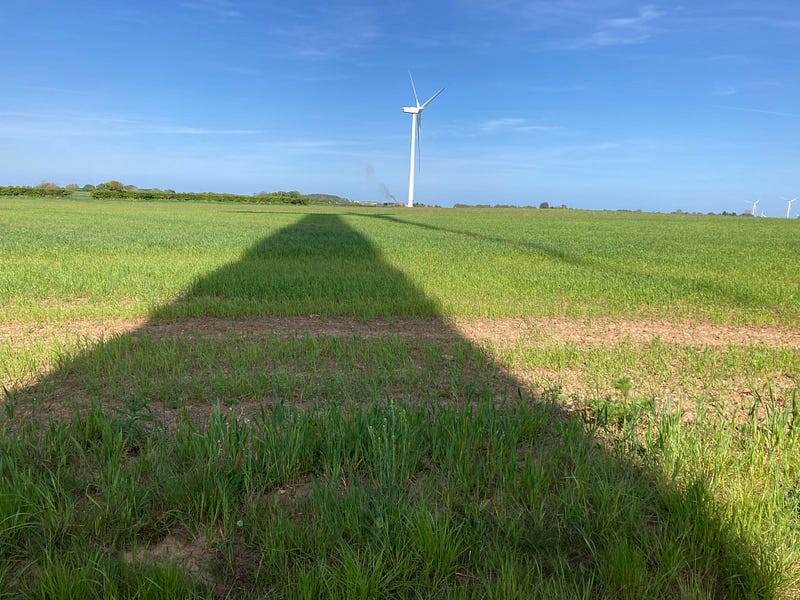
It looks as though you could walk the length of her shadow and be almost at the base of T2, but you can’t. As well as risking the wrath of the farmer whose crops you would be trampling, you wouldn’t be halfway.
We took the track across the headlands.
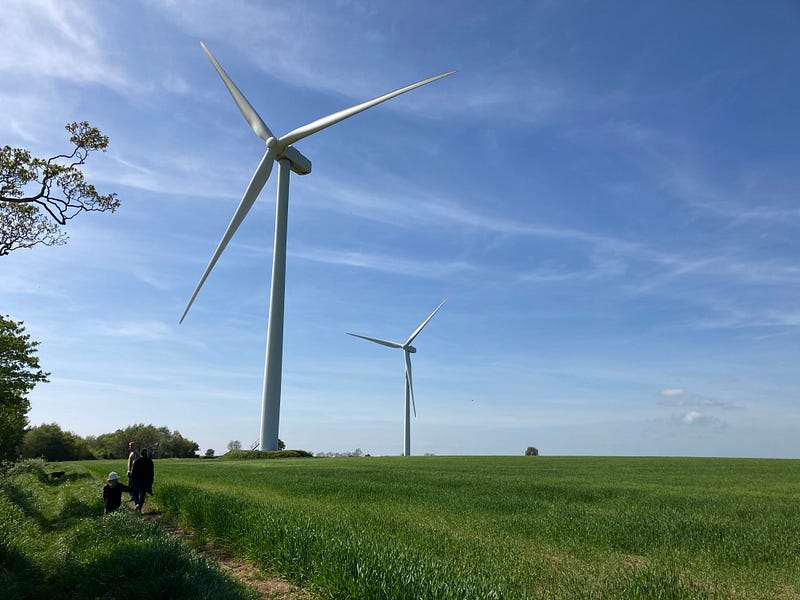
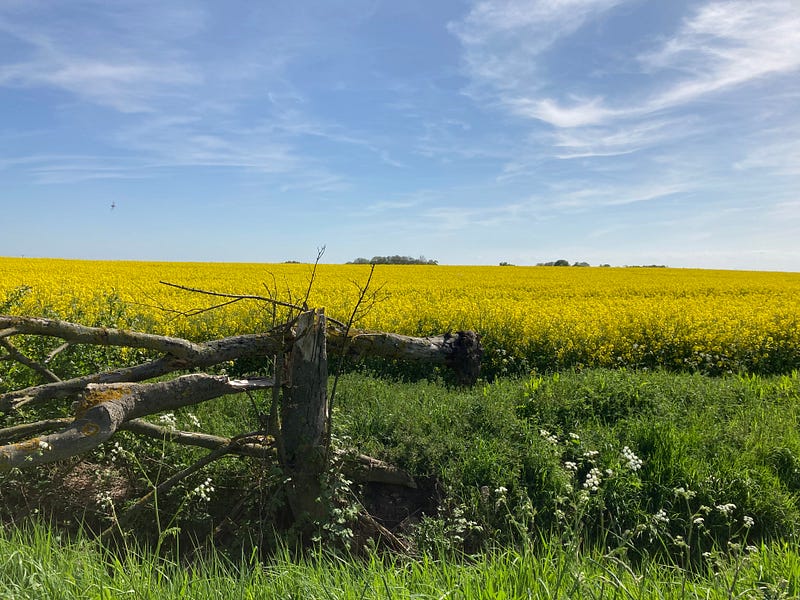
Along the way, we passed some storm-damage artwork…
…and a tangle of branches that looked like a makeshift fence, though it’s not clear what is being fenced off. Between the tangled grasses and the yellow rapeseed is a deep drainage ditch. Anything that can cross here won’t be stopped by a fence.
Windmills fringe the horizons in most directions from here, but not all.
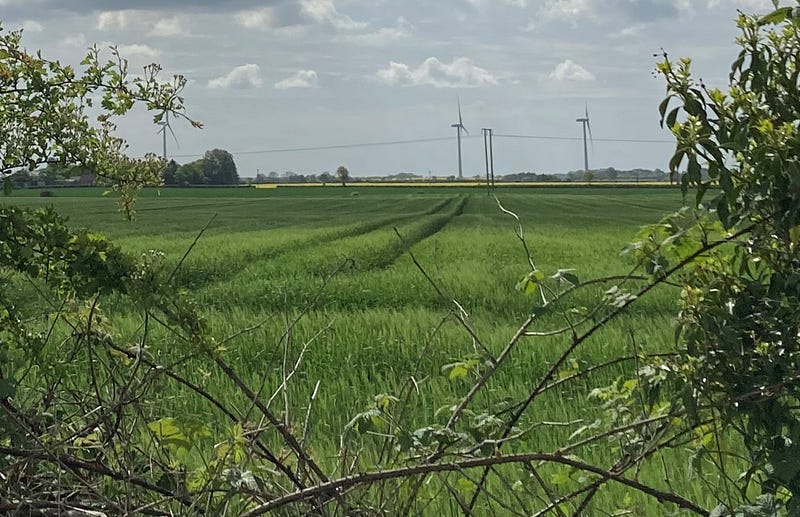
“Hello Friend T2”
We found T2 lazily turning his blades. Occasionally they growl — I think it’s an effect of the wind. The 4-year-old tells me it’s the goblins who are turning the turbines.
Having exchanged pleasantries, we head for T3. The trio makes a good triangular walk across open country away from the roads. The Caped Crusader can be let off the lead for a good run.
“Hello Friend T3"
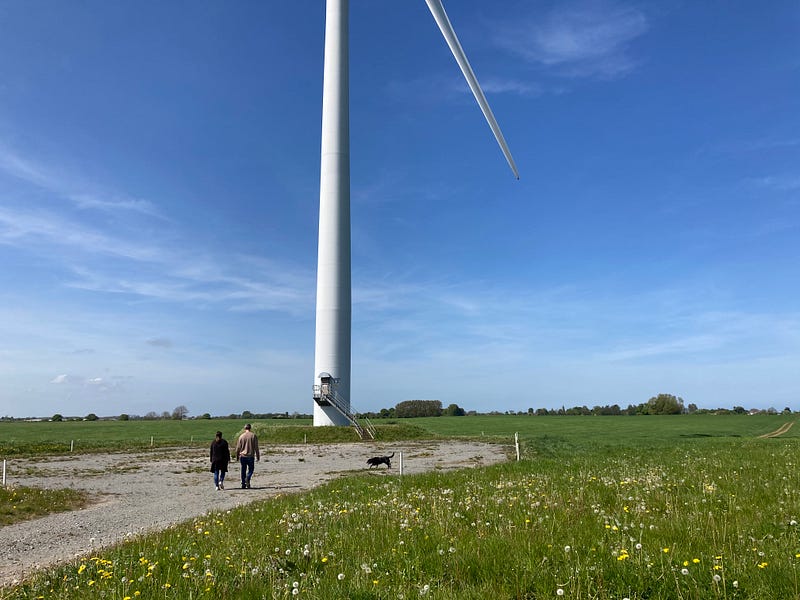
It takes two staircases to reach that (locked) door on T3’s side. Just imagine how many stairs are inside to reach the top!
T3 makes clear she’s not open to visitors. According to her welcome message, she can zap you with a lightning bolt, stop your heart, do something mysteriously worrying if you try to unlock her door, and drop ice on your head.
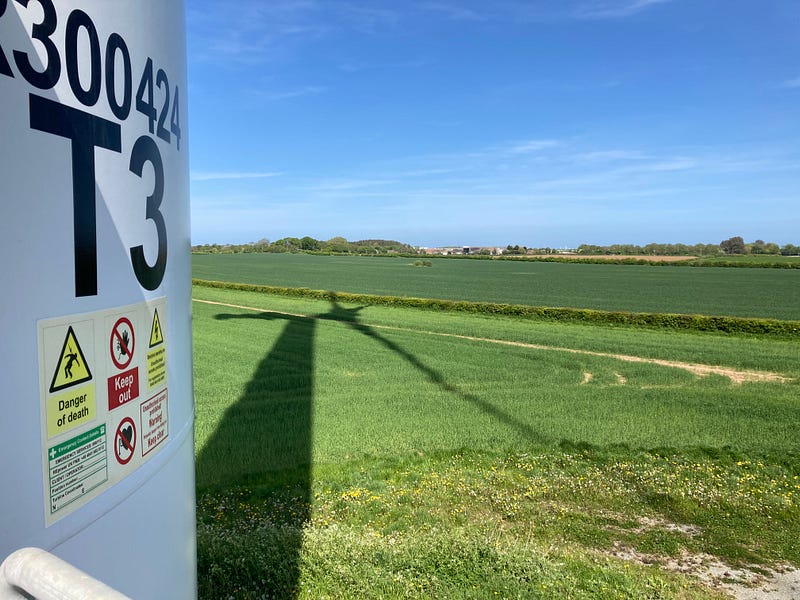
The one thing the sign doesn’t say is “Do not stand next to this sign,” but it probably should. On a warmish sunny spring day, we thought we would be safe from falling ice, but we have a healthy respect for electricity, so didn’t push her boundaries.
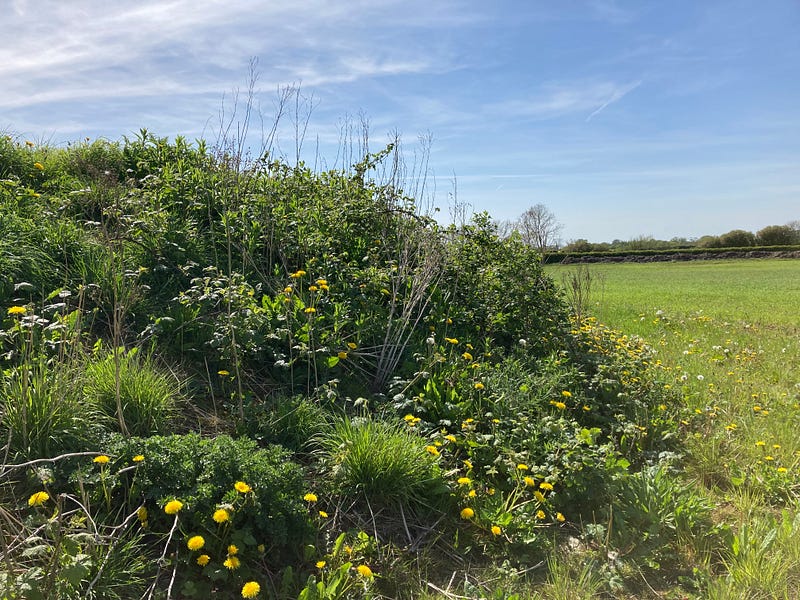
Instead, I wandered around her base. Each of the windmills stands on its own mini wild patch, each showing an increasing variety of plants and insects. The windmills might stand too far apart to make butterfly corridors but they seem to be creating their own environments in much the way that railways or motorways do, albeit on a smaller scale.
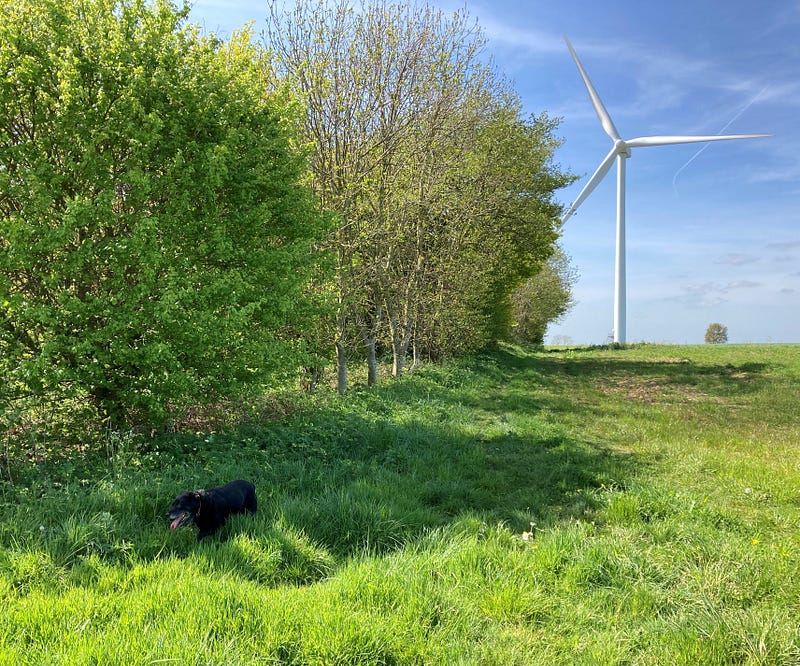
We head back towards the car, the Caped Crusader now pausing to savour the shade — and incidentally, to roll in something that necessitated car windows wide open on the journey home.
The windmill walk is an open-spaces experience, very different from our usual walks around the village lanes. It’s less sheltered obviously — there’s little point in a windmill farm in a sheltered valley — but now the weather’s improving we don’t need to dress up for an Arctic expedition to go there.
We’ll be back. Noone escapes the pull of the windmills.
Inspired by Dennett


